Key Takeaways
- Pickling and drawing operations require dedicated carbon monitoring protocols under EU CBAM Regulation (EU) 2023/956
- Direct emissions from acid regeneration systems must be quantified separately from upstream steel production
- Electricity consumption for drawing mills averages 45-65 kWh per tonne of processed steel
- Process-specific emission factors for hydrochloric acid consumption range from 0.15-0.25 tCO2/tonne HCl
- Installation boundaries must clearly delineate pickling lines from primary steelmaking operations
- Default values will apply penalties of 15-30% above actual emissions if proper monitoring is not established
Understanding CBAM Requirements for Pickling and Drawing Operations
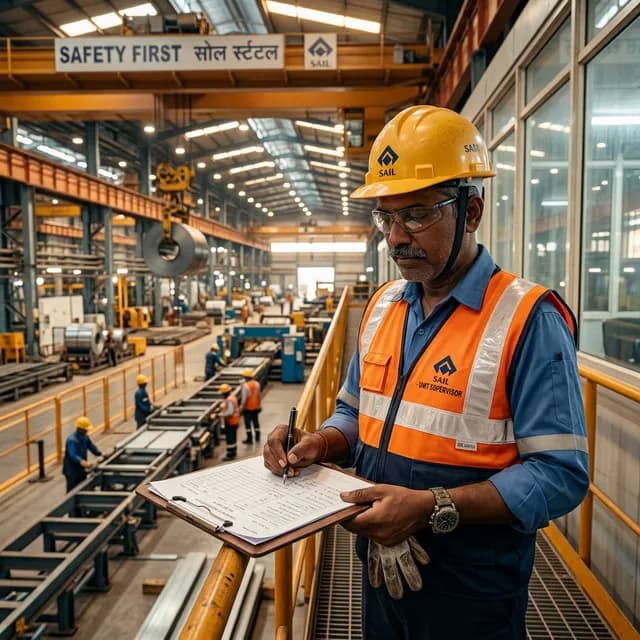
The Carbon Border Adjustment Mechanism (CBAM) under Regulation (EU) 2023/956 establishes specific monitoring obligations for downstream steel processing operations, including pickling and drawing processes. These operations, while secondary to primary steelmaking, constitute significant carbon-intensive activities that require dedicated compliance frameworks.
Pickling processes involve the removal of oxide scale from steel surfaces using acid solutions, primarily hydrochloric or sulfuric acid. Drawing operations encompass the mechanical reduction of steel cross-sections through dies to achieve desired dimensions and surface characteristics. Both processes generate direct and indirect emissions that must be accurately quantified for CBAM reporting.
The regulatory framework distinguishes between integrated steel facilities where pickling and drawing occur within the same installation as primary steelmaking, and standalone facilities that process semi-finished steel products. This distinction fundamentally affects emission allocation methodologies and monitoring requirements.
For integrated operations, the challenge lies in establishing clear system boundaries between primary steelmaking emissions and downstream processing emissions. The regulation requires that emissions from pickling and drawing be separately identifiable and not double-counted within the broader steel production carbon footprint.
Installation Boundary Definition and System Mapping
Establishing precise installation boundaries represents the foundational requirement for CBAM compliance in pickling and drawing operations. The installation boundary must encompass all equipment, infrastructure, and auxiliary systems directly associated with the pickling and drawing processes while maintaining clear demarcation from upstream steel production activities.
The boundary definition must include pickling tanks, acid circulation systems, acid regeneration plants, drawing mills, annealing furnaces (where applicable), water treatment facilities, and associated utilities. Shared infrastructure such as steam systems, compressed air networks, and electrical distribution systems require careful allocation methodologies to assign emissions appropriately between different process units.
For acid regeneration systems, the installation boundary must capture the complete regeneration cycle, including spray roasting towers, hydrochloric acid recovery systems, and iron oxide by-product handling facilities. These systems typically operate at temperatures between 800-900°C and consume significant quantities of natural gas, generating direct CO2 emissions that must be monitored continuously.
Drawing operations require boundary definitions that encompass drawing mills, intermediate annealing furnaces, surface preparation equipment, and quality control systems. The boundary must clearly distinguish between emissions from mechanical drawing processes and any thermal treatment operations that may be integrated within the same facility.
Auxiliary systems present particular challenges for boundary definition. Water treatment systems for pickling operations, including neutralization and sludge handling facilities, generate emissions through chemical consumption and energy use. These systems must be included within the installation boundary when they serve exclusively the pickling and drawing operations.
See what CBAM will cost your buyer
Free 30-second check — pick your product and tonnage, get your buyer-side savings number.
Direct Emissions Monitoring Protocols
Direct emissions from pickling and drawing processes originate primarily from fuel combustion in heating systems, acid regeneration operations, and chemical reactions within the pickling process itself. Monitoring protocols must address each emission source with appropriate measurement techniques and quality assurance procedures.
Acid regeneration systems represent the most significant direct emission source in pickling operations. These systems combust natural gas or other fuels to operate spray roasting towers at temperatures exceeding 850°C. Continuous emissions monitoring systems (CEMS) must be installed on regeneration plant stacks to measure CO2 concentrations, flue gas flow rates, and oxygen content. The monitoring system must achieve accuracy levels of ±2.5% for CO2 concentration measurements and ±5% for flow rate measurements.
For drawing operations, direct emissions typically arise from annealing furnaces used for intermediate heat treatment of drawn products. These furnaces operate on natural gas, propane, or hydrogen-enriched atmospheres. Monitoring protocols must account for the specific fuel composition and combustion characteristics of each fuel type. Hydrogen-enriched atmospheres require specialized monitoring approaches due to the absence of carbon content in hydrogen combustion.
Chemical reactions within pickling baths can generate CO2 emissions through the dissolution of iron oxides and carbonate scale. While these emissions are typically minor compared to fuel combustion, they must be quantified through material balance calculations based on acid consumption rates and steel throughput data.
Process heating systems for maintaining pickling bath temperatures require dedicated monitoring when fuel-fired heating is employed. Electric heating systems do not generate direct emissions but contribute to indirect emissions through electricity consumption.
Indirect Emissions Calculation Methodologies
Indirect emissions from electricity consumption constitute a substantial portion of the carbon footprint for pickling and drawing operations. Drawing mills typically consume 45-65 kWh per tonne of processed steel, while pickling lines consume 15-25 kWh per tonne, depending on the specific process configuration and automation level.
The calculation methodology for indirect emissions must employ the appropriate emission factor for the electricity grid serving the installation. For Indian facilities, the Central Electricity Authority publishes annual CO2 emission factors for different regional grids. The current all-India average emission factor stands at approximately 0.82 tCO2/MWh, though regional variations exist.
Electricity consumption monitoring must capture all electrical loads associated with the pickling and drawing processes, including process equipment, auxiliary systems, lighting, and ventilation. Sub-metering systems must be installed to segregate electricity consumption between different process units and to avoid allocation disputes during CBAM reporting.
For facilities with on-site power generation, the monitoring methodology must account for the fuel consumption and efficiency of captive power plants. Combined heat and power systems require allocation methodologies to distribute emissions between electricity generation and steam production used in the pickling and drawing processes.
Purchased steam represents another indirect emission source that must be quantified. Steam consumption for process heating, cleaning operations, and auxiliary systems must be monitored through flow measurement systems with appropriate temperature and pressure corrections.
Process-Specific Emission Factors and Benchmarks
The development of process-specific emission factors for pickling and drawing operations requires detailed analysis of material and energy consumption patterns. Hydrochloric acid consumption in pickling operations generates emissions through both the production of the acid and its subsequent regeneration or disposal.
The emission factor for hydrochloric acid consumption ranges from 0.15-0.25 tCO2 per tonne of HCl consumed, depending on the production method and transportation distance. Facilities using regenerated acid must account for the emissions associated with the regeneration process, typically 0.8-1.2 tCO2 per tonne of regenerated HCl.
Sulfuric acid pickling operations exhibit different emission characteristics, with emission factors ranging from 0.08-0.12 tCO2 per tonne of H2SO4 consumed. The lower emission factor reflects the different production pathways and energy requirements for sulfuric acid manufacturing.
Drawing operations require emission factors for lubricants, drawing compounds, and surface treatment chemicals. These factors are typically expressed per tonne of steel processed and range from 0.005-0.015 tCO2/tonne for conventional drawing lubricants.
Wire drawing operations may require specialized emission factors for patenting processes, which involve controlled cooling in lead baths or salt baths. These processes consume significant energy and may generate direct emissions from fuel combustion in heating systems.
2025-2026 Regulatory Impact
The transition from the current transitional period to full CBAM implementation in 2026 will significantly impact pickling and drawing operations. Beginning January 1, 2026, facilities must surrender CBAM certificates corresponding to the embedded carbon content of their exports to the EU.
The regulatory impact assessment indicates that pickling and drawing operations may face additional compliance costs of €15-25 per tonne of processed steel, based on current EU ETS allowance prices of approximately €85 per tonne CO2. These costs will be directly passed through to export pricing, potentially affecting the competitiveness of Indian steel products in EU markets.
Facilities that fail to establish adequate monitoring systems by 2026 will be subject to default emission values that typically exceed actual emissions by 15-30%. For pickling and drawing operations, default values may be set at 0.8-1.2 tCO2 per tonne of processed steel, compared to typical actual emissions of 0.4-0.7 tCO2 per tonne.
The 2025-2026 period will also see the introduction of mandatory third-party verification requirements for emission reports. Verification bodies must be accredited under ISO 14065 and demonstrate specific competence in steel processing operations. The verification process will focus on the accuracy of installation boundary definitions, emission factor selections, and data quality management systems.
New technical guidance documents expected in early 2025 will provide detailed methodologies for complex allocation scenarios, particularly for integrated facilities where pickling and drawing operations share infrastructure with primary steelmaking processes. These guidance documents will establish standardized approaches for emission allocation and boundary definition.
Documentation and Reporting Requirements
CBAM reporting for pickling and drawing operations requires comprehensive documentation of all emission sources, monitoring methodologies, and quality assurance procedures. The quarterly CBAM reports must include detailed breakdowns of direct and indirect emissions, with supporting calculations and measurement data.
Documentation requirements include installation permits, process flow diagrams, energy balance calculations, material consumption records, and calibration certificates for all monitoring equipment. Emission factor documentation must include source references, applicability assessments, and uncertainty analyses.
The reporting system requires monthly data collection and validation procedures to ensure data quality and completeness. Automated data acquisition systems must include appropriate data validation routines, gap-filling procedures, and uncertainty quantification methods.
Quality management systems must comply with ISO 14001 environmental management standards and incorporate specific procedures for CBAM data management. These procedures must address data collection, validation, storage, and reporting processes with appropriate controls and audit trails.
Annual emission reports must include detailed uncertainty analyses for all emission sources, with quantified uncertainty ranges for direct measurements, emission factors, and calculation methodologies. The overall uncertainty for installation emissions must not exceed ±7.5% for Tier 1 monitoring approaches.
Frequently asked questions
How do I determine if my pickling and drawing operations require separate CBAM reporting from primary steelmaking?
What monitoring tier should I apply for electricity consumption in drawing operations?
Are emissions from acid regeneration systems considered direct or indirect emissions?
How should I handle shared utilities between pickling lines and other steel processing operations?
What default emission values will apply if I cannot establish adequate monitoring by 2026?
Compliance disclaimer
Strategies described here are for educational purposes. CBAM regulations (EU 2023/956) evolve quarterly — always verify with your accredited verifier before filing definitive reports.
We’ll do your entire CBAM quarter — ₹0.
A dedicated CBAM expert plus our AI do the whole April–June 2026 report end-to-end: your factory data in, verified actual emissions out — so your buyer pays your real number, not the inflated EU default. The report is yours to keep.
Start your report by 30 September 2026 to claim the free quarter.
Bills, logs, photos — one afternoon.
Verified actuals, EU XML, audit standard.
Yours to keep. ₹0 this quarter.
Prefer to talk? +91 76250 95885 · or run a 30-second savings check first
The complete CBAM guide for Indian exporters
The full compliance roadmap — CN codes, emissions, deadlines, penalties and how to keep your EU orders.
More CBAM guidance for Indian exporters
 Technical Compliance
Wire Rod Manufacturing: Specific CBAM Monitoring Requirements
Technical guidance on EU CBAM compliance for Indian wire rod manufacturers, covering monitoring protocols and carbon accounting requirements.
 Technical Compliance
Measuring Embedded Emissions Without a Continuous Monitoring System: A Practical Guide for Indian Exporters
Indian exporters, navigate CBAM without expensive continuous emission monitoring. Learn practical methods for calculating embedded emissions for steel, cement, and aluminium exports to the EU. Get expert help from CarbonSettle.
 Technical Compliance
CBAM Implementing Regulation Deep-Dive: The Technical Rules Explained
A comprehensive guide for Indian MSMEs on the EU's CBAM regulation and compliance steps.