
Key Takeaways
- Railway steel products face stringent EU CBAM requirements under Regulation (EU) 2023/956, with financial obligations beginning January 1, 2026
- Indian rail steel exporters must implement comprehensive carbon accounting systems covering Scope 1 and Scope 2 emissions with verification protocols
- The transitional reporting period (2023-2026) requires quarterly emission declarations without financial penalties, providing preparation time for full compliance
- Rail steel products typically generate 1.8-2.4 tonnes CO2 equivalent per tonne of finished product, significantly impacting CBAM certificate requirements
- Third-party verification by accredited bodies becomes mandatory for emission data accuracy and regulatory acceptance
- Digital documentation systems and supply chain transparency are critical for demonstrating compliance with EU carbon pricing mechanisms
Understanding CBAM Requirements for Railway Steel Products
The European Union's Carbon Border Adjustment Mechanism (CBAM) represents a fundamental shift in international trade regulation, particularly affecting carbon-intensive industries such as steel manufacturing. Railway infrastructure components, including rails, fasteners, and structural steel elements, fall squarely within the scope of Regulation (EU) 2023/956, creating immediate compliance obligations for Indian exporters.
Railway steel products are classified under specific CN codes within the CBAM framework, encompassing hot-rolled rails, crane rails, and specialized track components. The regulation establishes a carbon pricing mechanism that mirrors the EU Emissions Trading System (ETS), requiring importers to purchase CBAM certificates corresponding to the carbon content of imported goods. For Indian manufacturers, this translates into mandatory carbon footprint documentation and verification processes.
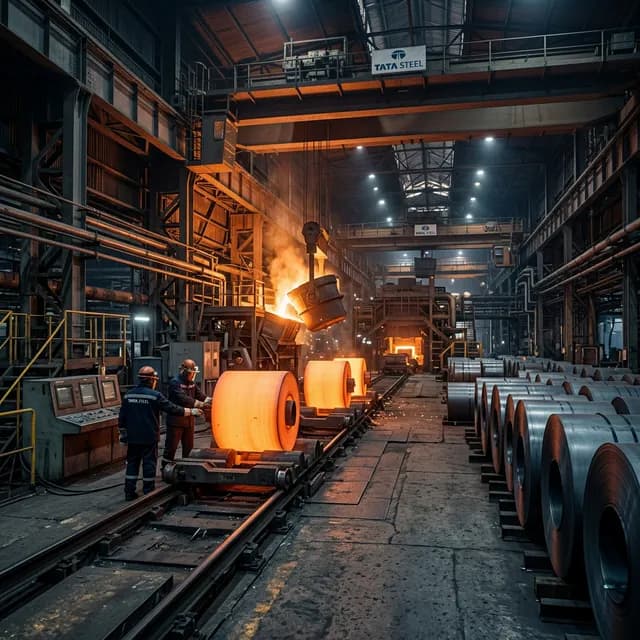
The regulatory framework distinguishes between direct emissions (Scope 1) from steel production processes and indirect emissions (Scope 2) from electricity consumption. Railway steel production typically involves blast furnace operations, electric arc furnace processing, and rolling mill operations, each contributing distinct emission profiles that must be accurately quantified and reported.
Carbon Accounting Methodologies for Rail Steel Manufacturing
Implementing robust carbon accounting systems requires adherence to internationally recognized methodologies, particularly ISO 14064 standards and the GHG Protocol. Railway steel manufacturers must establish comprehensive measurement protocols covering all production phases, from raw material processing through final product delivery.
The carbon intensity of railway steel products varies significantly based on production methodology. Blast furnace-based production typically generates 2.1-2.4 tonnes CO2 equivalent per tonne of finished rail steel, while electric arc furnace operations produce approximately 1.8-2.1 tonnes CO2 equivalent per tonne. These figures directly impact CBAM certificate requirements and associated compliance costs.
Emission factor calculations must incorporate facility-specific data rather than generic industry averages. This requires installation of continuous emission monitoring systems (CEMS) for major emission sources, coupled with periodic stack testing for verification purposes. Energy consumption tracking becomes equally critical, particularly for electricity-intensive operations such as electric arc furnaces and rolling mills.
Data collection protocols must ensure temporal alignment with production batches, enabling accurate allocation of emissions to specific railway steel products. This granular approach facilitates precise CBAM reporting while supporting internal carbon management initiatives.
See what CBAM will cost your buyer
Free 30-second check — pick your product and tonnage, get your buyer-side savings number.
Supply Chain Transparency and Documentation Requirements
CBAM compliance demands unprecedented supply chain transparency, extending beyond direct manufacturing operations to encompass upstream emissions from raw material suppliers. Railway steel manufacturers must establish comprehensive supplier engagement programs, requiring carbon footprint declarations from iron ore, coking coal, and scrap metal suppliers.
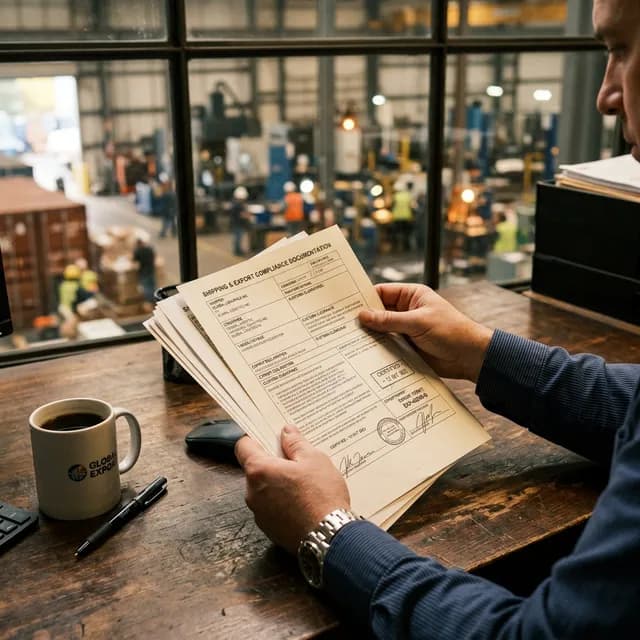
Documentation requirements include detailed production records, energy consumption data, emission calculations, and third-party verification reports. The European Commission has specified standardized reporting templates that must be completed quarterly during the transitional period and annually thereafter. These templates require specific data points including production volumes, emission factors, carbon content per tonne of product, and applicable carbon pricing mechanisms.
Digital documentation systems become essential for managing the volume and complexity of required information. Blockchain-based supply chain tracking systems offer potential solutions for ensuring data integrity and traceability throughout the production process. Such systems provide immutable records of carbon footprint data, facilitating regulatory compliance while supporting sustainability reporting initiatives.
Quality management systems must incorporate CBAM-specific procedures, including data validation protocols, document retention requirements, and internal audit processes. These systems ensure consistent compliance with regulatory requirements while supporting continuous improvement in carbon management practices.
2025-2026 Regulatory Impact
The transitional period concluding December 31, 2025, represents a critical preparation phase for full CBAM implementation. Railway steel exporters must utilize this period to establish comprehensive carbon accounting systems, engage with verification bodies, and optimize production processes for carbon efficiency.
Beginning January 1, 2026, financial obligations commence with CBAM certificate purchase requirements. The certificate price will reflect the weekly average auction price of EU ETS allowances, creating direct financial exposure to European carbon pricing mechanisms. Current EU ETS prices fluctuate between €60-90 per tonne CO2, indicating potential compliance costs of €108-216 per tonne of railway steel based on typical emission intensities.
Regulatory enforcement mechanisms include import restrictions for non-compliant products, financial penalties for incomplete or inaccurate reporting, and potential exclusion from EU markets for persistent violations. These enforcement measures create significant commercial risks for non-compliant exporters, emphasizing the critical importance of proactive compliance preparation.
The European Commission has indicated potential expansion of CBAM coverage to additional steel product categories, including specialized railway components currently outside the initial scope. This expansion could affect fasteners, signaling equipment housings, and other steel-intensive railway infrastructure components.
Third-Party Verification and Accreditation Processes
Third-party verification becomes mandatory for emission data accuracy and regulatory acceptance under CBAM requirements. Verification bodies must hold accreditation under ISO 14065 or equivalent national standards, ensuring competence in greenhouse gas verification methodologies.
The verification process encompasses data accuracy assessment, calculation methodology review, and compliance with reporting requirements. Verifiers examine production records, energy consumption data, emission calculations, and supporting documentation to provide reasonable assurance regarding reported carbon footprints.
Verification planning should commence during the transitional period, allowing sufficient time for data system optimization and process refinement. Early engagement with accredited verification bodies enables identification of potential compliance gaps and implementation of corrective measures before mandatory verification requirements take effect.
Verification costs typically range from €15,000-50,000 annually for medium-scale railway steel manufacturers, depending on production complexity and data system sophistication. These costs represent necessary investments in regulatory compliance and market access preservation.
Implementation Strategies and Best Practices
Successful CBAM compliance requires systematic implementation approaches encompassing organizational structure, technology systems, and operational procedures. Railway steel manufacturers should establish dedicated CBAM compliance teams with clear responsibilities for data collection, reporting, and regulatory interface activities.
Technology infrastructure investments should prioritize automated data collection systems, integrated carbon accounting platforms, and digital documentation management. These systems reduce manual data handling errors while providing real-time visibility into carbon performance metrics.
Training programs must address CBAM requirements across relevant organizational levels, from production operators responsible for data collection through senior management responsible for strategic compliance decisions. Regular training updates ensure awareness of regulatory developments and best practice evolution.
Continuous improvement processes should incorporate carbon efficiency optimization, supply chain engagement enhancement, and compliance system refinement. These processes support both regulatory compliance and competitive advantage development in increasingly carbon-conscious markets.
Frequently asked questions
What specific railway steel products are covered under CBAM?
How frequently must carbon emissions data be reported during the transitional period?
What happens if emission data cannot be obtained from suppliers?
Can existing ISO 14001 environmental management systems support CBAM compliance?
What verification standards are acceptable for CBAM compliance?
Compliance disclaimer
Strategies described here are for educational purposes. CBAM regulations (EU 2023/956) evolve quarterly — always verify with your accredited verifier before filing definitive reports.
We’ll do your entire CBAM quarter — ₹0.
A dedicated CBAM expert plus our AI do the whole April–June 2026 report end-to-end: your factory data in, verified actual emissions out — so your buyer pays your real number, not the inflated EU default. The report is yours to keep.
Start your report by 30 September 2026 to claim the free quarter.
Bills, logs, photos — one afternoon.
Verified actuals, EU XML, audit standard.
Yours to keep. ₹0 this quarter.
Prefer to talk? +91 76250 95885 · or run a 30-second savings check first
The complete CBAM guide for Indian exporters
The full compliance roadmap — CN codes, emissions, deadlines, penalties and how to keep your EU orders.
More CBAM guidance for Indian exporters
 Technical Compliance
Spring Steel Products: CN Code Mapping and CBAM Compliance Checklist
Essential guide for CBAM compliance and CN code mapping for spring steel products.
 Technical Compliance
Apportioning Captive Power Plant Emissions Across Multiple Products for CBAM Compliance: A Deep Dive for Indian Exporters
Indian exporters with captive power plants need precise emission apportionment for CBAM. Learn how to accurately allocate emissions across diverse products to avoid high EU carbon taxes. CarbonSettle offers end-to-end CBAM compliance services.
 Technical Compliance
Steel Billets and Slabs: Intermediate Products and CBAM Partial Declarations
Understand the implications of CBAM for steel billets and slabs in the EU market.