Key Takeaways
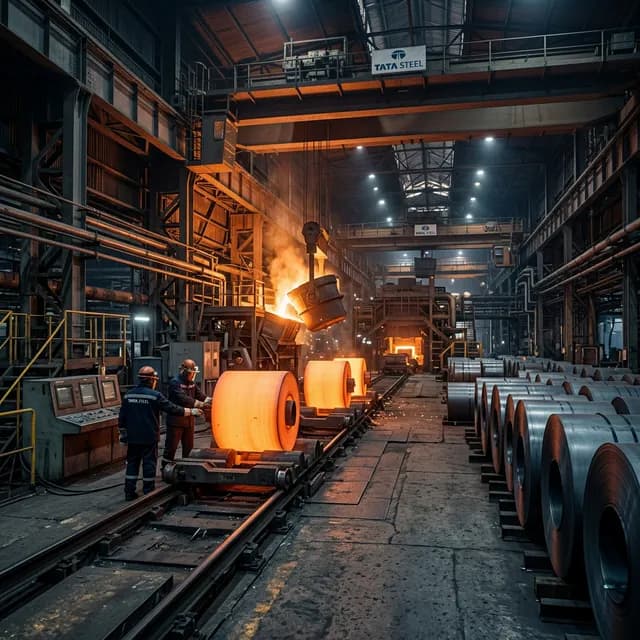
- Cost Surge: Potential 20-30% cost increase for Indian high-carbon steel exports to EU by 2030.
- Compliance Burden: MSMEs face high administrative costs for monitoring (MRV) and reporting.
- Competitiveness: Early adopters of low-carbon tech will survive; others risk losing EU market share.
Introduction
The Carbon Border Adjustment Mechanism (CBAM) represents a seismic shift for Indian Micro, Small, and Medium Enterprises (MSMEs). Historically, Indian MSMEs competed on cost efficiency. CBAM introduces a "Carbon Component" to the cost structure, potentially eroding the price advantage of Indian engineering goods. For a typical engineering MSME in Ludhiana or Coimbatore exporting to Germany, this regulation is a direct threat to profitability.
See what CBAM will cost your buyer
Free 30-second check — pick your product and tonnage, get your buyer-side savings number.
The Financial Implication: A Case Study
Consider an Indian MSME exporting steel fasteners.
- Current Price: €1,200 per tonne.
- Carbon Intensity: ~2.8 tonnes CO2e per tonne of steel (Blast furnace route + Indian Grid).
- EU Carbon Price: Assume €75 per tonne.
- CBAM Liability (post-2026): $2.8 \times 75 = €210$ per tonne.
- Net Impact: A 17.5% price increase. Without decarbonization, this product becomes significantly more expensive compared to a Turkish or European competitor using electric arc furnaces (EAF) with cleaner grids.
Administrative & Compliance Costs
Beyond the carbon tax, the cost of compliance is significant.
- Data Collection Systems: Installing meters for fuel and electricity consumption.
- Staff Training: Upskilling teams to understand ISO 14064 principles.
- Third-Party Verification: Estimated at $2,000–$5,000 annually per installation. For an MSME with low margins, these overheads are substantial.
2025-2026 Regulatory Impact for India
- Reporting Phase (Now): No financial tax, but "penalty for non-reporting". Correct reporting is crucial to establish a baseline.
- 2026 Phase-In: The carbon levy begins.
- Strategic Shift: Indian MSMEs must move from "Authorised Declarant" reliance to "Active Data Providers". Importers will switch suppliers who cannot provide reliable emissions data because efficient data lowers their liability.
Mitigation Strategies for MSMEs
- Switch to Renewable Power: Installing rooftop solar or procuring renewable energy is the fastest way to reduce Scope 2 emissions.
- Process Efficiency: Upgrade furnaces, improve insulation, and reduce scrap rates.
- Supplier Selection: Source raw materials (billets/wire rods) from mills with lower certified emission intensities.
Conclusion
The era of "burn and ship" is over. Indian MSMEs must treat Carbon Intensity as a core product specification, just like Tensile Strength or Hardness.
Frequently asked questions
Q: Will the Indian government reimburse CBAM costs?
Q: Can I ignore CBAM if I sell via a trader?
concerned about your cost competitiveness?
Compliance disclaimer
Strategies described here are for educational purposes. CBAM regulations (EU 2023/956) evolve quarterly — always verify with your accredited verifier before filing definitive reports.
We’ll do your entire CBAM quarter — ₹0.
A dedicated CBAM expert plus our AI do the whole April–June 2026 report end-to-end: your factory data in, verified actual emissions out — so your buyer pays your real number, not the inflated EU default. The report is yours to keep.
Start your report by 30 September 2026 to claim the free quarter.
Bills, logs, photos — one afternoon.
Verified actuals, EU XML, audit standard.
Yours to keep. ₹0 this quarter.
Prefer to talk? +91 76250 95885 · or run a 30-second savings check first
The complete CBAM guide for Indian exporters
The full compliance roadmap — CN codes, emissions, deadlines, penalties and how to keep your EU orders.
More CBAM guidance for Indian exporters
 Technical Compliance
CBAM Default Values vs Actual Data: 2026 Cost Analysis for Exporters
EU CBAM default values are set deliberately high — analysts report they can cost 2–4× more than verified actual emissions. See the 2026 default-vs-actual cost gap for Indian steel and aluminium, and the steps to switch to actuals.
 Technical Compliance
Portland Cement CBAM: Clinker Content Factor and Its Compliance Impact
Understanding the clinker content factor in Portland cement for CBAM compliance.
 Technical Compliance
Budget Planning for CBAM: Annual Compliance Cost Estimation
Comprehensive cost analysis framework for Indian steel exporters to budget CBAM compliance expenses under EU Regulation 2023/956.