Key Takeaways
- CBAM default values are deliberately conservative estimates. Market analysts in 2026 report default-based costs of roughly €250+ per tonne for Indian blast-furnace steel products, versus roughly €65–€170 per tonne when verified actual emissions are used.
- The default-value mark-up is designed to escalate through the definitive period, so the penalty for not reporting actual data grows every year.
- Since 1 January 2026 (the definitive regime), only verified actual emissions can replace defaults — unverified spreadsheets no longer count.
- Switching to verified actuals is an operational project — data mapping, monitoring, verification — not a form-filling exercise. Most Indian exporters can complete a first pass in 2–4 weeks with support.
Introduction
The European Union's Carbon Border Adjustment Mechanism (CBAM), under Regulation (EU) 2023/956, prices the embedded carbon of goods imported into the EU — including Indian steel, aluminium, cement and fertilisers. For every consignment, the EU importer must declare embedded emissions using one of two bases: the EU's default values, or the producer's verified actual emissions. The choice between them is now one of the largest single cost levers an Indian exporter controls. This article walks through the cost difference, why it exists, and the operational steps to move from defaults to actuals.
What CBAM Default Values Are
Default values are fallback emission intensities published by the European Commission for each CBAM product group. They exist so that an importer can still file a declaration when the producer supplies no data. Two design features matter for exporters:
- They are set intentionally high. Defaults are benchmarked toward the worst-performing producers, not the average — the EU's stated aim is to make real data more attractive than estimates. Analyst reviews in 2026 put defaults commonly 30–80% above typical actual production emissions, and for some routes the resulting certificate cost is 2–4× higher than a verified-actuals declaration.
- The mark-up escalates. For iron & steel and aluminium, the mark-up applied to default values increases over the definitive period (from 10% in 2026 to 30% by 2028), so the gap between defaults and actuals widens every year an exporter stays on defaults.
Representative midpoints for Indian steel routes. The hatched red zone is what an EU default value adds on top of your real number when no verified actuals are filed — that markup is what your buyer overpays.
Want this for your own product and tonnage? Run the 30-second savings check.
See what CBAM will cost your buyer
Free 30-second check — pick your product and tonnage, get your buyer-side savings number.
The Cost Gap in Numbers (2026)
The exact CBAM cost depends on the CN code, production route, free-allocation adjustment, and the weekly CBAM certificate price (which tracks the EU ETS, trading around the €70–€80/tCO₂ range in 2026). Indicative figures reported by market analysts in 2026 for Indian blast-furnace (BF-BOF) flat steel illustrate the gap:
| Declaration basis | Embedded emissions basis | Indicative CBAM cost per tonne of product |
|---|---|---|
| EU default values (no producer data) | Deliberately conservative default, plus escalating mark-up | ≈ €250–€270 |
| Verified actual emissions (typical Indian BF-BOF installation, ≈2.1–2.2 tCO₂/t) | Measured Scope 1 + Scope 2, verified | ≈ €65–€170 |
On a 1,000-tonne consignment, that difference is roughly €80,000–€180,000 — a cost the EU buyer either pushes back into your price or uses as a reason to switch suppliers. Electricity-intensive aluminium routes show a similar pattern: coal-heavy grid power makes Indian defaults especially punitive, and verified actuals (or renewable-power documentation) pull the number down sharply.
These are indicative, publicly reported ranges — your own gap depends on your route and data. A 30-second CBAM savings check gives you a first estimate for your product and tonnage, or use the CBAM tax calculator for a fuller view.
Actual Emissions Data: The Switch That Pays For Itself
Verified actual emissions almost always come in below defaults for Indian installations — that is the entire design of the mechanism. To use actuals in 2026, the data must be calculated under CBAM methodology (Scope 1 direct + Scope 2 electricity, with India-specific grid factors) and verified by an accredited verifier before the importer can use it in a declaration.
Steps for Data Collection
- Map installation boundaries: define which processes, fuel streams and electricity meters belong to the CBAM production process.
- Collect source records: electricity bills, fuel invoices, production logs, and precursor (input material) data from suppliers.
- Calculate embedded emissions: apply CBAM calculation rules — not GHG Protocol rules — including the correct grid emission factor for your state or captive supply.
- Verification: have the dataset verified by an EU-accredited verifier so the importer's declarant can rely on it.
- Keep records: retain the underlying documents; verifiers and (via your buyer) EU authorities can ask for them.
Verifying CN/HS Codes
Correct product classification under CN codes decides which default values would apply to you and whether the product is in CBAM scope at all. Misclassification cuts both ways — it can pull an out-of-scope product in, or apply a harsher default than necessary.
- Review product specifications against Annex I of Regulation (EU) 2023/956.
- Consult your customs broker or a CBAM specialist to confirm codes.
- Re-check when your product mix changes — new alloys, coatings or forms can shift the CN code.
Reporting Requirements in the Definitive Regime
Since 1 January 2026, CBAM is in its definitive phase: EU importers must surrender CBAM certificates against verified embedded emissions, with annual declarations replacing the transitional quarterly reports. The practical consequence for Indian exporters: your EU buyer now asks you for verified data on a schedule, and a supplier who cannot produce it is a supplier who costs more to buy from.
- Prepare documentation: verified emissions dataset, production volumes, CN codes.
- Deliver to your importer in the format their declarant needs (structured data / EU-ready XML).
- Monitor changes: certificate prices, mark-up escalation and methodology updates land every year — see the complete CBAM India guide for the current timeline.
What Changes Next (2026–2028)
- Escalating default mark-up: 10% (2026) → 30% (2028) for steel and aluminium — defaults get progressively more expensive relative to actuals.
- Buyer consolidation: EU buyers are already shortlisting suppliers by data readiness; analysts describe verified-actuals suppliers as winning share from default-value suppliers at identical product prices.
- Verification capacity: accredited-verifier slots are a bottleneck year-round; exporters who start early avoid paying rush premiums.
Conclusion
For Indian exporters, staying on CBAM default values is a standing decision to pay the highest available carbon cost on every EU consignment — a cost that compounds as the mark-up escalates. Verified actual emissions data, collected once per installation and updated on a normal reporting cycle, is the single most effective CBAM cost-reduction step available in 2026.
If you export steel or aluminium to the EU, start with the sector-specific guides — CBAM for Indian steel exporters and CBAM for Indian aluminium exporters — or get the full roadmap in the CBAM India guide.
Frequently asked questions
What are CBAM default values?
How much more do default values cost than actual data?
Can I use my own emissions calculation without verification?
How do I start switching from defaults to actuals?
Compliance disclaimer
Strategies described here are for educational purposes. CBAM regulations (EU 2023/956) evolve quarterly — always verify with your accredited verifier before filing definitive reports.
We’ll do your entire CBAM quarter — ₹0.
A dedicated CBAM expert plus our AI do the whole April–June 2026 report end-to-end: your factory data in, verified actual emissions out — so your buyer pays your real number, not the inflated EU default. The report is yours to keep.
Start your report by 30 September 2026 to claim the free quarter.
Bills, logs, photos — one afternoon.
Verified actuals, EU XML, audit standard.
Yours to keep. ₹0 this quarter.
Prefer to talk? +91 76250 95885 · or run a 30-second savings check first
The complete CBAM guide for Indian exporters
The full compliance roadmap — CN codes, emissions, deadlines, penalties and how to keep your EU orders.
More CBAM guidance for Indian exporters
 Financial Planning
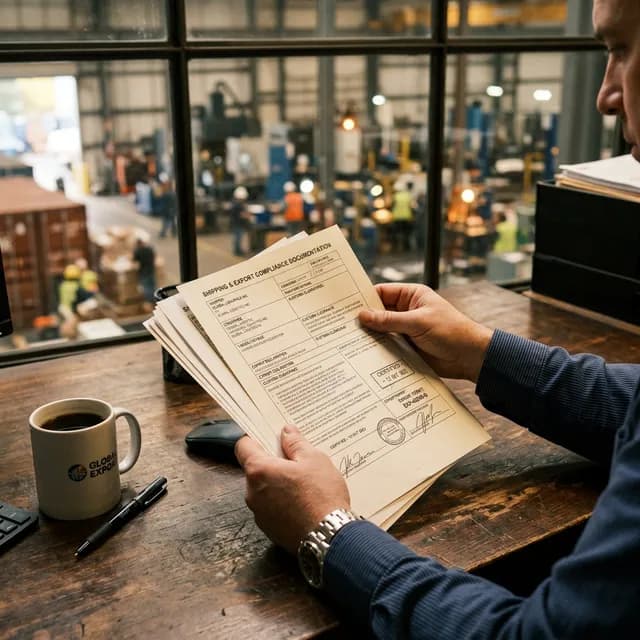
Verified Actuals vs Default Values: The Real 2026 Cost Comparison for Indian Exporters Under EU CBAM
Indian exporters face critical CBAM choices for 2026. Learn how verified actual emissions can save millions compared to EU default values. Get expert CBAM compliance services in India.
 Technical Compliance
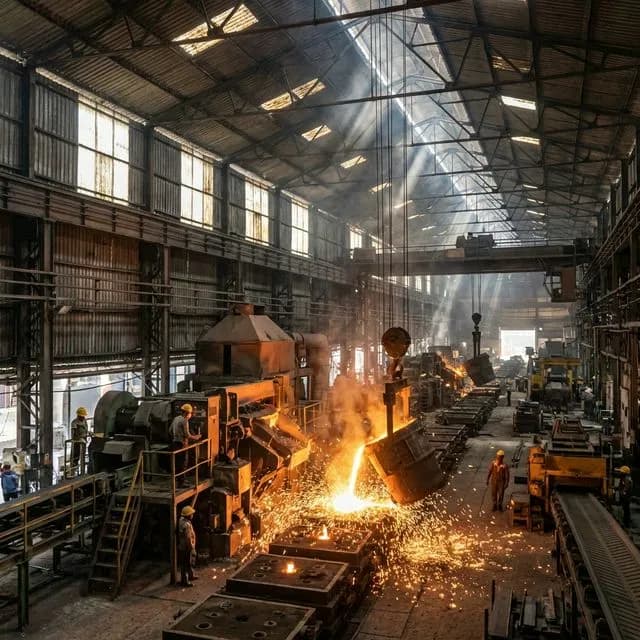
Own Calculation vs Default Values: A Decision Matrix for Indian Exporters
Explore the decision matrix for Indian exporters on using own calculations vs default values under EU regulations.
 Technical Compliance
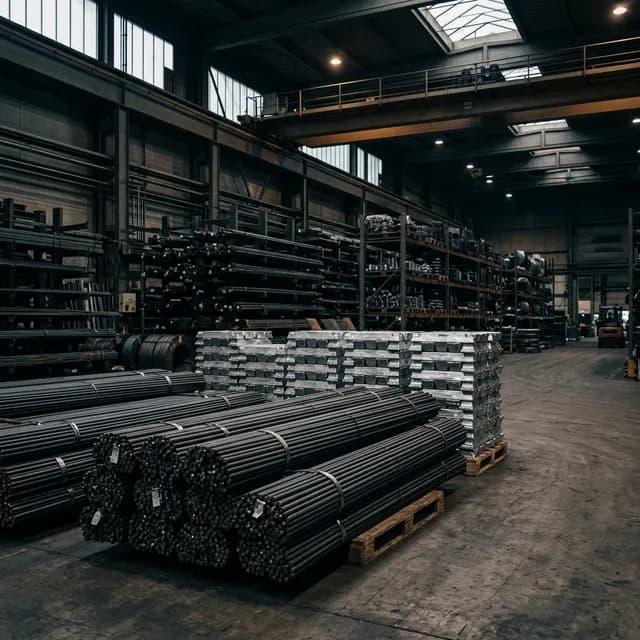
How Indian Steel Mills Can Use Transitional Period Data for 2026 Advantage
Learn how Indian steel mills can leverage transitional period data to enhance compliance and competitiveness by 2026.