Key Takeaways
- Understanding embedded carbon is crucial for compliance with EU regulations.
- Accurate data collection and verification of HS codes are essential steps.
- Indian exporters must prepare for potential carbon costs as part of the EU CBAM.
Introduction
As Indian manufacturers, particularly in the steel sector, pivot towards exporting hot rolled coils to the European Union, it becomes imperative to understand the intricacies of carbon emissions associated with these products. The EU's Carbon Border Adjustment Mechanism (CBAM), as outlined in Regulation (EU) 2023/956, is set to have profound implications for Indian exporters. This regulation aims to equalize the price of carbon between domestic products and imports, thus impacting the competitiveness of Indian MSMEs in the EU market.
In this article, we will delve into the methodology for calculating the embedded carbon in hot rolled coils, highlighting specific operational steps that Indian exporters must undertake to ensure compliance and mitigate potential penalties.
Understanding Embedded Carbon
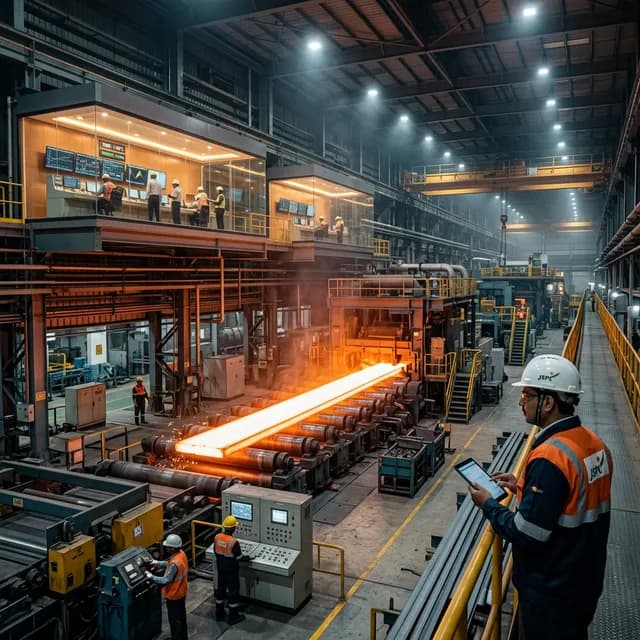
Embedded carbon refers to the total greenhouse gas emissions produced during the manufacturing process of a product, including raw material extraction, processing, and transportation. For hot rolled coils, this includes emissions from iron ore extraction, steel production, and the rolling process itself.
Calculation of Embedded Carbon
To accurately calculate the embedded carbon for hot rolled coils, Indian exporters should follow these steps:
-
Data Collection: Gather data on energy consumption, raw materials, and production processes. This includes:
- Energy sources used (coal, electricity, natural gas).
- Quantity of raw materials consumed (iron ore, scrap steel).
- Production methods employed (basic oxygen furnace, electric arc furnace).
-
Emission Factors: Utilize standardized emission factors for various processes. For instance:
- The production of one ton of hot rolled steel typically emits around 1.8 tons of CO2 when using a blast furnace.
- Electric arc furnaces have a lower emission factor, approximately 0.4 tons of CO2 per ton of steel produced.
-
Application of Emission Factors: Multiply the quantity of each input by its respective emission factor to obtain total emissions for each stage of production.
-
Total Emissions Calculation: Sum the emissions from all stages to derive the total embedded carbon for the hot rolled coils.
Example Calculation
Suppose an Indian manufacturer utilizes 100 tons of iron ore and 50 tons of scrap steel to produce 100 tons of hot rolled coils, using a blast furnace. The calculation would be as follows:
- Iron Ore Emissions: 100 tons x 1.8 tons CO2/ton = 180 tons CO2
- Scrap Steel Emissions: 50 tons x 0.4 tons CO2/ton = 20 tons CO2
- Total Embedded Carbon: 180 tons + 20 tons = 200 tons CO2 for 100 tons of hot rolled coils.
See what CBAM will cost your buyer
Free 30-second check — pick your product and tonnage, get your buyer-side savings number.
Verifying HS Codes
A critical step in compliance with the EU CBAM is the accurate verification of Harmonized System (HS) codes. Indian exporters must ensure that their products are classified correctly to avoid penalties and ensure proper reporting.
-
Identify the Correct HS Code: For hot rolled coils, the HS code typically falls under 7208 for flat-rolled products of iron or non-alloy steel. However, variations exist based on thickness and width.
-
Consult the EU Customs Tariff: Utilize the EU’s TARIC database to confirm the appropriate HS code and its corresponding duty rates.
-
Documentation: Maintain accurate records of the HS codes used in shipping documents to facilitate smooth customs clearance and compliance verification.
Reporting Requirements
Under the EU CBAM, Indian exporters must adhere to specific reporting requirements. These include:
-
Annual Reporting: Exporters are required to report the embedded carbon data annually to the EU authorities. This report should include:
- Total emissions calculated for the exported hot rolled coils.
- The methodology used for calculations.
- Any relevant data on production processes and energy sources.
-
Compliance Audits: Prepare for potential audits by EU authorities. Ensure that all calculations and data are well-documented and verifiable.
-
Penalties for Non-Compliance: Failure to comply with reporting requirements can result in penalties. For instance, penalties may include fines or increased tariffs on exported products.
2025-2026 Regulatory Impact for India
As the EU continues to refine its CBAM framework, Indian MSMEs must stay abreast of upcoming changes that could impact their operations. By 2025-2026, the EU aims to fully implement the CBAM, which may include:
-
Expanded Product Coverage: More products, including downstream steel products, may fall under the CBAM, increasing compliance requirements for Indian exporters.
-
Increased Carbon Costs: As the EU strengthens its carbon pricing mechanisms, Indian exporters could face significant costs associated with carbon allowances. Projections suggest that carbon prices could reach €50-€100 per ton by 2026, directly impacting profit margins.
-
Enhanced Reporting Obligations: Expect more stringent reporting requirements, necessitating robust emissions tracking systems and potentially third-party verification of emissions data.
Practical Steps for Indian Exporters
To navigate the complexities of the EU CBAM effectively, Indian MSMEs should consider the following practical steps:
-
Implement Emissions Tracking Systems: Invest in technology to monitor and report emissions accurately. This could involve software solutions that integrate data from various production stages.
-
Engage in Capacity Building: Train compliance officers and relevant staff on the intricacies of the EU CBAM and emissions reporting requirements.
-
Conduct a CBAM Readiness Assessment: Evaluate current operations against EU standards to identify gaps in compliance and areas for improvement.
Conclusion
As Indian exporters of hot rolled coils prepare for the EU CBAM, understanding the calculation of embedded carbon is essential for compliance and competitiveness. By following the outlined steps, verifying HS codes, and staying informed about regulatory changes, Indian MSMEs can navigate this complex landscape effectively.
For further support, consider conducting a CBAM readiness assessment or enhancing your emissions tracking capabilities to ensure compliance and avoid penalties.
Frequently asked questions
1: What is the EU CBAM?
2: How do I calculate the embedded carbon for my products?
3: What are the penalties for non-compliance with the CBAM?
4: How can I verify the correct HS code for my products?
5: What steps should I take to prepare for the CBAM?
Compliance disclaimer
Strategies described here are for educational purposes. CBAM regulations (EU 2023/956) evolve quarterly — always verify with your accredited verifier before filing definitive reports.
We’ll do your entire CBAM quarter — ₹0.
A dedicated CBAM expert plus our AI do the whole April–June 2026 report end-to-end: your factory data in, verified actual emissions out — so your buyer pays your real number, not the inflated EU default. The report is yours to keep.
Start your report by 30 September 2026 to claim the free quarter.
Bills, logs, photos — one afternoon.
Verified actuals, EU XML, audit standard.
Yours to keep. ₹0 this quarter.
Prefer to talk? +91 76250 95885 · or run a 30-second savings check first
The complete CBAM guide for Indian exporters
The full compliance roadmap — CN codes, emissions, deadlines, penalties and how to keep your EU orders.
More CBAM guidance for Indian exporters
 Technical Compliance
Calculating Embedded Emissions: A Guide for Indian Manufacturers
A technical guide for Indian manufacturers on calculating embedded emissions for EU CBAM compliance, covering direct and indirect emissions.
 Technical Compliance
EPD vs CBAM Report: Which Carbon Document Does Your EU Buyer Actually Need?
Indian exporters often confuse EPDs with CBAM reports. Learn the critical differences, what your EU buyer truly needs, and how CarbonSettle simplifies CBAM compliance for your exports.
 Technical Compliance
Measuring Embedded Emissions Without a Continuous Monitoring System: A Practical Guide for Indian Exporters
Indian exporters, navigate CBAM without expensive continuous emission monitoring. Learn practical methods for calculating embedded emissions for steel, cement, and aluminium exports to the EU. Get expert help from CarbonSettle.