Key Takeaways
- The EU's Carbon Border Adjustment Mechanism (CBAM) impacts Indian SMEs exporting to Europe.
- Understanding the requirements of Regulation (EU) 2023/956 is crucial for compliance.
- Operational steps include data collection, verifying HS codes, and accurate reporting.
- Preparing for the 2025-2026 regulatory landscape is essential for long-term success.
- A readiness assessment for CBAM compliance is recommended for Indian MSMEs.
Introduction
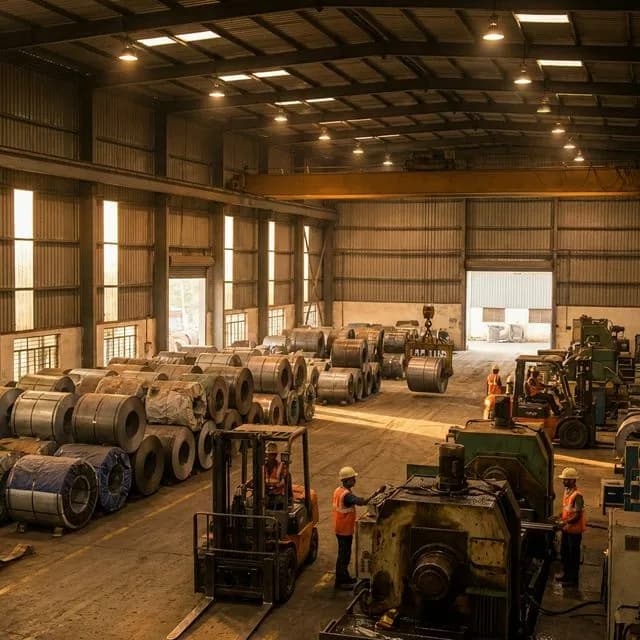
The European Union's Carbon Border Adjustment Mechanism (CBAM) has introduced significant compliance requirements for exporters worldwide, including Indian MSMEs. As Indian manufacturers in sectors such as steel, cement, and aluminum aim to penetrate or maintain their foothold in the European market, understanding the implications of Regulation (EU) 2023/956 becomes paramount. This article outlines simplified pathways for compliance, ensuring that Indian exporters can navigate the complexities of CBAM effectively.
Understanding the CBAM Framework
What is CBAM?
The CBAM is a regulatory framework aimed at reducing carbon emissions by imposing a carbon price on imports of certain goods from outside the EU. The regulation targets industries that are considered carbon-intensive, such as steel and cement. By implementing CBAM, the EU seeks to level the playing field for European producers who are subject to stringent carbon emission regulations.
Key Components of Regulation (EU) 2023/956
- Scope of Goods: The regulation applies to specific sectors, including steel, aluminum, cement, and fertilizers.
- Carbon Price: Importers must purchase CBAM certificates corresponding to the emissions associated with their products. The price of these certificates is linked to the EU Emissions Trading System (ETS) carbon price, which was approximately €90 per ton in 2023.
- Reporting Requirements: Importers are required to report the embedded emissions in the goods they import, calculated based on standardized emission factors.
See what CBAM will cost your buyer
Free 30-second check — pick your product and tonnage, get your buyer-side savings number.
Operational Steps for Compliance
Step 1: Data Collection
Indian MSMEs must begin by gathering relevant data on the carbon emissions associated with their products. This includes:
- Production Processes: Detailed records of the production process, including energy consumption and raw material sources.
- Emission Factors: Utilize standardized emission factors provided by the EU to estimate carbon emissions accurately. For instance, steel production can emit around 1.8 tons of CO2 per ton of steel produced.
Step 2: Verifying HS Codes
Correctly identifying and verifying the Harmonized System (HS) codes for your products is crucial. The HS codes determine whether your products fall under the scope of CBAM. Indian exporters should:
- Consult the EU's official tariff database to confirm the HS codes applicable to their products.
- Ensure that the classification aligns with the products being exported to avoid penalties.
Step 3: Reporting Obligations
Once data is collected and HS codes verified, Indian MSMEs must prepare for reporting:
- Annual Reporting: Importers must submit annual reports detailing the embedded emissions of their imported goods.
- CBAM Certificates: Ensure that the appropriate number of CBAM certificates is purchased to cover the emissions reported.
Challenges for Indian MSMEs
While the CBAM presents an opportunity for Indian MSMEs to enhance their sustainability credentials, it also poses challenges:
- Cost Implications: The costs associated with purchasing CBAM certificates can add up, potentially impacting profit margins.
- Complexity of Compliance: Understanding and navigating the regulatory landscape can be daunting for smaller enterprises with limited resources.
2025-2026 Regulatory Impact for India
As the EU tightens its regulations further by 2025-2026, Indian MSMEs must prepare for additional compliance requirements. Key anticipated changes include:
- Expanded Scope: Additional products may fall under the CBAM framework, increasing the number of exporters affected.
- Increased Reporting Frequency: More frequent reporting may be required, demanding robust data management systems from Indian MSMEs.
- Higher Carbon Prices: As the EU continues to ramp up its climate ambitions, the price of CBAM certificates is expected to rise, impacting the cost of doing business.
Indian exporters should proactively assess their operations and make necessary adjustments to ensure compliance with these evolving regulations.
Conclusion
The EU's CBAM presents both challenges and opportunities for Indian MSMEs. By understanding the framework established under Regulation (EU) 2023/956 and taking operational steps to ensure compliance, Indian exporters can navigate this regulatory landscape effectively.
To safeguard their interests, Indian MSMEs should consider conducting a CBAM readiness assessment to evaluate their current emissions tracking capabilities and compliance processes. This proactive approach will not only facilitate smoother exports to the EU but also enhance the overall sustainability of their operations.
Frequently asked questions
What is the CBAM?
How does CBAM affect Indian exporters?
What are the penalties for non-compliance?
How can Indian MSMEs prepare for CBAM?
What is the expected cost of CBAM certificates?
Compliance disclaimer
Strategies described here are for educational purposes. CBAM regulations (EU 2023/956) evolve quarterly — always verify with your accredited verifier before filing definitive reports.
We’ll do your entire CBAM quarter — ₹0.
A dedicated CBAM expert plus our AI do the whole April–June 2026 report end-to-end: your factory data in, verified actual emissions out — so your buyer pays your real number, not the inflated EU default. The report is yours to keep.
Start your report by 30 September 2026 to claim the free quarter.
Bills, logs, photos — one afternoon.
Verified actuals, EU XML, audit standard.
Yours to keep. ₹0 this quarter.
Prefer to talk? +91 76250 95885 · or run a 30-second savings check first
The complete CBAM guide for Indian exporters
The full compliance roadmap — CN codes, emissions, deadlines, penalties and how to keep your EU orders.
More CBAM guidance for Indian exporters
 Technical Compliance
Apportioning Captive Power Plant Emissions Across Multiple Products for CBAM Compliance: A Deep Dive for Indian Exporters
Indian exporters with captive power plants need precise emission apportionment for CBAM. Learn how to accurately allocate emissions across diverse products to avoid high EU carbon taxes. CarbonSettle offers end-to-end CBAM compliance services.
 Technical Compliance
A CBAM Non-Compliance Risk Matrix for Indian Export Managers
Navigate EU CBAM risks for Indian exports. This guide helps Indian MSMEs identify, assess, and mitigate non-compliance penalties and financial exposure under the Carbon Border Adjustment Mechanism.
 Technical Compliance
EU Deforestation Regulation and CBAM: Double Compliance Risks for Exporters
Explore the compliance risks Indian exporters face with the EU Deforestation Regulation and CBAM.