Key Takeaways
- Understanding the implications of the EU CBAM for joint ventures is crucial for compliance and operational efficiency.
- Clear allocation of emissions responsibilities can mitigate financial penalties under Regulation (EU) 2023/956.
- Strategic data collection and verification of HS codes are essential for accurate reporting and compliance.
Introduction
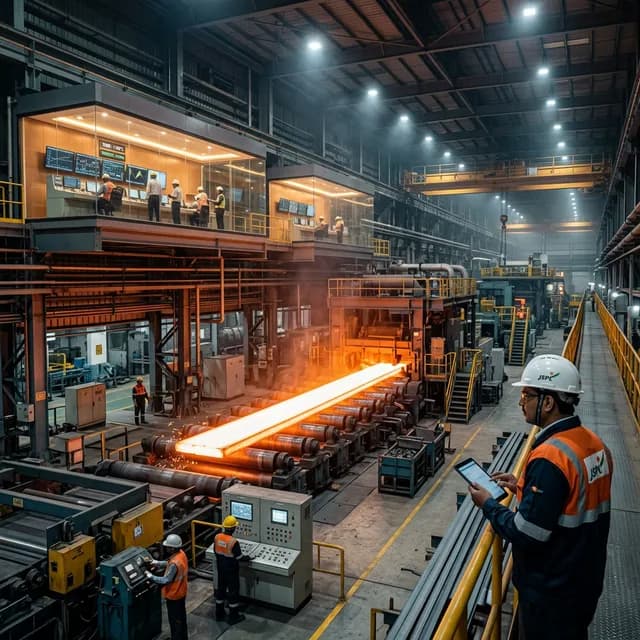
As Indian exporters increasingly engage in joint ventures to penetrate European markets, understanding the implications of the EU's Carbon Border Adjustment Mechanism (CBAM) becomes paramount. The CBAM, established under Regulation (EU) 2023/956, directly impacts sectors such as steel, cement, and aluminum, which are significant contributors to carbon emissions. For Indian MSMEs engaged in joint ventures, the allocation of emissions responsibilities between partners is critical to ensure compliance and avoid penalties.
In this article, we will delve into the operational steps that Indian manufacturers must take to navigate the complexities of CBAM, particularly in the context of joint ventures. We will explore the regulatory framework, data collection requirements, and the strategic allocation of emissions responsibilities.
Understanding CBAM and Its Implications
The CBAM aims to level the playing field between EU producers and foreign manufacturers by imposing a carbon price on imports of certain goods. For Indian exporters, this means that they must account for the carbon emissions associated with their products to avoid incurring additional costs upon entering the EU market.
Regulatory Framework
The CBAM applies to specific sectors, including:
- Steel: Approximately 1.5 billion tons of steel are produced globally each year, with significant contributions from India.
- Cement: Cement production accounts for about 8% of global CO2 emissions, making it a crucial focus under the CBAM.
- Aluminum: The aluminum sector is another key area, with emissions from primary aluminum production averaging around 16 tons of CO2 per ton of aluminum produced.
Under Regulation (EU) 2023/956, Indian exporters must be prepared to report their emissions data and may face penalties for non-compliance. The regulation stipulates that companies must submit a CBAM declaration, detailing the emissions associated with their products, which will be assessed against the EU's carbon price.
See what CBAM will cost your buyer
Free 30-second check — pick your product and tonnage, get your buyer-side savings number.
Operational Steps for Joint Ventures
Navigating the CBAM landscape requires a structured approach, particularly for joint ventures. Here are the essential operational steps that Indian MSMEs should undertake:
1. Data Collection
Accurate data collection is the foundation of compliance. Joint ventures must establish a robust system for gathering emissions data from all partners involved in the production process. This includes:
- Identification of Emission Sources: Each partner should identify their specific emissions sources, including energy consumption, raw material sourcing, and production processes.
- Quantification of Emissions: Utilize standardized emission factors to calculate the total emissions associated with each partner's operations. For example, the emission factor for steel production can vary significantly based on the production method (e.g., electric arc furnace vs. blast furnace).
2. Verifying HS Codes
Harmonized System (HS) codes are crucial for classifying products and determining their eligibility under the CBAM framework. Joint ventures must:
- Review Product Classifications: Ensure that all products produced under the joint venture are accurately classified according to the correct HS codes.
- Consult with Customs Experts: Engage customs professionals to verify product classifications and ensure compliance with EU regulations.
3. Allocation of Emissions Responsibilities
One of the most critical aspects of joint ventures under the CBAM is the allocation of emissions responsibilities. This can be approached in several ways:
- Proportional Allocation: Emissions can be allocated based on each partner's contribution to the production process. For example, if Partner A contributes 60% of the production capacity and Partner B contributes 40%, emissions can be allocated accordingly.
- Contractual Agreements: Establish clear contractual agreements that outline how emissions will be allocated between partners. This should include provisions for data sharing, reporting responsibilities, and penalties for non-compliance.
4. Reporting and Compliance
Once data collection and emissions allocation are established, the next step is reporting. Joint ventures must:
- Prepare CBAM Declarations: Each partner may need to prepare CBAM declarations that detail their respective emissions contributions.
- Submit Reports on Time: Ensure that all reports are submitted within the stipulated deadlines as outlined in Regulation (EU) 2023/956 to avoid penalties.
5. Monitoring and Continuous Improvement
Ongoing monitoring of emissions is essential for compliance and operational efficiency. Joint ventures should:
- Implement Monitoring Systems: Establish systems for real-time monitoring of emissions to ensure compliance with EU regulations.
- Conduct Regular Audits: Regular audits can help identify areas for improvement and ensure that emissions data remains accurate and up-to-date.
2025-2026 Regulatory Impact for India
As the CBAM regulations evolve, Indian exporters must prepare for significant changes expected in 2025-2026. The EU plans to expand the scope of the CBAM to include more sectors and tighten the reporting requirements. Indian MSMEs should consider the following implications:
- Increased Compliance Costs: As regulations become stricter, the cost of compliance may rise, impacting profit margins for Indian exporters.
- Potential for Market Access Challenges: Failure to comply with the evolving regulations may result in restricted access to the EU market, affecting joint ventures' viability.
To mitigate these impacts, Indian MSMEs should invest in emissions tracking technologies and engage in proactive compliance strategies.
Conclusion
The EU's CBAM presents both challenges and opportunities for Indian MSMEs engaged in joint ventures. By understanding the regulatory framework, implementing effective data collection practices, and strategically allocating emissions responsibilities, Indian exporters can navigate the complexities of CBAM compliance.
As the regulatory landscape continues to evolve, it is vital for joint ventures to remain vigilant and adapt their strategies accordingly.
Call to Action
Are you ready for the challenges posed by the CBAM? Conduct a CBAM readiness assessment today to ensure that your joint venture is prepared for compliance and emissions tracking.
Frequently asked questions
1. What is the CBAM?
2. How does CBAM affect joint ventures?
3. What are the penalties for non-compliance?
4. How can Indian MSMEs prepare for CBAM?
Compliance disclaimer
Strategies described here are for educational purposes. CBAM regulations (EU 2023/956) evolve quarterly — always verify with your accredited verifier before filing definitive reports.
We’ll do your entire CBAM quarter — ₹0.
A dedicated CBAM expert plus our AI do the whole April–June 2026 report end-to-end: your factory data in, verified actual emissions out — so your buyer pays your real number, not the inflated EU default. The report is yours to keep.
Start your report by 30 September 2026 to claim the free quarter.
Bills, logs, photos — one afternoon.
Verified actuals, EU XML, audit standard.
Yours to keep. ₹0 this quarter.
Prefer to talk? +91 76250 95885 · or run a 30-second savings check first
The complete CBAM guide for Indian exporters
The full compliance roadmap — CN codes, emissions, deadlines, penalties and how to keep your EU orders.
More CBAM guidance for Indian exporters
 Technical Compliance
CBAM for Multi-Product Plants: Allocating Shared Utilities Between Goods
Learn how to allocate shared utilities in multi-product plants for CBAM compliance.
 Technical Compliance
Blast Furnace Slag: Byproduct Accounting and CBAM Emission Allocation
Understanding the role of blast furnace slag in CBAM emission allocation for Indian exporters.
 Technical Compliance
Contractual Clauses for CBAM Cost Allocation in Supply Agreements
Explore essential contractual clauses for effective CBAM cost allocation in supply agreements.