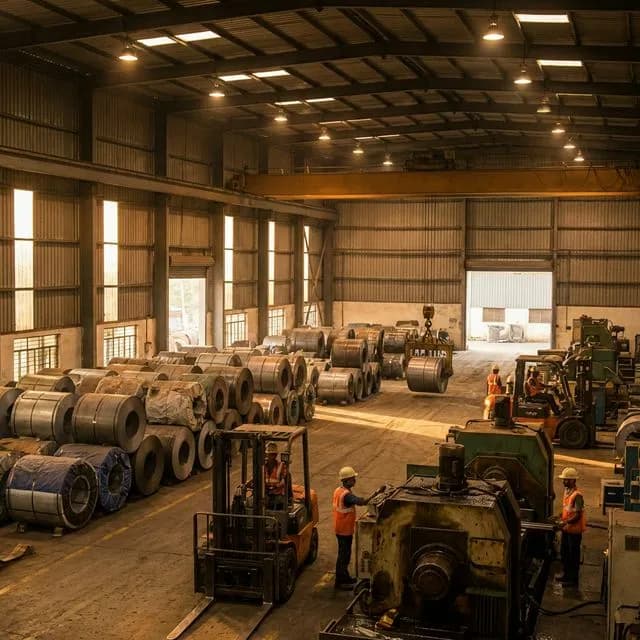
Key Takeaways
- Indian pig iron producers must comply with the EU's Carbon Border Adjustment Mechanism (CBAM) as outlined in Regulation (EU) 2023/956.
- Accurate classification of products and emissions data collection is critical for compliance.
- The penalties for non-compliance can be significant, including fines up to €30 per tonne of CO2 emitted.
- The 2025-2026 regulatory landscape will demand increased scrutiny and reporting rigor from Indian MSMEs.
Introduction
As Indian pig iron producers look to expand their footprint in European markets, understanding the implications of the EU's Carbon Border Adjustment Mechanism (CBAM) is essential. Regulation (EU) 2023/956 introduces a framework that requires exporters to account for carbon emissions associated with their products, creating a new layer of compliance for Indian MSMEs. This guide outlines the classification and reporting requirements for Indian pig iron producers, ensuring they are prepared to meet these regulatory obligations.
See what CBAM will cost your buyer
Free 30-second check — pick your product and tonnage, get your buyer-side savings number.
Understanding CBAM and Its Relevance to Indian Pig Iron Producers
The CBAM aims to level the playing field between EU producers and imports by imposing a carbon price on certain goods based on their carbon emissions during production. For Indian pig iron exporters, this means they must accurately assess and report their carbon emissions to avoid significant financial penalties.
Classification of Pig Iron Under CBAM
To comply with CBAM, Indian pig iron producers must first determine the correct Harmonized System (HS) codes for their products. Pig iron typically falls under HS Code 7201, which encompasses "Pig iron and spiegeleisen in pigs, blocks or other primary forms." Accurate classification is critical, as it directly affects the reporting requirements and potential carbon costs.
Data Collection for Emissions Reporting
Indian MSMEs must establish robust data collection processes to track emissions accurately. The following steps are essential:
- Identify Emission Sources: Determine all sources of greenhouse gas emissions in the production process, from raw material extraction to transportation.
- Calculate Emission Factors: Utilize recognized emission factors for pig iron production. For instance, the average emission factor for pig iron production is approximately 1.8 tonnes of CO2 per tonne of pig iron produced.
- Document Production Processes: Maintain detailed records of production processes, including energy consumption, raw materials used, and any emissions mitigation measures implemented.
Reporting Requirements Under CBAM
Once data collection is in place, Indian pig iron producers must prepare for the reporting phase. The key components of the reporting process include:
-
Annual Emissions Report: Producers must submit an annual report detailing total emissions associated with their pig iron production. This report should include:
- Total production volume
- Total emissions calculated based on the established emission factors
- Any carbon credits or offsets claimed
-
Verification Process: To ensure compliance, the emissions report may need to be verified by an accredited third-party auditor. This step adds credibility to the reported data and can help avoid penalties.
Penalties for Non-Compliance
The financial implications of failing to comply with CBAM can be severe. For instance, penalties may reach €30 per tonne of CO2 emitted if accurate reporting is not conducted. Given that a typical Indian pig iron producer may emit around 1,800 tonnes of CO2 for every 1,000 tonnes of pig iron produced, the costs of non-compliance can escalate quickly.
2025-2026 Regulatory Impact for India
As CBAM regulations evolve, Indian pig iron producers must prepare for increased scrutiny and stricter compliance requirements. By 2025-2026, the EU plans to phase in a comprehensive reporting framework that may include:
- Expanded Scope: Additional products may fall under CBAM, necessitating broader emissions reporting.
- Increased Verification Requirements: Stricter verification processes could be implemented, requiring more detailed documentation and third-party audits.
- Dynamic Carbon Pricing: The carbon price may fluctuate based on market conditions, affecting the cost of compliance for Indian exporters.
To navigate these changes, Indian MSMEs must proactively engage in emissions tracking and reporting readiness assessments.
Operational Steps for Compliance
To ensure compliance with CBAM, Indian pig iron producers should adopt the following operational steps:
- Conduct a CBAM Readiness Assessment: Evaluate current emissions data and reporting processes to identify gaps.
- Invest in Emissions Tracking Technologies: Utilize software and tools that facilitate real-time emissions tracking and reporting.
- Train Compliance Officers: Ensure that compliance officers are well-versed in CBAM requirements and equipped to handle reporting and verification tasks.
- Engage with Industry Bodies: Collaborate with industry associations and regulatory bodies to stay informed about changes in regulations and best practices for compliance.
Conclusion
As Indian pig iron producers navigate the complexities of the EU's CBAM, understanding classification and reporting requirements is essential for maintaining market access. By adopting rigorous data collection practices, ensuring accurate product classification, and preparing for the evolving regulatory landscape, Indian MSMEs can position themselves for success in the European market.
As you prepare for compliance, consider conducting a CBAM readiness assessment to identify potential gaps in your emissions tracking and reporting processes.
Frequently asked questions
What is the CBAM?
How do I determine the HS code for my pig iron products?
What are the penalties for non-compliance with CBAM?
How can I prepare for the 2025-2026 regulatory changes?
Compliance disclaimer
Strategies described here are for educational purposes. CBAM regulations (EU 2023/956) evolve quarterly — always verify with your accredited verifier before filing definitive reports.
We’ll do your entire CBAM quarter — ₹0.
A dedicated CBAM expert plus our AI do the whole April–June 2026 report end-to-end: your factory data in, verified actual emissions out — so your buyer pays your real number, not the inflated EU default. The report is yours to keep.
Start your report by 30 September 2026 to claim the free quarter.
Bills, logs, photos — one afternoon.
Verified actuals, EU XML, audit standard.
Yours to keep. ₹0 this quarter.
Prefer to talk? +91 76250 95885 · or run a 30-second savings check first
The complete CBAM guide for Indian exporters
The full compliance roadmap — CN codes, emissions, deadlines, penalties and how to keep your EU orders.
More CBAM guidance for Indian exporters
 Technical Compliance
Cold Rolled Steel Products: CBAM Classification and Reporting Guide
A comprehensive guide on CBAM classification and reporting for cold rolled steel products in compliance with EU regulations.
 Technical Compliance
Calculating Scope 2 Emissions From India's Grid for CBAM Reporting
Indian exporters navigating CBAM must accurately calculate Scope 2 emissions from grid electricity. Learn how to comply with EU Regulation 2023/956, avoid penalties, and optimize costs with CarbonSettle's expert guidance.
 Technical Compliance
The Risks of Using Unverified CBAM SaaS Tools for EU Reporting
Discover the risks of unverified CBAM tools for EU reporting and why Indian exporters should choose reliable compliance services.