Key Takeaways
- The sintering process significantly contributes to upstream emissions in steel production.
- Understanding the emission factors associated with sintering is crucial for compliance with EU CBAM.
- Accurate data collection and reporting are essential for Indian exporters to navigate the regulatory landscape.
Introduction
The European Union's Carbon Border Adjustment Mechanism (CBAM), as outlined in Regulation (EU) 2023/956, aims to mitigate carbon leakage by imposing a carbon cost on imported goods, including steel. For Indian MSMEs and exporters in the steel sector, understanding the sintering process is vital, as it constitutes a significant upstream emission source in finished steel production. This article delves into the intricacies of the sintering process, its emissions contributions, and the implications for Indian exporters navigating the EU's regulatory landscape.
Understanding the Sintering Process
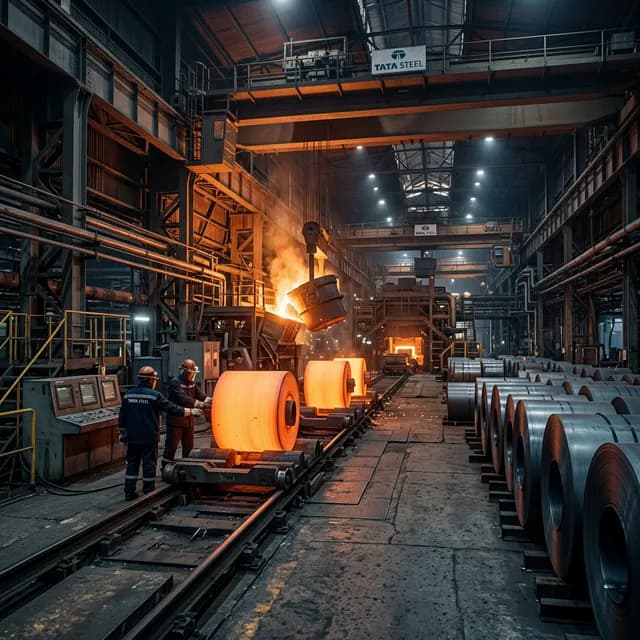
Sintering is a critical step in the steel manufacturing process that involves the agglomeration of iron ore fines into a porous mass called sinter. The process typically occurs in a sintering machine, where iron ore fines are mixed with coke breeze, limestone, and other additives. The mixture is then heated to around 1,300°C to 1,400°C, causing the materials to fuse together. This process not only enhances the physical properties of the iron ore but also facilitates its subsequent reduction in a blast furnace.
Emission Factors in Sintering
The sintering process is associated with considerable greenhouse gas (GHG) emissions. According to the International Energy Agency (IEA), the sintering stage can contribute up to 10% of the total emissions associated with steel production. The primary emissions come from the combustion of fossil fuels, particularly coke, used in the process.
- Carbon Dioxide (CO2): The combustion of coke releases CO2, contributing to the overall carbon footprint of the steel produced.
- Particulate Matter (PM): Sintering also generates particulate emissions, which can have additional regulatory implications.
- Other GHGs: Minor emissions of methane (CH4) and nitrous oxide (N2O) may also occur, depending on the raw materials and process conditions.
For Indian MSMEs, it is crucial to quantify these emissions accurately as they will be factored into the CBAM calculations.
See what CBAM will cost your buyer
Free 30-second check — pick your product and tonnage, get your buyer-side savings number.
Data Collection and Verification
To comply with EU CBAM requirements, Indian exporters must implement rigorous data collection and verification processes. This involves:
-
Identifying Relevant HS Codes: Indian exporters need to verify the Harmonized System (HS) codes applicable to their products. For finished steel, typical HS codes include 7208 for flat-rolled products and 7210 for bars and rods.
-
Collecting Emission Data: Accurate emission factors for the sintering process must be collected. Indian MSMEs should refer to the European Commission's guidelines for the calculation of emissions and ensure that their data aligns with the methodologies prescribed in Regulation (EU) 2023/956.
-
Documentation: Maintain comprehensive records of the sintering process, including raw material inputs, energy consumption, and emissions data. This documentation will be essential for demonstrating compliance during audits.
Reporting Requirements under CBAM
Once data is collected, Indian exporters must report their emissions to the relevant EU authorities. The reporting process involves:
-
Emissions Calculation: Calculate the total emissions from the sintering process using the collected data. This includes emissions from both direct combustion and indirect sources.
-
Submitting Reports: Reports must be submitted to the EU on an annual basis, detailing the total GHG emissions associated with the production of finished steel. Non-compliance may lead to penalties, which can be as high as €30 per ton of CO2 emitted beyond the allocated carbon allowances.
-
Verification by Third Parties: To enhance credibility, consider engaging third-party auditors to verify emissions data. This can provide assurance to EU authorities and enhance the reputation of Indian exporters.
2025-2026 Regulatory Impact for India
As the CBAM framework evolves, the regulatory landscape for Indian exporters will become increasingly complex. By 2025-2026, the EU plans to fully implement the CBAM, which will include stricter reporting and compliance requirements. Key considerations for Indian MSMEs include:
-
Increased Scrutiny: Expect heightened scrutiny from EU customs and regulatory bodies. Indian exporters must be prepared for potential audits and investigations into their emissions data.
-
Potential Cost Implications: The cost of compliance may increase as more stringent emission reduction targets are set. Indian MSMEs should anticipate potential increases in operational costs associated with emissions tracking and reporting.
-
Investment in Cleaner Technologies: To remain competitive, Indian exporters may need to invest in cleaner technologies and processes to reduce emissions from sintering and other stages of steel production. This could include transitioning to alternative fuels or improving energy efficiency in the sintering process.
Conclusion
The sintering process plays a pivotal role in the upstream emissions associated with finished steel production. For Indian MSMEs and exporters, understanding the emissions contributions from sintering is essential for compliance with the EU's CBAM. By implementing robust data collection, verifying HS codes, and adhering to reporting requirements, Indian exporters can navigate the regulatory landscape effectively.
As the regulatory environment continues to evolve, it is imperative for Indian MSMEs to stay informed and proactive. Conducting a CBAM readiness assessment or establishing a comprehensive emissions tracking system can significantly enhance compliance and competitiveness in the EU market.
Frequently asked questions
What is the significance of the sintering process in steel production?
How can Indian exporters ensure compliance with CBAM?
What are the potential penalties for non-compliance with CBAM?
Is there support available for Indian MSMEs to navigate CBAM?
Compliance disclaimer
Strategies described here are for educational purposes. CBAM regulations (EU 2023/956) evolve quarterly — always verify with your accredited verifier before filing definitive reports.
We’ll do your entire CBAM quarter — ₹0.
A dedicated CBAM expert plus our AI do the whole April–June 2026 report end-to-end: your factory data in, verified actual emissions out — so your buyer pays your real number, not the inflated EU default. The report is yours to keep.
Start your report by 30 September 2026 to claim the free quarter.
Bills, logs, photos — one afternoon.
Verified actuals, EU XML, audit standard.
Yours to keep. ₹0 this quarter.
Prefer to talk? +91 76250 95885 · or run a 30-second savings check first
The complete CBAM guide for Indian exporters
The full compliance roadmap — CN codes, emissions, deadlines, penalties and how to keep your EU orders.
More CBAM guidance for Indian exporters
 Technical Compliance
Lime Calcination in Steel Production: Process Emission Quantification
Explore the quantification of emissions from lime calcination in steel production processes.
 Technical Compliance
Scrap Steel Usage: Impact on Embedded Emission Intensity
Explore how scrap steel usage influences embedded emission intensity in manufacturing.
 Technical Compliance
Galvanized Steel Under CBAM: Coating Process Emissions Accounting
Technical guide for Indian steel exporters on CBAM compliance for galvanized steel coating process emissions accounting and regulatory requirements.