Key Takeaways
- Grinding and finishing operations, while often considered minor, are subject to the EU's Carbon Border Adjustment Mechanism (CBAM).
- Indian exporters must accurately report emissions from these operations to avoid penalties.
- Compliance involves meticulous data collection, verifying HS codes, and understanding the implications of Regulation (EU) 2023/956.
Introduction
The introduction of the EU's Carbon Border Adjustment Mechanism (CBAM) under Regulation (EU) 2023/956 has brought significant attention to various manufacturing processes, including grinding and finishing operations. For Indian MSMEs and exporters, particularly in sectors like steel, cement, and aluminum, these operations may seem minor; however, they are now under scrutiny for their carbon emissions. This article delves into the importance of these operations in the context of CBAM, providing a framework for compliance that Indian exporters can implement.
Understanding CBAM and Its Scope
The CBAM aims to level the playing field between EU manufacturers and foreign producers by imposing a carbon price on imports of certain goods. Under this regulation, products such as steel, cement, and aluminum are directly affected. However, the scope extends to all processes contributing to the final product's carbon footprint, including grinding and finishing operations.
What Are Grinding and Finishing Operations?
Grinding and finishing operations are essential in the manufacturing process for achieving the desired surface quality and dimensional accuracy of products. These operations involve various techniques, such as:
- Grinding: A machining process that uses an abrasive wheel to remove material from a workpiece.
- Finishing: Processes like polishing, coating, or surface treatment that enhance the appearance and durability of the product.
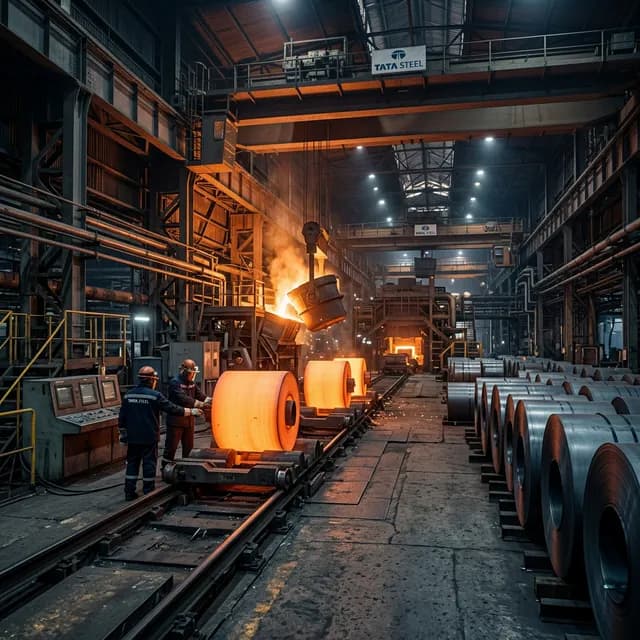
Despite their seemingly minor role in the overall production process, the energy consumption and emissions associated with these operations can significantly impact the carbon footprint of the final product.
See what CBAM will cost your buyer
Free 30-second check — pick your product and tonnage, get your buyer-side savings number.
Emission Factors and Cost Implications
According to the guidelines provided in Regulation (EU) 2023/956, the emissions associated with grinding and finishing operations must be accounted for. The emission factors for these operations can vary based on the materials used and the energy sources.
For instance, grinding operations may emit approximately 0.5 to 1.5 tons of CO2 per ton of product, depending on the energy efficiency of the machinery and the type of material being processed. This is a critical consideration for Indian exporters, as it directly affects their compliance costs under the CBAM.
Cost Implications
Failure to accurately report emissions can lead to substantial penalties. For instance, the EU has indicated that non-compliance could result in fines up to €100 per ton of CO2 emitted. This underscores the importance of rigorous data collection and reporting practices for Indian MSMEs engaged in grinding and finishing operations.
Operational Steps for Compliance
To ensure compliance with CBAM, Indian exporters must undertake several operational steps:
1. Data Collection
Accurate data collection is the cornerstone of compliance. Indian MSMEs must:
- Monitor energy consumption specific to grinding and finishing operations.
- Calculate the associated emissions based on the emission factors relevant to their operations.
2. Verifying HS Codes
Understanding and verifying the correct Harmonized System (HS) codes for products is essential. This ensures that the products being exported fall under the correct categories as defined by the EU's CBAM framework, allowing for accurate emissions reporting.
3. Emissions Reporting
Once data is collected, Indian exporters must prepare to report their emissions. This involves:
- Compiling data on energy consumption and emissions.
- Submitting the required documentation to EU authorities as part of the import process.
2025-2026 Regulatory Impact for India
Looking ahead, the regulatory landscape for Indian exporters is expected to evolve significantly between 2025 and 2026. The EU is likely to refine its CBAM regulations, potentially expanding the scope to include more products and processes. This means that Indian MSMEs must stay vigilant and proactive in their compliance efforts.
Anticipated Changes
- Increased Scrutiny: As the EU strengthens its climate policies, Indian exporters may face more stringent reporting requirements.
- Broader Scope: Additional manufacturing processes may fall under the CBAM's purview, necessitating further adjustments in compliance strategies.
Indian MSMEs must prepare for these changes by investing in emissions tracking systems and enhancing their operational efficiencies.
Conclusion
While grinding and finishing operations may appear minor in the grand scheme of manufacturing, they are crucial in the context of the EU's CBAM. Indian exporters must recognize the importance of these operations in their overall carbon footprint and take proactive steps to ensure compliance with Regulation (EU) 2023/956. By focusing on accurate data collection, verifying HS codes, and preparing for future regulatory changes, Indian MSMEs can navigate the complexities of the CBAM effectively.
Call to Action
To ensure your business is prepared for the evolving landscape of carbon compliance, consider conducting a CBAM readiness assessment or investing in emissions tracking systems. Understanding your carbon footprint today will safeguard your market position tomorrow.
Frequently asked questions
What is CBAM?
How does CBAM affect Indian exporters?
What are the penalties for non-compliance?
What steps should Indian MSMEs take to comply with CBAM?
Compliance disclaimer
Strategies described here are for educational purposes. CBAM regulations (EU 2023/956) evolve quarterly — always verify with your accredited verifier before filing definitive reports.
We’ll do your entire CBAM quarter — ₹0.
A dedicated CBAM expert plus our AI do the whole April–June 2026 report end-to-end: your factory data in, verified actual emissions out — so your buyer pays your real number, not the inflated EU default. The report is yours to keep.
Start your report by 30 September 2026 to claim the free quarter.
Bills, logs, photos — one afternoon.
Verified actuals, EU XML, audit standard.
Yours to keep. ₹0 this quarter.
Prefer to talk? +91 76250 95885 · or run a 30-second savings check first
The complete CBAM guide for Indian exporters
The full compliance roadmap — CN codes, emissions, deadlines, penalties and how to keep your EU orders.
More CBAM guidance for Indian exporters
 Technical Compliance
Calculating Scope 2 Emissions From India's Grid for CBAM Reporting
Indian exporters navigating CBAM must accurately calculate Scope 2 emissions from grid electricity. Learn how to comply with EU Regulation 2023/956, avoid penalties, and optimize costs with CarbonSettle's expert guidance.
 Technical Compliance
CBAM and Scope 3 Expansion: Could Customer Emissions Be Covered by 2030
Exploring the potential expansion of CBAM to include Scope 3 emissions by 2030.
 Technical Compliance
Scope 3 Emissions and CBAM: What is Included and What is Excluded
A detailed analysis of Scope 3 emissions under CBAM, focusing on inclusions and exclusions for compliance.