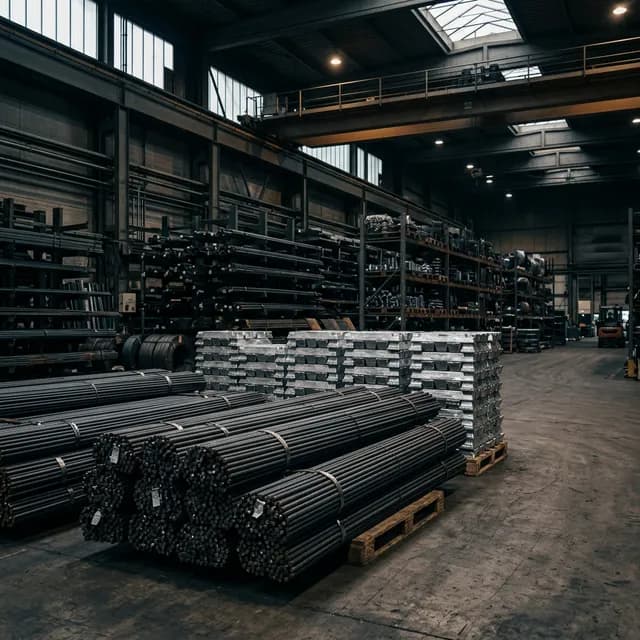
Key Takeaways
- Understanding the implications of using own calculations versus default values is crucial for Indian exporters under the EU CBAM.
- Accurate emissions data can lead to reduced costs and compliance risks.
- A structured decision matrix can guide Indian MSMEs in making informed choices.
Introduction
As Indian exporters navigate the complexities of the European Union's Carbon Border Adjustment Mechanism (CBAM), the decision between utilizing own calculations for emissions versus relying on default values becomes a pivotal one. The CBAM, as outlined in Regulation (EU) 2023/956, imposes a carbon price on imports of certain goods, including steel, cement, and aluminum, which are significant sectors for Indian MSMEs. This article aims to provide a technical guidance framework, focusing on the operational steps necessary for Indian manufacturers to make informed decisions regarding emissions reporting.
Understanding Own Calculations vs Default Values
What Are Own Calculations?
Own calculations refer to the process where Indian exporters gather and analyze their own emissions data based on specific production processes, materials used, and energy consumption. This approach allows for a tailored emissions profile that may reflect actual operational efficiencies and practices.
What Are Default Values?
Default values, on the other hand, are standardized emissions factors set by the EU for various sectors. These values are designed to simplify compliance for companies that may lack the resources or data to calculate their emissions accurately. However, they may not always reflect the specific circumstances of Indian MSMEs, potentially leading to higher compliance costs.
Representative midpoints for Indian steel routes. The hatched red zone is what an EU default value adds on top of your real number when no verified actuals are filed — that markup is what your buyer overpays.
Want this for your own product and tonnage? Run the 30-second savings check.
See what CBAM will cost your buyer
Free 30-second check — pick your product and tonnage, get your buyer-side savings number.
Decision Matrix for Indian Exporters
Step 1: Data Collection
The first step in the decision matrix involves comprehensive data collection. Indian exporters should gather data on:
- Energy consumption (in GJ)
- Raw material inputs (in tons)
- Production processes and technologies used
- Emission factors applicable to their operations
Example:
For steel production, the emission factor is approximately 1.85 tons of CO2 per ton of steel produced. If an Indian MSME produces 10,000 tons of steel, the emissions using default values would be 18,500 tons of CO2.
Step 2: Verifying HS Codes
Accurate verification of Harmonized System (HS) codes is crucial, as different products may fall under different emission factors. Indian exporters must ensure that their products are classified correctly to avoid penalties and ensure compliance with the CBAM.
Step 3: Cost-Benefit Analysis
A thorough cost-benefit analysis should be conducted to compare the potential costs associated with using own calculations versus default values. This analysis should consider:
- Potential penalties for non-compliance (up to €200 per ton of CO2)
- Administrative costs of data collection and calculation
- Expected reductions in carbon costs through accurate reporting
Step 4: Risk Assessment
Conduct a risk assessment to evaluate the implications of both approaches. Factors to consider include:
- The accuracy of emission data
- The potential for audits by EU authorities
- The impact on market access and reputation
Step 5: Decision Making
Based on the data collected and analyses performed, Indian exporters can use a decision matrix to determine the best approach. Key questions to guide this decision include:
- Does the potential for cost savings through accurate reporting outweigh the administrative burden?
- Are the resources available to conduct own calculations sufficient?
- What is the risk of penalties if default values are used?
2025-2026 Regulatory Impact for India
As the EU continues to refine its CBAM regulations, Indian exporters must prepare for potential changes that could impact their operations. By 2025, it is anticipated that the EU will implement stricter compliance measures and potentially increase the carbon price. This could mean that Indian MSMEs will face higher costs if they do not transition to more accurate emissions reporting.
Implications for Indian MSMEs:
- Increased pressure to adopt own calculations to avoid penalties.
- Need for investment in emissions tracking technology and training.
- Potential for collaboration with EU partners for knowledge sharing and best practices.
Conclusion
The decision matrix for Indian exporters regarding own calculations versus default values is not merely a regulatory requirement; it is a strategic business decision that can significantly impact compliance costs and market competitiveness. By understanding the nuances of emissions reporting under Regulation (EU) 2023/956, Indian MSMEs can better position themselves for success in the European market.
As the landscape of international trade evolves, staying ahead of regulatory changes is crucial. Indian exporters are encouraged to conduct a CBAM readiness assessment or invest in emissions tracking solutions to ensure compliance and sustainability.
Frequently asked questions
What is CBAM?
Why should Indian exporters consider own calculations?
What are the penalties for non-compliance?
How can Indian MSMEs prepare for CBAM?
Compliance disclaimer
Strategies described here are for educational purposes. CBAM regulations (EU 2023/956) evolve quarterly — always verify with your accredited verifier before filing definitive reports.
We’ll do your entire CBAM quarter — ₹0.
A dedicated CBAM expert plus our AI do the whole April–June 2026 report end-to-end: your factory data in, verified actual emissions out — so your buyer pays your real number, not the inflated EU default. The report is yours to keep.
Start your report by 30 September 2026 to claim the free quarter.
Bills, logs, photos — one afternoon.
Verified actuals, EU XML, audit standard.
Yours to keep. ₹0 this quarter.
Prefer to talk? +91 76250 95885 · or run a 30-second savings check first
The complete CBAM guide for Indian exporters
The full compliance roadmap — CN codes, emissions, deadlines, penalties and how to keep your EU orders.
More CBAM guidance for Indian exporters
 Technical Compliance
CBAM Default Values vs Actual Data: 2026 Cost Analysis for Exporters
EU CBAM default values are set deliberately high — analysts report they can cost 2–4× more than verified actual emissions. See the 2026 default-vs-actual cost gap for Indian steel and aluminium, and the steps to switch to actuals.
 Technical Compliance
Benchmark Emission Factors: When to Use Default Values
Technical guidance for Indian steel exporters on EU CBAM default emission factors, regulatory compliance, and operational decision frameworks.
 Technical Compliance
A CBAM Non-Compliance Risk Matrix for Indian Export Managers
Navigate EU CBAM risks for Indian exports. This guide helps Indian MSMEs identify, assess, and mitigate non-compliance penalties and financial exposure under the Carbon Border Adjustment Mechanism.