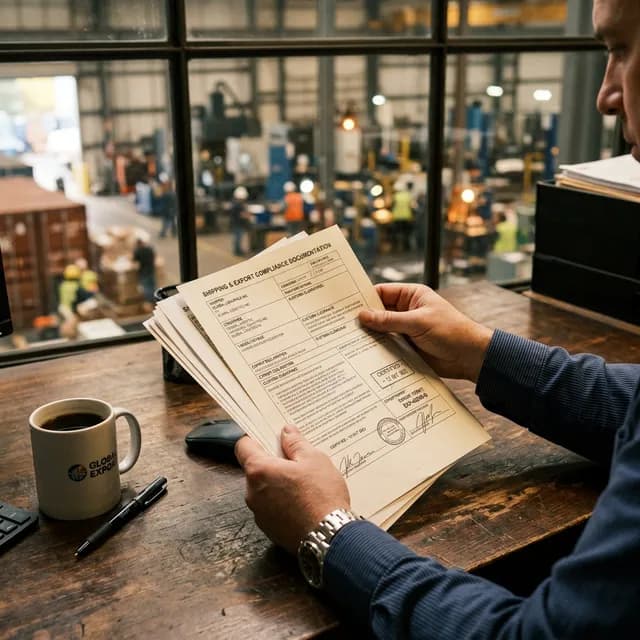
Key Takeaways
- The EU's CBAM (Regulation 2023/956) imposes a new compliance framework for Indian MSMEs exporting forged steel components.
- Understanding the emission factors and compliance costs is critical for Indian exporters to avoid penalties.
- Accurate data collection and classification of HS codes are essential for compliance.
- The upcoming 2025-2026 regulatory changes will significantly impact Indian exporters, necessitating immediate action.
Introduction
As Indian exporters seek to penetrate the European market, understanding the implications of the EU's Carbon Border Adjustment Mechanism (CBAM) is crucial, especially for energy-intensive industries like forged steel components. Regulation (EU) 2023/956 establishes a framework that affects various sectors, including steel manufacturing, which is pivotal for Indian MSMEs. This article aims to provide a detailed overview of the CBAM treatment of forged steel components, focusing on operational steps that Indian exporters must undertake to ensure compliance.
Understanding CBAM and Its Relevance to Forged Steel Components
The CBAM is designed to address the risk of carbon leakage, ensuring that European manufacturers are not disadvantaged by stricter carbon regulations compared to foreign producers. For Indian exporters of forged steel components, this means that emissions associated with production will be scrutinized, and compliance will be tied to the carbon intensity of the products they export.
Emission Factors
Forged steel components are energy-intensive products, with production processes typically resulting in significant carbon emissions. According to the European Commission, the average emission factor for steel production is approximately 1.8 tons of CO2 per ton of steel produced. For Indian MSMEs, this means that if they produce 1,000 tons of forged steel components, they could be responsible for around 1,800 tons of CO2 emissions. Understanding these figures is critical for accurate reporting and compliance.
See what CBAM will cost your buyer
Free 30-second check — pick your product and tonnage, get your buyer-side savings number.
Operational Steps for Compliance
To navigate the complexities of CBAM, Indian MSMEs must adopt a structured approach. Here are the essential operational steps:
1. Data Collection
Accurate data collection is vital for compliance with CBAM requirements. Indian exporters should focus on gathering the following information:
- Production Emissions: Document the emissions associated with the production of forged steel components, including energy consumption and type of energy used (renewable vs. non-renewable).
- Transport Emissions: Calculate the emissions related to the transportation of products to the EU.
- Total Emissions: Compile the total emissions data to determine the overall carbon footprint of the exported products.
2. Verifying HS Codes
Harmonized System (HS) codes play a crucial role in CBAM compliance. Indian exporters must ensure that they are using the correct HS codes for forged steel components, as this will affect the calculation of carbon emissions and the corresponding CBAM allowances. The correct classification will also help in understanding the specific requirements applicable to their products.
3. Reporting Requirements
Under Regulation (EU) 2023/956, Indian MSMEs will need to report their emissions data to the relevant EU authorities. Key reporting requirements include:
- Annual Reporting: Exporters must submit an annual report detailing their emissions for the previous year.
- Verification: Reports may require third-party verification to ensure accuracy and compliance.
4. Cost Implications
Compliance with CBAM will incur costs for Indian MSMEs. The European Commission estimates that the cost of carbon allowances could reach €50 per ton of CO2 by 2030. For Indian exporters, this could translate into significant financial implications, especially if they do not take proactive measures to reduce their carbon footprint.
2025-2026 Regulatory Impact for India
As the EU continues to refine its CBAM framework, significant changes are anticipated by 2025-2026. Indian MSMEs must prepare for the following potential impacts:
- Increased Compliance Costs: As the EU tightens its regulations, compliance costs may rise, making it imperative for Indian exporters to invest in emission reduction technologies.
- Market Access Challenges: Non-compliance with CBAM could lead to restricted access to the EU market, emphasizing the need for Indian MSMEs to adopt robust compliance strategies.
- Enhanced Reporting Requirements: The EU may introduce more stringent reporting frameworks, necessitating improved data management systems for Indian exporters.
Conclusion
The introduction of the CBAM (Regulation 2023/956) presents both challenges and opportunities for Indian MSMEs exporting forged steel components to the EU. By understanding the emission factors, implementing robust data collection processes, verifying HS codes, and preparing for future regulatory impacts, Indian exporters can position themselves for compliance and competitiveness in the European market.
As the landscape of carbon regulation evolves, it is crucial for Indian MSMEs to conduct a thorough CBAM readiness assessment and enhance their emissions tracking capabilities. This proactive approach will not only ensure compliance but also foster sustainable business practices that resonate with the growing demand for environmentally responsible products.
Frequently asked questions
What is CBAM?
How does CBAM affect Indian exporters of forged steel components?
What are the key steps for compliance?
What are the potential financial implications of CBAM for Indian MSMEs?
How can Indian MSMEs prepare for the 2025-2026 regulatory changes?
Compliance disclaimer
Strategies described here are for educational purposes. CBAM regulations (EU 2023/956) evolve quarterly — always verify with your accredited verifier before filing definitive reports.
We’ll do your entire CBAM quarter — ₹0.
A dedicated CBAM expert plus our AI do the whole April–June 2026 report end-to-end: your factory data in, verified actual emissions out — so your buyer pays your real number, not the inflated EU default. The report is yours to keep.
Start your report by 30 September 2026 to claim the free quarter.
Bills, logs, photos — one afternoon.
Verified actuals, EU XML, audit standard.
Yours to keep. ₹0 this quarter.
Prefer to talk? +91 76250 95885 · or run a 30-second savings check first
The complete CBAM guide for Indian exporters
The full compliance roadmap — CN codes, emissions, deadlines, penalties and how to keep your EU orders.
More CBAM guidance for Indian exporters
 Technical Compliance
Automotive Steel Components: CBAM Implications for Tier 1 Suppliers
Explore the implications of CBAM on Tier 1 suppliers of automotive steel components and prepare for compliance.
 Technical Compliance
Hydrogen-Based Steel Production: CBAM Treatment of Green Steel
Technical guidance on EU CBAM compliance for hydrogen-based steel production, covering carbon accounting, verification, and regulatory requirements.
Technical ComplianceWind Turbine Components: CBAM and Green Energy Infrastructure
Technical guide for wind turbine manufacturers on EU CBAM compliance, carbon accounting methodologies, and regulatory requirements for green energy exports.