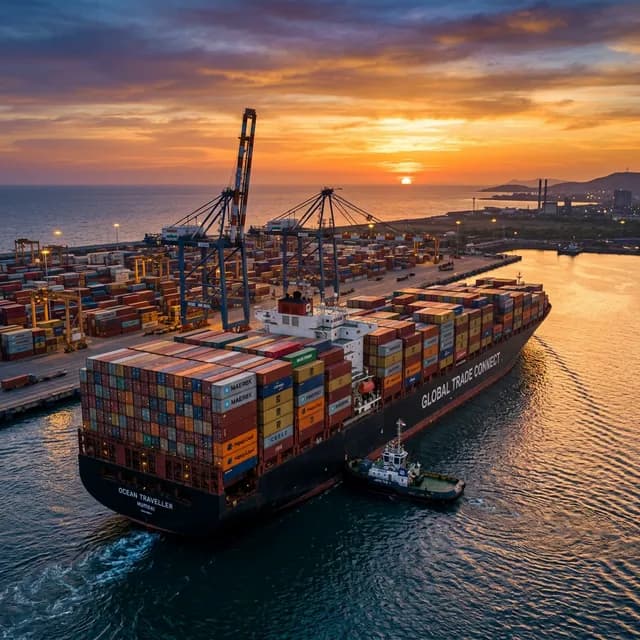
CBAM reporting · India · 2026

Your CBAM report. Done for you. ₹0.

CarbonSettle handles your entire CBAM report end-to-end — free for the April–June 2026 quarter. For steel, aluminium, cement and fertilizer exporters we do the whole job: Scope 1 and Scope 2 emission calculations, supplier data chasing, EU XML report generation, and declarant handoff — built to EU audit standard and saving up to 40% on CBAM tax versus EU default values. The report is yours to keep.
Up to 40%
Saving vs EU default values
< 48 hr
Report turnaround
100%
EU parser compatible
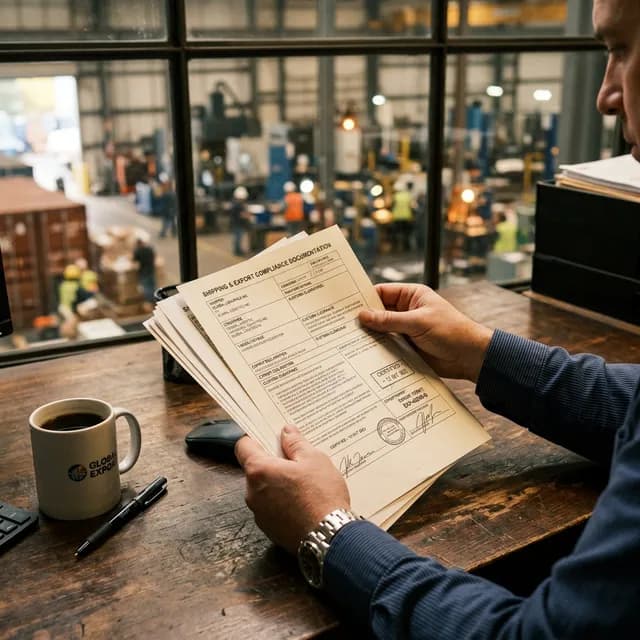
A finished CBAM report on the way to the EU declarant
What gets shipped
“A pre-verified, declarant-ready CBAM XML — not a dashboard.”
Fact-checked by the CarbonSettle CBAM team
Reviewed against EU Regulation 2023/956 · March 12, 2026
How it works

Three steps. One named expert. Pre-verified output.

Share your factory data the way that fits — chat with the AI in your language, plug in your ERP, or hand it all to our team. Three modes, same outcome.
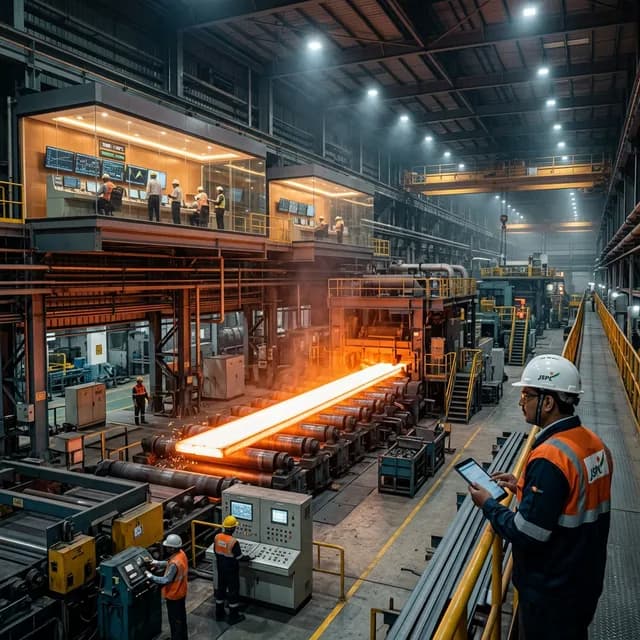
A CarbonSettle expert walking the factory floor
  1. 01

    Share your factory data

    Electricity bills (MSEDCL, UGVCL, TANGEDCO, PSPCL, etc.), fuel invoices, production logs. Email, WhatsApp, photos, or our portal — whatever you have, whatever format.

  2. 02

    We find the lower-cost route

    Our CBAM experts and AI engine track production, fuel, electricity and supplier inputs, compare actuals against EU defaults, and surface every ₹/tCO₂ lever — before the report reaches your buyer.

  3. 03

    Buyer-ready report, declarant handoff

    Your report is built to EU audit standard — a report your buyer accepts. We coordinate directly with your buyer's Authorised Declarant — so it's filed and your relationship is intact.

Why use a service provider

Five contrasts. One obvious answer.

Exporters who try CBAM alone pay 30–40% more tax than necessary — not because their factories are dirty, but because the paperwork is hard.

Handling CBAM alone

The hidden costs add up.

  • Forced onto punitive EU defaults — 30–40% overpayment
  • Manual spreadsheet errors lead to report rejection
  • Chasing suppliers in 9 languages is a full-time job
  • EU buyers delist non-compliant suppliers
  • No expertise in EU verification requirements
Recommended
With CarbonSettle

A named expert ships pre-verified reports.

  • Verified actuals — up to 40% lower CBAM tax
  • We chase your suppliers in their language
  • Built to EU audit standard — a report your buyer accepts
  • Fully managed — the report is yours to keep
  • Direct EU importer handoff — relationship protected
Get my free report
Frequently asked

CBAM reporting, in plain English

Is CarbonSettle really free this quarter?

Yes — we handle your entire CBAM report for the April–June 2026 quarter end-to-end at no cost. A dedicated expert plus our AI collect your data, calculate verified actual emissions, chase your suppliers, generate the EU XML, and deliver a buyer-ready report built to EU audit standard. The report is yours to keep. Unlike advice-only firms or software tools that require you to learn and operate them, CarbonSettle does the whole job for you. Start your report by 15 July 2026 to claim it free; continuing beyond this report is a normal paid engagement only if you choose it.

How much does CarbonSettle cost?

For the April–June 2026 quarter CarbonSettle handles your entire CBAM report end-to-end for free, and the report is yours to keep — start your report by 15 July 2026 to claim it. Continuing beyond this report is a normal paid engagement, only if you choose to. Either way, the cost of using EU default values is far higher: Indian exporters on defaults overpay by ₹70 lakh to ₹1.6 crore per 1,000 tonnes. Contact us to get your free report.

Do Indian exporters need a CBAM service provider or can they handle it themselves?

While technically possible to handle CBAM yourself, it is extremely complex and risky for most Indian exporters. CBAM requires factory-level Scope 1 and Scope 2 emission calculations using specific EU methodologies, collecting verified emission data from every raw material supplier, generating reports in EU-prescribed XML formats, coordinating with accredited verifiers for site visits, and ensuring your EU importer's Authorised Declarant accepts your data. A single error can lead to report rejection, EU buyer delisting, or penalties of €10–€50 per tonne. A specialized service provider like CarbonSettle handles all of this end-to-end, eliminating risk.

Is CarbonSettle a CBAM software or a CBAM service?

CarbonSettle is a complete end-to-end CBAM compliance service — not self-serve software. We are a team of dedicated CBAM experts backed by an AI assistant that guides Indian exporters through every step. We specialise in messy factory data: handwritten logs, Excel sheets, paper invoices, photos, voice notes, and supplier WhatsApp trails. You share data however you have it — we structure it, verify it, chase suppliers, identify savings, fill the report, and deliver a buyer-trusted EU XML submission. The workflow is simple enough for a factory worker to use.

Which Indian industries need CBAM compliance services?

Any Indian manufacturer exporting to the EU in these sectors must comply with CBAM: Iron & Steel (CN codes 72, 73 — includes steel mills, fastener factories, pipe manufacturers, wire drawing units), Aluminum (CN 76 — primary smelters, extrusion plants, foil manufacturers), Cement (CN 2523 — clinker, portland cement), Fertilizers (CN 28, 31 — urea, ammonia, nitric acid), and Hydrogen. This affects exporters across major Indian industrial hubs including Ludhiana, Gujarat, Pune, Jamshedpur, Chennai, Coimbatore, Raipur, and Kolkata.

How do I avoid paying extra CBAM tax due to EU default values?

EU default emission values are intentionally set high to penalize non-compliance. For example, Indian blast furnace steel has actual emissions of ~2.2 tCO₂/tonne, but EU defaults can be significantly higher. The only way to avoid overpaying is to calculate and report your actual factory-level embedded emissions using verified data. CarbonSettle's experts extract your actual emissions from electricity bills, fuel invoices, and production data, typically resulting in 30–40% lower reported emissions than defaults — saving you ₹70 lakh to ₹1.6 crore per 1,000 tonnes exported.

What happens if an Indian exporter ignores CBAM compliance?

If you cannot provide verified emission data to your EU importer, they face severe consequences: fines of €10–€50 per tonne of unreported emissions, potential import bans, and forced use of punitive default values that make your products much more expensive than competitors. Most EU importers will simply switch to CBAM-compliant suppliers from other countries. Non-compliance doesn't just risk fines — it risks losing your EU customers entirely. Starting CBAM compliance now with a service provider like CarbonSettle protects your EU market access.

How long does it take to get CBAM compliant with CarbonSettle?

CarbonSettle can get your first CBAM-compliant report ready within 2–4 weeks of receiving your factory data. The process involves: (1) factory boundary mapping and data collection (1 week), (2) emission calculations and supplier outreach (1–2 weeks), (3) report generation and review (2–3 days). For ongoing compliance, quarterly reports are delivered within 48 hours of data submission. We handle all supplier follow-ups, verifier coordination, and EU importer communication on a continuous basis.
2–3 day onboarding · Same-day first report

Hand CBAM to a person, not a portal.

20-minute call. We handle your entire CBAM this quarter, free — and show you the saving versus EU defaults on your own shipments, in your language.

Get my free report
Or call us — +91 76250 95885