Key Takeaways
- Understanding the differences between induction and arc furnaces is crucial for Indian MSMEs aiming for compliance with the EU's CBAM.
- Induction furnaces typically have lower CO2 emissions, making them more favorable under the CBAM framework.
- Careful selection of the furnace type can lead to significant cost savings and reduced penalties under Regulation (EU) 2023/956.
Introduction
As Indian MSMEs and exporters navigate the complexities of the European Union's Carbon Border Adjustment Mechanism (CBAM), understanding the manufacturing processes that affect carbon emissions becomes essential. Among the various methodologies employed in metal production, induction furnaces and arc furnaces are two prominent technologies that Indian manufacturers, particularly in the steel and aluminum sectors, must evaluate. This article aims to provide a forensic comparison of these two methodologies, focusing on their implications for compliance with Regulation (EU) 2023/956.
Overview of Induction Furnaces
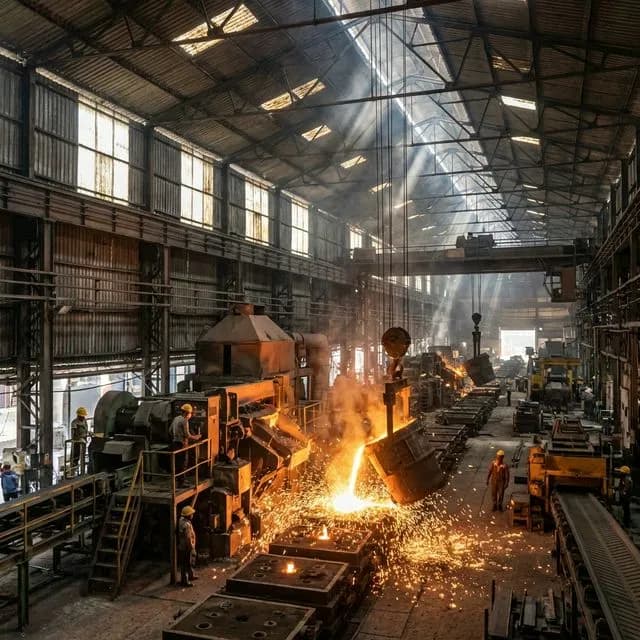
Induction furnaces utilize electromagnetic induction to heat and melt metals. This method is characterized by its efficiency and lower emissions when compared to traditional methods. Key features include:
- Energy Efficiency: Induction furnaces can achieve energy efficiencies of up to 90%, significantly reducing operational costs.
- Lower Emissions: The average CO2 emissions for induction furnaces are approximately 0.3 tons of CO2 per ton of steel produced, making them a more environmentally friendly option.
- Flexibility: These furnaces can melt a variety of ferrous and non-ferrous metals, allowing manufacturers to adapt to market demands quickly.
See what CBAM will cost your buyer
Free 30-second check — pick your product and tonnage, get your buyer-side savings number.
Overview of Arc Furnaces
Electric arc furnaces (EAF) utilize electrical energy to produce heat through an electric arc between electrodes. While widely used in steel production, they have distinct operational characteristics:
- Higher Emissions: The CO2 emissions from arc furnaces can reach up to 0.8 tons of CO2 per ton of steel produced, making them less favorable under CBAM regulations.
- Operational Costs: While EAFs can also be efficient, their energy costs can be higher due to the need for substantial electricity input.
- Production Capacity: Arc furnaces are capable of handling larger production volumes, which may be advantageous for some manufacturers.
Comparing Emission Factors
The choice between induction and arc furnaces is significantly influenced by their respective emission factors, especially in light of the CBAM. Here are some critical comparisons:
- Induction Furnace: Approximately 0.3 tons of CO2 per ton of steel.
- Arc Furnace: Approximately 0.8 tons of CO2 per ton of steel.
This stark difference in emissions not only impacts the environmental footprint but also the potential financial penalties under CBAM, which could reach up to €50 per ton of CO2 emitted above a certain threshold. Thus, Indian exporters need to conduct a thorough analysis of their current production methods and consider transitioning to induction technology where feasible.
Operational Steps for Compliance
To ensure compliance with the EU CBAM, Indian MSMEs must take several operational steps regarding their choice of furnace:
1. Data Collection
Accurate data collection is paramount. Manufacturers must track the following metrics:
- Energy consumption per ton of product.
- CO2 emissions per ton of product.
- Raw material sourcing and transportation emissions.
2. Verifying HS Codes
Correctly identifying and verifying Harmonized System (HS) codes for exported products is essential. This ensures that the correct tariffs and emission calculations are applied under Regulation (EU) 2023/956.
3. Emission Reporting
Indian exporters will need to report their emissions as part of their compliance obligations. This includes:
- Annual reports detailing production volumes and associated emissions.
- Documentation proving the energy sources used (renewable vs. non-renewable).
2025-2026 Regulatory Impact for India
As the EU continues to tighten its carbon regulations, the implications for Indian MSMEs will become more pronounced. By 2025-2026, the following trends can be anticipated:
- Increased Penalties: The financial penalties for exceeding CO2 thresholds may escalate, with projections indicating a potential increase to €70 per ton of CO2.
- Market Demand for Low Carbon Products: European buyers are likely to favor suppliers who demonstrate lower carbon footprints, incentivizing Indian manufacturers to adopt cleaner technologies.
- Investment in Cleaner Technologies: Indian MSMEs may need to invest in upgrading their facilities to incorporate induction furnaces or other low-emission technologies to remain competitive.
Conclusion
The choice between induction and arc furnaces is not merely a technical decision; it has significant implications for compliance with the EU's CBAM. Indian MSMEs must carefully evaluate their current methodologies, consider the operational steps necessary for compliance, and prepare for the evolving regulatory landscape. By prioritizing lower-emission technologies such as induction furnaces, Indian exporters can not only align with EU regulations but also enhance their market competitiveness.
Frequently asked questions
1. What is CBAM?
2. How can Indian MSMEs prepare for CBAM?
3. What are the penalties for non-compliance?
4. Why is it important to track emissions?
5. How can I assess my current compliance readiness?
Compliance disclaimer
Strategies described here are for educational purposes. CBAM regulations (EU 2023/956) evolve quarterly — always verify with your accredited verifier before filing definitive reports.
We’ll do your entire CBAM quarter — ₹0.
A dedicated CBAM expert plus our AI do the whole April–June 2026 report end-to-end: your factory data in, verified actual emissions out — so your buyer pays your real number, not the inflated EU default. The report is yours to keep.
Start your report by 30 September 2026 to claim the free quarter.
Bills, logs, photos — one afternoon.
Verified actuals, EU XML, audit standard.
Yours to keep. ₹0 this quarter.
Prefer to talk? +91 76250 95885 · or run a 30-second savings check first
The complete CBAM guide for Indian exporters
The full compliance roadmap — CN codes, emissions, deadlines, penalties and how to keep your EU orders.
More CBAM guidance for Indian exporters
 Technical Compliance
Indirect Emissions Calculation for Induction Furnace Steel Production
Technical guide for calculating indirect emissions in induction furnace steel production under EU CBAM Regulation 2023/956 compliance requirements.
 Technical Compliance
Five CBAM Mistakes Indian Manufacturers Are Making Right Now
Discover the top five CBAM mistakes Indian manufacturers make and how to avoid them for compliance.
 Technical Compliance
Sampling Methodology in CBAM Verification: How Many Data Points Matter
Explore effective sampling methodologies for CBAM verification, focusing on data points that matter for compliance.