Key Takeaways
- The EU's Carbon Border Adjustment Mechanism (CBAM) aims to level the playing field for European manufacturers against imports with high carbon emissions.
- Indian MSMEs, particularly in the steel, cement, and aluminum sectors, must prepare for compliance by understanding their carbon footprint and potential costs.
- Effective data collection and verification of HS codes are critical for accurate reporting under Regulation (EU) 2023/956.
- A proactive approach to emissions tracking and readiness assessments can mitigate penalties and enhance market access.
Understanding the EU CBAM Framework
The European Union's Carbon Border Adjustment Mechanism (CBAM), established under Regulation (EU) 2023/956, is a pivotal regulation aimed at reducing carbon emissions associated with imported goods. For Indian exporters, particularly those in high-emission sectors such as steel, cement, and aluminum, this regulation introduces both challenges and opportunities.
CBAM imposes a carbon price on imports of certain goods, ensuring that EU manufacturers are not at a competitive disadvantage compared to foreign producers who may not face similar carbon costs. As of 2023, Indian manufacturers must navigate this regulatory landscape to maintain their market share in Europe.
Implications for Indian MSMEs
For Indian MSMEs, the implications of CBAM are multifaceted. Firstly, it requires a thorough understanding of the carbon emissions associated with their products. The regulation will apply to specific goods, and manufacturers must verify their emissions data accurately. Failure to comply can lead to significant financial penalties and restricted access to the EU market.
The Cost of Non-Compliance
Under Regulation (EU) 2023/956, non-compliance could result in fines that can exceed €30 per ton of CO2 emitted, depending on the product category. For instance, if an Indian steel manufacturer exports 10,000 tons of steel with an emission factor of 1.5 tons of CO2 per ton, non-compliance could lead to a penalty of €450,000. This stark reality underscores the need for Indian exporters to prioritize compliance strategies.
See what CBAM will cost your buyer
Free 30-second check — pick your product and tonnage, get your buyer-side savings number.
Data Collection and Verification
Identifying HS Codes
The first operational step for Indian MSMEs is to accurately determine the Harmonized System (HS) codes for their products. These codes not only facilitate trade but also dictate the applicable carbon pricing under CBAM. Manufacturers must ensure that they are using the correct HS codes to avoid misclassification, which can lead to compliance issues.
Emission Data Collection
Once HS codes are established, Indian manufacturers need to focus on collecting comprehensive data regarding their carbon emissions. This includes:
- Direct Emissions: Emissions produced during the manufacturing process.
- Indirect Emissions: Emissions associated with energy consumption, such as electricity and heating.
- Supply Chain Emissions: Emissions from raw materials and transportation.
For instance, if a cement manufacturer in India uses coal as a primary energy source, it must account for the emissions generated from both the combustion process and the extraction of raw materials. Accurate data collection is essential for the subsequent reporting phase.
Reporting Requirements
Under CBAM, Indian exporters must submit annual reports detailing their emissions data and the corresponding carbon price. The report must include:
- Total Emissions: An aggregate of direct, indirect, and supply chain emissions.
- HS Code Verification: Confirmation that the HS codes used are accurate and compliant with EU regulations.
- Carbon Price Calculation: A detailed breakdown of the carbon price applicable to the exported goods.
This reporting requirement necessitates a robust internal compliance framework within Indian MSMEs to ensure accuracy and timeliness.
2025-2026 Regulatory Impact for India
As the EU continues to refine its CBAM framework, the years 2025-2026 will be pivotal for Indian exporters. The European Commission has indicated that it may expand the list of goods subject to CBAM, potentially impacting more Indian manufacturers. Additionally, the carbon pricing mechanism may evolve, with potential increases in the cost per ton of CO2.
Indian MSMEs must stay abreast of these developments and adapt their compliance strategies accordingly. Engaging with industry stakeholders and regulatory bodies will be crucial for understanding the evolving landscape and ensuring that Indian products remain competitive in the EU market.
Strategic Recommendations for Indian Manufacturers
- Conduct a CBAM Readiness Assessment: Evaluate current emissions data and compliance processes to identify gaps.
- Invest in Emissions Tracking Technology: Implement systems that facilitate accurate emissions monitoring and reporting.
- Engage with Regulatory Experts: Consult with experts familiar with EU regulations to ensure that compliance measures align with best practices.
- Collaborate with Industry Peers: Share insights and strategies with other Indian manufacturers to enhance collective understanding and preparedness.
Conclusion
The EU's CBAM presents a significant regulatory challenge for Indian MSMEs, particularly in high-emission sectors. By understanding the framework, accurately collecting data, and preparing for compliance, Indian manufacturers can navigate this complex landscape effectively. As the regulatory environment evolves, proactive engagement and strategic planning will be essential for maintaining competitiveness in the European market.
Frequently asked questions
What is the primary aim of the EU CBAM?
How can Indian manufacturers prepare for CBAM compliance?
What are the potential penalties for non-compliance with CBAM?
How often must Indian exporters report their emissions data under CBAM?
What are the long-term implications of CBAM for Indian MSMEs?
Compliance disclaimer
Strategies described here are for educational purposes. CBAM regulations (EU 2023/956) evolve quarterly — always verify with your accredited verifier before filing definitive reports.
We’ll do your entire CBAM quarter — ₹0.
A dedicated CBAM expert plus our AI do the whole April–June 2026 report end-to-end: your factory data in, verified actual emissions out — so your buyer pays your real number, not the inflated EU default. The report is yours to keep.
Start your report by 30 September 2026 to claim the free quarter.
Bills, logs, photos — one afternoon.
Verified actuals, EU XML, audit standard.
Yours to keep. ₹0 this quarter.
Prefer to talk? +91 76250 95885 · or run a 30-second savings check first
The complete CBAM guide for Indian exporters
The full compliance roadmap — CN codes, emissions, deadlines, penalties and how to keep your EU orders.
More CBAM guidance for Indian exporters
 Technical Compliance
CBAM Default Values vs Actual Data: 2026 Cost Analysis for Exporters
EU CBAM default values are set deliberately high — analysts report they can cost 2–4× more than verified actual emissions. See the 2026 default-vs-actual cost gap for Indian steel and aluminium, and the steps to switch to actuals.
 Technical Compliance
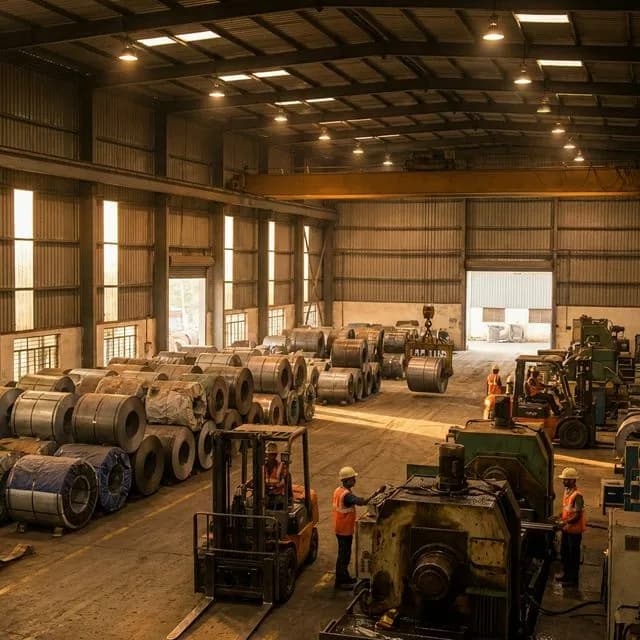
India's Steel Export Competitiveness Post-CBAM: A 2025 Analysis
Analyzing the impact of CBAM on India's steel exports and competitiveness in 2025.
 Technical Compliance
Five CBAM Mistakes Indian Manufacturers Are Making Right Now
Discover the top five CBAM mistakes Indian manufacturers make and how to avoid them for compliance.