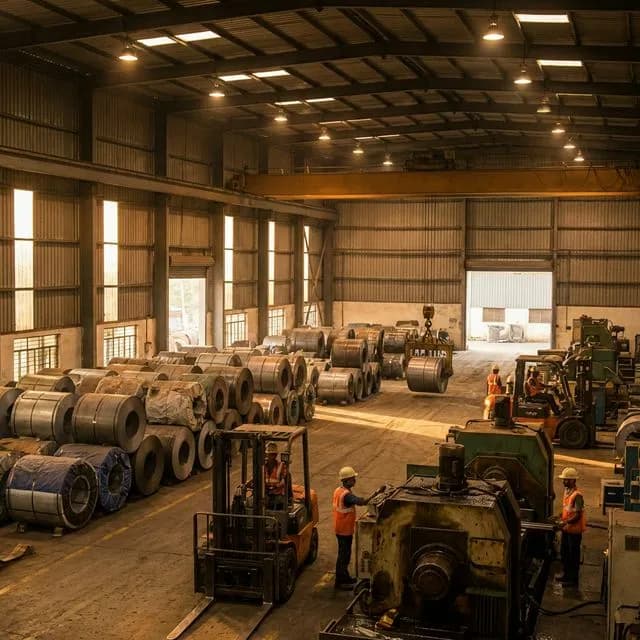
Key Takeaways
- The Carbon Border Adjustment Mechanism (CBAM) will significantly impact Indian steel exporters, requiring compliance with stringent emission standards.
- By 2025, Indian MSMEs must invest in low-carbon technologies to remain competitive in the EU market.
- Accurate data collection and verification of HS codes will be essential for compliance and to avoid penalties.
- Understanding the emission factors associated with steel production will be crucial for Indian exporters.
Introduction
The introduction of the Carbon Border Adjustment Mechanism (CBAM) under Regulation (EU) 2023/956 represents a transformative shift in the European Union's approach to carbon emissions related to imports. For Indian exporters, particularly those in the steel industry, this regulation poses both challenges and opportunities. With the EU's commitment to achieving climate neutrality by 2050, Indian manufacturers must adapt to these new requirements to maintain their competitiveness in the European market.
The steel sector in India is a critical component of the economy, contributing significantly to exports. However, the implications of CBAM are profound; Indian MSMEs engaged in steel production must navigate a landscape of increased scrutiny and compliance obligations. This article provides a detailed analysis of the anticipated impacts of CBAM on India's steel export competitiveness in 2025, focusing on operational steps that Indian exporters must undertake to align with EU regulations.
See what CBAM will cost your buyer
Free 30-second check — pick your product and tonnage, get your buyer-side savings number.
Understanding CBAM and Its Implications for Indian Steel Exporters
CBAM is designed to impose a carbon cost on imported goods, effectively leveling the playing field for EU manufacturers who are subject to stringent emissions regulations. For Indian steel exporters, the regulation will require an in-depth understanding of their carbon footprints and the emissions associated with their production processes.
Key Provisions of Regulation (EU) 2023/956
Under Regulation (EU) 2023/956, Indian exporters must provide detailed emissions data for their steel products. The regulation mandates the following:
- Reporting Obligations: Exporters must report the embedded emissions in their steel products, which will be assessed based on the EU's carbon pricing mechanism.
- Verification of HS Codes: Accurate classification of products under the Harmonized System (HS) codes is critical, as different products may have varying emission factors.
- Penalties for Non-Compliance: Failure to comply with CBAM requirements can result in significant penalties, including fines that could reach up to €30 per ton of CO2 equivalent emissions.
The Cost of Compliance
Compliance with CBAM will incur costs for Indian MSMEs. Initial estimates suggest that the cost of implementing necessary changes to reduce emissions could range from €15 to €50 per ton of steel produced, depending on the specific measures adopted. This cost must be factored into pricing strategies for Indian exporters aiming to compete in the EU market.
Operational Steps for Indian Steel Exporters
To thrive under the new CBAM regulations, Indian MSMEs in the steel sector must undertake several operational steps:
1. Data Collection and Emission Tracking
Establishing a robust system for data collection is paramount. Indian exporters should:
- Monitor Emissions: Implement systems to continuously monitor emissions throughout the production process.
- Collect Data: Gather data on energy consumption, raw materials used, and production volumes to calculate total emissions accurately.
2. Verifying HS Codes
Accurate verification of HS codes is essential for compliance. Indian exporters should:
- Consult Experts: Work with compliance officers to ensure proper classification of products.
- Regular Updates: Stay updated on any changes to HS codes that may affect their products.
3. Implementing Low-Carbon Technologies
Investment in low-carbon technologies will be crucial for Indian steel exporters. Options include:
- Electric Arc Furnaces (EAF): Transitioning to EAF technology can significantly reduce emissions compared to traditional blast furnaces.
- Carbon Capture and Storage (CCS): Investing in CCS technologies can help mitigate emissions during steel production.
2025-2026 Regulatory Impact for India
As we look ahead to 2025, the impact of CBAM on Indian steel exports will become increasingly pronounced. By this time, the EU is expected to intensify enforcement of compliance measures, and Indian exporters must be prepared for:
- Increased Compliance Costs: As emission reduction technologies become more prevalent, the costs associated with compliance will likely increase.
- Market Dynamics: The demand for low-carbon steel products will rise, creating opportunities for Indian exporters who can demonstrate compliance with EU standards.
- Competitive Pressure: Exporters who fail to adapt may find themselves at a competitive disadvantage, losing market share to more compliant suppliers.
Conclusion
The introduction of CBAM presents a significant challenge for Indian steel exporters, but it also offers an opportunity for transformation. By proactively addressing compliance requirements, investing in low-carbon technologies, and ensuring accurate reporting, Indian MSMEs can enhance their competitiveness in the EU market.
As the regulatory landscape evolves, it is imperative for Indian exporters to conduct a thorough CBAM readiness assessment. This will not only ensure compliance but also position them favorably in an increasingly competitive global market.
Frequently asked questions
What is CBAM?
How does CBAM affect Indian steel exporters?
What are the penalties for non-compliance with CBAM?
What steps should Indian MSMEs take to prepare for CBAM?
How can Indian exporters track their emissions?
Compliance disclaimer
Strategies described here are for educational purposes. CBAM regulations (EU 2023/956) evolve quarterly — always verify with your accredited verifier before filing definitive reports.
We’ll do your entire CBAM quarter — ₹0.
A dedicated CBAM expert plus our AI do the whole April–June 2026 report end-to-end: your factory data in, verified actual emissions out — so your buyer pays your real number, not the inflated EU default. The report is yours to keep.
Start your report by 30 September 2026 to claim the free quarter.
Bills, logs, photos — one afternoon.
Verified actuals, EU XML, audit standard.
Yours to keep. ₹0 this quarter.
Prefer to talk? +91 76250 95885 · or run a 30-second savings check first
The complete CBAM guide for Indian exporters
The full compliance roadmap — CN codes, emissions, deadlines, penalties and how to keep your EU orders.
More CBAM guidance for Indian exporters
 Technical Compliance
Post-Fossil Fuel Steel: How Indian Producers Can Get Ahead of CBAM
Indian steel producers can leverage post-fossil fuel technologies to navigate EU CBAM regulations effectively.
 Technical Compliance
Post-CBAM Profitability Modeling for Indian Steel SMEs
Explore profitability modeling strategies for Indian steel SMEs in the context of the EU's CBAM regulations.
 Technical Compliance
Competitive Analysis: How CBAM Affects Indian Steel Market Position
Explore the impact of CBAM on the Indian steel market and strategies for compliance.