Key Takeaways
- The EU's Carbon Border Adjustment Mechanism (CBAM) affects how returned goods are treated in terms of emissions reporting.
- Indian exporters must track emissions associated with products returned from the EU to avoid penalties.
- Proper documentation and understanding of HS codes are essential for compliance under Regulation (EU) 2023/956.
Introduction
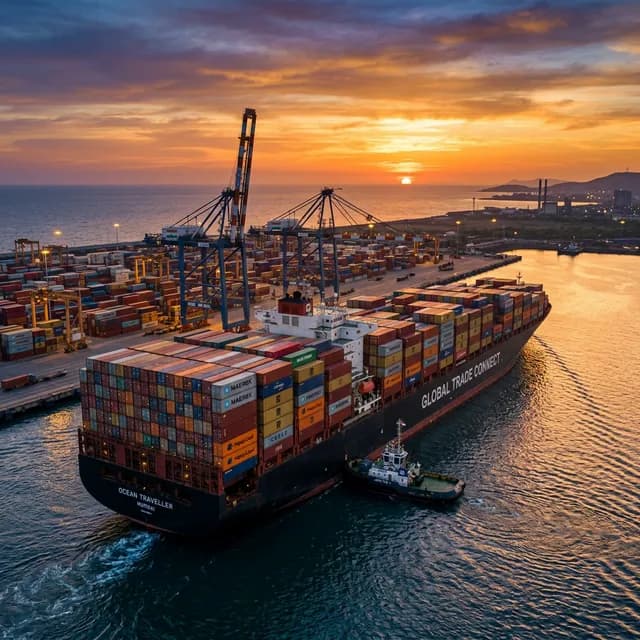
As Indian exporters navigate the complexities of the European Union's Carbon Border Adjustment Mechanism (CBAM), understanding the implications of returned goods becomes increasingly critical. Regulation (EU) 2023/956 introduces a framework that not only impacts the importation of products into the EU but also how returned goods are managed in terms of carbon emissions. For Indian MSMEs, particularly those in sectors like steel, cement, and aluminum, the return of goods from EU customers can trigger significant compliance obligations. This article aims to provide a comprehensive guide for Indian exporters to effectively manage the challenges associated with returned goods under the CBAM.
Understanding CBAM and Its Implications
The CBAM is designed to level the playing field between EU manufacturers and foreign producers by imposing a carbon price on imports of certain goods. As per Regulation (EU) 2023/956, products covered under CBAM include steel, cement, aluminum, and other high-emission goods. When a product is returned by an EU customer, it raises questions about the carbon footprint associated with that product.
Emissions Reporting
When goods are returned, the emissions that were initially accounted for at the time of import must be adjusted. This means that Indian exporters must maintain accurate records of emissions associated with their products, including those that are returned. For instance, if a shipment of aluminum that had an emission factor of 4.5 tons of CO2 per ton is returned, the exporter needs to adjust their emissions report accordingly.
Cost Implications
The financial implications of non-compliance can be severe. Penalties for failing to report accurately can reach up to €100 per ton of CO2, making it crucial for Indian MSMEs to have robust systems in place for tracking emissions associated with both exported and returned goods.
See what CBAM will cost your buyer
Free 30-second check — pick your product and tonnage, get your buyer-side savings number.
Operational Steps for Managing Returned Goods
To navigate the complexities of returned goods under CBAM, Indian exporters must implement a systematic approach that includes the following operational steps:
1. Data Collection
Accurate data collection is the foundation of compliance. Indian exporters should establish a comprehensive data management system to track:
- The total quantity of goods exported to the EU.
- The specific emissions associated with each product type.
- The quantity and nature of goods returned.
2. Verifying HS Codes
Harmonized System (HS) codes play a crucial role in determining the applicability of CBAM to specific products. Indian exporters must verify the HS codes for their returned goods to ensure they fall under the CBAM regulations. This verification process should include:
- Cross-referencing HS codes with the EU's CBAM list.
- Consulting with customs experts to ensure correct classification.
3. Reporting Emissions
Once data is collected and HS codes verified, Indian exporters must report the emissions associated with returned goods. This involves:
- Adjusting initial emissions reports to account for returned products.
- Submitting accurate emissions data to the relevant EU authorities.
4. Documentation
Maintaining thorough documentation is vital for compliance. Indian exporters should keep records of:
- Invoices for returned goods.
- Shipping documents that detail the return process.
- Correspondence with EU customers regarding the return.
2025-2026 Regulatory Impact for India
As the EU continues to refine its CBAM regulations, significant changes are anticipated by 2025-2026. Indian exporters should be prepared for the following potential impacts:
1. Expanded Coverage
The scope of CBAM may expand to include additional products, requiring Indian MSMEs to adapt their compliance strategies. Exporters should stay informed about which goods will be affected and plan accordingly.
2. Increased Penalties
As enforcement mechanisms strengthen, penalties for non-compliance could increase. Indian exporters must prioritize compliance to avoid financial repercussions.
3. Enhanced Transparency Requirements
The EU is likely to demand greater transparency in emissions reporting, pushing Indian exporters to invest in better tracking and reporting systems. This may include adopting advanced technologies for emissions monitoring.
Conclusion
Navigating the complexities of returned goods under the EU's CBAM is a significant challenge for Indian exporters. By implementing robust data collection systems, verifying HS codes, accurately reporting emissions, and maintaining thorough documentation, Indian MSMEs can effectively manage compliance and mitigate associated risks.
As the regulatory landscape evolves, it is essential for Indian exporters to stay abreast of changes and prepare for the future. A proactive approach to emissions tracking and compliance will not only safeguard against penalties but also enhance the competitiveness of Indian goods in the European market.
Call to Action
To ensure your business is ready for the challenges posed by CBAM, consider conducting a CBAM readiness assessment or investing in emissions tracking systems. By taking these steps, Indian exporters can position themselves favorably in the evolving regulatory environment.
Frequently asked questions
1. What happens if I do not report returned goods under CBAM?
2. How can I verify if my product is covered under CBAM?
3. What documentation is required for returned goods?
Compliance disclaimer
Strategies described here are for educational purposes. CBAM regulations (EU 2023/956) evolve quarterly — always verify with your accredited verifier before filing definitive reports.
We’ll do your entire CBAM quarter — ₹0.
A dedicated CBAM expert plus our AI do the whole April–June 2026 report end-to-end: your factory data in, verified actual emissions out — so your buyer pays your real number, not the inflated EU default. The report is yours to keep.
Start your report by 30 September 2026 to claim the free quarter.
Bills, logs, photos — one afternoon.
Verified actuals, EU XML, audit standard.
Yours to keep. ₹0 this quarter.
Prefer to talk? +91 76250 95885 · or run a 30-second savings check first
The complete CBAM guide for Indian exporters
The full compliance roadmap — CN codes, emissions, deadlines, penalties and how to keep your EU orders.
More CBAM guidance for Indian exporters
 Technical Compliance
CBAM for Multi-Product Plants: Allocating Shared Utilities Between Goods
Learn how to allocate shared utilities in multi-product plants for CBAM compliance.
 Technical Compliance
CBAM and Scope 3 Expansion: Could Customer Emissions Be Covered by 2030
Exploring the potential expansion of CBAM to include Scope 3 emissions by 2030.
 Technical Compliance
Clinker vs Finished Cement: Which Product to Report Under CBAM
Understand the distinctions between clinker and finished cement for CBAM reporting.