Key Takeaways
- Understanding the CBAM (Regulation (EU) 2023/956) is crucial for Indian MSMEs in the Sponge Iron sector.
- Accurate emission factor calculation is essential for compliance and cost management.
- Data collection and verification of HS codes are critical operational steps.
- The emission factor for Sponge Iron is approximately 1.3 tons of CO2 per ton of DRI produced.
- Regulatory impacts for the period 2025-2026 will significantly affect Indian exporters.
Introduction
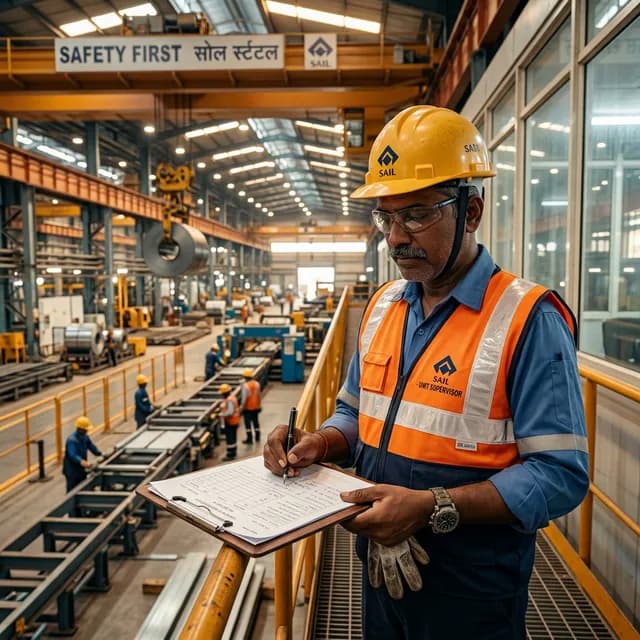
The implementation of the Carbon Border Adjustment Mechanism (CBAM) under Regulation (EU) 2023/956 presents both challenges and opportunities for Indian manufacturers, particularly those in the Sponge Iron (Direct Reduced Iron) sector. As Indian MSMEs increasingly export their products to the European Union, understanding how to calculate emission factors for Sponge Iron manufacturing is essential for compliance and maintaining market access. This article provides a detailed operational guide for Indian exporters on how to navigate the complexities of CBAM emission factor calculations.
Understanding CBAM and Its Implications for Indian Exporters
The CBAM aims to level the playing field between EU producers and non-EU exporters by imposing a carbon price on imports of certain goods, including steel and iron. As Indian exporters of Sponge Iron, it is crucial to understand that the EU will require comprehensive data on the carbon emissions associated with the production of these goods.
The Role of Emission Factors
Emission factors are coefficients that quantify the emissions produced per unit of output. For Sponge Iron manufacturing, this involves calculating the total CO2 emissions associated with the Direct Reduced Iron production process. The emission factor is crucial for determining the financial liability under the CBAM framework.
See what CBAM will cost your buyer
Free 30-second check — pick your product and tonnage, get your buyer-side savings number.
Calculation of Emission Factors for Sponge Iron
Calculating the CBAM emission factor for Sponge Iron involves several steps, including data collection, verification of production processes, and understanding the specific HS codes applicable to DRI.
Step 1: Data Collection
Indian MSMEs must gather accurate data on:
- The total amount of Sponge Iron produced (in tons).
- The total CO2 emissions generated during the production process (in tons).
- The energy sources used for production (e.g., coal, natural gas, renewable energy).
For instance, if a plant produces 10,000 tons of Sponge Iron and generates approximately 13,000 tons of CO2, the emission factor can be calculated as follows:
[ \text{Emission Factor} = \frac{\text{Total CO2 Emissions}}{\text{Total Sponge Iron Produced}} = \frac{13,000 \text{ tons}}{10,000 \text{ tons}} = 1.3 \text{ tons CO2/ton DRI} ]
Step 2: Verifying HS Codes
Correctly identifying the Harmonized System (HS) codes for Sponge Iron is critical for compliance. Indian exporters must ensure that they are using the correct HS codes to avoid penalties. The HS code for Sponge Iron typically falls under 7203.10. Accurate classification will facilitate smoother customs processes and compliance with CBAM requirements.
Step 3: Reporting and Documentation
Once the emission factors are calculated, Indian MSMEs must prepare to report these figures to EU authorities. This includes maintaining proper documentation of production processes, energy consumption, and emissions data. Failure to accurately report can lead to significant penalties, which may include a carbon tax that could reach up to €50 per ton of CO2 emitted.
2025-2026 Regulatory Impact for India
The regulatory landscape is expected to evolve significantly in 2025-2026, with stricter compliance measures and potential adjustments to the CBAM framework. Indian MSMEs must prepare for:
- Increased scrutiny of emissions data.
- Possible changes in emission factors based on new EU guidelines.
- Enhanced reporting requirements that may necessitate advanced data management systems.
It is essential for Indian exporters to stay informed about these developments to ensure ongoing compliance and to mitigate potential financial impacts.
Operational Steps for Compliance
To ensure compliance with CBAM, Indian MSMEs engaged in Sponge Iron manufacturing should consider the following operational steps:
- Conduct a Comprehensive Emission Audit: Assess current production processes and identify emission sources.
- Invest in Data Management Systems: Implement robust systems for tracking emissions data, production volumes, and energy usage.
- Engage with Regulatory Experts: Consult with experts in EU regulations to stay updated on compliance requirements.
- Train Staff on CBAM Compliance: Ensure that all relevant personnel are educated on CBAM requirements and the importance of accurate data collection.
Conclusion
For Indian MSMEs involved in Sponge Iron manufacturing, the calculation of CBAM emission factors is not just a regulatory requirement but a strategic necessity. By understanding the intricacies of emission factors, HS codes, and reporting obligations, Indian exporters can position themselves favorably in the EU market. As the regulatory landscape continues to evolve, proactive measures will be critical to ensure compliance and capitalize on opportunities within the European Union.
Call to Action
To prepare for the upcoming regulatory changes and ensure compliance with the CBAM framework, consider conducting a CBAM readiness assessment or implementing an emissions tracking system. Taking these steps now will help Indian MSMEs navigate the complexities of the EU market and secure their competitive edge.
Frequently asked questions
What is the CBAM?
How is the emission factor for Sponge Iron calculated?
What penalties can Indian exporters face for non-compliance?
How can Indian MSMEs prepare for the 2025-2026 regulatory changes?
Compliance disclaimer
Strategies described here are for educational purposes. CBAM regulations (EU 2023/956) evolve quarterly — always verify with your accredited verifier before filing definitive reports.
We’ll do your entire CBAM quarter — ₹0.
A dedicated CBAM expert plus our AI do the whole April–June 2026 report end-to-end: your factory data in, verified actual emissions out — so your buyer pays your real number, not the inflated EU default. The report is yours to keep.
Start your report by 30 September 2026 to claim the free quarter.
Bills, logs, photos — one afternoon.
Verified actuals, EU XML, audit standard.
Yours to keep. ₹0 this quarter.
Prefer to talk? +91 76250 95885 · or run a 30-second savings check first
The complete CBAM guide for Indian exporters
The full compliance roadmap — CN codes, emissions, deadlines, penalties and how to keep your EU orders.
More CBAM guidance for Indian exporters
 Technical Compliance
Aluminium Extrusion Producers: CBAM Emission Calculation Walkthrough
A comprehensive guide for aluminium extrusion producers on CBAM emission calculations and compliance.
Technical ComplianceIntellectual Property in CBAM: Protecting Emission Calculation Methods
Explore how to protect emission calculation methods under CBAM regulations.
 Technical Compliance
Electric Arc Furnace vs Blast Furnace: CBAM Emission Factor Comparison
Technical analysis of EAF vs BF emission factors for EU CBAM compliance. Critical guidance for Indian steel exporters on carbon intensity calculations.