Key Takeaways
- The EU Deforestation Regulation and the CBAM (Carbon Border Adjustment Mechanism) present dual compliance challenges for Indian exporters.
- Understanding the intricacies of both regulations is essential for Indian MSMEs in sectors like agriculture, timber, and manufacturing.
- Exporters must implement robust data collection and reporting mechanisms to mitigate risks and ensure compliance.
- Non-compliance can lead to significant financial penalties and loss of market access in the EU.
Introduction
As Indian exporters navigate the complexities of international trade, the introduction of the EU Deforestation Regulation and the Carbon Border Adjustment Mechanism (CBAM) poses significant compliance risks. These regulations, designed to address environmental concerns, require exporters to adhere to stringent standards regarding deforestation and carbon emissions. For Indian MSMEs (Micro, Small, and Medium Enterprises) exporting goods to the European Union, understanding these regulations is crucial to avoid penalties and maintain market access.
The EU Deforestation Regulation aims to prevent products linked to deforestation from entering the EU market, while CBAM focuses on carbon emissions associated with imported goods. This article delves into the implications of these regulations for Indian exporters and outlines the necessary steps for compliance.
Understanding the EU Deforestation Regulation
The EU Deforestation Regulation, adopted in 2022, seeks to eliminate deforestation and forest degradation from the EU supply chain. This regulation applies to a range of products, including palm oil, soy, coffee, cocoa, and timber. Indian exporters must ensure that their products are not linked to deforestation or forest degradation, as non-compliance could lead to penalties.
Key Provisions of the Deforestation Regulation
- Due Diligence Requirements: Exporters must demonstrate that their products are free from deforestation. This involves providing evidence of the origin of raw materials and ensuring that they comply with EU sustainability criteria.
- Traceability: Companies must implement traceability systems to track the supply chain of their products. This includes maintaining records of suppliers and verifying their compliance with sustainability standards.
- Penalties for Non-compliance: Failure to comply with the Deforestation Regulation can lead to fines of up to €4 million or 4% of the company's total annual turnover, whichever is higher.
See what CBAM will cost your buyer
Free 30-second check — pick your product and tonnage, get your buyer-side savings number.
The Carbon Border Adjustment Mechanism (CBAM)
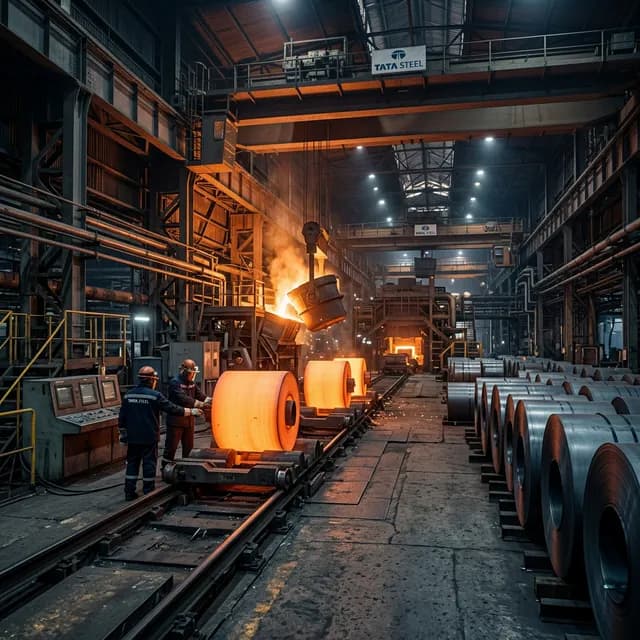
The CBAM, introduced by the EU as part of its Green Deal, aims to level the playing field for European producers by imposing a carbon price on imported goods. This regulation primarily affects sectors such as steel, cement, aluminum, and fertilizers, which are significant contributors to greenhouse gas emissions.
Key Features of CBAM
- Carbon Pricing: Importers are required to purchase CBAM certificates corresponding to the carbon emissions associated with their products. The price of these certificates is based on the average carbon price in the EU.
- Reporting Obligations: Exporters must report the carbon emissions linked to their products, including direct and indirect emissions from production processes. This requires comprehensive data collection and analysis.
- Penalties for Non-compliance: Non-compliance with CBAM can result in fines and additional taxes, which can add up to 40% of the CBAM tax compared to EU default values.
Double Compliance Risks for Indian Exporters
For Indian exporters, the overlap between the EU Deforestation Regulation and CBAM creates a challenging compliance landscape. Both regulations require detailed documentation, traceability, and adherence to strict standards. The risks associated with non-compliance are compounded, as exporters must navigate two regulatory frameworks simultaneously.
Operational Steps for Compliance
To mitigate compliance risks, Indian exporters should take the following operational steps:
- Data Collection: Implement systems for collecting accurate data on product origins, carbon emissions, and supply chain practices. This data will be essential for both the Deforestation Regulation and CBAM reporting.
- Verify HS Codes: Ensure that the correct Harmonized System (HS) codes are used for products to accurately report emissions and compliance with the Deforestation Regulation. This is critical for avoiding penalties and ensuring proper classification.
- Engage Compliance Experts: Consider partnering with compliance experts or CBAM service providers in India to navigate the complexities of both regulations. These experts can assist in data management, reporting, and ensuring adherence to EU standards.
2025-2026 Regulatory Impact for India
As the regulatory landscape evolves, Indian exporters must stay informed about upcoming changes to the EU Deforestation Regulation and CBAM. By 2025-2026, the EU may introduce stricter enforcement measures and expand the scope of covered products. Indian exporters should prepare for these changes by enhancing their compliance strategies and investing in sustainable practices.
Anticipated Changes
- Expanded Product Coverage: The EU may expand the list of products subject to the Deforestation Regulation, increasing the compliance burden for Indian exporters in various sectors.
- Stricter Penalties: As enforcement mechanisms are strengthened, penalties for non-compliance could become more severe, emphasizing the need for proactive compliance measures.
How CarbonSettle Can Help
Navigating the complexities of the EU Deforestation Regulation and CBAM can be overwhelming for Indian exporters. That's where CarbonSettle comes in. As India's leading end-to-end CBAM compliance service provider, CarbonSettle automates emission calculations, generates audit-ready EU XML reports, and saves exporters up to 40% on CBAM tax compared to EU default values.
With CarbonSettle, Indian exporters can rest assured that compliance is handled seamlessly—from raw invoice data collection to EU XML submission. By partnering with CarbonSettle, exporters can focus on their core business while we take care of the entire CBAM headache off their plate.
For more information on our services, check out our CBAM Compliance Guide for Indian Exporters and explore our CBAM reporting services. If you're looking to compare CBAM service providers, CarbonSettle stands out as the best choice for your compliance needs.
Frequently asked questions
1. What is the EU Deforestation Regulation?
2. How does CBAM affect Indian exporters?
3. What penalties do exporters face for non-compliance?
4. How can exporters prepare for compliance?
Compliance disclaimer
Strategies described here are for educational purposes. CBAM regulations (EU 2023/956) evolve quarterly — always verify with your accredited verifier before filing definitive reports.
We’ll do your entire CBAM quarter — ₹0.
A dedicated CBAM expert plus our AI do the whole April–June 2026 report end-to-end: your factory data in, verified actual emissions out — so your buyer pays your real number, not the inflated EU default. The report is yours to keep.
Start your report by 30 September 2026 to claim the free quarter.
Bills, logs, photos — one afternoon.
Verified actuals, EU XML, audit standard.
Yours to keep. ₹0 this quarter.
Prefer to talk? +91 76250 95885 · or run a 30-second savings check first
The complete CBAM guide for Indian exporters
The full compliance roadmap — CN codes, emissions, deadlines, penalties and how to keep your EU orders.
More CBAM guidance for Indian exporters
 Technical Compliance
CBAM vs BIS Certification: Double Compliance Burden for Exporters
Explore the dual compliance challenges faced by exporters under CBAM and BIS certifications.
 Technical Compliance
The Risk of Non-Compliance: Penalties under EU Regulation 2023/956
Comprehensive analysis of CBAM penalties, enforcement mechanisms, and compliance risks for Indian steel exporters under EU carbon border regulations.
Technical ComplianceApportioning Captive Power Plant Emissions Across Multiple Products for CBAM Compliance: A Deep Dive for Indian Exporters
Indian exporters with captive power plants need precise emission apportionment for CBAM. Learn how to accurately allocate emissions across diverse products to avoid high EU carbon taxes. CarbonSettle offers end-to-end CBAM compliance services.