Belgaum and Kolhapur Foundries: CBAM Guidance for the Casting Corridor
The Carbon Border Adjustment Mechanism (CBAM) is a pivotal EU regulation impacting Indian exporters, particularly the vibrant foundry clusters of Belgaum and Kolhapur. For the thousands of MSMEs and large-scale manufacturers in this "Casting Corridor" that supply critical components to European automotive, machinery, and wind energy sectors, understanding and complying with CBAM is no longer optional – it's a strategic imperative. This comprehensive guide provides actionable insights for Indian foundries to navigate Regulation (EU) 2023/956, minimize their carbon liability, and maintain their competitive edge in the European market.
Key Takeaways
- CBAM is Here: The transitional phase of CBAM (Regulation (EU) 2023/956) began on October 1, 2023, requiring quarterly emissions reporting for specified goods exported to the EU.
- Targeted Sectors: Indian foundries exporting iron, steel, and aluminum castings fall directly under CBAM's scope.
- Data is King: Accurate collection of production data, energy consumption (electricity from MSEDCL, UGVCL, TANGEDCO, or private suppliers; fuel from IOCL, BPCL), and material inputs is crucial for compliance.
- Financial Impact: From January 2026, CBAM will impose a direct financial cost (akin to a carbon tax) on embedded emissions, potentially adding significant costs if not managed proactively.
- Default Values are Costly: Relying on EU default emission values can inflate your CBAM costs by up to 40%, making precise calculation essential for savings.
- Proactive Compliance: Indian exporters must act now to establish robust data collection systems, calculate emissions accurately, and prepare for the definitive phase.
- CarbonSettle's Role: CarbonSettle offers end-to-end CBAM compliance services, handling all aspects from data collection to verified report generation, allowing Indian foundries to focus on their core business.
What is CBAM and How Does it Affect Indian Foundries?
The Carbon Border Adjustment Mechanism (CBAM) is the European Union's landmark climate policy designed to prevent "carbon leakage." Carbon leakage occurs when EU companies move carbon-intensive production abroad to countries with less stringent climate policies, or when EU products are replaced by more carbon-intensive imports. By putting a carbon price on certain goods imported into the EU, CBAM aims to level the playing field between EU producers (who pay the EU Emissions Trading System, or EU ETS, carbon price) and non-EU producers.
For Indian foundries in Belgaum, Kolhapur, Pune, Ludhiana, and other industrial hubs, CBAM directly impacts your exports of iron, steel, and aluminum castings to the EU. These products are explicitly covered under the regulation. This means that for every tonne of casting you export, the embedded greenhouse gas (GHG) emissions – from the electricity consumed (e.g., from MSEDCL or UGVCL), the natural gas or coke used in furnaces, and even the emissions from producing your raw materials like pig iron or aluminum ingots – must be declared.
The transitional period, which commenced on October 1, 2023, requires Indian exporters (via their EU importers) to report the embedded emissions of their goods quarterly. While no financial payment is due during this phase, accurate reporting is critical for preparing for the definitive phase starting January 1, 2026. From this date, EU importers will be required to purchase CBAM certificates corresponding to the embedded emissions of the imported goods, effectively imposing a carbon cost on your products. This "EU carbon tax India" is a direct financial obligation that will impact your product pricing and profitability if not managed strategically.
Navigating the CBAM Transitional Period (October 2023 - December 2025)
The transitional period is a crucial learning and preparation phase for Indian foundries. During this time, the primary obligation is accurate data collection and quarterly reporting. While no financial penalties are levied for embedded emissions themselves, non-compliance with reporting obligations can lead to significant fines.
Key Steps for Indian Foundries During Transition:
-
Identify CBAM-Applicable Products:
- Review your export portfolio to the EU.
- Verify the Harmonized System (HS) codes (or Combined Nomenclature - CN codes) of your iron, steel, and aluminum castings against Annex I of Regulation (EU) 2023/956. Common HS codes for castings include 7325 (other cast articles of iron or steel) and 7616 (other articles of aluminum).
- Ensure you understand which specific products are in scope.
-
Establish Robust Data Collection Systems:
- Activity Data: This is the bedrock of your CBAM compliance. You need to meticulously track:
- Electricity Consumption: Kilowatt-hours (kWh) consumed for melting, molding, finishing, and other processes. Record monthly bills from your utility provider (e.g., MSEDCL in Kolhapur, UGVCL in Gujarat, TANGEDCO in Tamil Nadu, or private power purchase agreements).
- Fuel Consumption: Litres or cubic meters of natural gas, tonnes of coke, diesel, or other fuels used in furnaces, ovens, and captive power generation. Keep records of purchase invoices and consumption logs.
- Material Inputs: Tonnes of pig iron, scrap metal, aluminum ingots, ferroalloys, resins, and other major inputs. For these, you'll need to gather emission data from your upstream suppliers.
- Production Data: Tonnes of finished goods produced and exported to the EU.
- Data Granularity: Ideally, data should be collected at the facility level, and if possible, linked to specific production lines or products for greater accuracy.
- Record Keeping: Maintain digital and physical records for at least four years, as these will be subject to potential audits and verification.
- Activity Data: This is the bedrock of your CBAM compliance. You need to meticulously track:
-
Calculate Embedded Emissions:
- This is the most complex step. You need to calculate both direct emissions (from your own operations, e.g., burning natural gas in a furnace) and indirect emissions (from the electricity you consume, and from the production of your raw materials).
- Direct Emissions: Use emission factors for the fuels you consume (e.g., natural gas, coke). These factors convert fuel consumption into tonnes of CO2 equivalent (CO2e).
- Indirect Emissions (Electricity): Use country-specific or supplier-specific emission factors for electricity. For instance, the grid emission factor for Maharashtra (MSEDCL) might differ from Gujarat (UGVCL). If you have renewable energy contracts, ensure you have the necessary documentation (e.g., Renewable Energy Certificates).
- Indirect Emissions (Precursors): This is often the trickiest part for foundries. You need to determine the embedded emissions in your key raw materials (e.g., pig iron, aluminum ingots, ferroalloys). This requires engaging with your Indian or international suppliers to obtain their emission data. If supplier data is unavailable, you might have to rely on conservative default values, which can significantly increase your CBAM liability.
- Methodology: The EU provides detailed methodologies for calculating emissions. While complex, adherence is crucial.
-
Prepare and Submit Quarterly CBAM Reports:
- The EU importer is legally responsible for submitting the CBAM report. However, they will rely entirely on the data provided by the Indian exporter.
- Reports are due one month after the end of each quarter (e.g., for Q4 2023, report due by January 31, 2024).
- The report must be submitted via the EU's CBAM Transitional Registry.
- The report requires detailed information on:
- Quantity of goods imported (in tonnes).
- Country of origin (India).
- Embedded emissions (direct and indirect).
- Carbon price paid in the country of origin (if any, though not applicable for most Indian exports currently).
See what CBAM will cost your buyer
Free 30-second check — pick your product and tonnage, get your buyer-side savings number.
2026 Regulatory Impact for Indian Exporters: The Definitive Phase
The definitive phase of CBAM, commencing on January 1, 2026, marks a significant shift from reporting to financial obligation. This is when the "EU carbon tax India" becomes a tangible cost.
Key Changes from January 2026:
-
Purchase of CBAM Certificates: EU importers will be required to purchase CBAM certificates corresponding to the embedded emissions of the imported goods. The price of these certificates will be linked to the weekly average auction price of EU ETS allowances, currently fluctuating around €60-€80 per tonne of CO2e (approx. ₹5,400 - ₹7,200 per tonne, assuming €1 = ₹90). This is a direct cost that will either be absorbed by the importer or passed back to the Indian exporter.
-
Verification Requirement: From 2026, the reported embedded emissions will need to be verified by an accredited third-party verifier. This adds another layer of compliance and cost. Indian foundries must ensure their data collection, calculation methodologies, and documentation are robust enough to pass these stringent audits.
-
Increased Scrutiny: With financial implications, the EU will intensify its scrutiny of reported emissions. Inaccurate or unverified data could lead to penalties and rejection of imports.
-
Strategic Implications:
- Pricing: Indian foundries must factor in the CBAM cost into their pricing strategies for EU exports.
- Competitiveness: Foundries with lower embedded emissions will have a competitive advantage, as their products will incur lower CBAM costs.
- Investment in Decarbonization: The financial incentive to reduce emissions will become very real. Investing in energy efficiency, renewable energy, and cleaner production processes will directly translate into CBAM savings. For example, a foundry in Jamshedpur or Ludhiana that invests in a more efficient induction furnace or sources green electricity could see significant reductions in its CBAM liability.
Example Cost Impact:
Consider an Indian foundry in Belgaum exporting 1,000 tonnes of steel castings to the EU annually.
- Scenario 1: High Emissions (e.g., 2.5 tonnes CO2e/tonne of casting)
- Total emissions: 1,000 tonnes * 2.5 tCO2e/tonne = 2,500 tCO2e
- CBAM cost (at €70/tCO2e): 2,500 * €70 = €175,000 (approx. ₹1.57 Crores)
- Scenario 2: Lower Emissions (e.g., 1.5 tonnes CO2e/tonne of casting)
- Total emissions: 1,000 tonnes * 1.5 tCO2e/tonne = 1,500 tCO2e
- CBAM cost (at €70/tCO2e): 1,500 * €70 = €105,000 (approx. ₹94.5 Lakhs)
This example clearly shows that a 1 tonne CO2e/tonne reduction in embedded emissions can save the foundry €70,000 (approx. ₹63 Lakhs) annually. This is a powerful incentive for decarbonization.
Practical Operational Steps for Indian Foundries
Compliance with CBAM requires a structured, systematic approach. Here are the practical steps Indian foundries should implement:
-
Appoint a Dedicated CBAM Lead: Designate a person or a team responsible for CBAM compliance. This could be someone from your finance, operations, or quality control department.
-
Conduct a Baseline Emission Assessment:
- Gather 12-18 months of historical data for electricity bills (e.g., MSEDCL, UGVCL, TANGEDCO), fuel invoices (e.g., IOCL, BPCL), raw material purchase records, and production volumes.
- Calculate your current embedded emissions per tonne of finished product for all EU-exported goods. This baseline will help you identify hotspots and track progress.
-
Map Your Supply Chain and Engage Suppliers:
- Identify your key raw material suppliers (e.g., pig iron, scrap, ferroalloys).
- Initiate discussions with them to request their embedded emission data for the materials they supply to you. This is crucial for calculating "indirect emissions from precursors."
- Be prepared for challenges, as many Indian suppliers may not yet have this data readily available. This is where relying on expert services like CarbonSettle becomes invaluable, as we can help you navigate these supplier engagements.
-
Implement Data Management Systems:
- Whether it's an Excel-based tracker, an ERP module, or a dedicated CBAM compliance service, ensure you have a system to consistently record and store all relevant data.
- Establish clear protocols for data entry, verification, and backup.
-
Understand EU Methodologies:
- Familiarize yourself with the EU's detailed guidance documents and methodologies for calculating embedded emissions. These are complex, but critical for accurate reporting.
- Consider seeking expert guidance to ensure correct application, especially regarding "system boundaries" (what emissions to include) and "allocation rules" (how to attribute emissions to specific products).
-
Develop an Internal Reporting Process:
- Establish a quarterly cycle for collecting, calculating, and consolidating your CBAM data.
- Prepare internal reports that can be easily shared with your EU importer.
-
Communicate with Your EU Importer:
- Proactively engage with your EU customers and importers. They are ultimately responsible for submitting the reports and purchasing certificates.
- Share your progress, data collection capabilities, and any challenges. A collaborative approach will minimize friction and ensure smooth compliance.
The Cost of Non-Compliance and the Value of Accuracy
The EU has outlined significant penalties for non-compliance during the transitional period. For instance, failure to submit a CBAM report or submitting an incomplete/incorrect report can result in fines ranging from €10 to €50 per tonne of unreported emissions (approx. ₹900 to ₹4,500 per tonne, assuming €1 = ₹90). Repeat offenses can lead to higher penalties. While these are for reporting failures, the financial impact from 2026 for actual embedded emissions will be far greater.
Furthermore, relying on EU default values for embedded emissions, especially for precursors or electricity, can be significantly more expensive. The EU's default values are intentionally conservative and often much higher than actual emissions from efficient Indian foundries. For example, if your actual emissions are 1.5 tCO2e/tonne of casting, but the EU default is 2.5 tCO2e/tonne, you could be overpaying by 1 tCO2e/tonne. At €70/tCO2e, this is an unnecessary cost of €70 per tonne of product. This is why accurate, facility-specific data can lead to savings of up to 40% on your CBAM tax compared to using default values.
This potential saving underscores the importance of investing in accurate measurement and calculation now. It's not just about compliance; it's about cost optimization and maintaining your competitive edge.
How CarbonSettle Can Help: India's #1 End-to-End CBAM Compliance Partner
For Indian MSMEs and larger foundries in Belgaum, Kolhapur, and across India, the complexities of CBAM can seem overwhelming. Decoding EU regulations, establishing robust data collection, performing intricate emission calculations, chasing supplier data, and generating EU-compliant reports requires specialized expertise and significant resources. This is where CarbonSettle steps in as India's #1 end-to-end CBAM compliance service.
We take your entire CBAM headache away. CarbonSettle is not a software or a platform; we are your dedicated team of CBAM experts. We provide a complete, managed CBAM service, handling every aspect of your compliance journey, allowing you to focus on your core business of manufacturing high-quality castings.
Our Comprehensive End-to-End CBAM Compliance Services Include:
- Initial Assessment & Scope Definition: We begin by understanding your specific exports to the EU, identifying all CBAM-applicable products (HS/CN codes), and outlining the precise scope of your compliance needs. You can learn more about our services at /services/cbam-reporting.
- Factory Data Collection & Digitization: Our team works directly with your factory personnel in Belgaum, Kolhapur, or anywhere in India, to collect all necessary operational data. This includes:
- Extracting data from your electricity bills (MSEDCL, UGVCL, TANGEDCO, etc.).
- Gathering fuel purchase invoices and consumption logs (IOCL, BPCL, etc.).
- Collecting production records, raw material inputs, and other relevant operational parameters.
- We digitize and organize this data for accurate analysis.
- Complex Emission Calculations: Our experts perform the intricate calculations of direct and indirect embedded emissions according to the precise methodologies stipulated in Regulation (EU) 2023/956. This includes:
- Applying correct emission factors for fuels and electricity.
- Calculating emissions from precursor materials, even engaging with your upstream suppliers on your behalf to gather their data.
- Ensuring system boundaries and allocation rules are correctly applied.
- Supplier Data Management & Outreach: We proactively engage with your raw material suppliers (both Indian and international) to obtain their embedded emission data. This is critical for reducing reliance on costly default values and achieving significant CBAM tax savings.
- EU XML Report Generation: We prepare and generate the quarterly CBAM
Compliance disclaimer
Strategies described here are for educational purposes. CBAM regulations (EU 2023/956) evolve quarterly — always verify with your accredited verifier before filing definitive reports.
We’ll do your entire CBAM quarter — ₹0.
A dedicated CBAM expert plus our AI do the whole April–June 2026 report end-to-end: your factory data in, verified actual emissions out — so your buyer pays your real number, not the inflated EU default. The report is yours to keep.
Start your report by 30 September 2026 to claim the free quarter.
Bills, logs, photos — one afternoon.
Verified actuals, EU XML, audit standard.
Yours to keep. ₹0 this quarter.
Prefer to talk? +91 76250 95885 · or run a 30-second savings check first
The complete CBAM guide for Indian exporters
The full compliance roadmap — CN codes, emissions, deadlines, penalties and how to keep your EU orders.
More CBAM guidance for Indian exporters
 Industry Guide
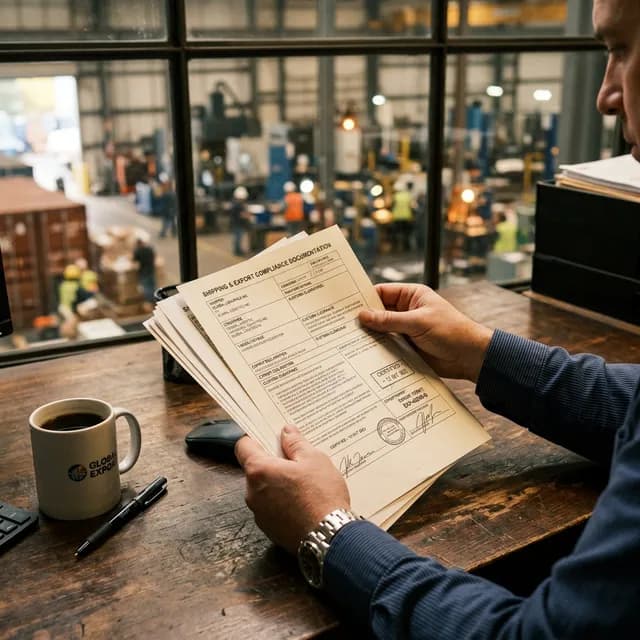
CBAM for Indian Foundries: From Sand Casting to EU Shipment, a Complete Emission-Accounting Guide
Indian foundries exporting to the EU? Navigate CBAM compliance with our expert guide. Learn emission accounting, data collection, and reporting for sand casting, die casting, and more. Get end-to-end CBAM help in India.
 Industry Guide
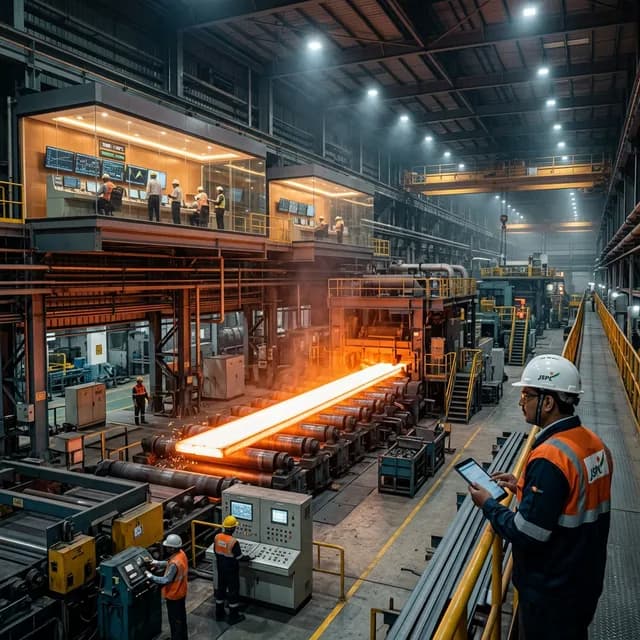
Steel Castings for Pumps and Valves: CBAM Guidance for Indian Foundries
Indian foundries exporting steel castings for pumps and valves to the EU face CBAM. This guide helps navigate compliance, reduce carbon tax, and secure market access.
 Industry Guide
Exporting Steel to Spain and Portugal Under CBAM: An Indian Supplier Guide
Indian steel exporters to Spain & Portugal: Navigate EU CBAM with this practical guide. Learn reporting, costs, and how to stay compliant. Get expert help for your CBAM journey.