Shipping through Rotterdam or Antwerp? CBAM attaches at the port — be ready. Free this quarter.
Rotterdam and Antwerp are India's gateway to the EU — a huge share of India's steel and aluminium enters Europe there, including cargo bound for German or French buyers. CBAM attaches where goods are released for free circulation, which is frequently at these ports — and the declarant is often a Dutch or Belgian customs broker or fiscal representative with zero tolerance for missing emission data. This quarter, CarbonSettle prepares your complete, declarant-ready CBAM dataset for free — verified actuals that cut the bill by up to 40% versus EU defaults. The report is yours to keep.
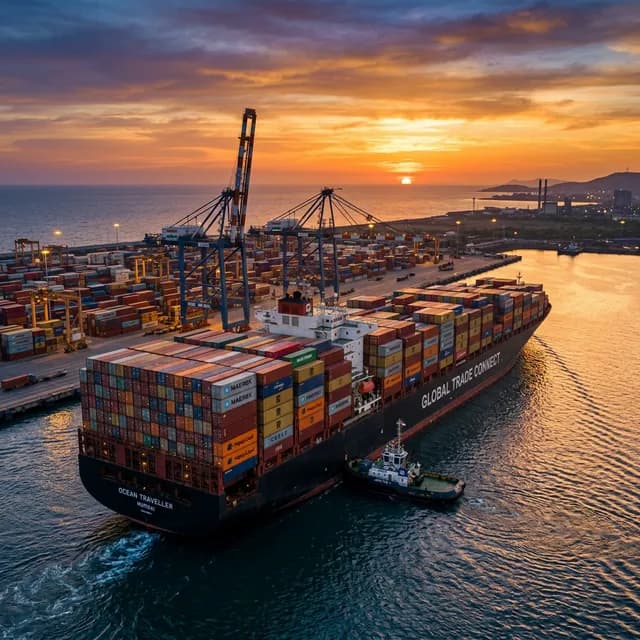
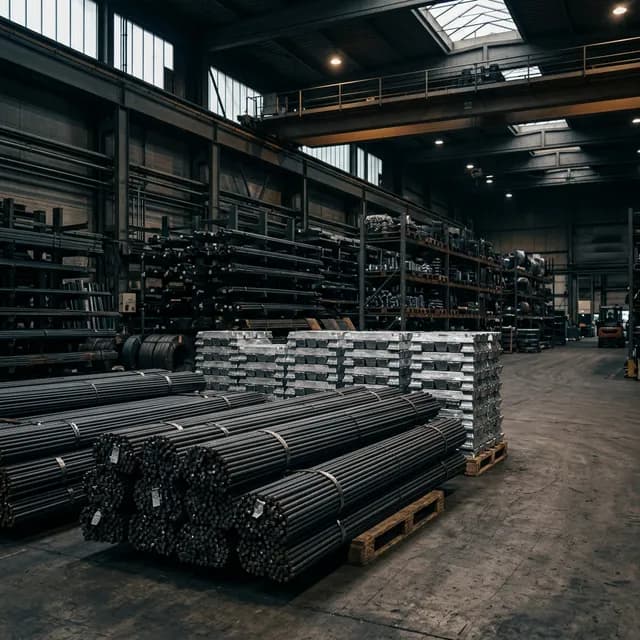
Where your goods clear customs is where CBAM attaches
CBAM obligations attach where goods are released for free circulation in the EU — regardless of where they are finally consumed. Move on from Rotterdam or Antwerp under customs supervision and the obligation defers to the destination member state; release at the port, and the Dutch or Belgian declarant on that customs entry is responsible. In practice that declarant is frequently a customs broker, fiscal representative or logistics provider acting for your buyer — a party Indian exporters often never meet until a data demand lands.
That party has zero tolerance for missing emission data: they either apply marked-up EU defaults against your goods or refuse the file. Either outcome lands on your buyer's cost — and comes back to you as a price cut or a re-sourced order. New to CBAM? Start with our complete India guide or talk to us about your Benelux-routed shipments.
What India lands at Rotterdam and Antwerp that CBAM covers
The Netherlands and Belgium buy distribution-grade volume: flat and coated steel, tubes, bars, fasteners and aluminium for trading houses, service centres and stockists — all clearing under CBAM-covered CN codes. Check the code on your export invoice; the full directory is in our CN code directory.
| CN code | Product category | Risk |
|---|---|---|
| 7208–7212 | Flat-Rolled Steel (Hot, Cold & Coated) | Very High |
| 7210 / 7212 | Galvanized & Coated Sheet — incl. Boxes & Formats | Very High |
| 7304–7306 | Steel Tubes & Pipes | High |
| 7213–7215 | Bars, Rods & Wire Rod | High |
| 7318 | Fasteners — Screws, Bolts, Nuts, Studs | High |
| 7326 / 7325 | Forged, Machined & Cast Articles | High |
| 7224–7229 | Alloy Steel Products | Medium |
| 7601 / 7604 / 7616 | Aluminium — Unwrought, Extrusions & Articles | High |
What the declarant at the port needs from you, every quarter
Whether it's your Dutch buyer, a Belgian fiscal representative or a customs broker acting for a customer deeper in Europe — the party filing at Rotterdam or Antwerp files on your numbers. These five deliverables are what the request actually contains, and what CarbonSettle produces from the plant documents you already keep.
- 01
Embedded emissions per CN code
Specific embedded emissions in tCO₂ per tonne, calculated per CN code — Scope 1 (your furnaces and fuel), Scope 2 (your electricity) and precursor emissions — in the EU methodology and format the declarant files. A customs broker filing on behalf of your buyer will not reconstruct this; they need it delivered, complete.
- 02
Installation and operator data
Your plant identified as a CBAM "installation": name, address, geo-coordinates, production routes and the reporting period. Brokers and fiscal representatives processing hundreds of files reject datasets where the installation record is incomplete or inconsistent between quarters.
- 03
Verified actuals, not defaults
In the definitive phase, default values carry an escalating markup — 10% in 2026 rising to 30% by 2028. A declarant with no verified actuals for your consignment simply applies the default; the inflated cost lands on your buyer and, commercially, on your next negotiation.
- 04
Consistency, quarter after quarter
The declarant reconciles your emission data against tonnage, CN codes and prior quarters. A gateway declarant handling many suppliers has no bandwidth for anomalies — a number that moves without explanation is a file they will not carry, so consistency is what keeps your goods moving.
- 05
Questionnaire and query answers
The data request from the broker, the buyer's CBAM questionnaire, the follow-up query on a precursor line — answered in full, on time, in the requested format. We answer them for you, so the party clearing your goods never has a reason to fall back to defaults.
What gets filed at the port — defaults vs your actuals
Indian BF-BOF steel runs about 2.1–2.2 tCO₂/t on verified actuals — well under the EU default. At certificate prices of ~€70–80/tCO₂ (tracking the EU ETS), the default-vs-actuals gap is roughly €250–270/t against €65–170/t — €80,000–180,000 per 1,000 tonnes that the declarant at Rotterdam or Antwerp files against your goods when no actuals arrive. All values below are tCO₂ per tonne of crude steel; savings are per 1,000 t at ~€80/t CO₂. Full numbers by route in the India CBAM Cost Index.
Representative midpoints. The red zone is the markup an EU default applies when no verified actual is filed — that gap is what gets declared against your consignments at the port, and what CarbonSettle removes.
| Production route | India typical | EU average | EU default value | Savings with actuals |
|---|---|---|---|---|
| BF-BOF (Blast Furnace) | 2.2–2.8 | 1.4–1.8 | 3.5+ | ₹56–80 lakh |
| EAF (Electric Arc Furnace) | 0.8–1.4 | 0.3–0.5 | 2.0+ | ₹48–72 lakh |
| DRI/Sponge Iron + EAF | 1.8–2.4 | 1.0–1.2 | 3.0+ | ₹40–64 lakh |
| IF (Induction Furnace) | 1.2–2.0 | 0.5–0.8 | 2.5+ | ₹36–56 lakh |
The default-value markup only gets worse
The markup on default values escalates from 10% in 2026 to 30% by 2028, and the free-allocation phase-out runs to 2034 — so the same missing data costs more against your goods every year. Trading houses and service centres pricing deal by deal see that gap in landed cost immediately. Verified actuals, filed once per quarter, remove the markup entirely and typically cut the CBAM cost by up to 40%. Steel producer? Go deeper in our steel exporters guide.
Indian clusters shipping through the gateway ports
Flat-steel mills, tube makers, fastener belts, foundries and aluminium producers — each with its own fuel mix, grid factor and captive-power story. We know the cluster before we walk in.
Mumbai–JNPT hinterland
Flat steel, coated sheet, tubes
India's busiest container gateway feeds the Rotterdam and Antwerp services — flat and coated steel from western-India mills dominates the lane
Very High riskMundra–Kandla belt
Flat products, pipes, aluminium
Gujarat mills and pipe makers shipping breakbulk and containers direct to North-Sea ports — large consignments released at the port for trading-house buyers
Very High riskLudhiana
Fasteners, cold-forged parts (CN 7318)
Fastener consignments clearing at Antwerp for Benelux distributors and onward EU supply — every carton is a CBAM good
High riskRajkot
Castings, forgings, fasteners
Foundry and forging cluster whose castings and machined parts route through NL/BE logistics hubs to buyers across the single market
High riskSteel tube & pipe belt
ERW, seamless & precision tubes
Tube makers under CN 7304–7306 supplying Benelux stockists and project cargo cleared at Rotterdam and Antwerp
High riskAluminium belt
Unwrought aluminium, extrusions, articles
Smelters and extruders shipping to Benelux traders and processors — aluminium's wide default gaps make the data question urgent
High riskA CBAM data demand from a Dutch broker just landed. Now what?
Don't ignore it because the sender isn't your buyer — a customs broker or fiscal representative filing for your buyer is exactly the party who decides whether your goods are declared on actuals or on marked-up defaults. And don't reply with estimates: a partial dataset is treated as no dataset. Everything they ask for is answerable from documents you already keep — electricity bills, fuel and gas invoices, production logs, and your metal suppliers' precursor data.
CarbonSettle maps your plant boundary, computes embedded emissions per CN code under the EU methodology, chases your precursor suppliers until every input line is closed, and returns the declarant-ready dataset plus completed answers — in the structure and format the party at the port files. Quarter after quarter, consistently, so your numbers reconcile and your consignments keep moving.
Released at Rotterdam, or transiting on? Who files depends on the customs entry
If your container is released for free circulation at Rotterdam or Antwerp, the declarant on that Dutch or Belgian customs entry carries the CBAM obligation — even when the goods are trucked on to a buyer in Germany or France the same week. If instead the goods move onward under customs supervision and are released in the destination member state, the obligation defers there and that buyer's declarant files — the setup we cover in our Germany lander. The exact arrangement varies deal by deal; your importer's declarant confirms it.
What never varies: neither routing changes the CBAM bill. The only lever is the emission data filed against your consignments — verified actuals versus marked-up defaults — and the same dataset from your plant serves whichever party files.

What will CBAM cost your shipments?
Pick your product, drop your number — a named CBAM expert sends your estimate on WhatsApp the same day, in your language. No forms, no software, no obligation.
CBAM at Rotterdam and Antwerp, in plain English
My goods land at Rotterdam but my buyer is German — who files the CBAM declaration?
▼
What happens if my shipment arrives at Rotterdam or Antwerp without emission data?
▼
Does using a fiscal representative or customs broker change my CBAM duty?
▼
Why am I getting CBAM data requests from a Dutch logistics company I've never heard of?
▼
Who actually buys Indian steel in the Netherlands and Belgium?
▼
How do I get declarant-ready CBAM data without an in-house carbon team?
▼
Declarant-ready CBAM data for your gateway shipments. Free.
Steel mill, tube maker, fastener plant, foundry or aluminium producer — if your goods clear at Rotterdam or Antwerp, we prepare the full, declarant-ready CBAM dataset and answer every data demand, whoever sends it. We cover your first report (April–June 2026) so an inflated EU default never costs you an order. Continue only if you choose to.
Each report is a managed, expert-led engagement, so we take on a limited number of exporters free each quarter.