Navigating CBAM for Indian Exporters: A Practical Guide to the Communication Template
The Carbon Border Adjustment Mechanism (CBAM), established by Regulation (EU) 2023/956, represents a significant shift in how the European Union addresses carbon leakage and climate change. For Indian manufacturers exporting to the EU, especially those in sectors like steel, cement, aluminium, fertilisers, and hydrogen, understanding and accurately completing the CBAM Communication Template is not just a regulatory hurdle – it's a critical step to maintaining market access and avoiding substantial financial penalties. This article provides a high-authority, practical, and field-by-field walkthrough of the CBAM Communication Template, specifically tailored for Indian MSMEs and exporters.
The transitional period, which began on October 1, 2023, requires Indian exporters to provide their EU importers with crucial embedded emissions data. This data, often communicated via the template, is then used by the EU importer to fulfil their quarterly reporting obligations to the European Commission. While no financial levy is imposed during this phase, accurate reporting now is paramount for preparing for the definitive phase starting January 1, 2026, when actual financial obligations based on embedded emissions will kick in.
This guide will demystify the template, offering actionable steps for factory owners, compliance officers, and CFOs in industrial hubs like Ludhiana, Gujarat, Pune, and Jamshedpur. We'll cover everything from data collection strategies to understanding complex emission calculations, ensuring your Indian operations are fully prepared.
Key Takeaways
- CBAM is Real and Urgent: The transitional phase (Oct 2023 - Dec 2025) requires accurate embedded emissions reporting, preparing for financial obligations from January 2026.
- The Communication Template is Key: This document is how Indian exporters convey critical emissions data to their EU importers for quarterly reporting.
- Data Accuracy is Paramount: Inaccurate data can lead to penalties for EU importers (and reputational damage for you), and higher CBAM costs for your products in 2026.
- Indian Context Matters: This guide addresses specific challenges and data sources relevant to Indian manufacturing, including local utility providers and operational practices.
- End-to-End Support is Available: Services like CarbonSettle offer complete hand-holding, taking the entire CBAM compliance burden off your shoulders.
What is the CBAM Communication Template and Why is it Crucial for Indian Exporters?
The CBAM Communication Template is a standardised document, often provided in an Excel format by the European Commission, designed to facilitate the exchange of embedded emissions data between non-EU exporters (like those in India) and their EU importers. It is crucial for Indian exporters because it's the primary mechanism through which your factory's carbon footprint, embedded in the goods you ship to the EU, is communicated to the party responsible for CBAM reporting in Europe.
During the transitional phase (October 2023 - December 2025), EU importers must submit quarterly reports detailing the embedded emissions of CBAM goods imported. Without accurate data from Indian suppliers, these importers face the risk of using default values, which are generally higher and can lead to increased future CBAM costs for your products, or even penalties ranging from €10 to €50 (approx. ₹900 to ₹4,500) per tonne of unreported emissions. Providing this template accurately filled out demonstrates your commitment to compliance and strengthens your relationship with your European buyers. It’s your factory’s carbon passport to the EU market.
Preparing for Template Completion: Essential Pre-requisites for Indian Manufacturers
Before diving into the template fields, Indian manufacturers need to gather specific data and understand key concepts. This preparatory phase is critical for accurate reporting and efficient compliance.
-
Identify CBAM-Applicable Products and HS/CN Codes: The first step is to confirm if your exported products fall under the CBAM scope. This includes specific categories of iron and steel, cement, aluminium, fertilisers, and hydrogen. Each product is identified by its Combined Nomenclature (CN) code, which is the EU's version of the Harmonized System (HS) code. You can cross-reference your product's HS code with the CBAM CN code directory to confirm applicability. For example, specific types of steel rebar (CN 7214) or aluminium foil (CN 7607) are covered.
-
Understand the Reporting Period: CBAM reporting is quarterly. You need to collect data for each quarter of the year (e.g., Q4 2023: October-December, Q1 2024: January-March, etc.). Ensure your data collection systems can segment information by these periods.
-
Gather Production Data: This includes total production volumes (in tonnes), specific production processes used, and the quantity of CBAM goods exported to the EU during the reporting period.
-
Collect Energy Consumption Data: This is perhaps the most critical data point. You'll need:
- Electricity Bills: From your local utility providers like MSEDCL (Maharashtra), UGVCL (Gujarat), TANGEDCO (Tamil Nadu), or others. These bills will show total electricity consumption (in kWh) and, ideally, the grid emission factor (if provided, though often you'll need a national average).
- Fuel Invoices: For natural gas, coal, furnace oil, pet coke, diesel, etc. (in appropriate units like Nm³, tonnes, litres).
- Steam/Heat Consumption: If applicable, from internal generation or external suppliers.
-
Identify Precursors and Embedded Emissions: For complex products like steel or aluminium, the emissions embedded in intermediate goods (precursors) are also relevant. For example, in steel production, the embedded emissions of pig iron or direct reduced iron (DRI) used as inputs must be accounted for. This often requires reaching out to your Indian suppliers for their emission data, a process that can be challenging but is essential for accuracy.
-
Understand Emission Factors: These are values that convert the quantity of fuel or energy consumed into CO2 equivalent emissions. The EU provides default emission factors, but using specific factors for your fuels (e.g., from Indian government sources or verified lab reports) can lead to more accurate, and potentially lower, reported emissions.
-
Establish Data Collection Protocols: Implement a robust system for collecting, storing, and verifying all relevant data. This could involve assigning a dedicated compliance officer or team within your factory in Ludhiana or Pune.
See what CBAM will cost your buyer
Free 30-second check — pick your product and tonnage, get your buyer-side savings number.
Field-by-Field Walkthrough of the CBAM Communication Template
The CBAM Communication Template typically consists of several sections, each requiring specific information. While the exact layout might vary slightly, the core data points remain consistent. We will break down the essential fields and provide guidance for Indian exporters.
Section 1: General Information and Exporter Details
This section identifies the parties involved and the reporting period.
- Reporting Period (e.g., Q4 2023): Clearly state the quarter and year the data pertains to (e.g., "October 1 – December 31, 2023").
- Exporter Name: Your company's legal name (e.g., "Shree Ganesh Steel Industries Pvt. Ltd.").
- Exporter Address: Full factory address in India (e.g., "Plot No. 123, GIDC Estate, Vapi, Gujarat, India").
- Exporter Contact Person: Name, email, and phone number of the person responsible for CBAM queries (e.g., "Mr. Rajesh Kumar, Compliance Manager, rajesh.kumar@shreeganeshsteel.com, +91 9876543210").
- EU Importer Name: The name of your EU customer (e.g., "EuroMetals GmbH"). This helps your importer match the data to their records.
- EU Importer EORI Number: The Economic Operators Registration and Identification (EORI) number of your EU importer. This is a unique identifier for customs purposes. Your importer must provide this to you.
- Date of Template Completion: The date you fill out the template.
Indian Context: Ensure all contact details are accurate and readily available for your EU importer to reach out if clarification is needed.
Section 2: Product-Specific Information
This section details the specific CBAM goods being exported.
- Product Description: A clear, concise description of the goods (e.g., "Hot-rolled non-alloy steel bars," "Portland cement clinker," "Primary aluminium ingots").
- CN Code (Combined Nomenclature Code): The 8-digit CN code for the product. This is critical for classification. For example, steel bars might be 7214.20.00. Use the CBAM CN code directory to verify.
- Quantity of CBAM Goods Exported to EU (Tonnes): The total mass of the specific product exported to the EU during the reporting period, in metric tonnes. This must align with your shipping documents and invoices.
- Country of Origin: "India."
- Production Route/Process: Briefly describe the manufacturing method (e.g., "Electric Arc Furnace (EAF) with scrap," "Blast Furnace (BF) with basic oxygen furnace (BOF)," "Dry process cement production," "Hall-Héroult process for aluminium"). This helps in understanding the emission profile.
Indian Context: For MSMEs, ensuring accurate weighing and recording of exported quantities is crucial. Many smaller units might rely on manual logs, which need to be meticulously maintained.
Section 3: Direct Embedded Emissions Data
This is the core of the template, requiring detailed calculations of emissions from your production processes. Direct emissions are those released from your own facilities.
-
Total Direct Emissions (Tonnes CO2e): This is the sum of all direct emissions from fuel combustion and process emissions attributable to the production of the exported CBAM goods. This is NOT your factory's total emissions, but the portion allocated to the specific products shipped to the EU.
- How to Calculate:
- Identify Emission Sources: List all fuels consumed (natural gas, coal, furnace oil, diesel, LPG, pet coke) and any process emissions (e.g., CO2 from calcination in cement production, or from reduction in primary aluminium production).
- Quantify Fuel/Material Consumption: Record the exact quantity of each fuel/material consumed for the production of the exported CBAM goods during the reporting period. This often requires an allocation method if your factory produces other goods too.
- Apply Emission Factors: Multiply the quantity of each fuel/material by its respective emission factor (e.g., tonnes of CO2e per tonne of coal, or per Nm³ of natural gas).
- Example for Indian Exporters: If your factory in Ludhiana used 1,000 tonnes of Indian coking coal for steel production during the quarter, and the emission factor for that coal is 2.5 tonnes CO2e/tonne, that's 2,500 tonnes CO2e. For natural gas supplied by GAIL, you'd use its specific emission factor.
- Sum Emissions: Add up all emissions from different fuels and processes.
- How to Calculate:
-
Specific Direct Emissions (Tonnes CO2e per Tonne of Product): This is calculated by dividing the "Total Direct Emissions" by the "Quantity of CBAM Goods Exported to EU." This metric provides the carbon intensity of your product.
Indian Context: Many Indian factories, especially MSMEs, may not have sophisticated continuous emission monitoring systems. Relying on fuel purchase records, production logs, and applying standard emission factors (e.g., from IPCC guidelines or Indian government publications) is a common approach. For electricity, if you generate your own power, you must account for those emissions here.
Section 4: Indirect Embedded Emissions Data (Electricity)
This section focuses on emissions from the electricity consumed during the production of your CBAM goods.
-
Total Electricity Consumption (MWh or kWh): The total amount of electricity consumed for the production of the exported CBAM goods during the reporting period. This data comes directly from your electricity bills (e.g., from MSEDCL, UGVCL, TANGEDCO). Remember to allocate if your factory produces other goods.
-
Grid Emission Factor (Tonnes CO2e/MWh or kWh): This is the emission intensity of the electricity you purchased from the grid.
- How to Obtain:
- Supplier-Specific (Ideal): If your utility provider (e.g., Tata Power, Adani Electricity) offers a specific grid emission factor for your supply, use that.
- National Average (Common for India): More often, Indian exporters will need to use the national grid emission factor for India, as published by the Central Electricity Authority (CEA) or other reputable sources. This is typically around 0.7-0.8 tonnes CO2e per MWh (or 0.0007-0.0008 tonnes CO2e per kWh).
- EU Default (Last Resort): If no other data is available, the EU provides default emission factors, but these are often higher than actual Indian grid factors, leading to higher CBAM costs.
- How to Obtain:
-
Total Indirect Emissions (Tonnes CO2e): Calculated by multiplying "Total Electricity Consumption" by the "Grid Emission Factor."
-
Specific Indirect Emissions (Tonnes CO2e per Tonne of Product): Calculated by dividing "Total Indirect Emissions" by the "Quantity of CBAM Goods Exported to EU."
Indian Context: For factories in Gujarat or Maharashtra, electricity bills will be your primary source. Ensure you convert kWh to MWh if the template requires MWh (1 MWh = 1000 kWh). If you have renewable energy contracts (e.g., solar power purchase agreements), ensure you can document the origin and associated zero-emission claims.
Section 5: Embedded Emissions from Precursors (For Complex Products)
For products like steel, aluminium, and some chemicals, the emissions embedded in the raw materials (precursors) used to make the final product are also considered. This is often the most challenging section for Indian exporters.
-
Precursor Name: The name of the intermediate product (e.g., "Pig Iron," "Alumina," "Ammonia").
-
Supplier Name: The name of the Indian supplier of the precursor.
-
Quantity of Precursor Used (Tonnes): The amount of precursor used to produce the exported CBAM goods.
-
Embedded Emissions of Precursor (Tonnes CO2e per Tonne of Precursor): This is the carbon intensity of the precursor itself. This data must come from your precursor supplier.
- Challenge for Indian Exporters: Many Indian precursor suppliers are not yet CBAM-aware or equipped to provide this data. This requires proactive engagement and potentially assisting your suppliers in calculating their own emissions.
- EU Default for Precursors: If your supplier cannot provide this data, the EU will allow the use of default values for precursors, which are generally very high and will significantly inflate your product's total embedded emissions. This is where a service like CarbonSettle can be invaluable, as we assist in supplier outreach and data collection.
-
Total Embedded Emissions from Precursors (Tonnes CO2e): Calculated by multiplying "Quantity of Precursor Used" by "Embedded Emissions of Precursor."
Indian Context: This section highlights the need for supply chain transparency. A steel manufacturer in Jamshedpur using pig iron from another Indian mill will need to obtain the embedded emissions data from that mill. This cascading data requirement means CBAM impacts beyond just the direct exporter.
Section 6: Total Embedded Emissions
This section consolidates all the calculated emissions.
- Total Embedded Emissions (Tonnes CO2e): Sum of "Total Direct Emissions," "Total Indirect Emissions," and "Total Embedded Emissions from Precursors." This is the grand total of emissions attributed to your exported CBAM goods.
- Specific Total Embedded Emissions (Tonnes CO2e per Tonne of Product): Total Embedded Emissions divided by the "Quantity of CBAM Goods Exported to EU." This is the final carbon intensity figure your EU importer will use.
Indian Context: This final figure is what will determine your actual CBAM tax liability from 2026. Aiming for the lowest, most accurate figure is key for maintaining competitiveness.
Section 7: Declaration and Verification
This section typically requires a formal declaration from the exporter.
- Declaration: A statement confirming the accuracy and completeness of the provided data, often signed by a senior official (e.g., CFO, CEO, or Compliance Head) of the Indian exporting company.
- Signature and Company Seal: Official signature and company seal (if applicable) to authenticate the document.
Indian Context: This declaration carries significant weight. Ensure that the data has been thoroughly reviewed and is auditable. While third-party verification is not mandatory during the transitional phase, it will become critical in the definitive phase. Preparing for future verification now will save time and resources.
2026 Regulatory Impact for Indian Exporters: The Definitive Phase
The transitional period (October 2023 - December 2025) is a learning phase, but it's a dress rehearsal for the definitive phase starting January 1, 2026. From this date, the financial implications of CBAM become real.
Key Changes from 2026:
- Financial Obligation: EU importers will be required to purchase and surrender CBAM certificates corresponding to the embedded emissions of the goods imported. The price of these certificates will be linked to the weekly average auction price of EU Emissions Trading System (ETS) allowances,
Compliance disclaimer
Strategies described here are for educational purposes. CBAM regulations (EU 2023/956) evolve quarterly — always verify with your accredited verifier before filing definitive reports.
We’ll do your entire CBAM quarter — ₹0.
A dedicated CBAM expert plus our AI do the whole April–June 2026 report end-to-end: your factory data in, verified actual emissions out — so your buyer pays your real number, not the inflated EU default. The report is yours to keep.
Start your report by 30 September 2026 to claim the free quarter.
Bills, logs, photos — one afternoon.
Verified actuals, EU XML, audit standard.
Yours to keep. ₹0 this quarter.
Prefer to talk? +91 76250 95885 · or run a 30-second savings check first
The complete CBAM guide for Indian exporters
The full compliance roadmap — CN codes, emissions, deadlines, penalties and how to keep your EU orders.
More CBAM guidance for Indian exporters
 Technical Compliance
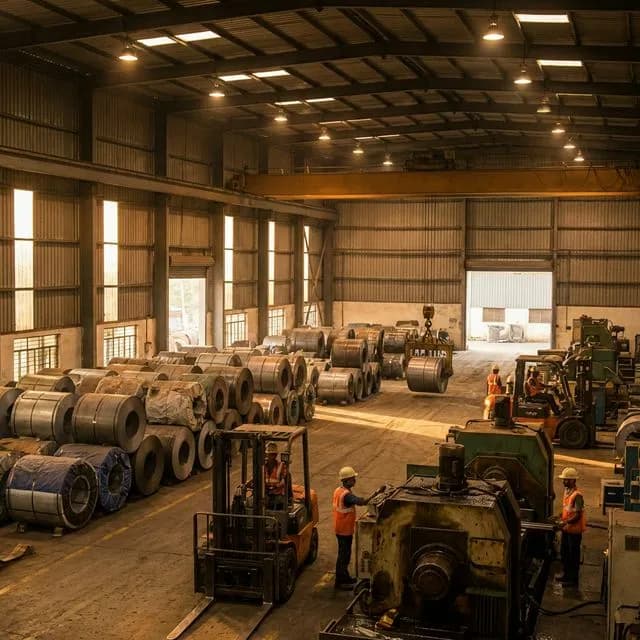
The CBAM Communication Report: What It Is and Why Buyers Ask for It
Indian exporters, understand the CBAM Communication Report: what it is, why EU buyers demand it, and how to prepare. Get expert CBAM compliance services in India.
 Technical Compliance
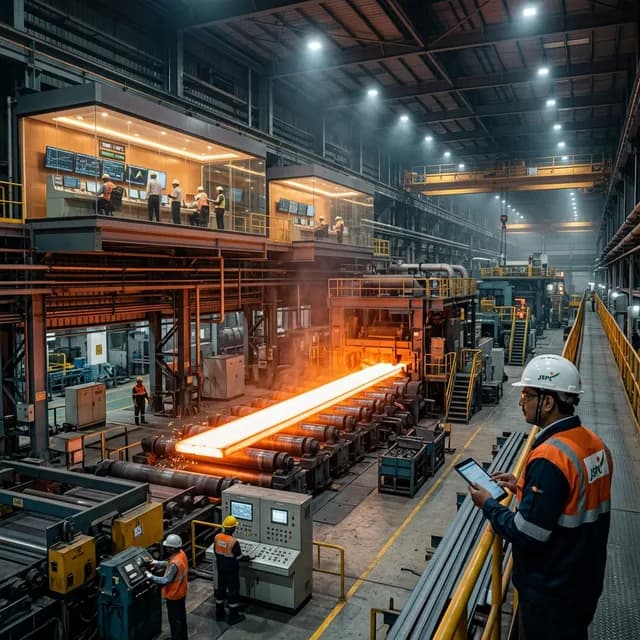
Responding to EU Buyer CBAM Questionnaires: A Template-Driven Approach for Indian Exporters
Indian exporters, learn how to master EU buyer CBAM questionnaires. This guide provides templates, data collection strategies, and expert tips for seamless CBAM compliance and reporting. Get end-to-end support from CarbonSettle.
 Technical Compliance
Aluminium Extrusion Producers: CBAM Emission Calculation Walkthrough
A comprehensive guide for aluminium extrusion producers on CBAM emission calculations and compliance.