Exporting to France? Your buyer's CBAM data demand — answered. Free this quarter.
France is a major EU destination for Indian steel, aluminium and auto components — and French OEMs, Tier-1s and their declarants scrutinise supplier carbon intensity as closely as any buyer in Europe. Their Authorised Declarant surrenders certificates on your embedded emissions; your data quality decides their cost. This quarter, CarbonSettle prepares your complete, declarant-ready CBAM dataset for free — verified actuals that cut the bill by up to 40% versus EU defaults. The report is yours to keep.
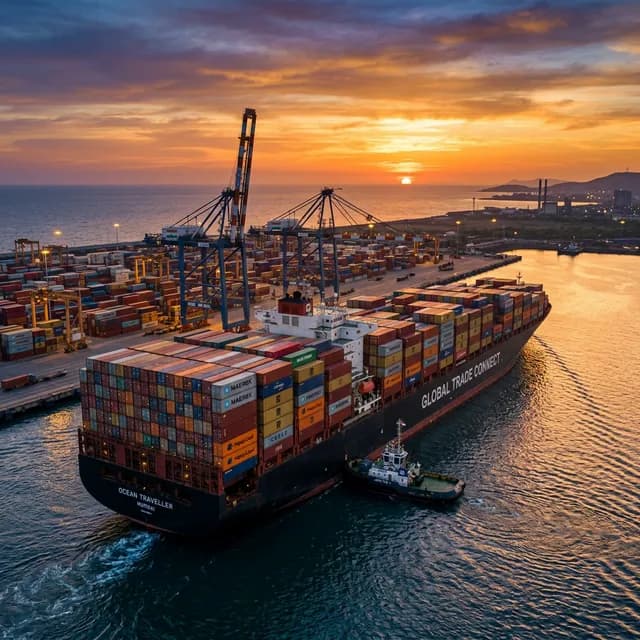
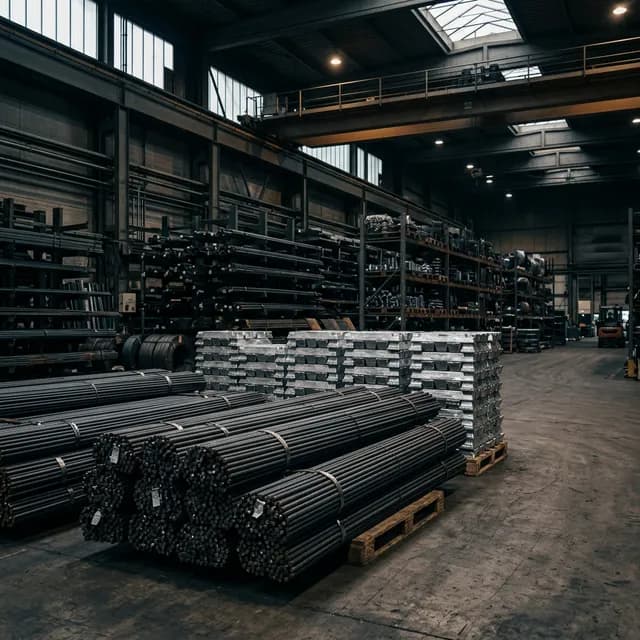
Why French buyers scrutinise supplier carbon so closely
France runs one of the EU's lowest-carbon grids, largely nuclear, so French manufacturers already sit on low Scope 2 emissions and know exactly where carbon enters their supply chain — a high-emission imported input stands out. Their Authorised Declarant surrenders CBAM certificates as a real, calculable line in landed cost, run with the documentary rigour French customs and declarants are known for; incomplete supplier data is a filing risk they refuse to carry.
The consequence is simple: your emission data quality directly sets your French buyer's cost. Verified actuals make their landed price predictable; no data forces them onto inflated defaults with an escalating markup — a gap they will negotiate out of your price or resolve by re-sourcing. New to CBAM? Start with our complete India guide or talk to us about your French accounts.
What India ships to France that CBAM covers
Auto components, aluminium articles, steel and fasteners dominate India's France-bound trade — and they clear EU customs under CBAM-covered CN codes. Check the code on your export invoice; the full directory is in our CN code directory.
| CN code | Product category | Risk |
|---|---|---|
| 7326 | Other Articles of Iron/Steel — Forged & Machined Parts | Very High |
| 7318 | Fasteners — Screws, Bolts, Nuts, Studs | Very High |
| 7325 | Cast Articles of Iron or Steel | High |
| 7304–7306 | Steel Tubes & Pipes | High |
| 7208–7212 | Flat-Rolled Steel (Hot & Cold) | High |
| 7213–7215 | Bars, Rods & Wire Rod | Medium |
| 7224–7229 | Alloy Steel Products | Medium |
| 7604 / 7616 | Aluminium Extrusions, Castings & Machined Parts | High |
What your French importer needs from you, every quarter
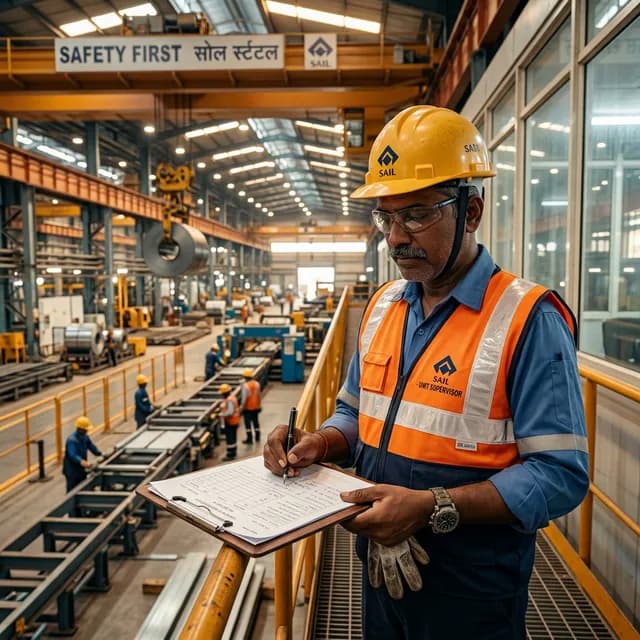
Their Authorised Declarant files on your numbers. These five deliverables are what a French buyer's CBAM request actually contains — and what CarbonSettle produces from the plant documents you already keep.
- 01
Embedded emissions per CN code
Specific embedded emissions in tCO₂ per tonne, calculated per CN code — Scope 1 (your furnaces and fuel), Scope 2 (your electricity) and precursor emissions — in the EU methodology and reporting format your buyer's Authorised Declarant files.
- 02
Installation and operator data
Your plant identified as a CBAM "installation": name, address, geo-coordinates, production routes and the reporting period. French declarants reject datasets where the installation record is incomplete or inconsistent between quarters.
- 03
Verified actuals, not defaults
In the definitive phase, default values carry an escalating markup — 10% in 2026 rising to 30% by 2028. A French importer paying that markup on your goods will price it into your next negotiation, or move the volume to a supplier who files actuals.
- 04
Consistency, quarter after quarter
French buyers reconcile your emission data against tonnage, CN codes and prior quarters. A number that moves without explanation triggers questions — and a supplier who answers them with documentation keeps the programme.
- 05
Questionnaire and audit answers
The CBAM questionnaire, the supplier scorecard update, the verifier query — French procurement expects them answered in full, on time, in their format. We answer them for you, and your buyer relationship stays protected.
What your French buyer pays — on defaults vs your actuals
Indian BF-BOF steel runs about 2.1–2.2 tCO₂/t on verified actuals — well under the EU default. At certificate prices of ~€70–80/tCO₂ (tracking the EU ETS), the default-vs-actuals gap is roughly €250–270/t against €65–170/t — €80,000–180,000 per 1,000 tonnes that your French buyer either overpays or negotiates out of your price. All values below are tCO₂ per tonne of crude steel; savings are per 1,000 t at ~€80/t CO₂. Full numbers by route in the India CBAM Cost Index.
Representative midpoints. The red zone is the markup an EU default applies when no verified actual is filed — that gap is what your French buyer overpays, and what CarbonSettle removes.
| Production route | India typical | EU average | EU default value | Savings with actuals |
|---|---|---|---|---|
| BF-BOF (Blast Furnace) | 2.2–2.8 | 1.4–1.8 | 3.5+ | ₹56–80 lakh |
| EAF (Electric Arc Furnace) | 0.8–1.4 | 0.3–0.5 | 2.0+ | ₹48–72 lakh |
| DRI/Sponge Iron + EAF | 1.8–2.4 | 1.0–1.2 | 3.0+ | ₹40–64 lakh |
| IF (Induction Furnace) | 1.2–2.0 | 0.5–0.8 | 2.5+ | ₹36–56 lakh |
The default-value markup only gets worse
The markup on default values escalates from 10% in 2026 to 30% by 2028, and the free-allocation phase-out runs to 2034 — so the same missing data costs your French buyer more every year. French procurement teams model exactly this trajectory in supplier decisions. Verified actuals, filed once per quarter, remove the markup entirely and typically cut the CBAM cost by up to 40%.
Indian clusters shipping to France
Auto-component belts, forging hubs, foundry towns, fastener capitals and tube makers — each with its own fuel mix, grid factor and captive-power story. We know the cluster before we walk in.
Faridabad–Gurugram (NCR)
Forgings, machined parts, sheet-metal
Dense auto-component belt supplying French OEM and Tier-1 programmes — forged and machined parts under CN 7326 dominate the Renault and Stellantis supply chains
Very High riskChennai–Oragadam
Machined & precision components
OEM-anchored cluster exporting powertrain and chassis components into French-led vehicle platforms and Tier-1 programmes
Very High riskPune–Chakan
Forgings, aluminium die-casting
Large forgers and die-casters serving French vehicle programmes — aluminium articles under CN 7616 face wide default gaps
High riskLudhiana
Fasteners, cold-forged parts (CN 7318)
India's fastener capital ships to French Tier-1s and industrial distributors — every consignment clears under a CBAM-covered CN code
High riskRajkot
Castings, forgings, fasteners
Foundry and forging cluster — brake parts, housings, machined castings under CN 7325 and 7326 into French machinery and vehicle makers
High riskSteel tube & pipe belt
Precision tubes, ERW & seamless pipes
Tube and pipe makers under CN 7304–7306 supplying French engineering, construction and hydraulics buyers
High riskA French CBAM questionnaire just landed. Now what?
Don't reply with estimates, and don't leave fields blank — a partial answer is scored the same as no answer, and defaults get applied against your goods. The questionnaire is fully answerable from documents you already keep: electricity bills, fuel and gas invoices, production logs, and your metal suppliers' precursor data.
CarbonSettle maps your plant boundary, computes embedded emissions per CN code under the EU methodology, chases your precursor suppliers until every input line is closed, and returns the completed questionnaire plus the declarant-ready dataset — in the structure and format your French buyer files. Quarter after quarter, consistently, so your numbers reconcile and your scorecard holds.
Le Havre, Marseille-Fos, Dunkirk — or via Rotterdam — the port doesn't change CBAM
A common question from exporters routing through Rotterdam or Antwerp to French customers: no, transit doesn't change anything. CBAM applies when goods are released for free circulation anywhere in the EU customs union — it is destination-EU-wide, not port-specific. Whether your container lands at Le Havre, Marseille-Fos, Dunkirk or transits another EU port, your French buyer's Authorised Declarant declares the same embedded emissions on the same CN codes.
There is no routing lever. The only lever that changes the bill is the emission data filed against your consignments — verified actuals versus marked-up defaults.

What will CBAM cost your shipments?
Pick your product, drop your number — a named CBAM expert sends your estimate on WhatsApp the same day, in your language. No forms, no software, no obligation.
Selling to France under CBAM, in plain English
Does my French buyer pay CBAM, or do I?
▼
What data will a French OEM or Tier-1 ask for?
▼
Can I keep using default values for my French customers?
▼
Why do French buyers scrutinise supplier carbon intensity so closely?
▼
My French buyer is an OEM — who actually files the CBAM declaration?
▼
My goods land at Le Havre or Marseille-Fos — does the port change my CBAM obligation?
▼
Will my French customer drop me over CBAM?
▼
Your French buyer's CBAM data, done for you. Free.
Forge shop, foundry, fastener maker, tube mill, aluminium plant or steel producer — if your goods reach a French buyer, we prepare the full, declarant-ready CBAM dataset and questionnaire answers. We cover your first report (April–June 2026) so an inflated EU default never costs you an order. Continue only if you choose to.
Each report is a managed, expert-led engagement, so we take on a limited number of exporters free each quarter.