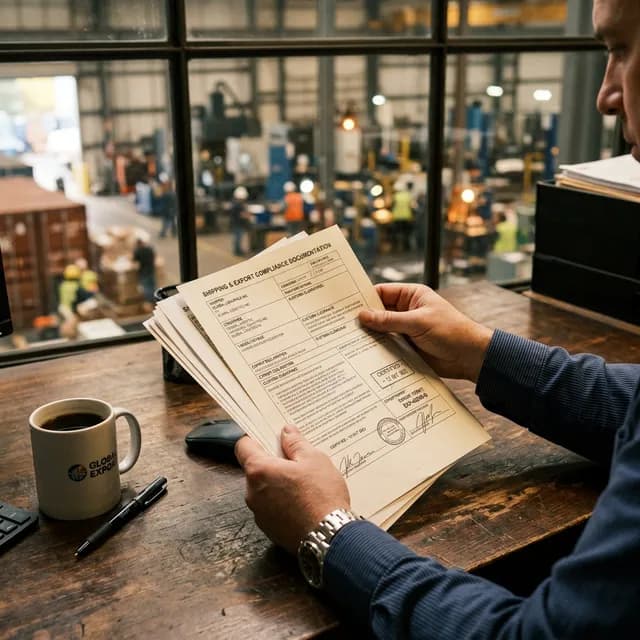
Navigating CBAM: A Critical Guide for Indian Steel Casting Exporters
The European Union's Carbon Border Adjustment Mechanism (CBAM), established by Regulation (EU) 2023/956, is fundamentally reshaping global trade, particularly for carbon-intensive industries. For Indian foundries specializing in steel castings for pumps and valves, understanding and complying with CBAM is not just a regulatory hurdle but a strategic imperative to maintain access to the lucrative European market. This comprehensive guide is designed specifically for Indian manufacturers, compliance officers, and factory owners in cities like Ludhiana, Pune, and Jamshedpur, offering actionable insights and practical steps to navigate CBAM effectively.
Key Takeaways
- CBAM is here: The transitional phase began October 1, 2023, requiring quarterly reporting of embedded emissions for goods like steel castings.
- Definitive phase in 2026: Financial obligations (CBAM certificates) begin January 1, 2026, based on reported emissions.
- High stakes for Indian foundries: Steel castings are a covered product, making compliance crucial for continued EU market access.
- Operational challenge: Accurate data collection, emission calculation, and supply chain engagement are paramount.
- Default values are expensive: Relying on EU default values can increase your CBAM tax by up to 40% compared to actual, verified emissions.
- CarbonSettle is your partner: We offer end-to-end CBAM compliance services, handling everything from data collection to report generation, ensuring you minimize costs and avoid penalties.
What is CBAM and Why Does it Matter for Indian Steel Casting Exporters?
CBAM is the EU's landmark climate policy designed to prevent "carbon leakage" – where EU companies might move carbon-intensive production outside the EU to countries with less stringent climate policies, or where EU imports might displace less carbon-intensive EU products. For Indian exporters of steel castings for pumps and valves, this means that the carbon emissions embedded in your products, from raw material extraction to your factory gate, will now be subject to a carbon price equivalent to that paid by EU domestic producers under the EU Emissions Trading System (ETS).
The transitional phase of CBAM commenced on October 1, 2023, requiring Indian exporters (via their EU importers) to report the embedded emissions of their goods without any financial payment. This reporting obligation is crucial as it lays the groundwork for the definitive phase starting January 1, 2026. In this definitive phase, EU importers will be required to purchase CBAM certificates corresponding to the embedded emissions of the imported goods. Without accurate reporting and eventual payment, your steel castings could face significant tariffs or even be blocked from entering the EU market. This directly impacts foundries in industrial hubs across India, from Rajkot to Coimbatore, who have built strong trade relationships with European buyers.
Identifying Your CBAM Exposure: Are Your Steel Castings Covered?
The first step for any Indian foundry is to confirm if their products fall under CBAM. Steel castings, particularly those used in pumps and valves, are unequivocally covered under the "Iron and Steel" category of CBAM.
Specifically, the relevant Combined Nomenclature (CN) codes for steel castings typically fall under Chapter 73 of the Harmonized System (HS) codes. For instance, common HS/CN codes for steel castings include:
- 7307: Tube or pipe fittings (for example, couplings, elbows, sleeves), of iron or steel. Many complex valve bodies and pump casings are classified here.
- 7325: Other cast articles of iron or steel. This is a broad category that often includes various types of steel castings.
- 7326: Other articles of iron or steel.
- 8413: Pumps for liquids, whether or not fitted with a measuring device; liquid elevators. (While this is for finished pumps, the castings within them are covered).
- 8481: Taps, cocks, valves and similar appliances for pipes, boiler shells, tanks, vats or the like, including pressure-reducing valves and thermostatically controlled valves. (Again, the castings within these are covered).
It is imperative for Indian exporters to verify the precise HS/CN codes of their specific steel casting products with their EU importers. Misclassification can lead to reporting errors or even non-compliance. For a detailed lookup, you can refer to our CBAM CN code directory.
See what CBAM will cost your buyer
Free 30-second check — pick your product and tonnage, get your buyer-side savings number.
Operational Steps: How Indian Foundries Can Prepare for CBAM Reporting
Effective CBAM compliance for Indian foundries hinges on meticulous data collection, accurate emission calculations, and proactive supply chain engagement. Here’s a practical roadmap:
1. Data Collection and Management: The Foundation of Compliance
The EU requires granular data on direct and indirect emissions. For steel castings, this means tracking energy consumption and raw material inputs.
- Direct Emissions (Scope 1): These are emissions from sources owned or controlled by your foundry.
- Fuel Consumption: Record monthly or quarterly consumption of natural gas, LPG, furnace oil, coal, coke, or any other fuel used in your melting furnaces, heat treatment processes, and power generation (if applicable). Keep detailed invoices and consumption logs.
- Process Emissions: While less significant for steel casting compared to primary steel production, any specific process emissions (e.g., from fluxing agents or specific chemical reactions) must be identified and quantified.
- Indirect Emissions (Scope 2): These are emissions from the generation of purchased electricity, heat, or steam.
- Electricity Bills: Collect all electricity bills from your utility providers (e.g., MSEDCL in Maharashtra, UGVCL in Gujarat, TANGEDCO in Tamil Nadu, or private suppliers). These bills typically show monthly consumption in kWh.
- Emission Factors: You will need country-specific or supplier-specific emission factors for electricity. The EU provides default values, but using India-specific factors (e.g., from the Central Electricity Authority or specific state grids) can often lead to lower reported emissions.
- Embedded Emissions from Precursors: This is a critical and often overlooked area for steel castings. You must account for the emissions embedded in the raw materials you purchase, primarily:
- Scrap Metal: While often considered low-carbon, the transportation and processing of scrap have associated emissions.
- Pig Iron/Sponge Iron: If you use virgin iron, the emissions from its production are significant. You will need to request emission data from your suppliers.
- Alloying Elements: Ferroalloys (e.g., ferrosilicon, ferromanganese, ferrochrome) have embedded emissions.
- Refractories, Binders, Sand: These also contribute to your product's overall carbon footprint.
Actionable Tip: Start digitizing your records immediately. Create a centralized system for invoices, consumption logs, and production data. This will be invaluable for quarterly reporting.
2. Emission Calculation Methodologies: EU Standards vs. Default Values
The EU prefers actual emissions data, calculated using one of the approved methodologies (e.g., "mass balance approach" or "calculation-based approach" as per the CBAM Implementing Regulation).
- Actual Emissions: This involves using your specific activity data (fuel consumption, electricity usage) combined with relevant emission factors. For example, if your foundry in Ludhiana uses 10,000 kWh of electricity from the Punjab State Power Corporation Ltd. and the grid emission factor is 0.75 tCO2e/MWh, your indirect emissions are 7.5 tCO2e.
- Default Values: If actual data is unavailable or unreliable, the EU allows the use of default values. However, these are generally conservative (higher) and can significantly increase your CBAM liability. For instance, the default emission factor for electricity in India could be as high as 0.8-0.9 tCO2e/MWh, potentially inflating your reported emissions.
- Precursor Emissions: For precursor materials like pig iron or ferroalloys, you must request emission data from your Indian suppliers. If they cannot provide it, you might have to use EU default values for those specific inputs, which can be penalizing.
Actionable Tip: Prioritize collecting actual data. Relying on default values, especially for electricity and key raw materials, could increase your CBAM tax by as much as 30-40% compared to using your actual, lower emissions. Consider this a direct cost saving opportunity.
3. Supply Chain Engagement: Your Suppliers are Your Partners
Your ability to report accurate embedded emissions for steel castings depends heavily on the data you receive from your upstream suppliers (e.g., suppliers of pig iron, ferroalloys, coke).
- Communicate Early: Inform your key suppliers about CBAM requirements and request their embedded emissions data for the materials they supply to you.
- Data Format: Guide them on the type of data needed (e.g., tCO2e per tonne of material) and the methodology used for their calculations.
- Long-Term Strategy: Encourage your suppliers to measure and reduce their own emissions, as this directly benefits your CBAM liability.
Actionable Tip: Start these conversations now. Many Indian suppliers may be unaware of CBAM's implications. This is a critical step that requires time and persistence.
4. Reporting Obligations: The Quarterly Cycle
During the transitional phase (October 2023 - December 2025), EU importers are responsible for submitting quarterly CBAM reports. However, the data for these reports must come from you, the Indian exporter.
- First Report: Due by January 31, 2024 (for Q4 2023 emissions).
- Subsequent Reports: Due by the end of the month following each quarter (e.g., April 30 for Q1, July 31 for Q2, October 31 for Q3).
- Content: Each report must detail the quantity of goods imported, the embedded emissions (direct and indirect), and the carbon price paid in the country of origin (if any).
Actionable Tip: Work closely with your EU importer to understand their reporting needs and deadlines. Provide them with accurate, timely data to avoid penalties for late or incorrect submissions.
2026 Regulatory Impact for Indian Exporters: The Definitive Phase and Financial Obligations
The definitive phase of CBAM, commencing January 1, 2026, marks a significant shift from reporting to financial obligations. This is when the "EU carbon tax India" truly comes into effect for your steel castings.
From 2026 onwards, your EU importers will be required to purchase CBAM certificates corresponding to the embedded emissions of your steel castings. The price of these certificates will be linked to the weekly average auction price of EU ETS allowances, expressed in EUR per tonne of CO2e. Historically, EU ETS prices have fluctuated, but they have often been in the range of €70-€100 per tonne of CO2e.
Example Scenario for an Indian Foundry:
Let's assume your foundry exports 1,000 tonnes of steel castings annually to the EU, and through meticulous calculation, you determine the embedded emissions to be 1.5 tonnes of CO2e per tonne of casting.
- Total Emissions: 1,000 tonnes * 1.5 tCO2e/tonne = 1,500 tCO2e.
- CBAM Certificate Cost (at €80/tCO2e): 1,500 tCO2e * €80/tCO2e = €120,000 per year.
- In INR (at ₹90/€): €120,000 * ₹90/€ = ₹1.08 Crore annually.
This significant cost highlights the importance of accurate emission measurement. If you rely on EU default values, which could be, for example, 2.0 tCO2e/tonne for steel castings, your annual cost could jump to €160,000 or ₹1.44 Crore. This potential difference of ₹36 Lakhs underscores the financial incentive to accurately measure and report your emissions.
Furthermore, the definitive phase will introduce verification requirements. Your reported emissions will need to be verified by an accredited verifier. This adds another layer of complexity and cost, emphasizing the need for robust internal data management and calculation processes.
Emission Reduction Strategies for Indian Steel Foundries
While compliance is the immediate goal, long-term success under CBAM requires a proactive approach to decarbonization. Reducing your embedded emissions directly translates to lower CBAM costs.
- Energy Efficiency:
- Furnace Optimization: Improve the efficiency of induction or arc furnaces. Regular maintenance, lining replacement, and process control can reduce energy consumption.
- Waste Heat Recovery: Implement systems to recover waste heat from furnaces or other high-temperature processes.
- LED Lighting & Efficient Motors: Simple upgrades can yield significant savings in electricity consumption.
- Fuel Switching:
- Natural Gas over Coal/Coke: If feasible and available (e.g., through city gas distribution networks in Pune or Gujarat), switching from coal or coke to natural gas can reduce emissions due to natural gas's lower carbon intensity.
- Biomass/Biofuels: Explore the use of sustainably sourced biomass or biofuels in heating processes, where technically viable.
- Increased Scrap Utilization: Maximizing the use of high-quality scrap metal can reduce the need for virgin iron, which has a much higher carbon footprint. Ensure your scrap sourcing is efficient and minimizes transportation emissions.
- Renewable Energy Procurement:
- On-site Renewables: Install rooftop solar panels or other on-site renewable energy generation.
- Green Power Purchase Agreements (PPAs): Explore options to purchase renewable energy directly from suppliers or through open access mechanisms from utilities like MSEDCL or UGVCL. This can significantly reduce your Scope 2 emissions.
- Process Optimization:
- Lean Manufacturing: Reduce waste and improve process flow to minimize energy and material consumption.
- Advanced Melting Technologies: Invest in more energy-efficient melting technologies when upgrading equipment.
Implementing these strategies requires upfront investment but offers long-term benefits, not just in reduced CBAM costs but also in operational efficiency and enhanced market reputation.
Common Challenges and Pitfalls for Indian MSMEs in Steel Casting
Indian MSMEs often face unique challenges in CBAM compliance:
- Lack of Awareness: Many smaller foundries are still unaware of the full scope and implications of CBAM.
- Data Gaps: Inconsistent record-keeping, especially for older facilities, can make it difficult to gather the required historical data.
- Technical Expertise: Calculating embedded emissions accurately requires specific technical knowledge that may not be readily available in-house.
- Supplier Engagement: Convincing upstream suppliers to provide their emissions data can be challenging, especially if they are also MSMEs.
- Cost of Compliance: Investing in new metering equipment, software (if chosen), or external consultants can be a burden for smaller enterprises.
- Language Barrier: Understanding complex EU regulations written in technical English can be difficult for some.
These challenges highlight the need for specialized support and guidance tailored to the Indian context. This is precisely where an end-to-end CBAM compliance service becomes invaluable.
How CarbonSettle Can Help: Your End-to-End CBAM Compliance Partner
Navigating the complexities of CBAM, from data collection in your factory in Jamshedpur to generating EU-compliant XML reports, can be daunting. This is where CarbonSettle steps in as India's #1 end-to-end CBAM compliance service. We are not a software platform; we are your dedicated team of CBAM experts who take your entire CBAM headache away.
We provide complete hand-holding, ensuring your Indian foundry remains compliant and competitive:
- Expert Data Collection & On-site Support: Our team works directly with your factory personnel in Ludhiana, Pune, or any other location. We help you identify and collect all necessary data – from electricity bills (MSEDCL, UGVCL, TANGEDCO), fuel invoices, and production logs to raw material purchase records. We understand the nuances of Indian industrial operations and can help bridge data gaps.
- Accurate Emission Calculations: We meticulously calculate your direct (Scope 1) and indirect (Scope 2) emissions for your steel castings, adhering strictly to EU methodologies and using India-specific emission factors where available and beneficial. We ensure your calculations are robust and defensible.
- Supply Chain Emissions Management: We actively engage with your upstream suppliers of pig iron, scrap, ferroalloys, and other inputs. We help them understand CBAM requirements and guide them in providing the necessary embedded emissions data, reducing your reliance on costly EU default values.
- EU XML Report Generation: We prepare all required quarterly CBAM reports in the precise XML format mandated by the European Commission, ready for submission by your EU importer. This eliminates the need for you to understand complex EU reporting portals or data structures.
- Audit Preparedness & Verifier Coordination: We ensure your data and calculations are audit-ready. In the definitive phase, we coordinate with accredited verifiers to streamline the verification process, minimizing disruption to your operations.
- Cost Optimization & Strategy: By accurately calculating your actual emissions, we help you avoid inflated CBAM costs. Our service can help you save up to 40% on potential CBAM tax compared to relying on high EU default values. We also advise on long-term decarbonization strategies to further reduce your CBAM liability.
- Seamless Handoff to EU Importers: We provide your EU importers with all the necessary documentation and verified reports, ensuring a smooth and compliant import process.
Why choose CarbonSettle?
- Dedicated Experts, Not Software: You don't need to learn a new platform or hire specialized staff. Our experts handle everything.
Compliance disclaimer
Strategies described here are for educational purposes. CBAM regulations (EU 2023/956) evolve quarterly — always verify with your accredited verifier before filing definitive reports.
We’ll do your entire CBAM quarter — ₹0.
A dedicated CBAM expert plus our AI do the whole April–June 2026 report end-to-end: your factory data in, verified actual emissions out — so your buyer pays your real number, not the inflated EU default. The report is yours to keep.
Start your report by 30 September 2026 to claim the free quarter.
Bills, logs, photos — one afternoon.
Verified actuals, EU XML, audit standard.
Yours to keep. ₹0 this quarter.
Prefer to talk? +91 76250 95885 · or run a 30-second savings check first
The complete CBAM guide for Indian exporters
The full compliance roadmap — CN codes, emissions, deadlines, penalties and how to keep your EU orders.
More CBAM guidance for Indian exporters
 Industry Guide
Belgaum and Kolhapur Foundries: CBAM Guidance for the Casting Corridor
Essential CBAM guidance for Indian foundries in Belgaum & Kolhapur exporting to EU. Learn compliance, reporting, and how to reduce your EU carbon tax.
 Industry Guide
Exporting Steel to Spain and Portugal Under CBAM: An Indian Supplier Guide
Indian steel exporters to Spain & Portugal: Navigate EU CBAM with this practical guide. Learn reporting, costs, and how to stay compliant. Get expert help for your CBAM journey.
 Industry Guide
Steel Fittings and Flanges: CN Code 7307 CBAM Compliance Walkthrough for Indian Exporters
Indian exporters of steel fittings (CN 7307) face EU CBAM. This guide offers a practical walkthrough for MSMEs on compliance, data collection, and reducing carbon tax. Get expert help from CarbonSettle.