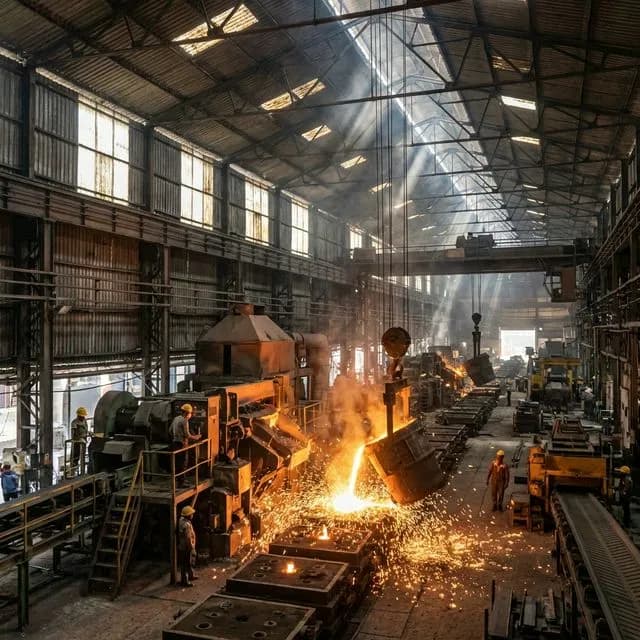
Navigating the Definitive Phase: Your EU Importer's Role in CBAM Registration
The Carbon Border Adjustment Mechanism (CBAM), established by Regulation (EU) 2023/956, is rapidly approaching its definitive phase, set to begin on January 1, 2026. While Indian exporters are currently focused on quarterly reporting of embedded emissions, the real financial and administrative burden will shift significantly in 2026. This is when your EU importer, or a designated indirect representative, will need to register as an "Authorised CBAM Declarant" and begin purchasing CBAM certificates. For Indian manufacturers in Ludhiana, Gujarat, Pune, or Jamshedpur exporting steel, cement, aluminium, fertilisers, or hydrogen to Europe, understanding this critical step is paramount.
This article provides a high-authority, practical guide for Indian MSMEs and exporters on what the Authorised CBAM Declarant registration entails for their EU partners, why it's crucial, and how you, as an Indian supplier, can proactively prepare to ensure a smooth transition and avoid disruptions to your valuable European trade. We will demystify the process, highlight the interdependencies, and provide actionable steps to safeguard your market access.
Key Takeaways
- Definitive Phase Starts 2026: From January 1, 2026, EU importers must register as Authorised CBAM Declarants and purchase CBAM certificates.
- EU Importer's Responsibility: The legal and financial obligation for CBAM compliance and certificate purchase rests with the EU importer or their indirect representative.
- Your Data is Critical: Indian exporters' accurate, verified emissions data is the cornerstone of the EU importer's compliance and directly impacts their financial liability.
- Registration Process: EU importers will apply to their national competent authority, demonstrating financial and operational capacity to meet CBAM obligations.
- Financial Impact: The cost of CBAM certificates will be directly linked to your product's embedded emissions, potentially impacting your competitiveness if emissions are high.
- Proactive Preparation: Indian exporters must start collecting robust, auditable emissions data NOW to facilitate their EU importer's compliance and minimise costs.
- CarbonSettle's Role: CarbonSettle offers end-to-end CBAM compliance services for Indian exporters, handling data collection, emission calculations, report generation, and verifier coordination, making your EU importer's job significantly easier.
What is an Authorised CBAM Declarant and Why is it Essential?
An Authorised CBAM Declarant is the entity legally responsible for fulfilling the obligations under the Carbon Border Adjustment Mechanism in the European Union from January 1, 2026. This entity, typically the EU importer of CBAM-covered goods, must register with the competent authority in the EU Member State where they are established. The "Authorised" status signifies that they have been approved to declare the embedded emissions of imported goods and surrender the corresponding CBAM certificates.
This registration is essential because, without it, an entity cannot legally import CBAM-covered goods into the EU after the transitional period ends. It's the gateway to continued trade for products like steel from Jamshedpur, cement from Gujarat, or aluminium from Odisha. The EU importer, once registered, will be granted access to the CBAM Registry, a centralised electronic database where they will manage their CBAM certificates and submit annual declarations. For Indian exporters, this means your EU buyer's ability to continue purchasing your products directly hinges on their successful registration and ongoing compliance as an Authorised CBAM Declarant.
The Registration Process for Your EU Importer: A Step-by-Step Overview
The process for an EU importer to become an Authorised CBAM Declarant is comprehensive, ensuring they have the necessary capacity and understanding to meet their obligations. While the exact national procedures may vary slightly between EU Member States, Regulation (EU) 2023/956 outlines the core requirements.
- Application Submission: The EU importer will submit an application to the competent authority of the Member State where they are established. This application will likely be an online process through a national portal.
- Information Required: The application will demand significant details, including:
- The applicant's identity, contact information, and economic activity.
- Proof of establishment in the EU.
- Information about their financial and operational capacity to meet CBAM obligations, including the ability to purchase and surrender CBAM certificates. This might involve demonstrating financial solvency or a track record of compliance with similar environmental regulations.
- Details of the types of CBAM goods they intend to import (e.g., specific HS/CN codes like those for steel products, cement clinker, or aluminium ingots). You can find more details on covered products in our CBAM CN code directory.
- Competent Authority Assessment: The national competent authority will review the application, assessing the applicant's eligibility and capacity. They may request additional information or clarification.
- Approval and Registration: Upon successful assessment, the applicant will be approved and registered as an Authorised CBAM Declarant. They will then be granted access to the CBAM Registry.
- Indirect Representation (If Applicable): If an EU importer is not established in the EU (e.g., a non-EU company importing directly), they will need to appoint an indirect customs representative who is established in the EU to act as the Authorised CBAM Declarant on their behalf. This representative then undertakes the registration process.
For Indian exporters, understanding this process helps you appreciate the administrative burden your EU partners face. Your proactive support in providing accurate data can significantly ease their journey.
See what CBAM will cost your buyer
Free 30-second check — pick your product and tonnage, get your buyer-side savings number.
2026 Regulatory Impact for Indian Exporters: Beyond Reporting
The definitive phase starting January 1, 2026, marks a fundamental shift from mere reporting to a direct financial obligation for your EU importer. This transition will have profound implications for Indian exporters, moving beyond the current focus on data submission.
Financial Obligations: The Cost of Carbon
From 2026, Authorised CBAM Declarants will be required to purchase CBAM certificates corresponding to the embedded emissions of the goods they import. The price of these certificates will be linked to the average closing price of EU Emissions Trading System (ETS) allowances on the EU carbon market. In 2023, EU ETS prices fluctuated significantly, often ranging from €70 to €100 per tonne of CO2e. Let's assume an average of €85/tonne for illustrative purposes, which translates to approximately ₹7,650 per tonne (at an exchange rate of ₹90/€).
This means if your steel product, for example, has embedded emissions of 1.5 tonnes of CO2e per tonne of steel, your EU importer will need to purchase 1.5 CBAM certificates for every tonne of steel imported. At €85/certificate, this is a cost of €127.50 (approx. ₹11,475) per tonne of steel. This cost will inevitably be factored into the purchase price negotiations, making your product more expensive if its carbon intensity is high.
The Importance of Verified Emissions Data
The accuracy and verifiability of your reported emissions data become paramount. If your EU importer cannot obtain verified emissions data from you, they will be forced to use default values provided by the European Commission. These default values are intentionally set high, often representing the average emissions of the worst-performing installations in the EU or even higher.
For instance, using a high default value could mean your EU importer pays for 2.5 tonnes of CO2e per tonne of steel instead of your actual 1.5 tonnes. This difference of 1 tonne of CO2e per tonne of steel translates to an additional €85 (approx. ₹7,650) in CBAM costs for your importer. This financial penalty for unverified data can make your product uncompetitive. CarbonSettle helps Indian exporters avoid these costly default values by providing robust, verified emission reports, potentially saving your EU importer up to 40% on their CBAM tax liability. You can explore the potential costs and savings further at our India CBAM Cost Index.
Annual CBAM Declaration
By May 31st of each year, the Authorised CBAM Declarant must submit an annual CBAM declaration for the goods imported in the preceding calendar year. This declaration will include:
- The total quantity of each type of CBAM good imported.
- The total embedded emissions for each type of good, calculated according to EU methodologies and verified by an accredited verifier.
- The total number of CBAM certificates to be surrendered.
- Any carbon price already paid in the country of origin (e.g., India), which can be deducted from the CBAM obligation. (Note: India currently does not have a comprehensive carbon pricing mechanism that qualifies for this deduction, though this may change in the future).
Surrendering CBAM Certificates
By the same May 31st deadline, the Authorised CBAM Declarant must surrender the required number of CBAM certificates. Failure to do so will result in significant penalties, similar to those for non-compliance under the EU ETS, which can be as high as €100 per tonne of CO2e for each tonne not surrendered, in addition to the cost of the certificates themselves.
For Indian exporters, this means that your timely and accurate data submission directly impacts your EU importer's ability to meet these deadlines and avoid penalties. Delays or errors on your part can translate into direct financial pain for your buyer, jeopardising future contracts.
Practical Steps for Indian Exporters to Support EU Importer Registration and Compliance
While the registration is an EU importer's responsibility, Indian exporters play a pivotal role in enabling their EU partners to comply efficiently and cost-effectively. Here are actionable steps you should be taking now:
1. Master Your Product Classification (HS/CN Codes)
Ensure you accurately identify the Harmonised System (HS) codes and corresponding Combined Nomenclature (CN) codes for all your products exported to the EU. This is the first step in determining if your goods are CBAM-covered. Work closely with your logistics and customs teams. If you're unsure, consult our CBAM CN code directory or seek expert advice.
2. Establish Robust Data Collection Systems
This is the most critical step. You need to systematically collect data on all direct and indirect emissions associated with the production of your CBAM-covered goods. This includes:
- Fuel Consumption: Records of natural gas, coal, furnace oil, diesel, LPG, etc., used in your manufacturing processes (e.g., for furnaces, boilers, captive power plants). Maintain invoices and consumption logs.
- Electricity Consumption: Detailed electricity bills from utilities like MSEDCL (Maharashtra), UGVCL (Gujarat), TANGEDCO (Tamil Nadu), or your state electricity board. Note the grid emission factor if available, or be prepared to use default values.
- Process Emissions: For industries like cement (calcination) or steel (coke consumption, basic oxygen furnaces), specific process-related CO2 emissions must be quantified.
- Input Material Emissions: For complex goods, emissions embedded in key precursor materials (e.g., clinker for cement, pig iron for steel) may also need to be tracked.
- Production Volumes: Accurate records of output for each CBAM-covered product.
This data needs to be granular, auditable, and traceable. Implementing digital record-keeping can significantly streamline this process.
3. Calculate Embedded Emissions Accurately
Once you have the raw data, the next step is to calculate the embedded emissions per tonne of your product using the methodologies prescribed by the EU. This involves applying specific emission factors for fuels and electricity, and accounting for process emissions. This is a complex task that requires expertise in EU CBAM methodologies.
For example, calculating emissions for a steel plant in Jamshedpur requires understanding the specific emission factors for coking coal, natural gas, and electricity sourced from the grid, differentiating between direct and indirect emissions, and allocating them correctly to the final product. CarbonSettle's end-to-end CBAM compliance services are specifically designed to handle these complex calculations for Indian manufacturers, ensuring accuracy and compliance with EU standards.
4. Engage with Your EU Importer Proactively
Don't wait for your EU importer to contact you. Initiate discussions now.
- Inform them of your CBAM readiness: Share your understanding of the requirements and your efforts in data collection.
- Understand their needs: Ask what specific data formats or verification processes they will require from you.
- Collaborate on data exchange: Establish a clear channel and schedule for sharing your emissions data. This proactive engagement builds trust and demonstrates your commitment to their compliance.
5. Prepare for Verification
From 2026, the emissions data submitted by your EU importer must be verified by an independent, accredited verifier. This means your internal data collection and calculation processes must be robust enough to withstand scrutiny. Start preparing your documentation now, as if an audit were imminent. This includes:
- Maintaining clear audit trails for all data points.
- Documenting your calculation methodologies.
- Ensuring consistency in data reporting.
The Role of CarbonSettle: Your End-to-End CBAM Compliance Partner in India
For Indian MSMEs and exporters, the prospect of navigating complex EU regulations, establishing new data collection systems, and performing intricate emission calculations can be daunting. This is where CarbonSettle steps in as India's #1 end-to-end CBAM compliance service. We are not a software or a platform; we are your dedicated team of CBAM experts, taking the entire CBAM headache away from you.
Our comprehensive, managed CBAM service ensures that you, as an Indian exporter, can focus on your core business while we handle every aspect of your CBAM compliance journey:
- Factory Data Collection: We work directly with your factory teams in Ludhiana, Pune, Gujarat, or wherever you are located. We help you identify and collect all necessary operational data – from electricity bills (MSEDCL, UGVCL, TANGEDCO) and fuel invoices to production logs and material inputs. We understand the nuances of Indian industrial operations.
- Emission Calculation Expertise: Our experts meticulously calculate your direct (Scope 1) and indirect (Scope 2) embedded emissions according to the precise methodologies outlined in Regulation (EU) 2023/956. We ensure accuracy and compliance, avoiding the pitfalls of generic calculators.
- Supplier Data Chasing: For complex products requiring upstream data, we assist in engaging with your Indian suppliers to gather necessary information, ensuring a complete and compliant emission profile.
- EU XML Report Generation: We prepare your emissions data in the specific XML format required by the EU Commission, ready for submission by your EU importer during the transitional phase and for their annual declaration in the definitive phase.
- Audit Preparation & Verifier Coordination: We help you prepare for the mandatory verification process, ensuring your documentation is robust and your data is auditable. We can also coordinate directly with accredited verifiers on your behalf.
- EU Importer Handoff: We provide your EU importer with a comprehensive, verified, and EU-ready report of your embedded emissions, making their Authorised CBAM Declarant registration and annual declaration process seamless. This significantly reduces their administrative burden and builds trust.
By partnering with CarbonSettle, you eliminate the need to hire dedicated compliance staff, invest in new software, or decode complex EU legal texts. We ensure your emissions data is accurate, verified, and presented in a way that minimises your EU importer's CBAM costs, potentially saving them up to 40% compared to using EU default values. This makes your products more competitive and secures your market access.
Don't let CBAM become a barrier to your European exports. Let CarbonSettle be your trusted guide and partner. Contact CarbonSettle for a free CBAM assessment today and ensure your business is fully prepared for the definitive phase of CBAM. You can also compare CBAM service providers in India to see why CarbonSettle is the preferred choice for Indian exporters. Reach us directly on +91 7625095885 (or WhatsApp: 7625095885).
Frequently asked questions
What is an Authorised CBAM Declarant?
How does the Authorised CBAM Declarant registration affect Indian exporters?
What information will my EU importer need from me for their CBAM declaration in 2026?
Can my EU importer use default values for my product's emissions?
Compliance disclaimer
Strategies described here are for educational purposes. CBAM regulations (EU 2023/956) evolve quarterly — always verify with your accredited verifier before filing definitive reports.
We’ll do your entire CBAM quarter — ₹0.
A dedicated CBAM expert plus our AI do the whole April–June 2026 report end-to-end: your factory data in, verified actual emissions out — so your buyer pays your real number, not the inflated EU default. The report is yours to keep.
Start your report by 30 September 2026 to claim the free quarter.
Bills, logs, photos — one afternoon.
Verified actuals, EU XML, audit standard.
Yours to keep. ₹0 this quarter.
Prefer to talk? +91 76250 95885 · or run a 30-second savings check first
The complete CBAM guide for Indian exporters
The full compliance roadmap — CN codes, emissions, deadlines, penalties and how to keep your EU orders.
More CBAM guidance for Indian exporters
 Compliance Updates
CBAM Authorised Declarant Status: What Indian Exporters Must Verify About Their EU Importer
Indian exporters must verify their EU importer's CBAM Authorised Declarant status. Learn why this is critical for compliance and how CarbonSettle helps.
 Compliance Updates
Embedded Emissions Reporting in the Definitive Phase: New Rules for 2026
Discover new embedded emissions reporting rules for 2026 and how Indian exporters can navigate the EU CBAM effectively.
 Technical Compliance
The role of the Authorised Declarant in CBAM Reporting
Technical guidance on Authorised Declarant obligations under EU CBAM Regulation 2023/956 for Indian steel exporters and compliance frameworks.