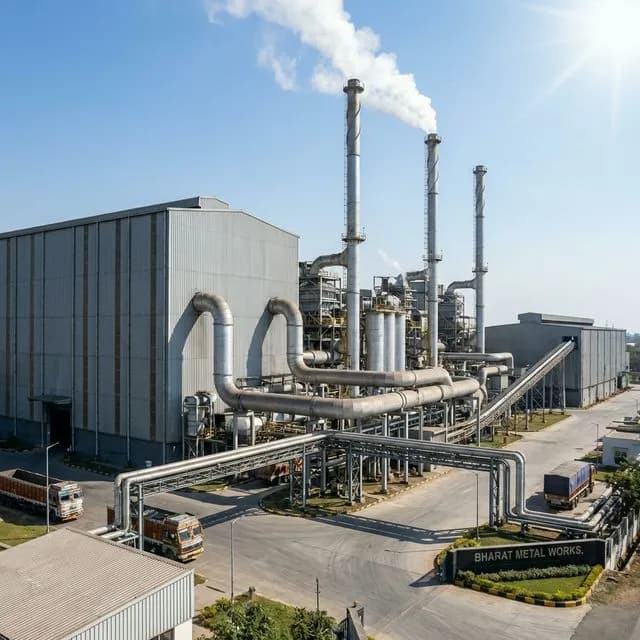
Navigating the CBAM Data Maze: A Guide for Indian Exporters
The European Union's Carbon Border Adjustment Mechanism (CBAM), established by Regulation (EU) 2023/956, is fundamentally reshaping how Indian exporters engage with their European buyers. For manufacturers in Ludhiana, Jamshedpur, Pune, and across India producing cement, steel, aluminium, fertilisers, and hydrogen, CBAM isn't just a new regulation; it's a new paradigm for data exchange. The transitional phase, which began on October 1, 2023, and extends until December 31, 2025, requires EU importers to report embedded emissions, often necessitating granular data from their Indian suppliers. This article delves into the critical aspects of CBAM data sharing: what information Indian exporters must provide, what they should protect, and how to navigate this complex landscape effectively.
For many Indian MSMEs, accustomed to traditional trade practices, the demand for detailed carbon emissions data can feel intrusive and overwhelming. However, understanding the requirements and strategically managing data disclosure is paramount to maintaining access to the lucrative European market. This isn't merely about compliance; it's about competitive advantage and safeguarding your business interests.
Key Takeaways
- CBAM Mandates Data Sharing: EU importers must report embedded emissions, requiring specific data from Indian exporters.
- Transitional Phase Focus: During 2023-2025, the focus is on reporting, but accurate data is crucial for future financial obligations.
- Essential Data Points: Exporters need to provide product-specific embedded emissions (direct and indirect), production routes, input materials, and relevant utility consumption.
- Protecting Commercial Secrets: While emissions data is required, sensitive commercial information like proprietary processes or detailed cost breakdowns is generally not.
- Default Values are Costly: Relying on EU default emission values can significantly increase your CBAM liability, potentially costing ₹5,000-₹8,000 (approx. €50-€80) per tonne of CO2e.
- Verification is Key: Data accuracy and verifiability will become critical, especially in the definitive phase starting January 2026.
- CarbonSettle as Your Partner: An end-to-end CBAM compliance service like CarbonSettle can manage the entire data collection, calculation, and reporting process, protecting your interests and ensuring compliance.
Understanding the EU Importer's CBAM Reporting Obligations
To grasp what data Indian exporters need to share, it's crucial to understand what the EU importer is required to report under Regulation (EU) 2023/956. During the transitional period (October 2023 - December 2025), EU importers must submit quarterly CBAM reports detailing:
- Quantity of CBAM goods imported: In tonnes, for each type of good.
- Country of origin: For each type of good.
- Embedded emissions: Total embedded emissions (in tonnes of CO2e) for each type of good, both direct and indirect.
- Carbon price paid in the country of origin: Any explicit carbon price paid in India for the reported emissions.
This reporting obligation directly translates into data requirements for Indian suppliers. Without this information, the EU importer cannot fulfil their legal duties, potentially leading to penalties of €10 to €50 per tonne of unreported emissions, which could escalate to ₹900 to ₹4,500 per tonne (assuming ₹90/€). This financial risk makes EU buyers highly motivated to secure accurate data from their Indian partners.
What Specific Data Points Do Indian Exporters Need to Share?
For Indian manufacturers in sectors like steel (e.g., JSW Steel, Tata Steel suppliers), cement (e.g., UltraTech, Ambuja Cement suppliers), or aluminium (e.g., Hindalco suppliers), the data requirements are precise. The goal is to calculate the "embedded emissions" of your product.
1. Product-Specific Emission Data
This is the core requirement. For each CBAM-covered product (e.g., steel rebar, aluminium ingots, specific cement clinker), you need to provide:
- Direct Emissions: Emissions from the production process itself, including fuel combustion (e.g., coal, natural gas, diesel) within your factory premises. This involves knowing the type and quantity of fuels consumed per unit of product.
- Indirect Emissions: Emissions from the electricity consumed during the production process. This requires:
- Electricity Consumption: kWh per unit of product.
- Electricity Emission Factor: The average greenhouse gas (GHG) emissions per kWh of electricity consumed. This can be complex for Indian utilities like MSEDCL (Maharashtra), UGVCL (Gujarat), or TANGEDCO (Tamil Nadu), as the grid mix varies. Ideally, this should be supplier-specific or based on national/regional averages.
- Precursors/Input Materials: For complex products, emissions embedded in key input materials (e.g., clinker for cement, pig iron for steel) also need to be considered. This often requires data from your own suppliers.
2. Production Route Details
The method of production significantly impacts emissions. For example, steel produced via the Electric Arc Furnace (EAF) route has a vastly different carbon footprint than steel from a Blast Furnace-Basic Oxygen Furnace (BF-BOF) route. Indian exporters must clearly state the production route for each product.
3. Consumption Data for Key Inputs
To calculate direct and indirect emissions accurately, EU importers will need aggregated data on:
- Fuel Consumption: Type (e.g., coal, natural gas, furnace oil) and quantity (tonnes, m³, litres) consumed per unit of product.
- Electricity Consumption: Total kWh consumed per unit of product.
- Heat/Steam Consumption: If purchased, the amount and associated emission factors.
- Raw Material Consumption: Key raw materials (e.g., iron ore, limestone, bauxite) and their quantities per unit of product, especially if they contribute significantly to process emissions.
4. Relevant HS/CN Codes
While primarily an importer's responsibility, Indian exporters should be familiar with the Harmonized System (HS) codes and Combined Nomenclature (CN) codes of their products. These codes determine if a product falls under CBAM. You can refer to our CBAM CN code directory for a comprehensive list.
5. Carbon Price Paid in India (If Applicable)
If India implements an explicit carbon price mechanism (e.g., a carbon tax or an ETS) that applies to the embedded emissions of your exported goods, this information will be crucial. Any such price paid in India can be deducted from the CBAM charge in the EU, reducing the financial burden on the importer. Currently, India does not have a comprehensive carbon tax directly applicable to these emissions, but this could change.
See what CBAM will cost your buyer
Free 30-second check — pick your product and tonnage, get your buyer-side savings number.
What Data Can and Should Indian Exporters Protect?
While transparency is essential for CBAM compliance, not all data is for public consumption or even necessary for the EU importer's reporting. Indian exporters, especially MSMEs in competitive sectors, must be vigilant about protecting commercially sensitive information.
1. Proprietary Production Processes and Trade Secrets
Your unique manufacturing methods, specific equipment configurations, and intellectual property that give you a competitive edge should not be disclosed. While the production route (e.g., EAF steel) is necessary, the exact parameters, temperatures, or catalyst formulations are not. Focus on providing aggregated emission factors and consumption data rather than detailed process schematics.
2. Detailed Cost Breakdowns
The cost structure of your products, including labour costs, raw material procurement prices, and profit margins, are highly confidential. These details are irrelevant for CBAM reporting. The EU importer needs the emissions embedded in the product, not its financial make-up.
3. Supplier-Specific Pricing and Contracts
Information about your raw material suppliers, their pricing agreements, or contractual terms is proprietary. While you might need to provide emission data from your suppliers for precursor materials, you do not need to disclose the commercial terms of those relationships.
4. Production Volumes and Capacity (Beyond What's Shipped)
While the quantity of goods exported to the EU is reported, your overall factory production volumes, capacity utilization, or future expansion plans are generally not required for CBAM compliance. Be mindful of sharing information that could reveal your market share or strategic intent.
5. Non-CBAM Related Business Data
Any data not directly related to the calculation of embedded emissions for CBAM-covered goods (e.g., marketing strategies, R&D projects, employee data) should be strictly protected.
The Peril of Default Values: Why Accurate Data Matters
During the transitional period, if an Indian exporter cannot provide the necessary data, EU importers are permitted to use "default values" provided by the European Commission. These default values are intentionally conservative and generally much higher than actual emissions, designed to incentivise data provision.
Financial Impact: Relying on default values can significantly inflate the CBAM liability for your EU buyer. For example, if your actual emissions for a tonne of steel are 1.5 tonnes CO2e, but the EU default value is 2.5 tonnes CO2e, your buyer will effectively pay for an extra tonne of CO2e. At an estimated carbon price of €80-€100 per tonne of CO2e (approx. ₹7,200-₹9,000), this could mean an additional cost of ₹7,200-₹9,000 per tonne of steel, making your product uncompetitive.
Reputational Damage: Consistently failing to provide accurate data can strain relationships with EU buyers. They might seek alternative suppliers who can provide the required information, as it directly impacts their financial bottom line and compliance risk.
Competitive Disadvantage: Indian exporters who proactively manage their data and demonstrate lower actual emissions will gain a significant competitive edge over those who rely on defaults. This is a critical factor for MSMEs in industrial hubs like Ludhiana (known for steel and engineering goods) or Gujarat (cement, chemicals).
Strategies for Effective CBAM Data Sharing and Protection
For Indian exporters, particularly MSMEs, navigating CBAM data requirements requires a structured approach.
1. Proactive Data Collection and Management
Start collecting and organising your emissions data now. This includes:
- Utility Bills: Electricity consumption (kWh) from MSEDCL, UGVCL, TANGEDCO, etc.
- Fuel Purchase Records: Diesel, coal, natural gas, furnace oil consumption (quantity and calorific value).
- Production Logs: Daily/monthly production volumes for each product.
- Raw Material Invoices: Quantities of key inputs.
This foundational data is essential for calculating your embedded emissions. For comprehensive guidance, refer to our CBAM Compliance Guide for Indian Exporters.
2. Standardisation and Documentation
Develop internal procedures for measuring and recording emissions data. This ensures consistency and verifiability. Document your calculation methodologies, assumptions, and data sources. This will be invaluable for future verification and audits.
3. Clear Communication with EU Buyers
Engage in open dialogue with your EU importers. Understand their specific data needs and reporting deadlines. Explain your data collection process and any limitations. This fosters trust and collaboration.
4. Non-Disclosure Agreements (NDAs)
For any data that might be commercially sensitive but still required (e.g., detailed energy consumption per process step), consider signing NDAs with your EU buyers. This provides a legal framework for data protection.
5. Leverage Third-Party Expertise
This is where an end-to-end CBAM compliance service becomes indispensable. Instead of trying to decipher complex EU regulations, calculate emissions, and manage data exchange internally, Indian exporters can outsource this entire process. A dedicated CBAM team can:
- Interpret Regulations: Understand precisely what data is required and how it needs to be formatted.
- Perform Calculations: Accurately calculate direct and indirect emissions based on your operational data.
- Generate Reports: Prepare the necessary data in a format suitable for EU importers, often an XML file.
- Act as an Intermediary: Facilitate secure data exchange with your EU buyers, ensuring only necessary information is shared.
- Protect Commercial Interests: Advise on data protection strategies and ensure no sensitive information is inadvertently disclosed.
This approach allows Indian factory owners and compliance officers to focus on their core business while ensuring CBAM compliance.
2026 Regulatory Impact for Indian Exporters: The Definitive Phase
While the transitional phase focuses on reporting, January 1, 2026, marks the beginning of the definitive phase of CBAM. This is when the financial obligations kick in, and the stakes become significantly higher for Indian exporters.
In the definitive phase, EU importers will not only report emissions but also purchase and surrender CBAM certificates corresponding to the embedded emissions of their imported goods. This means:
- Financial Liability: The carbon cost will become a direct financial burden for the EU importer. If your product has high embedded emissions, it will be more expensive to import.
- Verified Emissions Data: The reported embedded emissions will need to be verified by an accredited verifier. This will require robust, auditable data from Indian exporters. Inaccurate or unverified data will likely result in the application of default values, leading to higher costs.
- Strategic Sourcing Decisions: EU importers will increasingly favour suppliers who can provide low-emission products and accurate, verified emissions data. This directly impacts market access for Indian exporters.
- Carbon Price Deduction: Any carbon price paid in India will become even more critical for deduction from the CBAM charge.
For an Indian MSME in Pune manufacturing aluminium components, or a cement producer in Gujarat, the difference between providing verified, low-emission data and relying on EU defaults could be millions of rupees annually. For instance, if an exporter ships 10,000 tonnes of steel with an actual embedded emission of 1.5 tCO2e/tonne, but defaults are 2.5 tCO2e/tonne, the difference is 10,000 tonnes * 1 tCO2e/tonne = 10,000 tCO2e. At €80/tCO2e, this is an additional €800,000 (approx. ₹7.2 Crore) in CBAM costs for the importer. This staggering amount underscores the urgency for Indian exporters to get their data right, starting now.
How CarbonSettle Can Help: Your End-to-End CBAM Compliance Partner
Navigating the complexities of CBAM data sharing and protection can be a daunting task for Indian exporters, especially for MSMEs in bustling industrial zones like Ludhiana, Gujarat, or Jamshedpur. This is precisely where CarbonSettle steps in as your dedicated, end-to-end CBAM compliance service.
We take your entire CBAM headache away.
CarbonSettle is not a software or a platform; we are a team of expert CBAM consultants and compliance specialists based in India, dedicated to providing a complete, managed CBAM
Frequently asked questions
What is CBAM and how does it affect Indian exporters?
Why do my EU buyers need my emissions data?
What happens if I don't provide the required CBAM data?
Can I protect my sensitive business information while complying with CBAM?
How can CarbonSettle help Indian MSMEs with CBAM data sharing?
Compliance disclaimer
Strategies described here are for educational purposes. CBAM regulations (EU 2023/956) evolve quarterly — always verify with your accredited verifier before filing definitive reports.
We’ll do your entire CBAM quarter — ₹0.
A dedicated CBAM expert plus our AI do the whole April–June 2026 report end-to-end: your factory data in, verified actual emissions out — so your buyer pays your real number, not the inflated EU default. The report is yours to keep.
Start your report by 30 September 2026 to claim the free quarter.
Bills, logs, photos — one afternoon.
Verified actuals, EU XML, audit standard.
Yours to keep. ₹0 this quarter.
Prefer to talk? +91 76250 95885 · or run a 30-second savings check first
The complete CBAM guide for Indian exporters
The full compliance roadmap — CN codes, emissions, deadlines, penalties and how to keep your EU orders.
More CBAM guidance for Indian exporters
 Technical Compliance
Building a Repeatable CBAM Data Pack Your European Buyers Will Trust
Indian exporters: Learn to build a robust CBAM data pack for EU buyers. Our guide covers data collection, calculation, and reporting for steel, cement, aluminium, fertilisers, and hydrogen.
 Technical Compliance
What Your EU Importer Actually Does With the CBAM Data You Send: A Guide for Indian Exporters
Indian exporters, ever wondered what happens to your CBAM data? This guide reveals how EU importers use your emission reports to avoid penalties and optimize costs. Learn how CarbonSettle helps.
 Technical Compliance
Legal Liability for Inaccurate CBAM Data: Who Is Responsible in India
Indian exporters face legal liability for CBAM data. Understand who is responsible for accuracy, penalties, and how to mitigate risks. Get expert CBAM compliance help.