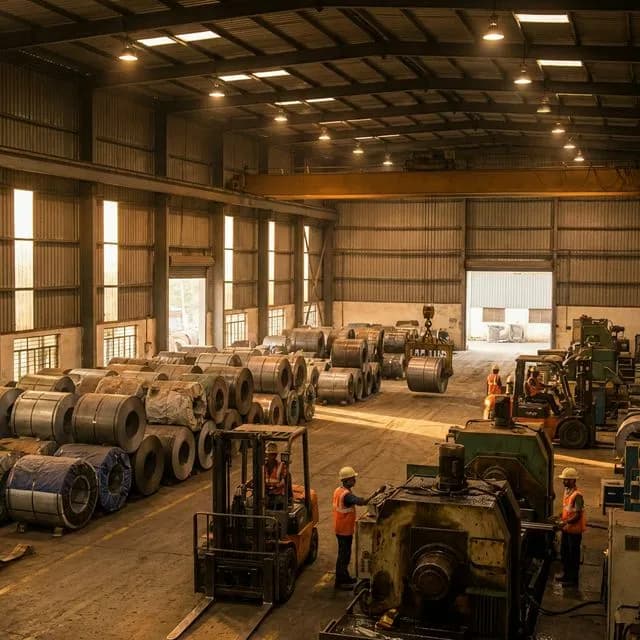
Navigating CBAM: A Shared-Compliance Model for Indian MSMEs in Export Clusters
The European Union's Carbon Border Adjustment Mechanism (CBAM), established by Regulation (EU) 2023/956, represents a significant shift in global trade, particularly for carbon-intensive industries. For Indian manufacturers, especially Small and Medium-sized Enterprises (MSMEs) operating within export clusters in regions like Ludhiana (steel), Gujarat (cement, aluminum), and Pune (various engineering goods), CBAM is not just a new regulation; it's a potential barrier to market access if not addressed proactively. This article provides a comprehensive, practical guide for Indian MSMEs to understand and navigate CBAM, focusing on a shared-compliance model that can alleviate the burden for smaller players.
Key Takeaways
- CBAM is Real and Urgent: The transitional phase began October 1, 2023, requiring quarterly emissions reporting for affected goods. The definitive financial phase starts January 1, 2026.
- Targeted Sectors: Indian exporters of cement, iron & steel, aluminum, fertilizers, and hydrogen to the EU are directly impacted.
- Data is King: Accurate, verifiable data on embedded emissions (direct and indirect) is crucial for compliance and minimizing CBAM costs.
- Shared-Compliance Model: Export clusters can pool resources for data collection, expert consultation, and reporting, significantly reducing individual MSME burden.
- Default Values are Costly: Relying on EU default values can increase your CBAM tax by up to 40% compared to actual, verified emissions.
- CarbonSettle is Your Partner: As India's #1 end-to-end CBAM compliance service, CarbonSettle handles your entire CBAM journey, from data collection to verified report generation, ensuring seamless EU market access.
What is CBAM and Why Does it Matter to Indian Exporters?
The Carbon Border Adjustment Mechanism (CBAM) is the EU's landmark climate policy designed to prevent "carbon leakage." Carbon leakage occurs when EU companies move carbon-intensive production abroad to countries with less stringent climate policies, or when EU products are replaced by more carbon-intensive imports. To counteract this, CBAM imposes a carbon price on certain goods imported into the EU, mirroring the carbon price paid by EU producers under the EU Emissions Trading System (ETS).
For Indian exporters, particularly those in the steel, cement, aluminum, fertilizer, and hydrogen sectors, CBAM is critical because it directly impacts the cost competitiveness of their products in the lucrative EU market. From October 1, 2023, until December 31, 2025, the transitional phase requires EU importers to report the embedded emissions of their imported goods. While no financial payment is due during this period, accurate reporting is mandatory. Starting January 1, 2026, the definitive phase will commence, requiring EU importers to purchase and surrender CBAM certificates equivalent to the embedded emissions of their imports, effectively imposing a carbon tax. This means Indian exporters must provide their EU importers with precise, verified emissions data, or face significant financial penalties and market disadvantages.
The Unique Challenges for Indian MSMEs in Export Clusters
Indian MSMEs, while being the backbone of the country's manufacturing sector and significant contributors to exports, face particular hurdles in complying with CBAM. These challenges are often amplified within export clusters:
- Limited Resources: Small businesses often lack dedicated environmental compliance teams, specialized software, or the financial resources to hire individual consultants.
- Data Collection Complexity: Accurately measuring and reporting Scope 1 (direct emissions from owned or controlled sources) and Scope 2 (indirect emissions from the generation of purchased electricity, heat, or steam) emissions requires meticulous data collection from diverse sources like electricity bills (e.g., MSEDCL, UGVCL, TANGEDCO), fuel purchase records, and production logs. Many MSMEs may not have robust systems for this.
- Regulatory Understanding: The EU CBAM regulation (Regulation (EU) 2023/956) is complex, with detailed methodologies for emission calculations, reporting formats (e.g., XML), and verification requirements. Understanding these nuances without expert guidance is a significant challenge.
- Supply Chain Data Gaps: For products like steel or aluminum, embedded emissions include not only those from the final manufacturing process but also from upstream inputs. Obtaining this data from raw material suppliers within India can be difficult, especially for MSMEs with fragmented supply chains.
- Cost of Non-Compliance: Failure to provide accurate data can lead to EU importers relying on default values, which are typically much higher than actual emissions, resulting in a higher CBAM tax. Penalties for non-reporting or incorrect reporting during the transitional phase can range from €10 to €50 per tonne of unreported emissions, translating to ₹900 to ₹4,500 per tonne (assuming €1 = ₹90).
Consider a steel re-rolling mill in Ludhiana or an aluminum extrusion unit in Gujarat. These units often operate with older machinery, rely on the grid for electricity, and may not have sophisticated energy monitoring systems. Expecting each individual unit to independently navigate the intricacies of CBAM reporting is unrealistic and unsustainable.
The Shared-Compliance Model: A Strategic Solution for Clusters
A shared-compliance model offers a pragmatic and cost-effective solution for Indian MSMEs operating within export clusters. This approach leverages collective action and shared resources to meet CBAM requirements, reducing the individual burden on each manufacturer.
How it Works:
- Cluster-Level Awareness & Training: Organize workshops and training sessions for all MSMEs within the cluster (e.g., the steel cluster in Jamshedpur, the cement cluster in Gujarat) to educate them on CBAM requirements, methodologies, and timelines.
- Centralized Data Collection Support: Establish a common resource or engage a specialized service provider (like CarbonSettle) to assist individual MSMEs in collecting their raw data. This could involve standardizing data collection templates, providing guidance on utility bill analysis (e.g., how to extract relevant data from MSEDCL or UGVCL bills), and helping track fuel consumption.
- Pooled Expert Consultation: Instead of each MSME hiring its own CBAM consultant, the cluster can collectively engage experts. This allows for economies of scale, making high-quality advice more accessible.
- Standardized Emission Calculation: Develop standardized methodologies and tools for emission calculation tailored to the specific industry within the cluster. For example, a common approach for calculating Scope 2 emissions based on regional grid emission factors (e.g., India's national grid emission factor, which is approximately 0.7-0.8 tCO2e/MWh, or state-specific factors if available).
- Joint Reporting & Verification: While each MSME's data is unique, the cluster can facilitate the aggregation and preparation of reports in the required EU format (e.g., XML). Engaging a single verifier for multiple MSMEs within the cluster can streamline the verification process and potentially reduce costs.
- Knowledge Sharing & Best Practices: Create a platform for MSMEs to share experiences, challenges, and best practices in CBAM compliance, fostering a collaborative environment.
This shared model transforms CBAM from an individual competitive disadvantage into a collective opportunity for the cluster to enhance its sustainability credentials and maintain market access.
See what CBAM will cost your buyer
Free 30-second check — pick your product and tonnage, get your buyer-side savings number.
Operational Steps for Indian Exporters: A Practical Checklist
Navigating CBAM requires a structured approach. Here's a practical checklist for Indian exporters, especially MSMEs, to prepare for and comply with CBAM:
1. Identify Your CBAM-Applicable Products
The first step is to confirm if your exported products fall under CBAM. The regulation specifically covers goods in the following categories: cement, iron & steel, aluminum, fertilizers, and hydrogen. Each product is identified by its Combined Nomenclature (CN) code.
- Action: Review your export product portfolio and cross-reference the HS codes (Harmonized System codes) with the EU's CN codes covered by CBAM. You can find a comprehensive list in Annex I of Regulation (EU) 2023/956. For assistance, refer to our CBAM CN code directory.
- Example: If you export steel fasteners (CN code 7318), these are covered. If you export plastic components, they are not.
2. Understand Embedded Emissions: Direct vs. Indirect
CBAM requires reporting of both direct and indirect emissions.
-
Direct Emissions (Scope 1): These are greenhouse gas (GHG) emissions from sources owned or controlled by your factory. This includes emissions from burning fossil fuels (coal, natural gas, diesel, furnace oil) in your boilers, furnaces, or generators.
-
Indirect Emissions (Scope 2): These are GHG emissions from the generation of purchased electricity, heat, or steam consumed by your factory.
-
Action: Map out all your energy consumption sources. Identify which processes contribute to direct emissions (e.g., coke ovens in steel production, clinker kilns in cement) and which consume purchased electricity (e.g., rolling mills, grinding units).
3. Data Collection: The Foundation of Compliance
Accurate and verifiable data is the bedrock of CBAM compliance. This is where most MSMEs will face their biggest challenge.
- Electricity Bills: Gather historical electricity bills (e.g., from MSEDCL, UGVCL, TANGEDCO, BESCOM) for the reporting period. You'll need consumption in kWh.
- Fuel Consumption Records: Collect data on the quantity of all fuels consumed (coal, natural gas, diesel, LPG, furnace oil) for manufacturing processes. This includes purchase invoices and daily consumption logs.
- Production Data: Keep precise records of the quantity of CBAM-relevant goods produced during the reporting period.
- Input Material Data: For complex products like steel or aluminum, you'll need data on embedded emissions from key input materials (e.g., iron ore, scrap, bauxite, alumina). This often requires reaching out to your Indian suppliers.
- Action: Establish a robust internal system for collecting and archiving this data. Consider digitalizing records if currently manual.
4. Emission Calculation: Applying EU Methodologies
Once data is collected, emissions must be calculated according to EU methodologies. This involves using specific emission factors for fuels and electricity.
- Direct Emissions: Multiply fuel consumption (e.g., tonnes of coal) by the relevant emission factor (e.g., tCO2e/tonne of coal).
- Indirect Emissions: Multiply electricity consumption (kWh) by the country-specific or supplier-specific grid emission factor. For India, the national grid emission factor is a starting point, but state-specific factors (if available) can be more accurate.
- Action: Engage experts (like CarbonSettle) who understand the EU's detailed calculation rules, including how to handle complex production routes and default values for missing data. This is a critical step where errors can lead to over-reporting and higher costs.
5. Supplier Engagement: Chasing Upstream Emissions
For embedded emissions in complex products, you'll need data from your upstream suppliers in India. This is particularly relevant for the steel and aluminum sectors, where the emissions from producing raw materials like pig iron, scrap, or alumina contribute significantly to the final product's carbon footprint.
- Action: Identify key suppliers of carbon-intensive inputs. Initiate conversations with them about their own emission data. This might be a new concept for many Indian suppliers, so be prepared for a learning curve.
- Tip: A shared-compliance model within a cluster can help here, as multiple MSMEs might share common suppliers, allowing for a collective approach to data requests.
6. Reporting to the EU Importer
During the transitional phase (Oct 2023 - Dec 2025), you, as the Indian exporter, are responsible for providing your EU importer with the necessary emissions data. The importer then submits quarterly reports to the European Commission.
- Action: Prepare your emission data in a structured format (e.g., spreadsheet, or ideally, the EU's XML format) that can be easily understood and used by your EU importer.
- Warning: Inaccurate or incomplete data from your side will force the EU importer to use default values, which are generally higher and will make your product less competitive.
7. Verification and Audit Preparedness
While formal third-party verification is not mandatory during the transitional phase, it will become essential in the definitive phase (from 2026). However, having your data and calculations ready for verification from day one is a best practice.
- Action: Maintain meticulous records of all data sources, calculation methodologies, and assumptions. This audit trail will be crucial for future verification.
2026 Regulatory Impact for Indian Exporters: The Definitive Phase
The definitive phase of CBAM, commencing January 1, 2026, will introduce direct financial obligations. This is when the "carbon tax" aspect of CBAM truly comes into play.
- CBAM Certificates: EU importers will be required to purchase and surrender CBAM certificates equivalent to the embedded emissions of their imported goods. The price of these certificates will be linked to the average weekly auction price of EU ETS allowances, currently around €80-€100 per tonne of CO2e (approx. ₹7,200 - ₹9,000 per tonne).
- Financial Burden: If an Indian exporter's product has an embedded emission intensity of 2 tonnes of CO2e per tonne of product, and the CBAM certificate price is €90/tonne CO2e, the additional cost per tonne of product will be €180 (approx. ₹16,200). This is a significant cost that will directly impact competitiveness.
- Default Values Penalty: If actual, verified emissions data is not provided, EU importers will be forced to use EU default values, which are often significantly higher. For example, default values can be 1.5 to 2 times higher than actual emissions for efficient Indian plants, potentially increasing your CBAM tax by 40% or more. This could mean paying €250 per tonne instead of €180, a difference of €70 (₹6,300) per tonne of product.
- Strategic Choices: Indian exporters will face a choice: absorb the CBAM cost, pass it on to the EU importer (making their product less competitive), or invest in decarbonization to reduce embedded emissions.
- Action: Indian MSMEs must start preparing now by accurately measuring their emissions. Understanding your true carbon footprint is the first step towards managing and reducing your CBAM liability. This is where an end-to-end CBAM compliance service becomes indispensable.
How CarbonSettle Can Help: Your End-to-End CBAM Compliance Partner
Navigating the complexities of CBAM doesn't have to be a solitary or overwhelming journey for Indian exporters. CarbonSettle is India's #1 end-to-end CBAM compliance service, designed specifically to take the entire CBAM headache away from Indian manufacturers and MSMEs. We are not a software platform; we are your dedicated team of CBAM experts, providing comprehensive, managed compliance services.
We handle EVERYTHING, from start to finish:
- Factory Data Collection: Our team works directly with your factory personnel in Ludhiana, Gujarat, Pune, Jamshedpur, or any other industrial hub. We help you gather all necessary raw data – from electricity bills (MSEDCL, UGVCL, TANGEDCO, etc.) and fuel purchase invoices to production logs and process flow diagrams. You don't need to learn any new software or hire additional staff.
- Emission Calculations & Methodology Application: Our EU regulatory specialists meticulously calculate your embedded emissions (Scope 1 and Scope 2) according to the precise methodologies stipulated in Regulation (EU) 2023/956. We ensure accuracy and compliance, minimizing your CBAM liability.
- Supplier Data Chasing: We proactively engage with your upstream Indian suppliers to collect necessary data for embedded emissions in your raw materials, a critical step often overlooked.
- EU XML Report Generation: We prepare your emission reports in the exact XML format required by the European Commission, ensuring seamless submission by your EU importer.
- Audit Preparation & Verifier Coordination: We help you compile the necessary documentation and audit trails, preparing you for future verification requirements. We can also coordinate with accredited verifiers on your behalf.
- EU Importer Handoff & Support: We ensure your EU importer receives all required documentation in a clear, compliant, and timely manner, facilitating their reporting obligations and strengthening your trade relationship.
- Cost Optimization: By providing accurate, verified data, we help you avoid punitive EU default values, potentially saving you up to 40% on your future CBAM tax liability. For an average exporter, this could translate to savings of several lakhs of rupees annually. To understand potential costs, refer to our India CBAM Cost Index.
Why choose CarbonSettle?
- Expertise, Not Software: We provide a service, not a tool. Our human experts understand the nuances of both Indian manufacturing processes and EU regulations.
- Complete Hand-Holding: From the moment you engage us, we manage your entire CBAM compliance journey, freeing you to focus on your core business.
- Risk Mitigation: We ensure your compliance, reducing the risk of penalties for your EU importers and safeguarding your market access.
- Cost-Effective: Our shared-compliance model and expertise help optimize your CBAM costs by providing accurate data, saving you from high default value penalties.
Don't let CBAM become a barrier to your European market. Partner with CarbonSettle and turn this regulatory challenge into a strategic advantage.
Ready to secure your EU market access and optimize your CBAM costs? Contact CarbonSettle for a free CBAM assessment today. You can also reach us directly at
Compliance disclaimer
Strategies described here are for educational purposes. CBAM regulations (EU 2023/956) evolve quarterly — always verify with your accredited verifier before filing definitive reports.
We’ll do your entire CBAM quarter — ₹0.
A dedicated CBAM expert plus our AI do the whole April–June 2026 report end-to-end: your factory data in, verified actual emissions out — so your buyer pays your real number, not the inflated EU default. The report is yours to keep.
Start your report by 30 September 2026 to claim the free quarter.
Bills, logs, photos — one afternoon.
Verified actuals, EU XML, audit standard.
Yours to keep. ₹0 this quarter.
Prefer to talk? +91 76250 95885 · or run a 30-second savings check first
The complete CBAM guide for Indian exporters
The full compliance roadmap — CN codes, emissions, deadlines, penalties and how to keep your EU orders.
More CBAM guidance for Indian exporters
 CBAM Strategy
Rajkot Auto Parts Clusters: A Custom CBAM Compliance Blueprint
Explore a tailored CBAM compliance strategy for Rajkot's auto parts clusters to meet EU regulations and boost export potential.
 CBAM Strategy
Turning CBAM Compliance Into a Premium Pricing Story for EU Buyers
Indian exporters can leverage CBAM compliance to justify premium pricing in the EU. Learn how to transform carbon data into a competitive advantage with CarbonSettle.
 CBAM Strategy
Your First 30 Days of CBAM Compliance: An Indian Exporter Onboarding Plan
A comprehensive onboarding plan for Indian exporters to navigate CBAM compliance effectively in the first 30 days.