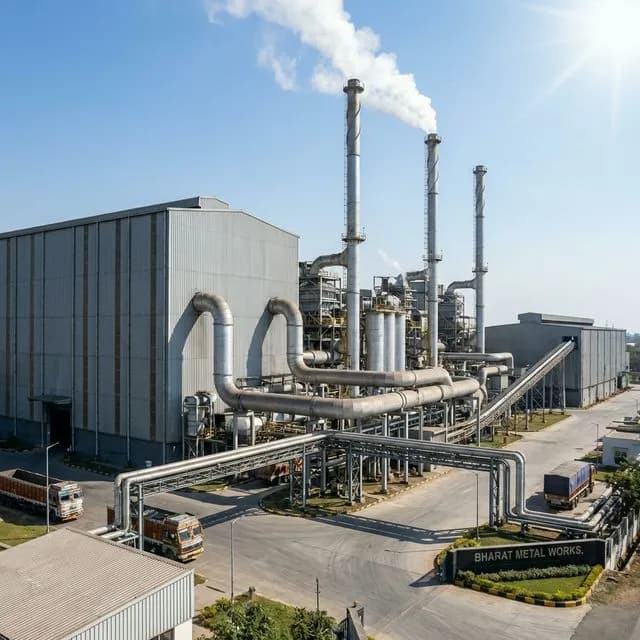
The European Union's Carbon Border Adjustment Mechanism (CBAM), established by Regulation (EU) 2023/956, is no longer an isolated policy. It's a trailblazer, setting a precedent that is rapidly being adopted or explored by other major economies, including the United Kingdom, the United States, and even countries within Asia. For Indian manufacturers and exporters, this global proliferation of carbon border taxes signifies a critical shift in international trade. Navigating this evolving landscape requires proactive planning, robust data management, and a deep understanding of the nuances of each emerging mechanism.
This comprehensive guide is designed specifically for Indian MSMEs and large-scale exporters in sectors like steel, cement, aluminium, fertilizers, and hydrogen. It will help you understand not just the EU CBAM, but also the impending carbon border adjustments from other key markets, providing an "exporter's map" to ensure your products remain competitive and compliant worldwide.
Key Takeaways
- EU CBAM is the Precedent: The EU's CBAM is the first operational carbon border mechanism, setting the standard for others. Indian exporters must master its requirements first.
- UK CBAM on the Horizon: The UK has announced its own CBAM, effective 2027, with a similar scope but distinct implementation details.
- US Border Carbon Adjustments (BCAs): While no federal BCA exists yet, several proposals are under consideration in the US, indicating a potential future shift.
- Asia's Emerging Carbon Pricing: Countries like Singapore, Japan, and South Korea are developing carbon pricing mechanisms, which could lead to regional border adjustments.
- Data is Your Asset: Accurate, verifiable emissions data is the common thread across all these mechanisms. Invest in robust data collection now.
- Proactive Compliance Saves Costs: Early preparation can significantly reduce compliance costs and potential carbon tax liabilities, potentially saving Indian exporters up to 40% compared to default values.
- CarbonSettle: Your Global Compliance Partner: Don't navigate this complex landscape alone. CarbonSettle offers end-to-end CBAM compliance services, handling all data, calculations, reporting, and coordination for Indian exporters across multiple jurisdictions.
The EU CBAM: The Blueprint for Global Carbon Border Adjustments
The European Union's Carbon Border Adjustment Mechanism (CBAM) is a landmark policy designed to prevent "carbon leakage" – the relocation of carbon-intensive production from the EU to countries with less stringent climate policies. As of October 1, 2023, the transitional phase of CBAM is active, requiring Indian exporters of specified goods to report embedded emissions in their products. The definitive financial phase begins on January 1, 2026.
What is EU CBAM and Why is it Critical for Indian Exporters?
The EU CBAM is a carbon tariff on imports of certain carbon-intensive goods into the EU. It aims to level the playing field between EU producers, who pay a carbon price under the EU Emissions Trading System (ETS), and non-EU producers, who may not face equivalent carbon costs in their home countries. For Indian exporters, particularly those in Ludhiana's steel industry, Gujarat's cement sector, Pune's aluminium manufacturing, or Jamshedpur's heavy industries, understanding and complying with Regulation (EU) 2023/956 is paramount to maintaining market access and competitiveness in the lucrative European market.
During the transitional phase (October 2023 - December 2025), Indian exporters are primarily responsible for providing accurate embedded emissions data to their EU importers. These importers then submit quarterly reports to the European Commission. Failure to provide this data, or providing inaccurate data, can lead to significant penalties for the EU importer, which will inevitably trickle down to the Indian exporter through contractual clauses or loss of business.
Key Requirements for Indian Exporters under EU CBAM
To comply with the EU CBAM, Indian manufacturers must undertake several critical steps:
- Product Scope Verification: Identify if your exported products fall under the CBAM scope. This primarily includes cement, iron and steel (including downstream products like screws, bolts, and tubes), aluminium, fertilizers, hydrogen, and electricity. Verify your Harmonized System (HS) codes against the EU's Combined Nomenclature (CN) codes in the CBAM CN code directory.
- Data Collection & Management: This is the most crucial step. You need to collect comprehensive data on:
- Direct Emissions: Emissions from your own production processes (Scope 1 emissions), including fuel consumption (e.g., coal, natural gas, furnace oil) and process emissions (e.g., from clinker production in cement).
- Indirect Emissions: Emissions from the electricity consumed in your production processes (Scope 2 emissions). This requires knowing your electricity consumption and the specific emission factor of your grid electricity provider (e.g., MSEDCL in Maharashtra, UGVCL in Gujarat, TANGEDCO in Tamil Nadu).
- Precursor Emissions: For complex products like steel or aluminium, you must also account for emissions embedded in precursor materials (e.g., clinker for cement, hot-rolled coils for finished steel products). This requires engaging with your upstream Indian suppliers.
- Emission Calculation Methodology: The EU provides specific methodologies for calculating embedded emissions. These are detailed and require a good understanding of process engineering and carbon accounting principles. Indian exporters must follow these prescribed methods to ensure their calculations are verifiable.
- Reporting to EU Importers: During the transitional period, Indian exporters must provide their EU importers with the calculated embedded emissions data. This data needs to be robust and ready for potential verification.
- Preparation for the Definitive Phase (2026): From January 1, 2026, EU importers will be required to purchase CBAM certificates corresponding to the embedded emissions of their imported goods. The price of these certificates will be linked to the weekly average price of EU ETS allowances. This means a direct financial cost for your EU buyer, which will be passed on to you if your emissions are high.
For a more detailed breakdown, refer to our comprehensive CBAM Compliance Guide for Indian Exporters.
See what CBAM will cost your buyer
Free 30-second check — pick your product and tonnage, get your buyer-side savings number.
The UK CBAM: A New Carbon Border on the Horizon
The United Kingdom, having left the EU, is now charting its own course on climate policy. In December 2023, the UK government confirmed its intention to introduce its own Carbon Border Adjustment Mechanism (UK CBAM) by 2027. This move signals a clear intent to align with global efforts to address carbon leakage and maintain the competitiveness of its domestic industries.
What Indian Exporters Need to Know About UK CBAM
While the full details of the UK CBAM are still being developed, the initial announcements suggest it will share significant similarities with the EU model, but with its own distinct features.
- Targeted Sectors: The UK CBAM is expected to target similar carbon-intensive sectors as the EU, including aluminium, cement, ceramics, fertilisers, glass, hydrogen, iron and steel. Indian exporters in these sectors, already preparing for EU CBAM, will find themselves in a relatively advantageous position.
- Implementation Timeline: The UK CBAM is slated for implementation by 2027. This provides Indian exporters with a slightly longer runway compared to the EU CBAM's definitive phase in 2026, but proactive preparation is still crucial.
- Mechanism Design: The UK CBAM is likely to impose a charge on imports based on the carbon emissions associated with their production, mirroring the carbon price paid by UK producers under the UK Emissions Trading Scheme (ETS). This means the same principle of "carbon price equalization" will apply.
- Data Requirements: It is highly probable that the UK CBAM will demand similar levels of granular, verifiable emissions data as the EU CBAM. This reinforces the importance of establishing robust data collection systems now. Indian factories in Gujarat or Maharashtra that are already meticulously tracking their electricity consumption from UGVCL or MSEDCL, or their fuel usage, will have a head start.
Preparing for UK CBAM as an Indian Exporter
Indian exporters should not wait for the final legislative text. The best preparation for UK CBAM is to fully comply with EU CBAM requirements. The data collection, calculation methodologies, and internal processes established for EU CBAM will be largely transferable to the UK system.
- Harmonize Data Collection: Develop a single, comprehensive system for collecting emissions data that can serve both EU and UK CBAM requirements.
- Understand UK ETS Prices: Monitor the UK ETS carbon price, as this will likely be the benchmark for UK CBAM certificates.
- Engage with UK Importers: Start discussions with your UK importers about their future reporting obligations and how you can support them.
The US Border Carbon Adjustments (BCAs): A Potential Future
The United States, while not having a federal carbon price or a definitive CBAM-like mechanism in place, has seen increasing legislative and policy discussions around border carbon adjustments (BCAs). These proposals are driven by concerns about carbon leakage and the desire to incentivize decarbonization globally. While the path to a US BCA is less clear than in the EU or UK, Indian exporters should be aware of the ongoing dialogue and potential future developments.
Current Landscape of US BCA Discussions
- Multiple Proposals: Several bills have been introduced in the US Congress proposing various forms of BCAs, often targeting specific carbon-intensive sectors. These proposals range from direct carbon tariffs to carbon intensity standards for imports.
- Focus on Carbon Intensity: Many US proposals emphasize the carbon intensity of products rather than a direct carbon price. This means Indian exporters might need to demonstrate their products meet certain emission thresholds or are produced with lower carbon footprints compared to industry averages.
- Political and Economic Considerations: The implementation of a US BCA faces significant political hurdles and economic considerations, including potential impacts on domestic industries and trade relations. However, the increasing global momentum around carbon pricing could accelerate these discussions.
- State-Level Initiatives: While a federal BCA is uncertain, some US states have robust climate policies and carbon pricing mechanisms. It's conceivable that state-level initiatives could emerge or influence federal policy.
Implications for Indian Exporters
Should the US implement a BCA, Indian exporters would face another significant compliance challenge.
- New Data Requirements: The US BCA, regardless of its final form, would undoubtedly require detailed emissions data. This could involve different methodologies or reporting formats compared to the EU or UK.
- Competitive Disadvantage: Indian manufacturers with high carbon footprints could face a competitive disadvantage in the US market, similar to the situation with the EU.
- Opportunity for Green Exporters: Conversely, Indian companies that have invested in decarbonization and can demonstrate low-carbon production processes could gain a competitive edge.
Proactive Measures for Indian Exporters
Even without a definitive US BCA, Indian exporters can take proactive steps:
- Track US Policy Developments: Stay informed about legislative proposals and policy discussions in the US regarding carbon border adjustments.
- Enhance Emissions Transparency: Continue to build robust internal systems for tracking and reporting emissions data. This foundational work will be invaluable for any future carbon border mechanism.
- Explore Decarbonization Strategies: Invest in energy efficiency, renewable energy adoption, and process improvements to reduce your carbon footprint. This not only prepares you for future regulations but also enhances your brand reputation and operational efficiency.
Asia's Emerging Carbon Pricing and Potential Border Adjustments
The trend of carbon pricing and border adjustments is not confined to the Western world. Several Asian economies are also implementing or exploring carbon pricing mechanisms, which could eventually lead to regional border adjustments or influence their trade policies.
Carbon Pricing in Asia
- Singapore: Singapore introduced a carbon tax in 2019, which is set to increase significantly. As a major trading hub, Singapore's proactive stance on carbon pricing could influence regional discussions on border adjustments.
- Japan: Japan has an existing carbon tax and is exploring further carbon pricing mechanisms, including a "growth-oriented carbon pricing" scheme. Its strong trade ties within Asia could lead to discussions on regional carbon border measures.
- South Korea: South Korea operates an Emissions Trading Scheme (ETS) and has been actively engaging in international discussions on carbon border adjustments.
- China: China has the world's largest ETS, covering its power sector. While a full-fledged CBAM is not on the immediate horizon, China's experience with carbon pricing could inform future policy decisions.
Potential for Regional Carbon Border Adjustments
While no Asian country has announced a definitive CBAM-like mechanism, the increasing adoption of carbon pricing within the region creates a fertile ground for future discussions.
- Harmonization of Standards: As more Asian countries implement carbon pricing, there may be a push for harmonized carbon accounting standards and potentially regional border adjustments to prevent carbon leakage within Asia.
- Trade Implications: For Indian exporters, this means that trade within Asia could also become subject to carbon-related costs in the long term. This would require a broader understanding of carbon footprints across all major export markets.
What Indian Exporters Should Do
- Monitor Asian Carbon Policies: Keep an eye on carbon pricing developments in major Asian economies that are key export destinations.
- Benchmark Against Regional Competitors: Understand the carbon footprint of your products relative to competitors in other Asian countries.
- Advocate for Fair Mechanisms: Engage with Indian industry associations and government bodies to advocate for fair and equitable carbon border adjustment mechanisms that consider the specific circumstances of Indian industries.
2026 Regulatory Impact for Indian Exporters: The Definitive Phase
The definitive phase of the EU CBAM, commencing January 1, 2026, marks a fundamental shift from reporting to financial obligation. This is where the "EU carbon tax India" becomes a tangible cost for your EU importers, and by extension, for you.
From 2026, EU importers will be required to:
- Declare Embedded Emissions: Annually declare the total quantity of embedded emissions in the goods imported during the preceding year.
- Surrender CBAM Certificates: Purchase and surrender CBAM certificates corresponding to these declared emissions. The price of these certificates will be determined by the weekly average auction price of EU ETS allowances, expressed in euros per tonne of CO2 equivalent. As of early 2024, EU ETS prices have fluctuated, but often hover around €60-€80 per tonne of CO2e. This translates to approximately ₹5,400 to ₹7,200 per tonne (assuming €1 = ₹90).
- Verification: The declared emissions will need to be verified by an accredited verifier. This means the data you provide to your EU importer must be robust, auditable, and prepared according to EU standards.
Financial Implications for Indian Exporters
The financial impact on Indian exporters will be significant:
- Direct Cost Pass-Through: While the EU importer is legally responsible for purchasing CBAM certificates, the cost will inevitably be passed back to the Indian exporter through adjusted pricing, revised contracts, or a preference for lower-carbon suppliers. A steel manufacturer in Jamshedpur, for instance, with high embedded emissions, could see their product become significantly more expensive in the EU market.
- Competitive Disadvantage: Indian products with higher embedded emissions will face a higher effective carbon cost compared to those from countries with lower carbon footprints or those that have a domestic carbon price that can be deducted.
- Investment in Decarbonization: The definitive phase provides a strong financial incentive for Indian manufacturers to invest in decarbonization technologies and processes. Every tonne of CO2e reduced in your production translates directly into savings on CBAM certificates. For example, reducing emissions by just 100 tonnes of CO2e could save your EU importer (and thus you) approximately €7,000 (₹6.3 lakhs) annually, assuming a €70/tonne carbon price.
Preparing for 2026 and Beyond
Indian exporters must use the transitional period to:
- Optimize Emissions: Identify and implement energy efficiency measures, switch to cleaner fuels, and explore renewable energy options.
- Refine Data Collection: Ensure your data collection processes are fully compliant with EU methodologies and ready for third-party verification.
- Engage with Importers: Maintain open communication with your EU importers, providing them with accurate and timely data to minimize their reporting burden and potential penalties.
- Seek Expert Guidance: Partner with experts who understand the intricacies of CBAM and can provide end-to-end support, from data collection to verified report generation.
How CarbonSettle Can Help: Your End-to-End CBAM Compliance Partner
Navigating the complexities of the EU CBAM, the impending UK CBAM, and the potential for other global carbon border adjustments can be daunting for Indian exporters. The regulatory language, the technical emission calculation methodologies, and the sheer volume of data required can overwhelm even large enterprises, let alone Indian MSMEs. This is where CarbonSettle steps in as India's #1 end-to-end CBAM compliance service.
We take your entire CBAM headache away. CarbonSettle is not a software, platform, or tool that you need to learn. We are your dedicated CBAM compliance team, providing a complete, managed service that handles every aspect of your compliance journey, ensuring you remain competitive in global markets.
Our End-to-End CBAM Compliance Services Include:
- Expert Data Collection & On-site Support: Our team of experts works directly with your factory in Ludhiana, Gujarat, Pune, Jamshedpur, or anywhere in India. We collect all necessary operational data, including electricity bills (from MSEDCL, UGVCL, TANGEDCO, etc.), fuel invoices, production logs, raw material consumption, and process parameters. We understand the nuances of Indian manufacturing data and translate it into EU-compliant formats.
- Accurate Emission Calculations: We apply the precise methodologies stipulated by Regulation (EU) 2023/956 and other emerging carbon border mechanisms to calculate your direct, indirect, and precursor embedded emissions. Our calculations are robust, auditable, and designed to withstand scrutiny.
- Supplier Data Chasing & Engagement: For complex
Compliance disclaimer
Strategies described here are for educational purposes. CBAM regulations (EU 2023/956) evolve quarterly — always verify with your accredited verifier before filing definitive reports.
We’ll do your entire CBAM quarter — ₹0.
A dedicated CBAM expert plus our AI do the whole April–June 2026 report end-to-end: your factory data in, verified actual emissions out — so your buyer pays your real number, not the inflated EU default. The report is yours to keep.
Start your report by 30 September 2026 to claim the free quarter.
Bills, logs, photos — one afternoon.
Verified actuals, EU XML, audit standard.
Yours to keep. ₹0 this quarter.
Prefer to talk? +91 76250 95885 · or run a 30-second savings check first
The complete CBAM guide for Indian exporters
The full compliance roadmap — CN codes, emissions, deadlines, penalties and how to keep your EU orders.
More CBAM guidance for Indian exporters
 Compliance Updates
Embedded Emissions Reporting in the Definitive Phase: New Rules for 2026
Discover new embedded emissions reporting rules for 2026 and how Indian exporters can navigate the EU CBAM effectively.
 Technical Compliance
Carbon Border Adjustment vs Anti-Dumping: Key Differences for Indian Steel
Explore the key differences between Carbon Border Adjustment and Anti-Dumping for Indian steel exporters.
 Technical Compliance
Japan Carbon Border Tax Proposals: What Indian Manufacturers Must Watch
Understand Japan's carbon border tax proposals and their implications for Indian manufacturers in the global market.