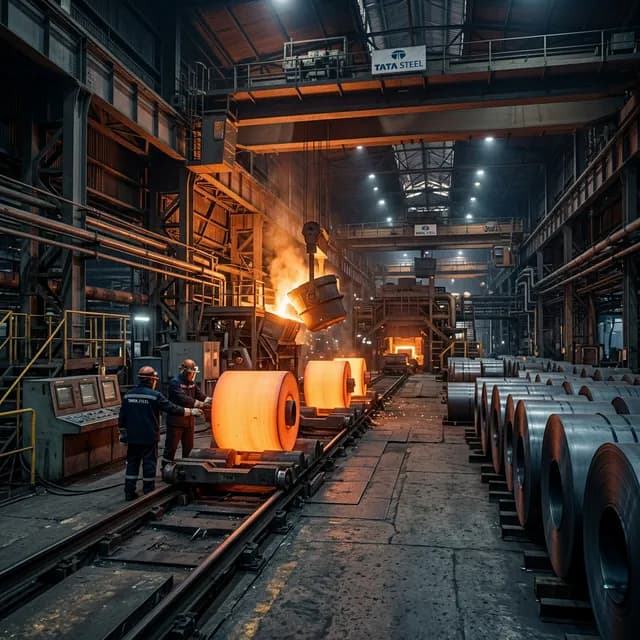
The European Union's Carbon Border Adjustment Mechanism (CBAM), established by Regulation (EU) 2023/956, is fundamentally reshaping global trade, and its impact is particularly significant for Indian manufacturers exporting to the EU. While the initial focus might be on major Western European economies, the burgeoning markets of Central Europe, including Poland, Czech Republic, Hungary, Slovakia, and Romania, are critical destinations for Indian steel, cement, aluminium, and other CBAM-affected goods. Indian mills, from the steel hubs of Jamshedpur and Ludhiana to the cement manufacturers in Gujarat and the aluminium producers in Odisha, must grasp the nuances of CBAM compliance to maintain their competitive edge in these vital markets.
This comprehensive guide is designed specifically for Indian MSMEs, factory owners, and compliance officers. It cuts through the regulatory jargon to provide actionable insights on navigating CBAM for exports to Poland and other Central European nations, ensuring your business remains compliant and profitable.
Key Takeaways
- CBAM is Here: The transitional phase of CBAM began on October 1, 2023, requiring quarterly emissions reporting for affected goods.
- Targeted Sectors: CBAM applies to imports of cement, iron and steel, aluminium, fertilisers, hydrogen, and electricity into the EU.
- Data is Paramount: Accurate, granular data on embedded emissions (direct and indirect) is the cornerstone of compliance.
- Financial Impact: From January 2026, a financial levy will apply, making emission reduction and accurate reporting crucial for cost savings.
- Poland & Central Europe: These markets are not exempt; your EU importers there are responsible for CBAM compliance, but rely entirely on your data.
- Expert Support is Key: Navigating CBAM is complex. Partnering with an end-to-end CBAM compliance service like CarbonSettle can simplify the process and ensure accuracy.
What is CBAM and Why Does it Matter for Indian Exporters to Central Europe?
CBAM is the EU's landmark climate policy designed to prevent "carbon leakage" – the relocation of carbon-intensive production outside the EU to countries with less stringent climate policies. For Indian exporters, this means that the carbon emissions embedded in certain goods imported into the EU will now be subject to a charge equivalent to the EU's internal carbon price, paid by the EU importer.
While the EU importer in Poland, Czech Republic, or Hungary is legally responsible for submitting CBAM reports and eventually purchasing CBAM certificates, they are entirely dependent on accurate, verified emissions data provided by the Indian exporter. Without this data, EU importers will default to higher, conservative emission values, leading to significantly increased costs for your products and potentially making them uncompetitive.
For an Indian steel mill in Ludhiana exporting rebar to a construction project in Warsaw, Poland, this means:
- Data Collection: The mill must meticulously collect data on electricity consumption (e.g., from MSEDCL or UGVCL bills), fuel usage (coke, natural gas), and production volumes.
- Emission Calculation: These data points are then used to calculate the direct (Scope 1) and indirect (Scope 2) embedded emissions per tonne of rebar.
- Reporting: This calculated data is then provided to the Polish importer, who uses it to fulfill their quarterly CBAM reporting obligations to the European Commission.
- Financial Impact (from 2026): From 2026, the Polish importer will have to purchase CBAM certificates based on these emissions, potentially impacting the final price of the rebar.
Ignoring CBAM is not an option. It will lead to higher costs, potential trade barriers, and a loss of market share in the lucrative Central European market.
The CBAM Timeline: What Indian Exporters Need to Know Now
CBAM is being rolled out in two main phases, each with distinct requirements for Indian exporters:
1. Transitional Phase (October 1, 2023 – December 31, 2025)
During this initial phase, the primary obligation for EU importers (including those in Poland, Hungary, and other Central European nations) is to report the embedded emissions of imported goods. There is no financial charge yet.
- What Indian Exporters Must Do: Your EU importers will be requesting detailed data on the embedded emissions of your products. This includes:
- Direct Emissions (Scope 1): Emissions from your own production processes (e.g., fuel combustion in your furnaces).
- Indirect Emissions (Scope 2): Emissions from the electricity consumed in your production (e.g., from TANGEDCO in Tamil Nadu or other state utilities).
- Default Values: If you cannot provide actual data, your importer will have to use default values provided by the European Commission, which are generally higher and will make your product less competitive in the long run.
- Reporting Frequency: EU importers must submit quarterly reports to the European Commission. This means they will be chasing you for data every three months.
- Focus: The transitional phase is a crucial learning period. It's the time to establish robust data collection systems, understand your emission footprint, and refine your reporting processes. Many Indian MSMEs are still grappling with this, making it an urgent priority.
2. Definitive Phase (Starting January 1, 2026)
This is where the financial implications of CBAM become real.
- What Indian Exporters Must Do: The need for accurate, verified data becomes even more critical. Your EU importer will need this data to determine the number of CBAM certificates they must purchase.
- Financial Obligation: EU importers will be required to purchase CBAM certificates corresponding to the embedded emissions of your products. The price of these certificates will be linked to the weekly average price of EU Emissions Trading System (ETS) allowances, currently fluctuating but often in the range of €60-€100 per tonne of CO2e (approx. ₹5,400 - ₹9,000 per tonne at an exchange rate of ₹90/€).
- Verification: From 2026, the reported emissions data will need to be verified by an accredited verifier. This adds another layer of complexity and cost, which an end-to-end CBAM compliance service can manage for you.
- Strategic Importance: Companies with lower embedded emissions will have a significant cost advantage. This phase will drive investment in decarbonization efforts across Indian industries.
See what CBAM will cost your buyer
Free 30-second check — pick your product and tonnage, get your buyer-side savings number.
Identifying Your CBAM-Affected Products and Markets in Central Europe
The first step for any Indian exporter is to identify if their products fall under CBAM and which of their EU markets are impacted.
CBAM Product Categories
CBAM currently covers:
- Cement: Clinker, Portland cement, aluminous cement, etc.
- Iron and Steel: A vast range including ingots, bars, rods, sheets, tubes, pipes, and complex fabricated structures. This is particularly relevant for Indian steel mills in cities like Jamshedpur, Bhilai, and Visakhapatnam.
- Aluminium: Unwrought aluminium, aluminium bars, rods, wire, plates, sheets, foil, tubes, pipes. Significant for Indian aluminium producers in Odisha and Chhattisgarh.
- Fertilisers: Ammonia, nitric acid, ammonium nitrates, and urea.
- Hydrogen: Produced by various methods.
- Electricity: Though less common for direct export from India, relevant for regional trade within the EU.
HS/CN Codes: The Definitive Classification
The precise identification of CBAM-affected goods is done through their Combined Nomenclature (CN) codes, which are the EU's eight-digit tariff codes, derived from the international Harmonized System (HS) codes.
Actionable Step:
- Review your export invoices and Bills of Lading: Identify the HS codes for all products you export to the EU.
- Cross-reference with the CBAM CN code directory: The European Commission provides a detailed list of CN codes subject to CBAM. You can also refer to resources like the CBAM CN code directory for easier navigation.
- Engage your EU importer: Confirm with your Polish, Czech, or Hungarian importer which specific products they believe are subject to CBAM, as they are ultimately responsible for reporting.
Central European Markets
While the regulation applies uniformly across all 27 EU member states, understanding your specific markets is crucial. Poland, Czech Republic, Hungary, Slovakia, and Romania represent significant growth markets for Indian goods. Your importers in these countries will be your primary point of contact for CBAM data requests.
The Core Challenge: Data Collection and Emission Calculation for Indian Factories
This is arguably the most critical and complex aspect of CBAM compliance for Indian MSMEs. The EU requires highly granular data, which many Indian factories are not accustomed to collecting.
What Data is Required?
For each CBAM-affected product, you need to calculate its embedded emissions, which include:
-
Direct Emissions (Scope 1):
- Fuel Consumption: Type and quantity of fuels used in your production processes (e.g., coal, natural gas, diesel, furnace oil).
- Process Emissions: Emissions from chemical reactions inherent to the production process (e.g., CO2 from calcination in cement production).
- Relevant Data Sources: Fuel purchase invoices, stock records, flow meters, production logs.
-
Indirect Emissions (Scope 2):
- Electricity Consumption: Quantity of electricity consumed specifically for the production of the CBAM good.
- Electricity Emission Factor: The CO2e emissions associated with the generation of that electricity. This can be complex for Indian utilities.
- Relevant Data Sources: Electricity bills (e.g., from MSEDCL, UGVCL, TANGEDCO), sub-meter readings, production logs.
Challenges for Indian Exporters
- Lack of Granularity: Many Indian factories track overall energy consumption but not necessarily per product or per specific process step.
- Data Availability: Historical data might be incomplete or stored in disparate systems.
- Emission Factors: Determining accurate emission factors for locally sourced fuels and grid electricity in India can be challenging. The EU provides default factors, but these are often conservative and can inflate your reported emissions.
- Supplier Data: If your product uses CBAM-affected inputs (e.g., steel rebar made from purchased steel billets), you'll need emission data from your upstream suppliers. This is a significant hurdle for many Indian supply chains.
Practical Steps for Data Collection
- Map Your Production Process: Understand every step involved in manufacturing your CBAM-affected product.
- Identify Emission Sources: Pinpoint all points where fuels are consumed or electricity is used.
- Install Sub-Metering: If possible, install sub-meters for electricity and fuel to track consumption for specific production lines or products.
- Digitize Records: Move away from manual registers to digital systems for better data management.
- Engage Your Suppliers: Start discussions with your raw material suppliers about their emission data.
- Utilize Indian Utility Data: Collect your electricity bills from providers like MSEDCL (Maharashtra), UGVCL (Gujarat), TANGEDCO (Tamil Nadu), or others. While they provide consumption, deriving accurate grid emission factors requires expertise.
Example: An aluminium producer in Odisha exporting to a distributor in Prague, Czech Republic. They need to track:
- Direct: Quantity of anode carbon consumed, fuel for pre-bake furnaces.
- Indirect: Electricity consumed from Odisha Power Generation Corporation (OPGC) or other sources for electrolysis.
- Upstream: Emissions embedded in purchased alumina.
This level of detail requires significant effort. This is precisely where an end-to-end CBAM compliance service becomes invaluable, handling the entire data collection and calculation burden.
CBAM Reporting: Generating EU-Ready Data for Your Importers
Once the data is collected and emissions are calculated, the next step is to prepare it in a format acceptable to your EU importers for their reporting to the European Commission.
The EU Reporting Format
The European Commission has specified a detailed reporting methodology and format. Importers must submit quarterly reports via the CBAM Transitional Registry. These reports require:
- Total quantity of goods imported (in tonnes).
- Country of origin (India).
- CN code.
- Embedded emissions (direct and indirect) per tonne of product.
- Methodology used for calculation.
- Information on any carbon price paid in India (though currently, India does not have a national carbon price directly comparable to the EU ETS, so this is often zero).
Key Considerations for Indian Exporters
- Accuracy is Paramount: Inaccurate data can lead to penalties for your EU importer and damage your business relationship.
- Consistency: Ensure consistent methodology across all reporting periods.
- Transparency: Be prepared to provide supporting documentation for your calculations.
- XML Format: While you won't directly submit to the EU, your EU importer will need data in a structured format, often requiring conversion to XML for direct upload.
Why Default Values Are Costly
If an Indian exporter cannot provide actual, calculated embedded emissions, the EU importer is forced to use default values provided by the European Commission. These default values are intentionally conservative and higher than typical actual emissions, designed to incentivize data provision.
Consider this: If your actual emissions for steel are 1.5 tonnes CO2e per tonne of steel, but the EU default is 2.5 tonnes CO2e per tonne.
- Cost Difference (from 2026): At €80/tonne CO2e, the difference is (2.5 - 1.5) * €80 = €80 per tonne of steel.
- For an exporter shipping 10,000 tonnes of steel annually to Poland: This translates to an additional cost of €800,000 (approx. ₹7.2 Crores) per year due to using default values.
- Potential Savings: By providing accurate data, you could save your EU importer (and indirectly yourself) up to 40% or more on potential CBAM costs.
This stark difference highlights why investing in accurate CBAM compliance is not just about avoiding penalties, but about securing a significant competitive advantage and saving substantial costs.
2026 Regulatory Impact for Indian Exporters: The Definitive Phase
The definitive phase, commencing January 1, 2026, marks the full implementation of CBAM, bringing financial obligations and stricter verification requirements. Indian exporters must prepare now for this shift.
Financial Obligations and CBAM Certificates
From 2026, EU importers will be required to purchase CBAM certificates to cover the embedded emissions of their imported goods. The price of these certificates will be determined by the weekly average auction price of EU ETS allowances. This price fluctuates but has historically been high, often exceeding €80 per tonne of CO2e.
Impact on Indian Exporters:
- Pricing Pressure: Your EU importers in Poland or Hungary will factor the cost of these certificates into their purchasing decisions. Higher emissions from your products will translate to higher costs for them, potentially leading to demands for price reductions or a shift to lower-emission suppliers.
- Competitive Disadvantage: Indian manufacturers with high embedded emissions will find their products less competitive against those from countries or companies with lower carbon footprints.
- Decarbonization Incentive: The financial levy provides a strong incentive for Indian industries to invest in greener technologies, energy efficiency, and renewable energy sources. This could involve shifting from coal to natural gas, improving furnace efficiency, or installing rooftop solar.
Verification Requirements
From 2026, the emissions data reported by EU importers must be verified by an accredited verifier. This means:
- Audit Readiness: Indian exporters must maintain meticulous records and be prepared for potential audits of their emission calculations.
- Methodology Adherence: The calculations must strictly follow the methodologies outlined in Regulation (EU) 2023/956.
- Third-Party Assurance: The verification process adds credibility but also complexity and cost.
For an Indian cement factory in Pune exporting to a distributor in Bucharest, Romania, this means their reported emissions for clinker and cement must not only be accurate but also stand up to scrutiny from an independent, accredited verifier. This requires robust internal processes and documentation.
How CarbonSettle Can Help: Your End-to-End CBAM Compliance Partner in India
Navigating the complexities of CBAM, especially with the impending financial and verification requirements of 2026, can be overwhelming for Indian MSMEs. This is where CarbonSettle steps in as India's #1 end-to-end CBAM compliance service. We are not a software platform; we are your dedicated team of CBAM experts, taking the entire burden of compliance off your shoulders.
We understand the unique challenges faced by Indian manufacturers – from deciphering utility bills from MSEDCL or TANGEDCO to managing diverse production processes in Ludhiana or Jamshedpur. Our service is designed to provide complete hand-holding, ensuring your exports to Poland, Czech Republic, and the wider EU remain compliant and competitive.
Here’s how CarbonSettle takes your entire CBAM headache away:
- Factory Data Collection & Assessment: We start by understanding your specific operations. Our experts work directly with your factory teams to collect all necessary primary data – from electricity bills and fuel invoices to production logs and raw material consumption records. We know what data is needed and how to extract it efficiently from your existing systems.
- Emission Calculation & Methodology Adherence: We meticulously calculate your direct (Scope 1) and indirect (Scope 2) embedded emissions for each CBAM-affected product, strictly adhering to the methodologies prescribed in Regulation (EU) 2023/956. We ensure accuracy and compliance, avoiding the costly pitfalls of default values.
- **Supplier Data
Compliance disclaimer
Strategies described here are for educational purposes. CBAM regulations (EU 2023/956) evolve quarterly — always verify with your accredited verifier before filing definitive reports.
We’ll do your entire CBAM quarter — ₹0.
A dedicated CBAM expert plus our AI do the whole April–June 2026 report end-to-end: your factory data in, verified actual emissions out — so your buyer pays your real number, not the inflated EU default. The report is yours to keep.
Start your report by 30 September 2026 to claim the free quarter.
Bills, logs, photos — one afternoon.
Verified actuals, EU XML, audit standard.
Yours to keep. ₹0 this quarter.
Prefer to talk? +91 76250 95885 · or run a 30-second savings check first
The complete CBAM guide for Indian exporters
The full compliance roadmap — CN codes, emissions, deadlines, penalties and how to keep your EU orders.
More CBAM guidance for Indian exporters
 Industry Guide
Aluminium Utensils and Cookware Exports Under CBAM: A CN 7615 Guide for Indian Exporters
Indian aluminium utensil exporters under CBAM face new rules. This guide explains CN 7615, emission calculations, and how CarbonSettle helps with end-to-end CBAM compliance for your EU exports.
 Technical Compliance
EU CBAM vs US Proposed Clean Competition Act: What Indian Exporters Should Know
A detailed comparison of EU CBAM and the US Clean Competition Act for Indian exporters.
 Industry Guide
CBAM for Wire Drawing Units: Ludhiana and Rajkot Compliance Guide
Indian wire drawing units in Ludhiana & Rajkot need CBAM compliance. This guide helps MSMEs navigate EU carbon tax, reduce costs, and ensure smooth exports. Get expert help.