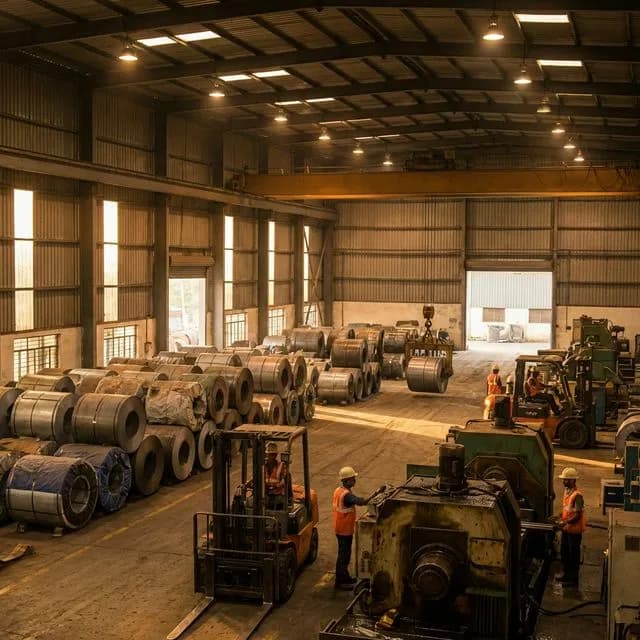
Navigating CBAM: A Practical Guide for Indian Exporters to the EU
The European Union's Carbon Border Adjustment Mechanism (CBAM), established by Regulation (EU) 2023/956, is no longer a distant threat but a present reality for Indian manufacturers exporting to the EU. From October 1, 2023, the transitional phase began, requiring meticulous quarterly reporting of embedded emissions. While no financial payments are due yet, this period is crucial for Indian MSMEs and large enterprises alike to build robust data collection and reporting systems. The definitive phase, commencing January 1, 2026, will introduce significant financial implications, making early preparation paramount.
This comprehensive guide is specifically tailored for Indian exporters – from the steel mills of Jamshedpur and Ludhiana, the cement plants of Gujarat, to the aluminium smelters of Odisha and the fertilizer units near Pune. We will demystify CBAM, provide actionable steps, and highlight how Indian businesses can prepare effectively to maintain their competitive edge in the European market.
Key Takeaways for Indian Exporters:
- CBAM is Here: The transitional phase (Oct 2023 - Dec 2025) requires mandatory quarterly emission reporting for covered goods exported to the EU.
- Covered Sectors: Steel, Cement, Aluminium, Fertilizers, Hydrogen, and Electricity are currently in scope. Verify your product's HS/CN code.
- Data is King: Accurate, granular data on direct and indirect emissions (Scope 1 & 2) is critical. Start collecting now.
- Financial Impact Looms: From January 2026, financial payments based on embedded emissions will be required, impacting your cost of goods.
- Default Values are Costly: Relying on EU default emission values can inflate your CBAM costs by up to 40%. Invest in accurate calculations.
- Get Expert Help: Partnering with an end-to-end CBAM compliance service like CarbonSettle can de-risk your compliance journey and save costs.
What is CBAM and Why Does it Matter to Indian Exporters?
CBAM is the EU's landmark climate policy designed to prevent "carbon leakage" – the relocation of carbon-intensive production outside the EU to countries with less stringent climate policies. It aims to level the playing field by imposing a carbon cost on certain imported goods equivalent to the carbon price paid by EU domestic producers under the EU Emissions Trading System (ETS). For Indian exporters, this means that the carbon footprint of your products will directly translate into a financial cost when entering the EU market from 2026.
The immediate impact for Indian manufacturers in sectors like steel, cement, aluminium, fertilizers, and hydrogen is the obligation to accurately measure and report the embedded greenhouse gas (GHG) emissions of their exported goods. This is not merely an administrative burden; it's a strategic imperative. Failure to comply during the transitional phase can lead to penalties, while inadequate preparation for the definitive phase could severely erode profit margins and market access.
Which Indian Products and Sectors are Covered by CBAM?
CBAM primarily targets energy-intensive industries with a high risk of carbon leakage. For Indian exporters, the following product categories and their corresponding Harmonized System (HS) codes (or Combined Nomenclature - CN codes) are currently in scope under Regulation (EU) 2023/956:
- Cement: Clinker, Portland cement, aluminous cement, etc. (e.g., HS codes 2523.10, 2523.29)
- Iron and Steel: A vast category including raw iron, ferro-alloys, steel products (bars, rods, wire, plates, sheets), tubes, pipes, and some downstream products like screws and bolts. (e.g., HS codes 7201, 7202, 7207, 7208-7229, 7301-7307)
- Aluminium: Unwrought aluminium, aluminium bars, rods, wire, plates, sheets, foil, tubes, pipes, and some castings. (e.g., HS codes 7601, 7604-7609)
- Fertilizers: Ammonia, nitric acid, ammonium nitrates, urea, and other nitrogenous, phosphatic, or potassic fertilizers. (e.g., HS codes 2814, 2834, 3102, 3105)
- Hydrogen: (HS code 2804.29)
- Electricity: (HS code 2716)
It is crucial for Indian exporters to meticulously check the specific CN codes of their products against the detailed list provided in Annex I of Regulation (EU) 2023/956. A slight variation in product specification or a sub-category can determine whether your product falls under CBAM or not. For a detailed lookup, refer to our CBAM CN code directory.
How to Calculate Embedded Emissions for CBAM Reporting: A Step-by-Step Guide
Accurately calculating embedded emissions is the cornerstone of CBAM compliance. This involves quantifying both direct (Scope 1) and indirect (Scope 2) GHG emissions attributable to the production of your goods.
Step 1: Identify Your Production Processes and Emission Sources
Map out your entire production process for the CBAM-covered goods. Identify all direct emission sources (e.g., combustion of fuels like coal, natural gas, diesel in furnaces, boilers, kilns; process emissions from chemical reactions like calcination in cement production) and indirect emission sources (e.g., electricity consumption from the grid).
Step 2: Collect Activity Data
This is the most critical and often challenging step. You need to gather granular data for each reporting period (quarterly):
- Fuel Consumption: Quantities of all fuels used (e.g., tonnes of coal, cubic meters of natural gas, liters of diesel). This can be found in purchase invoices, fuel logs, and meter readings.
- Electricity Consumption: Total MWh of electricity consumed, ideally segregated by process if possible. This information is available on electricity bills from utilities like MSEDCL (Maharashtra), UGVCL (Gujarat), TANGEDCO (Tamil Nadu), or other state electricity boards.
- Material Consumption: Quantities of raw materials used, especially those with inherent emissions or high energy intensity (e.g., limestone for cement, bauxite for aluminium).
- Production Output: Total tonnes of the CBAM-covered good produced.
- Waste Data: Quantities of waste generated and their disposal methods.
Step 3: Determine Emission Factors
Emission factors convert activity data into GHG emissions. The EU CBAM methodology prioritizes specific, verified emission factors from your own facility.
- Direct Emissions:
- Fuel Combustion: Use country-specific or IPCC default emission factors for different fuel types if facility-specific data is unavailable. For instance, the emission factor for Indian thermal coal might be around 2.5-2.8 tonnes CO2 per tonne of coal.
- Process Emissions: These are specific to the industrial process (e.g., CO2 released from limestone decomposition in cement kilns).
- Indirect Emissions (Electricity):
- Grid Electricity: Use the average grid emission factor for your specific region in India. The Central Electricity Authority (CEA) of India publishes these factors, which can vary significantly by state due to the energy mix (e.g., states with higher renewable energy penetration will have lower grid emission factors). For example, the national average grid emission factor for India is typically around 0.7-0.8 tonnes CO2e/MWh.
- On-site Renewable Electricity: If you generate your own renewable electricity (solar, wind), these typically have zero direct emissions.
- Power Purchase Agreements (PPAs): If you have a PPA for specific renewable energy, you might be able to use a lower, supplier-specific emission factor.
Step 4: Calculate Embedded Emissions
Multiply your activity data by the corresponding emission factors to get total GHG emissions (in tonnes of CO2e). Then, allocate these emissions to the specific CBAM-covered goods produced. This often involves a mass balance approach or an energy allocation method, especially in facilities producing multiple products.
For complex calculations and to ensure compliance with EU methodologies, engaging a CBAM compliance service India is highly recommended.
See what CBAM will cost your buyer
Free 30-second check — pick your product and tonnage, get your buyer-side savings number.
The Cost of Non-Compliance and Default Values for Indian Exporters
During the transitional phase (October 2023 - December 2025), non-compliance primarily incurs administrative penalties. Failure to submit a CBAM report, submitting an incomplete or incorrect report, or failing to correct it after notification can result in penalties ranging from €10 to €50 per tonne of unreported emissions (approximately ₹900 to ₹4,500 per tonne, depending on exchange rates). These penalties can quickly accumulate, especially for large consignments.
However, the more significant financial risk lies in the definitive phase starting January 1, 2026. If an Indian exporter cannot provide verified, actual embedded emission data, the EU importer will be forced to use default emission values provided by the European Commission. These default values are intentionally set high – often reflecting the average emissions of the worst-performing EU installations for that product category, or even higher.
Impact of Default Values: Relying on default values can inflate your CBAM tax liability significantly. Our analysis shows that using EU default values can increase your CBAM costs by up to 40% compared to accurately calculated, facility-specific emissions. For an Indian steel exporter, this could mean paying an additional €20-€30 per tonne of steel (approximately ₹1,800-₹2,700 per tonne) in CBAM charges. Over a year, for a medium-sized exporter shipping 50,000 tonnes of steel, this could amount to an extra €1 million to €1.5 million (₹9-13.5 Crores) in avoidable costs. This directly impacts your competitiveness and profitability in the European market.
This stark difference underscores the critical importance of investing in robust data collection and accurate emission calculation now. It's not just about avoiding penalties; it's about securing a competitive advantage. To understand potential costs, refer to our India CBAM Cost Index.
2026 Regulatory Impact for Indian Exporters: The Definitive Phase
The definitive phase of CBAM, commencing January 1, 2026, marks a fundamental shift from reporting obligations to financial liabilities. This is when the "EU carbon tax India" truly comes into effect.
Key Changes from 2026:
- Financial Obligation: EU importers will be required to purchase and surrender CBAM certificates corresponding to the embedded emissions of the imported goods. The price of these certificates will be linked to the weekly average auction price of EU ETS allowances.
- Verification Requirement: The embedded emissions reported by Indian exporters will need to be verified by an accredited verifier. This adds another layer of compliance and cost.
- Reporting Frequency: Annual CBAM declarations will replace quarterly reports.
- Credit for Carbon Pricing: If a carbon price has already been paid in India for the embedded emissions (e.g., through a domestic carbon tax or an equivalent mechanism), the EU importer can claim a reduction in the number of CBAM certificates to be surrendered. Currently, India does not have a comprehensive, economy-wide carbon pricing mechanism that would qualify for such a reduction, though the upcoming Carbon Credit Trading Scheme (CCTS) might offer some avenues in the future.
Operational and Financial Implications for Indian Exporters:
- Increased Cost of Goods: The CBAM cost will be a direct addition to your product's landed cost in the EU. This cost will either be absorbed by the exporter, passed on to the importer, or shared, depending on contractual agreements and market dynamics.
- Due Diligence by Importers: EU importers will become highly selective, preferring Indian suppliers who can provide accurate, verified emission data to minimize their own CBAM certificate costs. Exporters unable to provide this data risk losing market share.
- Supply Chain Scrutiny: The CBAM methodology requires reporting not just your direct emissions but also the emissions embedded in your precursor materials (e.g., the emissions from producing the iron ore used to make your steel). This necessitates robust data collection from your Indian suppliers as well.
- Need for Verification: Indian exporters will need to engage accredited verifiers (potentially EU-based or internationally recognized) to audit their emission calculations. This is a new cost and process to factor in.
Preparing for 2026 means not just understanding the rules, but implementing the systems, processes, and partnerships necessary to manage this financial and regulatory burden effectively.
Practical Steps for Indian Exporters to Ensure CBAM Compliance
To navigate CBAM successfully, Indian exporters need a proactive, structured approach.
1. Verify Product Scope and HS/CN Codes:
- Action: Review your export portfolio to the EU. Cross-reference your product's 6-digit HS codes and 8-digit CN codes with Annex I of Regulation (EU) 2023/956.
- Tip: Even if your final product isn't directly covered, if you export precursor materials to an EU manufacturer who then uses them in a CBAM-covered product, you might still need to provide emission data.
2. Establish Robust Data Collection Systems:
- Action: Identify all emission sources (fuel combustion, process emissions, grid electricity). Implement systems to track fuel consumption (coal, natural gas, diesel), electricity usage (from MSEDCL, UGVCL, TANGEDCO, etc.), and production volumes on a continuous basis.
- Tip: Digitize data collection where possible. Link energy meters, weighbridges, and production logs to a central system. Ensure data is auditable and traceable back to source documents (invoices, meter readings, production reports).
3. Calculate and Attribute Emissions Accurately:
- Action: Apply the CBAM methodology to calculate direct and indirect emissions per tonne of product. This involves selecting appropriate emission factors (facility-specific, country-specific, or EU default as a last resort).
- Tip: Pay close attention to the allocation rules, especially for multi-product facilities. Incorrect allocation can lead to over- or under-reporting. This is where an expert CBAM consultant India can provide invaluable guidance.
4. Engage Your Supply Chain:
- Action: For complex products like steel and aluminium, the embedded emissions include those from precursor materials. Reach out to your Indian suppliers (e.g., iron ore miners, bauxite suppliers) to request their emission data.
- Tip: Start early. Supplier engagement can be challenging and time-consuming. Educate your suppliers about CBAM and its implications.
5. Prepare for Verification:
- Action: Understand the requirements for third-party verification of your emission reports. This will become mandatory from 2026.
- Tip: Maintain meticulous records of all data, calculations, and methodologies used. This will streamline the verification process and reduce costs.
6. Understand Reporting Requirements and Deadlines:
- Action: Familiarize yourself with the EU's CBAM Transitional Registry and the format for quarterly reports.
- Tip: The first report (Q4 2023) was due by January 31, 2024. The second report (Q1 2024) is due by April 30, 2024. Missing deadlines can incur penalties.
7. Consider Decarbonization Strategies:
- Action: Long-term, reducing your embedded emissions is the most sustainable way to mitigate CBAM costs. Explore options like switching to cleaner fuels, improving energy efficiency, adopting renewable energy (solar, wind), or investing in process optimization.
- Tip: A lower carbon footprint not only reduces CBAM liability but also enhances your brand reputation and marketability in the EU.
How CarbonSettle Can Help: India's #1 End-to-End CBAM Compliance Service
Navigating the complexities of CBAM can feel overwhelming, especially for Indian MSMEs with limited resources and expertise in EU regulations. This is precisely where CarbonSettle, India's #1 end-to-end CBAM compliance service, steps in to take your entire CBAM headache away. We are not a software or a platform; we are your dedicated team of CBAM experts, providing complete hand-holding from start to finish.
Our comprehensive end-to-end CBAM compliance services ensure that Indian exporters meet all regulatory requirements seamlessly, efficiently, and cost-effectively.
What CarbonSettle Does for You:
- Factory Data Collection (We come to you): Our experts work directly with your factory teams in Ludhiana, Jamshedpur, Gujarat, Pune, or anywhere in India. We help you identify relevant data points, collect necessary documents (electricity bills from MSEDCL, UGVCL, TANGEDCO, fuel invoices, production logs, raw material consumption records), and establish robust data collection protocols.
- Emission Calculation & Methodology: We apply the precise EU CBAM methodology to calculate your direct (Scope 1) and indirect (Scope 2) embedded emissions per tonne of product. We ensure accurate allocation and use the most favorable emission factors to minimize your CBAM liability.
- Supplier Data Chasing: We proactively engage with your Indian upstream suppliers to gather necessary emission data for precursor materials, reducing your burden and ensuring a complete emissions profile.
- EU XML Report Generation: We prepare and generate the mandatory quarterly (and later annual) CBAM reports in the specific XML format
Compliance disclaimer
Strategies described here are for educational purposes. CBAM regulations (EU 2023/956) evolve quarterly — always verify with your accredited verifier before filing definitive reports.
We’ll do your entire CBAM quarter — ₹0.
A dedicated CBAM expert plus our AI do the whole April–June 2026 report end-to-end: your factory data in, verified actual emissions out — so your buyer pays your real number, not the inflated EU default. The report is yours to keep.
Start your report by 30 September 2026 to claim the free quarter.
Bills, logs, photos — one afternoon.
Verified actuals, EU XML, audit standard.
Yours to keep. ₹0 this quarter.
Prefer to talk? +91 76250 95885 · or run a 30-second savings check first
The complete CBAM guide for Indian exporters
The full compliance roadmap — CN codes, emissions, deadlines, penalties and how to keep your EU orders.
More CBAM guidance for Indian exporters
 Industry Guide
CBAM for Wire Drawing Units: Ludhiana and Rajkot Compliance Guide
Indian wire drawing units in Ludhiana & Rajkot need CBAM compliance. This guide helps MSMEs navigate EU carbon tax, reduce costs, and ensure smooth exports. Get expert help.
 Industry Guide
Aluminium Utensils and Cookware Exports Under CBAM: A CN 7615 Guide for Indian Exporters
Indian aluminium utensil exporters under CBAM face new rules. This guide explains CN 7615, emission calculations, and how CarbonSettle helps with end-to-end CBAM compliance for your EU exports.
 Industry Guide
CBAM for Indian Foundries: From Sand Casting to EU Shipment, a Complete Emission-Accounting Guide
Indian foundries exporting to the EU? Navigate CBAM compliance with our expert guide. Learn emission accounting, data collection, and reporting for sand casting, die casting, and more. Get end-to-end CBAM help in India.