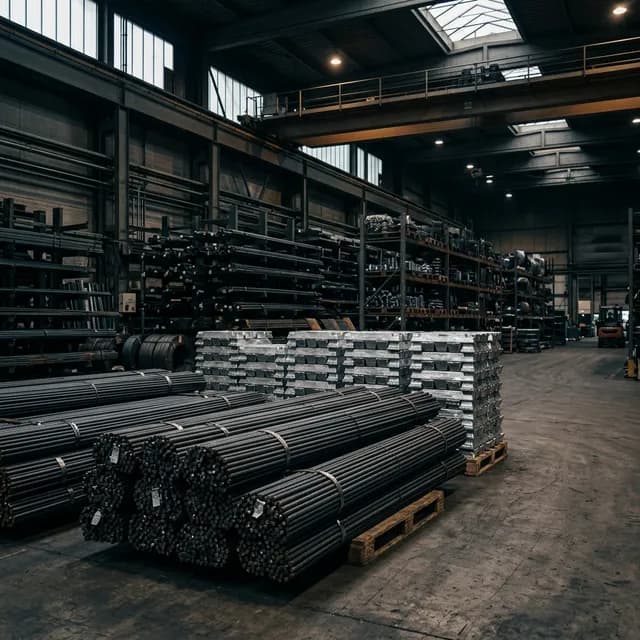
Navigating CBAM for Indian Steel Fittings and Flanges Exporters (CN Code 7307)
The European Union's Carbon Border Adjustment Mechanism (CBAM), established by Regulation (EU) 2023/956, is fundamentally reshaping global trade, particularly for carbon-intensive industries. For Indian manufacturers of steel fittings and flanges, falling under Combined Nomenclature (CN) code 7307, understanding and complying with CBAM is not just a regulatory obligation but a critical factor for maintaining market access and competitiveness in the lucrative EU market. This comprehensive guide provides Indian MSMEs and larger exporters with a practical, step-by-step walkthrough to navigate the complexities of CBAM for CN 7307 products, from the current transitional phase to the definitive phase starting January 2026.
Key Takeaways for Indian Steel Fittings & Flanges Exporters
- CBAM is Here: The transitional phase began October 1, 2023, requiring quarterly reporting of embedded emissions for CN 7307 products.
- Definitive Phase (Jan 2026): This is when financial obligations (CBAM certificates) begin, making accurate emission calculations crucial to avoid significant costs.
- Data is King: Accurate, verifiable data on direct and indirect emissions from your manufacturing processes is paramount.
- Default Values are Costly: Relying on EU default emission values can inflate your CBAM tax by up to 40% or more, making detailed calculations essential for cost savings.
- CN Code Specificity: CN 7307 covers a wide range of steel tube or pipe fittings (e.g., elbows, bends, sleeves, flanges), each requiring specific emission accounting.
- Expert Assistance is Key: Given the complexity, partnering with an end-to-end CBAM compliance service like CarbonSettle can significantly ease the burden and ensure accuracy.
What is CBAM and How Does it Impact Indian Steel Fittings (CN 7307)?
The Carbon Border Adjustment Mechanism (CBAM) is the EU's landmark policy designed to prevent "carbon leakage" – the relocation of carbon-intensive production outside the EU to countries with less stringent climate policies. It aims to put a fair price on the carbon emitted during the production of certain goods imported into the EU, mirroring the carbon price paid by EU domestic producers under the EU Emissions Trading System (ETS).
For Indian exporters of steel fittings and flanges (CN code 7307), this means that from October 1, 2023, you must begin monitoring and reporting the embedded greenhouse gas (GHG) emissions of your products exported to the EU. From January 1, 2026, your EU importer will be required to purchase CBAM certificates corresponding to these reported emissions, effectively imposing a carbon cost on your exports.
CN Code 7307 specifically covers "Tube or pipe fittings (for example, couplings, elbows, sleeves), of iron or steel." This broad category includes a vast array of products manufactured in industrial hubs across India, from Ludhiana's steel foundries to Pune's engineering units and Jamshedpur's heavy industries. Whether you're producing forged steel flanges, welded pipe elbows, or cast iron couplings, your products are subject to CBAM if destined for the EU.
The impact is twofold:
- Reporting Burden (Transitional Phase: Oct 2023 - Dec 2025): Indian exporters must provide their EU importers with accurate embedded emissions data. The importer is responsible for submitting quarterly CBAM reports to the European Commission. Lack of data or inaccurate data from the Indian exporter will lead to the EU importer using default values, which are generally higher and can lead to penalties.
- Financial Obligation (Definitive Phase: Jan 2026 onwards): This is where the "carbon tax" comes into play. The EU importer will purchase CBAM certificates at a price linked to the EU ETS carbon price (currently around €70-€90 per tonne of CO2e). The lower your reported embedded emissions, the fewer certificates your importer needs to buy, directly translating into lower costs and a competitive advantage for your Indian-made products.
Understanding Embedded Emissions for CN 7307: Direct vs. Indirect
For steel fittings and flanges, understanding the types of emissions is crucial for accurate reporting. CBAM requires reporting of both direct and indirect emissions.
-
Direct Emissions (Scope 1): These are GHG emissions from sources owned or controlled by your factory during the production process of the steel fittings. This includes emissions from:
- Fuel combustion: Burning natural gas, coal, furnace oil, or diesel in furnaces, boilers, and other equipment used for melting, forging, heat treatment, or machining.
- Process emissions: Any GHGs released directly from chemical reactions within the steelmaking or casting process itself (e.g., CO2 from electrode consumption in electric arc furnaces if you're producing the steel in-house, or from decarburization).
- On-site electricity generation: If your factory generates its own electricity using fossil fuels, the emissions from this generation are direct.
For a typical Indian factory in Ludhiana producing forged steel flanges, this would include emissions from the natural gas used in the forging furnaces, the diesel for backup generators, and any process-related emissions from the raw material conversion.
-
Indirect Emissions (Scope 2): These are GHG emissions from the generation of electricity, heat, or cooling purchased and consumed by your factory.
- Purchased Electricity: This is a major component for many Indian manufacturers. The emissions factor of your electricity grid (e.g., MSEDCL in Maharashtra, UGVCL in Gujarat, TANGEDCO in Tamil Nadu) determines the carbon intensity of your purchased power. India's grid is still heavily reliant on coal, leading to relatively high indirect emissions.
- Purchased Heat/Cooling: If your factory purchases heat or cooling from an external source, the emissions associated with its generation are indirect.
For an MSME in Gujarat manufacturing cast steel fittings, the electricity consumed from UGVCL for induction furnaces, machining, and lighting would contribute significantly to indirect emissions.
The Challenge for CN 7307: Steel fittings and flanges are often manufactured from semi-finished steel products (e.g., billets, bars, plates). CBAM requires reporting not only the emissions from your own manufacturing process (e.g., forging, machining, heat treatment, welding) but also the embedded emissions of the raw materials you use (e.g., the steel billets or ingots purchased from a steel mill). This means you need to obtain emissions data from your upstream steel suppliers. This is a critical and often complex step for Indian exporters.
See what CBAM will cost your buyer
Free 30-second check — pick your product and tonnage, get your buyer-side savings number.
Operational Steps for CBAM Compliance for CN 7307 Exporters
Compliance is a multi-faceted process requiring meticulous data collection, calculation, and reporting. Here’s a practical roadmap for Indian exporters of steel fittings and flanges:
1. Identify CBAM-Applicable Products (HS/CN Code Verification)
The first step is to confirm that your specific steel fittings and flanges fall under CN code 7307. While the general heading is clear, sub-headings can be nuanced.
-
Action: Review your export invoices and product classifications. Cross-reference them with the EU's Combined Nomenclature (CN) codes. For example:
- 7307.11: Of non-malleable cast iron
- 7307.19: Other, of cast iron
- 7307.21: Flanges, of stainless steel
- 7307.22: Threaded elbows, bends and sleeves, of stainless steel
- 7307.23: Other butt welding fittings, of stainless steel
- 7307.29: Other, of stainless steel
- 7307.91: Flanges, of other iron or steel
- 7307.92: Threaded elbows, bends and sleeves, of other iron or steel
- 7307.93: Other butt welding fittings, of other iron or steel
- 7307.99: Other, of other iron or steel
Each sub-code is relevant. If you're unsure, consult with customs brokers or a CBAM expert. You can also refer to our detailed CBAM CN code directory for further guidance.
2. Establish Robust Data Collection Systems
This is the bedrock of CBAM compliance. You need to gather data on all inputs and outputs related to your production of CN 7307 items.
-
Energy Consumption:
- Electricity Bills: Collect monthly electricity bills from your utility provider (e.g., MSEDCL, UGVCL, TANGEDCO, BESCOM). Record total units consumed (kWh).
- Fuel Consumption Records: Maintain detailed logs of all fuels purchased and consumed (natural gas, LPG, diesel, furnace oil, coal, coke) for furnaces, boilers, generators, and other equipment. Record quantities in appropriate units (litres, kg, cubic meters).
-
Raw Material Inputs:
- Purchase Records: Keep track of all steel raw materials (billets, bars, plates, ingots, scrap) used for manufacturing your fittings. Record quantities (tonnes).
- Supplier Emissions Data: Crucially, you need to request embedded emissions data from your steel suppliers. This is often the most challenging part. Ask for their Product Carbon Footprint (PCF) or specific emissions data per tonne of steel supplied. If they cannot provide it, you might need to use default values, which are less favourable.
-
Production Data:
- Production Logs: Record the total quantity of finished steel fittings (CN 7307) produced during each reporting period (e.g., tonnes, number of units).
- Waste Data: Track any significant waste generated during the process.
Practical Tip: Designate a specific person or team within your factory (e.g., from production, finance, or quality control) to be responsible for data collection. Implement a system (even a simple spreadsheet initially) to ensure consistent and accurate record-keeping.
3. Calculate Embedded Emissions (Direct and Indirect)
Once data is collected, the next step is to calculate the embedded emissions per tonne of your finished CN 7307 product. This involves applying emission factors to your consumption data.
-
Direct Emissions Calculation:
- Multiply fuel consumption (e.g., litres of diesel, cubic meters of natural gas) by their respective emission factors (e.g., kg CO2e/litre, kg CO2e/m³). These factors are often provided by national environmental agencies or international bodies like the IPCC.
- Account for process emissions if applicable.
-
Indirect Emissions Calculation:
- Multiply purchased electricity (kWh) by the grid-specific emission factor (e.g., kg CO2e/kWh for MSEDCL or UGVCL). The EU provides default grid emission factors for India, but using a more specific factor from your utility or a national average can be more accurate.
-
Raw Material Emissions:
- Integrate the embedded emissions data received from your steel suppliers. If supplier-specific data is unavailable, you will need to use EU default values for the raw steel, which are typically much higher.
-
Allocation: Allocate these total emissions to the specific quantity of CBAM-relevant products produced. For example, if your factory produces multiple products, you need a methodology to allocate energy consumption and emissions to the CN 7307 items.
-
Units: Ensure all calculations are in tonnes of CO2 equivalent (tCO2e) per tonne of product.
Complexity: This step is highly technical and requires expertise in GHG accounting methodologies (e.g., ISO 14064, GHG Protocol). For an Indian MSME in Pune, accurately calculating the emissions from their specialized valve and fitting manufacturing, including the upstream steel, can be a daunting task. This is where an end-to-end CBAM compliance service like CarbonSettle becomes invaluable. We handle all these complex calculations for you, ensuring compliance with EU methodologies.
4. Prepare CBAM Reports (Transitional Phase)
During the transitional phase (until December 2025), your EU importer is responsible for submitting quarterly CBAM reports. However, they rely entirely on the data you provide.
- Data Provision: You must provide your EU importer with the calculated embedded emissions per tonne of each type of CN 7307 product shipped.
- Documentation: Be ready to provide supporting documentation for your calculations (e.g., utility bills, fuel invoices, production records, supplier declarations).
- EU XML Format: The EU Commission mandates a specific XML format for these reports. While your importer submits this, understanding the data requirements helps. CarbonSettle generates these EU-ready XML reports directly, taking this burden off your shoulders and your importer's.
5. Engage with Suppliers and Customers
- Upstream Suppliers: Proactively engage with your steel suppliers (e.g., SAIL, JSW Steel, Tata Steel, or smaller re-rollers) to request their embedded emissions data. Explain the CBAM requirements and the competitive advantage of providing this data. This is crucial for avoiding costly default values.
- EU Importers: Maintain open communication with your EU importers. Understand their reporting needs and timelines. Collaborate to ensure smooth data exchange. They are your partners in this compliance journey.
6. Prepare for the Definitive Phase (January 2026 Onwards)
The definitive phase introduces financial obligations.
- Verification: Your reported emissions will need to be verified by an accredited verifier. This will likely involve an audit of your data collection and calculation methodologies.
- CBAM Certificates: Your EU importer will purchase CBAM certificates based on your verified emissions. The price of these certificates is linked to the EU ETS price. For example, if your product has an embedded emission of 1.5 tCO2e per tonne, and the CBAM certificate price is €80/tCO2e, your importer will pay €120 per tonne of your product. This cost will inevitably be passed back to you, the Indian exporter.
- Optimization: This phase makes emission reduction strategies critical. Investing in energy efficiency, renewable energy, and sourcing lower-carbon raw materials will directly reduce your CBAM liability.
2026 Regulatory Impact for Indian Exporters
The shift to the definitive phase in January 2026 marks a significant escalation in the impact of CBAM for Indian exporters of steel fittings and flanges. This is when the "carbon tax" becomes a tangible financial obligation, moving beyond just reporting.
Financial Obligations: From 2026, your EU importer will be required to purchase CBAM certificates equivalent to the embedded emissions of your CN 7307 products. The price of these certificates will track the weekly average auction price of EU ETS allowances. With EU ETS prices fluctuating between €70-€90 per tonne of CO2e, this represents a substantial cost.
Example Cost Impact for an Indian Steel Flange Exporter: Let's assume an Indian factory in Jamshedpur exports 1,000 tonnes of steel flanges (CN 7307) to the EU annually.
- Scenario 1: Accurate Reporting (Lower Emissions): Through meticulous data collection and process optimization, the factory calculates its embedded emissions at 1.8 tCO2e per tonne of finished product.
- Total emissions: 1,000 tonnes * 1.8 tCO2e/tonne = 1,800 tCO2e.
- If CBAM certificate price is €80/tCO2e, total CBAM cost = 1,800 * €80 = €144,000 (approx. ₹1.28 Crore).
- Scenario 2: Relying on EU Default Values (Higher Emissions): If the factory fails to provide accurate data, the EU importer might be forced to use default values, which for steel products can be significantly higher, often around 2.5 tCO2e per tonne or more.
- Total emissions (default): 1,000 tonnes * 2.5 tCO2e/tonne = 2,500 tCO2e.
- Total CBAM cost = 2,500 * €80 = €200,000 (approx. ₹1.78 Crore).
This difference of €56,000 (approx. ₹50 Lakhs) highlights the critical importance of accurate emission calculations. Relying on default values can easily inflate your CBAM tax by 30-40% or even more. This cost will directly impact your product's competitiveness and profitability in the EU market.
Verification Requirements: From 2026, the reported emissions will need to be verified by an independent, accredited verifier. This adds another layer of complexity and cost. Indian exporters will need to ensure their data collection, calculation methodologies, and supporting documentation are robust enough to withstand a rigorous audit.
Strategic Implications: The definitive phase necessitates a strategic shift for Indian manufacturers. It's no longer just about compliance; it's about carbon efficiency. Companies that proactively reduce their carbon footprint will gain a significant competitive edge by lowering their CBAM liability. This might involve:
- Investing in energy-efficient machinery.
- Transitioning to renewable energy sources (e.g., solar panels on factory roofs).
- Optimizing manufacturing processes to reduce fuel consumption.
- Sourcing lower-carbon steel inputs.
Why Indian Exporters Cannot Afford to Ignore CBAM
Compliance disclaimer
Strategies described here are for educational purposes. CBAM regulations (EU 2023/956) evolve quarterly — always verify with your accredited verifier before filing definitive reports.
We’ll do your entire CBAM quarter — ₹0.
A dedicated CBAM expert plus our AI do the whole April–June 2026 report end-to-end: your factory data in, verified actual emissions out — so your buyer pays your real number, not the inflated EU default. The report is yours to keep.
Start your report by 30 September 2026 to claim the free quarter.
Bills, logs, photos — one afternoon.
Verified actuals, EU XML, audit standard.
Yours to keep. ₹0 this quarter.
Prefer to talk? +91 76250 95885 · or run a 30-second savings check first
The complete CBAM guide for Indian exporters
The full compliance roadmap — CN codes, emissions, deadlines, penalties and how to keep your EU orders.
More CBAM guidance for Indian exporters
 Industry Guide
CBAM for Steel Utensils and Hardware Exporters: The CN Code 7323 Guide
Indian steel utensil and hardware exporters under CN Code 7323 must understand CBAM. This guide offers practical steps, emission calculation tips, and compliance strategies for Indian MSMEs exporting to the EU.
 Industry Guide
Stainless Steel Kitchenware Exporters: A CBAM Compliance Primer
Indian stainless steel kitchenware exporters face CBAM. This guide helps you navigate EU carbon tax compliance, from data collection to reporting. Get expert CBAM help in India.
Technical ComplianceSpring Steel Products: CN Code Mapping and CBAM Compliance Checklist
Essential guide for CBAM compliance and CN code mapping for spring steel products.