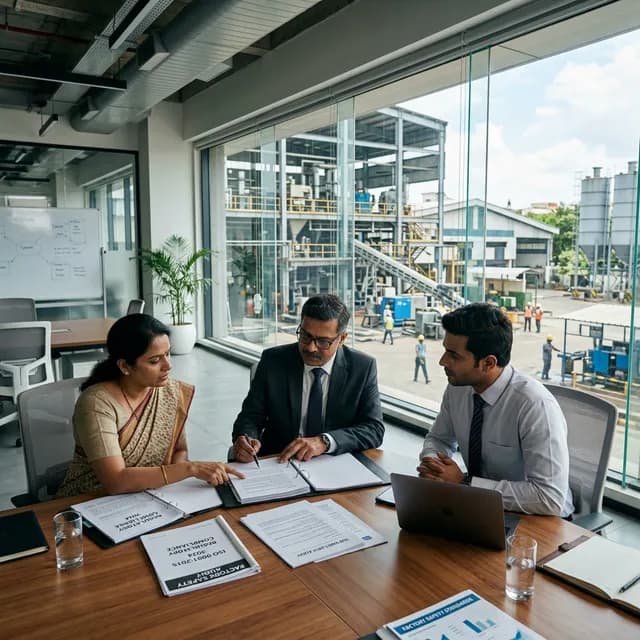
---
title: "Switching to Green Hydrogen for DRI: CBAM Upside for Indian Steelmakers"
date: 2024-07-30
description: "Indian steelmakers can significantly reduce CBAM costs by adopting Green Hydrogen for DRI. Learn how this strategy offers a competitive edge and how CarbonSettle provides end-to-end CBAM compliance services."
category: "CBAM Strategy"
---

# Switching to Green Hydrogen for DRI: A Strategic CBAM Upside for Indian Steelmakers

The European Union's Carbon Border Adjustment Mechanism (CBAM), enshrined in Regulation (EU) 2023/956, is fundamentally reshaping global trade, especially for carbon-intensive sectors. For Indian steel manufacturers, a sector vital to India's industrial backbone with significant exports to the EU, CBAM presents both a challenge and a profound opportunity. This article delves into how transitioning to Green Hydrogen for Direct Reduced Iron (DRI) production can offer a significant competitive advantage under CBAM, transforming potential carbon liabilities into a strategic upside for Indian steelmakers.

## Key Takeaways

*   **CBAM Impact on Indian Steel:** The EU CBAM will impose a carbon price on steel imports, directly impacting the profitability of Indian steel exports due to their typically higher emissions intensity.
*   **Green Hydrogen as a Solution:** Adopting Green Hydrogen in DRI production dramatically reduces embedded emissions, offering a pathway to lower or even eliminate CBAM charges.
*   **Financial Benefits:** Significant savings on CBAM costs (potentially €100-€200 per tonne of steel) can offset the initial investment in green technologies, improving export competitiveness.
*   **Operational Shifts Required:** Indian steelmakers need to focus on accurate emissions data collection, lifecycle assessments, and securing reliable Green Hydrogen supplies.
*   **2026 Definitive Phase:** From January 2026, financial obligations under CBAM become mandatory, making strategic decarbonization critical now.
*   **CarbonSettle's Role:** CarbonSettle offers end-to-end CBAM compliance services, taking the entire regulatory burden off Indian exporters, from data collection to verified report generation and coordination with EU importers.

## Understanding the CBAM Challenge for Indian Steel Exports

The Carbon Border Adjustment Mechanism (CBAM) is designed to prevent 'carbon leakage' – the relocation of carbon-intensive production outside the EU to countries with less stringent climate policies. For Indian steel, a major export commodity to the EU, this means that from January 2026, every tonne of steel imported into the EU will be subject to a carbon price equivalent to the EU Emissions Trading System (ETS) price, adjusted for any carbon pricing already paid in India.

Currently, Indian steel production, particularly through the Blast Furnace-Basic Oxygen Furnace (BF-BOF) route or even coal-based DRI, tends to have a higher embedded emission intensity compared to the EU average. For instance, the average CO2 emissions for steel production in India can range from 1.8 to 2.5 tonnes of CO2 per tonne of crude steel, depending on the technology and energy mix. In contrast, leading European producers are striving for intensities below 1.5 tonnes CO2/tonne. This disparity directly translates into higher CBAM costs for Indian exporters.

Consider a scenario where the EU ETS carbon price is €80 per tonne of CO2. An Indian steel producer exporting 100,000 tonnes of steel with an embedded emission intensity of 2.2 tonnes CO2/tonne would face a potential CBAM liability of €80 * 2.2 * 100,000 = €17.6 million (approximately ₹158 Crores at an exchange rate of ₹90/€). This significant cost can erode profit margins and make Indian steel less competitive in the European market. This is precisely why **CBAM for Indian exporters** is not just a compliance hurdle but a strategic imperative.

## The Promise of Green Hydrogen in Direct Reduced Iron (DRI) Production

Direct Reduced Iron (DRI) is a key intermediate product in steelmaking, produced by reducing iron ore without melting it. Traditionally, this reduction process uses natural gas or coal as a reductant, leading to significant CO2 emissions. However, substituting these fossil fuels with Green Hydrogen—hydrogen produced through electrolysis powered by renewable electricity (solar, wind)—offers a near-zero carbon pathway for DRI production.

### How Green Hydrogen Transforms DRI

1.  **Electrolysis:** Renewable energy (e.g., from solar farms in Gujarat or wind farms in Tamil Nadu) powers electrolysers to split water (H2O) into hydrogen (H2) and oxygen (O2).
2.  **DRI Process:** This Green Hydrogen is then fed into DRI plants (e.g., in Jamshedpur or Ludhiana) as the reducing agent. Instead of producing CO2, the reaction primarily yields water vapor (H2O), drastically cutting down embedded carbon emissions.
3.  **Electric Arc Furnace (EAF):** The Green DRI is then melted in an Electric Arc Furnace (EAF), which can also be powered by renewable electricity, further minimizing the carbon footprint of the final steel product.

This shift represents a paradigm change, moving from a carbon-intensive process to one that is virtually carbon-neutral at the production stage. For Indian MSMEs and large manufacturers alike, this is a tangible path to **CBAM compliance India** that goes beyond mere reporting.

## Strategic Advantages for Indian Steelmakers Under CBAM

Adopting Green Hydrogen for DRI offers several compelling advantages for Indian steelmakers aiming to navigate and thrive under CBAM:

### 1. Significant Reduction in CBAM Liabilities

The most direct benefit is the reduction, or even elimination, of CBAM charges. By lowering the embedded emissions of their steel products, Indian exporters can drastically cut down the carbon price they pay at the EU border.

*   **Example:** If an Indian steel producer reduces its embedded emissions from 2.2 tonnes CO2/tonne to 0.5 tonnes CO2/tonne through Green DRI, their CBAM liability for 100,000 tonnes of steel (at €80/tonne CO2) drops from €17.6 million to €4 million. This represents a saving of €13.6 million (approximately ₹122 Crores), making their product significantly more competitive.
*   **Default Values vs. Actuals:** Without accurate emissions data, EU importers will use high default values, which could be as high as 3-4 tonnes CO2/tonne for certain Indian steel products. By investing in Green Hydrogen and robust measurement, Indian exporters can report actual, much lower emissions, saving potentially **up to 40% on CBAM tax** compared to these default values. This is where an **end-to-end CBAM compliance service** like CarbonSettle becomes invaluable, ensuring your actual low emissions are accurately reported.

### 2. Enhanced Market Competitiveness

Lower CBAM costs translate directly into more competitive pricing for Indian steel in the EU market. This can help retain existing market share and even capture new opportunities as European buyers increasingly seek low-carbon products to meet their own sustainability goals.

### 3. Future-Proofing Operations

The global push for decarbonization is accelerating. Investing in Green Hydrogen now positions Indian steelmakers at the forefront of this transition, future-proofing their operations against increasingly stringent environmental regulations and carbon pricing mechanisms in other markets beyond the EU.

### 4. Access to Green Finance and Incentives

Governments and financial institutions worldwide are offering incentives, subsidies, and green finance options for projects that promote decarbonization. Indian steelmakers investing in Green Hydrogen can tap into these resources, reducing the financial burden of the transition. The Indian government is also actively promoting Green Hydrogen initiatives, which could provide domestic support.

### 5. Brand Reputation and ESG Benefits

Producing "Green Steel" significantly enhances a company's environmental, social, and governance (ESG) profile. This can attract environmentally conscious investors, improve brand image, and appeal to customers who prioritize sustainable sourcing.
See what CBAM will cost your buyer
Free 30-second check — pick your product and tonnage, get your buyer-side savings number.
Operational Steps for Indian Steelmakers to Embrace Green Hydrogen DRI
The transition to Green Hydrogen DRI is a complex undertaking requiring strategic planning and execution. Here are the key operational steps:
1. Feasibility Studies and Technology Assessment
- Hydrogen Production: Evaluate the viability of establishing captive Green Hydrogen production facilities (e.g., using solar power in Rajasthan or wind power in Karnataka) or securing long-term supply agreements from dedicated Green Hydrogen producers. Assess the availability of renewable energy and water resources.
- DRI Plant Modification: Determine the necessary modifications to existing DRI plants to accommodate Green Hydrogen as a reductant. This includes assessing compatibility, required capital expenditure, and potential operational adjustments.
- Cost-Benefit Analysis: Conduct a detailed financial analysis comparing the capital and operational costs of Green Hydrogen DRI with traditional methods, factoring in potential CBAM savings, government incentives, and carbon credit opportunities.
2. Securing Renewable Energy and Green Hydrogen Supply
- Power Purchase Agreements (PPAs): Establish long-term PPAs with renewable energy generators (e.g., MSEDCL, UGVCL, TANGEDCO for grid power from renewables, or direct agreements with solar/wind farm developers).
- Hydrogen Offtake Agreements: If not producing captively, secure reliable Green Hydrogen supply through long-term off-take agreements. Consider the logistics of hydrogen transportation and storage.
3. Robust Data Collection and Emissions Monitoring
- Lifecycle Assessment (LCA): Implement a comprehensive LCA approach to accurately measure the embedded emissions across the entire steel production value chain, from raw material extraction to finished product.
- Granular Data: Collect granular data on electricity consumption (with source and grid emission factors), fuel consumption, process emissions, and material inputs. This is crucial for CBAM reporting.
- Verification: Engage accredited third-party verifiers to ensure the accuracy and reliability of emission data, which is a mandatory requirement under Regulation (EU) 2023/956 for the definitive phase.
4. CBAM Reporting and Compliance
- HS/CN Code Verification: Accurately classify all steel products exported to the EU using the correct Harmonized System (HS) and Combined Nomenclature (CN) codes. This determines the CBAM applicability. For a comprehensive guide, refer to the CBAM CN code directory.
- Emission Calculation Methodology: Apply the EU-mandated methodologies for calculating embedded emissions. This includes direct emissions from production and indirect emissions from electricity consumption.
- Supplier Engagement: For complex supply chains, engage with upstream suppliers (e.g., iron ore miners, ferroalloy producers) to gather their emissions data. This can be challenging but is critical for a complete picture.
- Reporting: Prepare and submit quarterly CBAM reports during the transitional phase (until December 2025) and annual CBAM declarations from 2026 onwards. This requires meticulous documentation and adherence to EU formats.
This is where specialized CBAM service provider India like CarbonSettle steps in. We offer end-to-end CBAM compliance services that handle all these complexities, allowing Indian manufacturers in Pune, Jamshedpur, or anywhere else to focus on their core business.
2026 Regulatory Impact for Indian Exporters: The Definitive Phase
The transitional phase of CBAM, which began on October 1, 2023, is primarily a reporting obligation. Indian exporters (or their EU importers) must submit quarterly reports detailing the embedded emissions of their goods without incurring financial penalties. This period is crucial for Indian companies to understand the requirements, establish data collection systems, and identify their emission hotspots.
However, the definitive phase, commencing on January 1, 2026, will introduce the financial obligation. From this date, EU importers will be required to purchase and surrender CBAM certificates corresponding to the embedded emissions of their imported goods. The price of these certificates will be linked to the weekly average auction price of EU ETS allowances, expressed in €/tonne of CO2.
Key Implications of the Definitive Phase:
- Financial Liability: Indian exporters will either bear the cost directly (if they negotiate this with their EU importers) or indirectly through reduced purchase prices from EU buyers. This is the "EU carbon tax India" that everyone is talking about.
- Verification Mandate: All reported embedded emissions must be verified by an independent, accredited verifier. Unverified or inaccurate data will lead to penalties and potentially higher CBAM costs based on default values.
- Strategic Urgency: The time between now and January 2026 is critical for Indian steelmakers to implement decarbonization strategies like Green Hydrogen DRI. Delaying action will result in significant financial penalties and a loss of competitive edge.
- Data Accuracy is Paramount: The difference between reporting actual, low emissions and relying on high default values can be substantial. For example, if a steel product's actual emissions are 1.0 tCO2/tonne but the default value applied is 3.0 tCO2/tonne, at an €80/tCO2 price, the difference is €160 per tonne of steel. For a 10,000-tonne shipment, this is an avoidable cost of €1.6 million (approx. ₹14.4 Crores).
This financial reality underscores the need for proactive CBAM compliance India strategies. For a deeper dive, read our comprehensive CBAM Compliance Guide for Indian Exporters.
Challenges and Opportunities for Green Hydrogen Adoption in India
While the CBAM upside is clear, Indian steelmakers face challenges in adopting Green Hydrogen:
Challenges:
- Cost of Green Hydrogen: Currently, Green Hydrogen is more expensive than fossil fuel-based hydrogen or natural gas. However, costs are projected to decrease significantly with technological advancements and economies of scale.
- Infrastructure: Developing the necessary infrastructure for Green Hydrogen production, storage, and transportation (e.g., pipelines, refueling stations) is a massive undertaking.
- Policy and Regulatory Framework: While India has launched the National Green Hydrogen Mission, a robust and stable policy framework, including subsidies and incentives, is crucial for accelerating adoption.
- Technological Maturity: While Green Hydrogen DRI is proven, scaling it up to meet the demands of India's large steel industry requires significant investment in R&D and deployment.
Opportunities:
- Abundant Renewable Energy: India has vast untapped potential for solar and wind energy, which can power Green Hydrogen production.
- Government Support: The Indian government's focus on Green Hydrogen, including ambitious production targets, provides a supportive ecosystem.
- Global Partnerships: Collaboration with international technology providers and investors can accelerate the transition.
- Domestic Demand: Beyond steel, other sectors like fertilizers, chemicals, and transportation will also drive demand for Green Hydrogen, creating a robust ecosystem.
How CarbonSettle Can Help: Your Dedicated CBAM Compliance Partner
Navigating the complexities of CBAM and the strategic shift towards decarbonization can be daunting for Indian steelmakers, especially for MSMEs. This is where CarbonSettle, India's #1 end-to-end CBAM compliance service, steps in. We are not a software platform; we are your dedicated team of CBAM experts who take your entire CBAM headache away.
We understand that Indian factory owners and compliance officers don't want to become EU regulatory experts or spend countless hours on data entry. Our managed CBAM service provides complete hand-holding, ensuring seamless compliance and maximum financial benefit.
Our End-to-End CBAM Compliance Services Include:
- Factory Data Collection: We work directly with your teams in Ludhiana, Gujarat, Pune, Jamshedpur, or any other industrial hub to collect all necessary operational data – from electricity bills (MSEDCL, UGVCL, TANGEDCO), fuel invoices, and production logs to raw material consumption.
- Emissions Calculation & Verification: Our experts apply the precise EU-mandated methodologies to calculate both direct and indirect embedded emissions for your steel products. We prepare all documentation for third-party verification, ensuring your reports are audit-ready.
- Supplier Data Outreach: For complex supply chains, we proactively engage with your upstream suppliers to gather their emissions data, ensuring a comprehensive and accurate CBAM declaration.
- HS/CN Code Classification: We assist in accurately classifying your products under the correct HS and CN codes, preventing reporting errors and potential penalties. You can also explore our CBAM CN code directory.
- EU XML Report Generation: We generate the final EU-ready XML reports required for submission during the transitional phase and prepare the annual CBAM declarations for the definitive phase.
- EU Importer Coordination: We act as the liaison between your Indian operations and your EU importers, ensuring a smooth handoff of verified CBAM reports and addressing any queries. This streamlines the process for your EU partners.
- Strategic Cost Optimization: By accurately reporting your actual emissions, especially those reduced through Green Hydrogen adoption, we help you save significantly on CBAM tax, potentially up to 40% compared to punitive default values. We also provide insights into the India CBAM Cost Index to help you plan.
- Audit Preparation & Support: We ensure all your documentation is meticulously prepared for potential audits by EU authorities.
With CarbonSettle, you don't need to hire new compliance staff, invest in complex software, or decipher intricate EU regulations. We handle everything, allowing you to focus on your core business and your decarbonization journey.
Don't let CBAM become a barrier to your European market access. Partner with CarbonSettle, your trusted CBAM consultant India, and turn compliance into a competitive advantage.
Contact CarbonSettle today for a free CBAM assessment and discover how we can simplify your compliance journey:
Call or WhatsApp us at +91 7625095885
Or visit our website to contact CarbonSettle for a free CBAM assessment. To learn more about how we compare against other providers, visit compare CBAM service providers in India.
Frequently Asked Questions
What is the Carbon Border Adjustment Mechanism (CBAM) and how does it affect Indian steel exporters?
The Carbon Border Adjustment Mechanism (CBAM) is an EU regulation (Regulation (EU) 2023/956) that imposes a carbon price on certain carbon-intensive imports into the EU, including steel. For Indian steel exporters, this means that from January 2026, their products will face a financial levy at the EU border based on their
Compliance disclaimer
Strategies described here are for educational purposes. CBAM regulations (EU 2023/956) evolve quarterly — always verify with your accredited verifier before filing definitive reports.
We’ll do your entire CBAM quarter — ₹0.
A dedicated CBAM expert plus our AI do the whole April–June 2026 report end-to-end: your factory data in, verified actual emissions out — so your buyer pays your real number, not the inflated EU default. The report is yours to keep.
Start your report by 30 September 2026 to claim the free quarter.
Bills, logs, photos — one afternoon.
Verified actuals, EU XML, audit standard.
Yours to keep. ₹0 this quarter.
Prefer to talk? +91 76250 95885 · or run a 30-second savings check first
The complete CBAM guide for Indian exporters
The full compliance roadmap — CN codes, emissions, deadlines, penalties and how to keep your EU orders.
More CBAM guidance for Indian exporters
 Compliance
CBAM for Hydrogen and Ammonia Exporters from India: Rules, CN Codes and the Green-Hydrogen Opening
EU CBAM compliance guide.
 Compliance
India's Green Steel Taxonomy: Star Ratings, Certification, and Whether EU Buyers Care
EU CBAM compliance guide.
Technical ComplianceHydrogen-Based Steel Production: CBAM Treatment of Green Steel
Technical guidance on EU CBAM compliance for hydrogen-based steel production, covering carbon accounting, verification, and regulatory requirements.