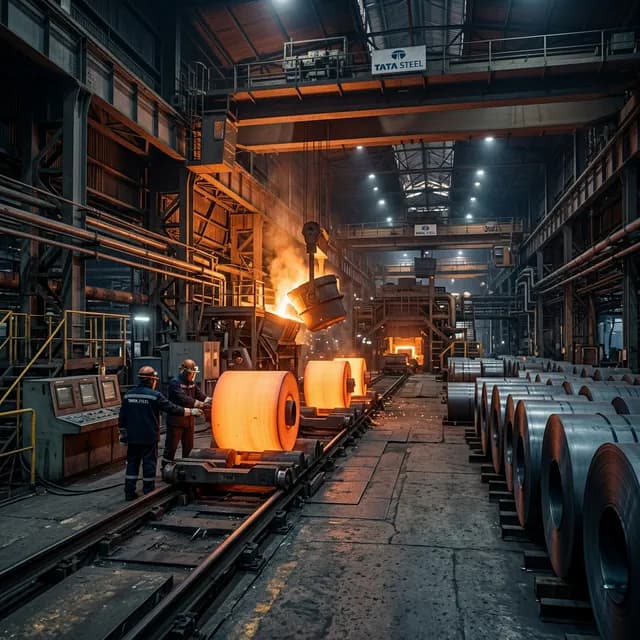
Navigating CBAM: Government Support for Indian Exporters
The European Union's Carbon Border Adjustment Mechanism (CBAM), established by Regulation (EU) 2023/956, is poised to significantly impact Indian exporters, particularly MSMEs in carbon-intensive sectors like steel, cement, aluminium, fertilisers, and hydrogen. While the transitional phase (October 2023 - December 2025) focuses on reporting, the definitive phase starting January 2026 will introduce financial obligations, essentially a "carbon tax" on imports into the EU. This has raised a critical question for many Indian factory owners and compliance officers: will the Indian government step in to alleviate the burden of CBAM compliance costs and potential carbon taxes?
This comprehensive guide delves into the current landscape of proposed government support for Indian MSMEs facing CBAM, explains the types of assistance being considered, and provides actionable insights for businesses to prepare. We will also highlight how CarbonSettle, as India's #1 end-to-end CBAM compliance service, can help you navigate these complexities, irrespective of government aid.
Key Takeaways
- CBAM Impact: The EU CBAM will impose a carbon levy on imports from January 2026, affecting Indian steel, cement, aluminium, fertiliser, and hydrogen exporters.
- Government Initiatives: The Indian government is actively exploring support mechanisms for CBAM-affected MSMEs, including financial aid, technical assistance, and capacity building.
- Proposed Schemes: Discussions are underway for schemes to cover CBAM compliance costs, provide incentives for greening operations, and potentially offer tax rebates or export subsidies.
- Proactive Compliance is Key: Even with government support, Indian exporters must proactively measure and report their embedded emissions to avoid penalties and high default values.
- CarbonSettle's Role: CarbonSettle offers complete hand-holding for CBAM compliance, from data collection to verified report generation, reducing your CBAM tax liability by up to 40% and ensuring seamless EU market access.
What is the Indian Government's Stance on CBAM?
The Indian government has expressed strong concerns regarding the EU CBAM, viewing it as a potential trade barrier and a protectionist measure. However, alongside diplomatic engagement and WTO challenges, there is a clear understanding that Indian industries, especially MSMEs, will require support to adapt. The Ministry of Commerce and Industry, along with other relevant ministries, has initiated discussions and formed expert groups to devise strategies for mitigating CBAM's impact on Indian exports. The focus is on both short-term compliance assistance and long-term decarbonisation efforts.
What Kind of Financial Support is Being Proposed for Indian MSMEs?
The Indian government is considering various financial support mechanisms to help MSMEs cope with the EU CBAM, ranging from direct financial assistance for compliance to incentives for decarbonisation. These proposals are currently under active discussion and are likely to be rolled out in phases.
One key area of focus is covering the costs associated with CBAM reporting and verification. For an Indian steel manufacturer in Ludhiana or a cement producer in Gujarat, the initial costs of accurately measuring and reporting embedded emissions can be substantial. This includes engaging consultants, investing in monitoring equipment, and obtaining third-party verification. The government is exploring schemes to subsidise these costs, which could involve:
- Direct Grants or Subsidies: Providing financial aid to MSMEs to offset the expenditure incurred for CBAM compliance services, such as those offered by CarbonSettle. This could cover a percentage of the fees for emission calculations, data management, and report generation.
- Reimbursement Schemes: Allowing MSMEs to claim reimbursement for verified CBAM-related expenses, including the cost of engaging expert CBAM consultants or auditors.
- Soft Loans or Credit Lines: Facilitating access to low-interest loans or dedicated credit lines from financial institutions to support investments in energy efficiency, renewable energy adoption, and process improvements aimed at reducing carbon intensity. For instance, an aluminium smelter in Pune might need to invest in new, energy-efficient furnaces, and such loans could make these capital expenditures more feasible.
Beyond direct compliance costs, the government is also looking at incentivising decarbonisation. This is crucial because the ultimate goal is to reduce the actual carbon footprint of Indian products, thereby lowering the CBAM tax burden in the definitive phase. Proposed incentives include:
- Tax Benefits: Offering tax holidays or reduced corporate tax rates for companies that invest in green technologies or achieve significant reductions in their carbon emissions.
- Production-Linked Incentive (PLI) Schemes: Expanding existing PLI schemes or introducing new ones specifically for green manufacturing, rewarding companies for producing low-carbon goods.
- Subsidies for Renewable Energy Adoption: Further promoting the adoption of solar and wind power by providing enhanced subsidies for installing rooftop solar panels or sourcing green electricity from utilities like MSEDCL, UGVCL, or TANGEDCO. This directly impacts Scope 2 emissions, a significant component of CBAM calculations for many Indian factories.
The exact details of these schemes, including eligibility criteria, application processes, and funding limits (e.g., a cap of ₹5 lakhs or €5,500 per MSME for compliance assistance), are still being formulated. Indian exporters should keep a close watch on announcements from the Ministry of MSME and the Ministry of Commerce and Industry.
See what CBAM will cost your buyer
Free 30-second check — pick your product and tonnage, get your buyer-side savings number.
How Will Government Support Impact Your CBAM Compliance Strategy?
While government support can certainly ease the financial burden, it will not eliminate the fundamental requirement for Indian exporters to understand and comply with CBAM. The core responsibility of accurately measuring, reporting, and eventually paying for embedded emissions remains with the exporter.
Even if the government covers a portion of your compliance costs, a robust internal strategy is essential. This means:
- Data Management: Implementing systems to collect and manage activity data (electricity consumption, fuel usage, material inputs, production volumes) at the factory level. This is non-negotiable, regardless of external support.
- Emission Calculations: Understanding how to accurately calculate direct (Scope 1) and indirect (Scope 2) emissions embedded in your products, adhering to EU methodologies.
- Supplier Engagement: Collaborating with your raw material suppliers to gather their emissions data, as upstream emissions are also part of the CBAM calculation.
- Reporting: Preparing and submitting quarterly CBAM reports to the EU Commission during the transitional period.
Government support might help you afford expert services, but it won't do the underlying work for you. This is where a partner like CarbonSettle becomes invaluable. We take your entire CBAM headache away, handling all these operational steps end-to-end, allowing you to focus on your core business. We are India's #1 end-to-end CBAM compliance service, designed to navigate these complexities for you.
2026 Regulatory Impact for Indian Exporters: The Definitive Phase
The definitive phase of CBAM, commencing on January 1, 2026, marks a significant shift from reporting to financial obligations. Indian exporters, particularly those in Jamshedpur's steel industry or Gujarat's cement sector, will no longer just report emissions; they will be required to purchase CBAM certificates equivalent to the embedded emissions of their goods.
Here's what Indian exporters need to understand about the 2026 impact:
- Financial Liability: This is the most critical change. For every tonne of CO2e embedded in your exported product, you will effectively pay a price equivalent to the EU Emissions Trading System (ETS) carbon price. As of late 2023, the EU ETS price has fluctuated between €70-€90 per tonne of CO2e. This translates to approximately ₹6,300 - ₹8,100 per tonne of CO2e (assuming an exchange rate of 1 EUR = 90 INR).
- CBAM Certificates: EU importers will be responsible for purchasing these certificates, but the financial burden will inevitably be passed back to the Indian exporter through adjusted pricing or direct charges.
- Default Values vs. Actual Emissions: If Indian exporters fail to provide verified actual emissions data, the EU will apply default values, which are typically much higher and can increase your CBAM liability by 20-40%. For example, if your actual emissions are 1.5 tonnes CO2e per tonne of steel, but the EU applies a default value of 2.0 tonnes CO2e, you'll pay tax on an extra 0.5 tonnes CO2e per tonne of steel. This could mean an additional cost of €35-€45 (₹3,150-₹4,050) per tonne of steel exported. This is why accurate measurement and reporting are paramount.
- Verification Requirements: From 2026, reported emissions will need to be verified by an accredited third-party verifier. This adds another layer of cost and complexity.
- Market Access: Non-compliance or failure to provide accurate data could lead to significant financial penalties for the EU importer, potentially making your products less competitive or even unviable in the EU market.
The Indian government's support schemes, if implemented effectively, could help Indian MSMEs invest in the necessary technologies and processes to reduce their actual emissions, thereby lowering their CBAM tax burden. However, the onus remains on individual businesses to proactively manage their carbon footprint.
Practical Steps Indian Exporters Must Take NOW for CBAM Compliance
Regardless of potential government subsidies, Indian exporters must take immediate, actionable steps to ensure CBAM compliance. The transitional period, which began in October 2023, is not a grace period for inaction; it's a critical learning phase.
-
Identify CBAM-Applicable Products:
- Start by reviewing your export portfolio to the EU. Do you export products falling under HS/CN codes for cement, iron & steel, aluminium, fertilisers, or hydrogen?
- Utilise resources like the CBAM CN code directory to accurately identify your products. This is the first and most crucial step.
-
Understand Your Supply Chain:
- Map out your production process from raw materials to finished goods.
- Identify all direct and indirect emission sources (Scope 1 and Scope 2).
- Engage with your raw material suppliers (e.g., iron ore suppliers for a steel plant in Jamshedpur) to understand their emissions data. This is often the most challenging part.
-
Data Collection & Management:
- Electricity Bills: Gather detailed electricity consumption data from your utility providers (e.g., MSEDCL, UGVCL, TANGEDCO). Ensure you have data on grid emission factors if available, or be prepared to use country-specific defaults.
- Fuel Invoices: Collect records of all fuel purchases (coal, natural gas, diesel, etc.) and their consumption.
- Production Logs: Maintain accurate records of product output (tonnes of steel, cement, etc.) linked to specific production periods.
- Material Inputs: Track the quantity and origin of all major raw materials.
- Establish a robust data collection system. This might involve upgrading your internal record-keeping or implementing new processes.
-
Emission Calculation Methodology:
- Familiarise yourself with the EU's prescribed methodology for calculating embedded emissions, as detailed in Regulation (EU) 2023/956 and its implementing acts. This includes direct (Scope 1) and indirect (Scope 2) emissions.
- Be prepared to differentiate between actual emissions and default values. Strive for actual emissions data to reduce your CBAM liability.
-
Quarterly Reporting (Transitional Phase):
- During October 2023 – December 2025, you (or your EU importer, with your data) must submit quarterly reports to the European Commission. These reports detail the quantity of goods imported, their embedded emissions, and any carbon price paid in the country of origin.
- The first report covered Q4 2023 and was due by January 31, 2024. Subsequent reports are due a month after the end of each quarter.
- This is where an end-to-end CBAM compliance service like CarbonSettle can be a game-changer. We generate the EU XML reports on your behalf, ensuring accuracy and timely submission.
-
Prepare for Verification (Definitive Phase):
- Start planning for third-party verification of your emissions data, which will be mandatory from 2026. This involves ensuring your data collection processes are auditable and transparent.
For a more in-depth guide, refer to our "CBAM Compliance Guide for Indian Exporters".
How CarbonSettle Can Help: Your End-to-End CBAM Compliance Partner
Navigating the complexities of CBAM, especially with evolving government support schemes, can be overwhelming for Indian MSMEs. This is precisely where CarbonSettle steps in as your dedicated CBAM compliance partner. We understand that Indian factory owners and compliance officers don't have the time or resources to become EU regulatory experts or hire new staff. We take your entire CBAM headache away.
CarbonSettle is not a software or a tool; we are an end-to-end CBAM compliance service that provides complete hand-holding. Our team of EU regulatory specialists and carbon accounting experts works directly with your factory to manage every aspect of your CBAM obligations:
- Data Collection & Management: We don't just tell you what data to collect; we help you collect it. From scrutinising your electricity bills (e.g., from MSEDCL, UGVCL, TANGEDCO) and fuel invoices to analysing production logs and raw material inputs, our team ensures all necessary activity data is accurately captured.
- Emission Calculation & Methodology: We apply the precise EU-mandated methodologies to calculate your direct (Scope 1) and indirect (Scope 2) embedded emissions. We ensure your calculations are robust, auditable, and compliant with Regulation (EU) 2023/956.
- Supplier Outreach & Data Chasing: We understand the challenges of getting emissions data from your upstream suppliers. Our team actively engages with your suppliers to gather the necessary information, reducing your burden and ensuring comprehensive reporting.
- EU XML Report Generation: We prepare and generate the mandatory quarterly CBAM reports in the specific XML format required by the European Commission, ensuring timely and accurate submission during the transitional phase.
- Audit Preparation & Verifier Coordination: For the definitive phase starting 2026, we prepare your documentation for third-party verification and coordinate with accredited verifiers, streamlining the audit process.
- EU Importer Handoff: We ensure a seamless transfer of all necessary CBAM data and reports to your EU importer, preventing any delays or issues at the border.
- Optimising CBAM Tax Liability: By providing verified actual emissions data, we help you avoid punitive default values. Our expertise can help you save up to 40% on your CBAM tax compared to using the EU's higher default emission factors. For a typical steel exporter, this could mean saving an average of €35-€45 (₹3,150-₹4,050) per tonne of steel exported. To understand potential savings, refer to our "India CBAM Cost Index".
With CarbonSettle, you don't need to learn any software, hire additional compliance staff, or decode complex EU regulations. Our dedicated team handles it all, ensuring your continued access to the lucrative EU market. We are your trusted CBAM service provider India.
Ready to secure your EU market access and minimise your CBAM costs? Contact CarbonSettle for a free CBAM assessment today. We are India's #1 end-to-end CBAM compliance service. Call us at +91 7625095885 (or WhatsApp: 7625095885). Explore our comprehensive end-to-end CBAM compliance services and see how we compare to other CBAM service providers in India.
Frequently asked questions
What is the Carbon Border Adjustment Mechanism (CBAM)?
Which Indian products are affected by CBAM?
Will the Indian government pay for my CBAM compliance costs?
What happens if I don't comply with CBAM reporting during the transitional phase?
Compliance disclaimer
Strategies described here are for educational purposes. CBAM regulations (EU 2023/956) evolve quarterly — always verify with your accredited verifier before filing definitive reports.
We’ll do your entire CBAM quarter — ₹0.
A dedicated CBAM expert plus our AI do the whole April–June 2026 report end-to-end: your factory data in, verified actual emissions out — so your buyer pays your real number, not the inflated EU default. The report is yours to keep.
Start your report by 30 September 2026 to claim the free quarter.
Bills, logs, photos — one afternoon.
Verified actuals, EU XML, audit standard.
Yours to keep. ₹0 this quarter.
Prefer to talk? +91 76250 95885 · or run a 30-second savings check first
The complete CBAM guide for Indian exporters
The full compliance roadmap — CN codes, emissions, deadlines, penalties and how to keep your EU orders.
More CBAM guidance for Indian exporters
 Financial Planning
CBAM Penalties in 2026: What Non-Compliance Actually Costs and Who Pays
Indian exporters, understand the severe CBAM penalties starting 2026. Learn who pays, how much non-compliance costs, and how CarbonSettle ensures your seamless CBAM compliance.
 Financial Planning
When Does Investing in CBAM Compliance Pay Off? A Break-Even Guide for Indian Exporters
Indian exporters: Understand CBAM compliance costs vs. benefits. Our guide helps MSMEs calculate ROI for CBAM investments and avoid high EU carbon taxes.
 Financial Planning
CarbonSettle vs In-House Compliance: A Financial Comparison for MSMEs
Explore the financial implications of choosing CarbonSettle vs in-house compliance for Indian MSMEs navigating CBAM regulations.