---
title: "How CBAM Is Reshaping India-EU Steel and Aluminium Trade Flows"
date: 2024-07-30
description: "Indian steel & aluminium exporters: Navigate EU CBAM compliance with our expert guide. Learn reporting, calculations, & how to avoid penalties. Get end-to-end CBAM help."
category: "Sector Analysis"
---

## Key Takeaways

*   **CBAM is Not a Distant Threat, but an Immediate Reality:** The transitional phase for the Carbon Border Adjustment Mechanism (CBAM) started on October 1, 2023, requiring Indian exporters of steel, aluminium, cement, fertilisers, and hydrogen to report embedded emissions for goods entering the EU. The definitive financial phase begins January 1, 2026.
*   **Steel and Aluminium are Front and Center:** These sectors, with their energy-intensive production processes, are among the hardest hit. Indian manufacturers in Ludhiana, Jamshedpur, Pune, and Gujarat must urgently assess their carbon footprint.
*   **Data is Your New Currency:** Accurate, verifiable data on direct and indirect emissions (Scope 1 and Scope 2) is paramount. This includes electricity consumption from utilities like MSEDCL, UGVCL, and TANGEDCO, and fuel consumption for furnaces and machinery.
*   **Default Values are Costly:** Relying on EU default emission values can inflate your CBAM liability by as much as 20-40% compared to actual, verified emissions. This translates to significant financial penalties, potentially making Indian exports uncompetitive.
*   **Proactive Compliance is Key to Competitiveness:** Indian MSMEs and large manufacturers must move beyond basic reporting to strategic emission reduction and robust data management to maintain their market share in the EU.
*   **CarbonSettle Offers End-to-End Support:** As India's #1 end-to-end CBAM compliance service, CarbonSettle handles every aspect of your CBAM journey – from data collection and calculation to report generation and coordination with EU importers, ensuring you avoid costly mistakes and save on CBAM tax.

## Understanding the EU Carbon Border Adjustment Mechanism (CBAM) for Indian Exporters

The European Union's Carbon Border Adjustment Mechanism (CBAM), established by **Regulation (EU) 2023/956**, is a landmark piece of legislation designed to prevent "carbon leakage." Carbon leakage occurs when EU companies relocate carbon-intensive production to countries with less stringent climate policies, or when EU products are replaced by more carbon-intensive imports. For Indian exporters, particularly those in the steel and aluminium sectors, CBAM is not just a new regulation; it's a fundamental shift in how trade with the EU will be conducted, directly impacting profitability and market access.

The transitional phase of CBAM commenced on October 1, 2023, requiring importers of specific goods into the EU to report the embedded greenhouse gas (GHG) emissions of those goods. While no financial payments are required during this phase, accurate reporting is crucial as it sets the stage for the definitive phase starting January 1, 2026. From that point, EU importers will be required to purchase CBAM certificates corresponding to the embedded emissions of their imported goods, making the carbon footprint a tangible cost.

For Indian manufacturers, especially MSMEs in industrial hubs like Ludhiana (known for its steel and engineering goods), Jamshedpur (steel), Pune (automotive components, including aluminium), and the industrial belts of Gujarat (diverse manufacturing), understanding and complying with CBAM is no longer optional. It's a strategic imperative. This guide aims to provide a high-authority, practical roadmap for Indian exporters to navigate this complex landscape.

## Why Steel and Aluminium are Most Affected by CBAM

Steel and aluminium production are inherently energy-intensive processes, making them prime targets for CBAM. The manufacturing of these metals involves significant consumption of fossil fuels (coal, natural gas) and electricity, leading to substantial direct (Scope 1) and indirect (Scope 2) greenhouse gas emissions.

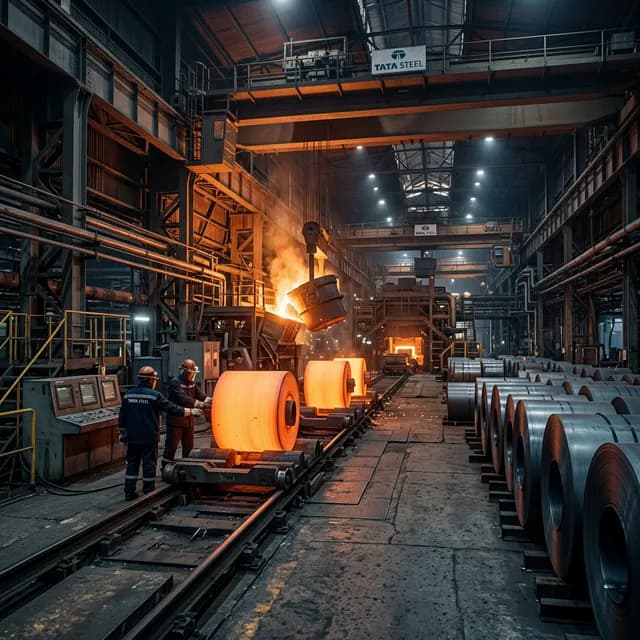
**Steel Production:** Whether through the Blast Furnace-Basic Oxygen Furnace (BF-BOF) route or Electric Arc Furnace (EAF) route, steelmaking generates considerable emissions. Indian steel plants, many of which rely on coal-fired power and traditional BF-BOF methods, often have higher emission intensities compared to their European counterparts, which have invested heavily in decarbonisation technologies. This disparity means Indian steel products are likely to face higher CBAM costs.

**Aluminium Production:** The primary production of aluminium, particularly the electrolysis process, is extremely electricity-intensive. While India has a growing renewable energy sector, many aluminium smelters still draw power from the grid, which includes a significant proportion of coal-fired electricity. Secondary aluminium production (recycling) is less carbon-intensive but still requires energy. The embedded emissions in Indian aluminium products, from ingots to finished components, will be scrutinised under CBAM.

The EU's focus on these sectors reflects their significant contribution to global industrial emissions. For Indian exporters in these critical industries, CBAM represents both a challenge and an opportunity: a challenge to adapt to new compliance burdens and potential costs, and an opportunity to enhance sustainability practices and gain a competitive edge.
See what CBAM will cost your buyer
Free 30-second check — pick your product and tonnage, get your buyer-side savings number.
Navigating the Transitional Phase (Oct 2023 - Dec 2025): What Indian Exporters MUST Do Now
The transitional phase is not a grace period; it's a critical learning and preparation period. Indian exporters must use this time to establish robust data collection, calculation, and reporting mechanisms.
1. Identify Your CBAM-Affected Products
The first step is to accurately identify if your exported products fall under CBAM. This involves checking the Combined Nomenclature (CN) codes (which are the EU's version of HS codes) for your steel and aluminium products. The current scope includes:
- Iron and Steel: Chapters 72 and 73 of the CN, covering raw materials, semi-finished products, and finished articles like tubes, pipes, structures, and fasteners.
- Aluminium: Chapter 76 of the CN, including raw aluminium, unwrought aluminium, bars, rods, profiles, plates, sheets, foil, tubes, and pipes.
You can find a comprehensive list and cross-reference your products using the official EU TARIC database or by consulting resources like the CBAM CN code directory. Misclassification can lead to reporting errors or missed obligations.
2. Understand Your Emission Calculation Methodology
For the transitional period, exporters can use one of four methodologies for calculating embedded emissions:
- EU Method: The prescribed method in Regulation (EU) 2023/956 and its implementing acts. This is the gold standard and will be mandatory from 2026.
- Equivalent National Methods: Methods used in the exporting country if they are equivalent to the EU method. India does not yet have a formally recognised equivalent method for CBAM purposes.
- Other Methods: Any other method, including company-specific ones, that provides sufficiently accurate data.
- Default Values: Provided by the European Commission. These are generally higher than actual emissions and should be avoided where possible, as they can significantly increase your future CBAM costs.
Actionable Step: Start collecting data using the EU methodology as your benchmark. This involves calculating both direct emissions (Scope 1) from your own operations (e.g., fuel combustion in furnaces, process emissions) and indirect emissions (Scope 2) from the generation of electricity, heat, or steam consumed in your production process.
3. Data Collection: The Foundation of Compliance
This is where the rubber meets the road for Indian factory owners. Accurate data collection is paramount.
- Electricity Consumption: Gather monthly electricity bills from your utility providers (e.g., MSEDCL in Maharashtra, UGVCL in Gujarat, TANGEDCO in Tamil Nadu, or private suppliers). You need total consumption in kWh.
- Fuel Consumption: Track all fuel purchases and consumption (coal, natural gas, diesel, furnace oil) used in your manufacturing processes. This includes quantities (tonnes, cubic meters, litres) and calorific values if available.
- Production Data: Maintain precise records of the quantity of CBAM goods produced.
- Input Materials: For complex products, you'll need to identify the embedded emissions of key precursor materials (e.g., imported steel scrap for an EAF, or alumina for an aluminium smelter). This requires engaging with your upstream suppliers.
- Operational Data: Collect data on operational parameters that influence emissions, such as furnace temperatures, process efficiencies, and waste heat recovery.
Challenge for MSMEs: Many Indian MSMEs lack sophisticated energy monitoring systems. This often means relying on manual records, utility bills, and fuel purchase invoices. It's crucial to consolidate this data systematically.
4. Calculating Embedded Emissions: Direct and Indirect
Once data is collected, the next step is calculation.
- Direct Emissions (Scope 1): Convert fuel consumption into CO2 equivalent emissions using appropriate emission factors. For example, burning 1 tonne of a specific type of coal will have a known CO2e emission factor.
- Indirect Emissions (Scope 2): Multiply your electricity consumption (in MWh) by the specific grid emission factor for your region in India. The Central Electricity Authority (CEA) provides national and regional grid emission factors, but more granular, state-specific factors (e.g., for Gujarat or Maharashtra) are preferable if available. Be aware that the EU might require specific factors for imported electricity.
Example: An aluminium factory in Pune consuming 10,000 MWh of electricity from MSEDCL in a quarter would multiply this by the relevant grid emission factor for Maharashtra to get its indirect emissions. If the grid factor is, say, 0.75 tCO2e/MWh, that's 7,500 tCO2e from electricity alone.
5. Reporting Obligations
The EU importer is legally responsible for submitting the CBAM report. However, they rely entirely on the data provided by the Indian exporter.
- Data Provision: Indian exporters must provide their EU importers with the calculated embedded emissions data, broken down by product and production route.
- XML Format: The EU CBAM Transitional Registry requires data in a specific XML format. This is where many Indian exporters will need assistance, as generating such a report requires technical expertise.
- Quarterly Reports: During the transitional phase, reports are due quarterly, one month after the end of the quarter (e.g., Q4 2023 report was due by January 31, 2024).
Crucial Point: If an Indian exporter fails to provide the necessary data, the EU importer will be forced to use default values, leading to higher CBAM costs, which will inevitably be passed back to the Indian exporter, making their products less competitive. This is why having an end-to-end CBAM compliance service is critical.
2026 Regulatory Impact for Indian Exporters: The Definitive Phase
January 1, 2026, marks the beginning of the definitive phase of CBAM, and with it, significant financial implications for Indian steel and aluminium exporters. This is when the "carbon tax" element truly kicks in.
Financial Obligations: Purchasing CBAM Certificates
From 2026, EU importers will be required to purchase CBAM certificates corresponding to the embedded emissions of the goods they import. The price of these certificates will be linked to the weekly average auction price of EU Emissions Trading System (ETS) allowances, expressed in EUR per tonne of CO2e. As of mid-2024, EU ETS prices have fluctuated, often hovering around €60-€80 per tonne of CO2e.
Example: If an Indian steel exporter ships 1,000 tonnes of steel with an embedded emission intensity of 1.5 tonnes CO2e per tonne of steel, the total embedded emissions would be 1,500 tonnes CO2e. At an ETS price of €70/tonne, the CBAM liability would be 1,500 * €70 = €105,000 (approx. ₹95 lakhs). This is a direct cost that will impact the competitiveness of Indian exports.
Avoiding Default Values: A Cost-Saving Imperative
During the definitive phase, if actual verified emissions data is not provided, the EU importer will be forced to use default values. These default values are intentionally set high, often representing the average emission intensity of the worst-performing 10% of EU installations for that product category. This can result in a 20-40% higher CBAM liability compared to using actual, verified emissions.
For an Indian steel manufacturer, this could mean paying an additional €20,000 to €40,000 (approx. ₹18 lakhs to ₹36 lakhs) on the €105,000 example above, simply due to lack of accurate data. This is a compelling reason to invest in robust emission measurement and reporting now.
Verification Requirements
From 2026, the reported embedded emissions will need to be verified by an accredited verifier. This adds another layer of complexity and cost. Indian exporters will need to ensure their data collection, calculation, and documentation processes are audit-ready to withstand scrutiny from EU-accredited verifiers.
Strategic Importance of Emission Reduction
Beyond compliance, the definitive phase highlights the strategic importance of decarbonisation. Indian manufacturers who invest in cleaner technologies, renewable energy sources, and energy efficiency improvements will not only reduce their operational costs but also lower their CBAM liability, making their products more attractive in the EU market. For example, switching from coal-fired power to solar or wind energy for a portion of operations can significantly reduce indirect emissions.
Practical Steps for Indian MSMEs and Exporters
Navigating CBAM requires a structured approach. Here are actionable steps for Indian MSMEs and larger exporters:
1. Appoint a Dedicated CBAM Compliance Team/Resource
Whether it's an internal team or an external expert like CarbonSettle, designate someone to own CBAM compliance. This person or team will be responsible for understanding the regulations, coordinating data collection, and ensuring timely reporting. For many Indian MSMEs, hiring an external CBAM consultant India or a dedicated service provider is often the most cost-effective and efficient solution.
2. Conduct an Initial Carbon Footprint Assessment
Before you can report, you need to know your baseline. Perform a preliminary carbon footprint assessment for your CBAM-affected products. This involves:
- Mapping Production Processes: Understand all energy and material inputs for each product.
- Identifying Emission Sources: Pinpoint where direct and indirect emissions occur.
- Estimating Emission Intensity: Calculate the tCO2e per tonne of product for your steel or aluminium goods.
This assessment will highlight your emission hotspots and inform your decarbonisation strategy.
3. Implement Robust Data Management Systems
Move beyond ad-hoc data collection. Establish systematic processes for recording and storing:
- Electricity consumption: Daily/monthly readings from meters, utility bills.
- Fuel consumption: Purchase records, inventory logs, usage logs.
- Production volumes: Daily/batch production records.
- Material inputs: Supplier invoices, material consumption records.
Even a simple spreadsheet-based system, consistently updated, is better than scattered data. Consider digital solutions if feasible.
4. Engage with Your Supply Chain
For complex products, the embedded emissions of your input materials (e.g., iron ore, scrap, alumina) also contribute to your product's overall carbon footprint. Proactively engage with your upstream suppliers in India to request their emission data. This is a new concept for many Indian suppliers, so be prepared for a learning curve. If supplier data is unavailable, you may need to use proxy data or default values for those inputs, which can increase your overall reported emissions.
5. Prioritise Emission Reduction Strategies
While compliance is immediate, long-term competitiveness depends on reducing your carbon footprint. Consider:
- Energy Efficiency: Invest in more efficient motors, furnaces, insulation, and waste heat recovery systems. A 10% reduction in energy consumption can directly translate to a 10% reduction in indirect emissions and thus CBAM costs.
- Renewable Energy: Explore options for sourcing renewable electricity, either through direct power purchase agreements (PPAs) with solar/wind farms or by installing rooftop solar panels.
- Process Optimisation: Look for ways to reduce material waste, improve yields, and optimise process parameters to lower energy intensity.
- Fuel Switching: Where possible, transition from high-carbon fuels (e.g., coal) to lower-carbon alternatives (e.g., natural gas, biomass, or eventually hydrogen).
6. Seek Expert Guidance
CBAM is complex, with evolving rules and technical requirements. For many Indian MSMEs, trying to manage this internally can be overwhelming and prone to errors. Engaging with a specialised CBAM service provider India or CBAM consultant India can save time, reduce risk, and ensure accurate compliance. Look for partners who offer end-to-end CBAM compliance services and understand the Indian context.
The Cost of Non-Compliance and the Benefits of Proactive Action
The penalties for non-compliance during the transitional phase can range from €10 to €50 per tonne of unreported emissions, with higher penalties for repeated failures. While this is primarily for the EU importer, these costs will invariably be passed down to the Indian exporter. Beyond financial penalties, non-compliance can lead to:
- Loss of Market Access: EU importers may choose to source from compliant suppliers to avoid regulatory headaches and financial risks.
- Reputational Damage: Being seen as non-compliant can harm your brand image in the sustainability-conscious EU market.
- Competitive Disadvantage: Your products become more expensive due to higher CBAM costs from default values, making you less competitive against suppliers with lower verified emissions.
Conversely, proactive compliance offers significant benefits:
- Cost Savings: By accurately measuring and reporting your actual emissions, you can avoid inflated CBAM costs from default values, potentially saving up to 40% on future CBAM tax. You can compare potential savings using resources like the India CBAM Cost Index.
- **Enhanced Compet
Compliance disclaimer
Strategies described here are for educational purposes. CBAM regulations (EU 2023/956) evolve quarterly — always verify with your accredited verifier before filing definitive reports.
We’ll do your entire CBAM quarter — ₹0.
A dedicated CBAM expert plus our AI do the whole April–June 2026 report end-to-end: your factory data in, verified actual emissions out — so your buyer pays your real number, not the inflated EU default. The report is yours to keep.
Start your report by 30 September 2026 to claim the free quarter.
Bills, logs, photos — one afternoon.
Verified actuals, EU XML, audit standard.
Yours to keep. ₹0 this quarter.
Prefer to talk? +91 76250 95885 · or run a 30-second savings check first
The complete CBAM guide for Indian exporters
The full compliance roadmap — CN codes, emissions, deadlines, penalties and how to keep your EU orders.
More CBAM guidance for Indian exporters
 Compliance
UK CBAM 2027: What Indian Steel and Aluminium Exporters to Britain Must Prepare Now
EU CBAM compliance guide.
 Compliance
Steel Wire Rope and Cable: CBAM Classification for Indian Rope Makers
EU CBAM compliance guide.
ComplianceHow the Free Allowance Phase-Down Raises CBAM Pressure on Indian Steel
EU CBAM compliance guide.