The European Union's Carbon Border Adjustment Mechanism (CBAM), established by Regulation (EU) 2023/956, is no longer a distant threat for Indian exporters; it's a present reality with significant financial implications set to bite hard from January 2026. While the transitional phase (October 2023 - December 2025) primarily focuses on reporting, the definitive phase commencing in 2026 introduces a direct financial levy – the "EU carbon tax" – on specified goods imported into the EU. For Indian manufacturers of steel, cement, aluminium, fertilisers, and hydrogen, understanding the difference between reporting "verified actual emissions" and relying on "default values" is not just a compliance exercise; it's a strategic financial decision that could save or cost your business millions of rupees.
This article provides a high-authority, practical guide for Indian MSMEs and large exporters, offering a deep dive into the cost implications of these two approaches. We will explicitly address the concerns of factory owners in Ludhiana, Gujarat, Pune, Jamshedpur, and other industrial hubs, helping them navigate the complexities of CBAM compliance in India.
Key Takeaways
- 2026 is the Financial Deadline: From January 2026, CBAM will impose a direct carbon levy on imports into the EU, based on embedded emissions.
- Actuals vs. Defaults: Indian exporters have two primary options for reporting emissions: using verified actual emissions or relying on EU default values.
- Significant Cost Savings: Reporting verified actual emissions can lead to substantial financial savings, potentially reducing your CBAM liability by 20-40% compared to default values, which are deliberately set high.
- Data is King: Accurate, granular data collection from your factory floor (electricity bills from MSEDCL, UGVCL, TANGEDCO; fuel invoices; production logs) is crucial for calculating actual emissions.
- Complexity Requires Expertise: Calculating embedded emissions, especially for complex products and supply chains, is challenging and often requires specialised CBAM compliance services.
- CarbonSettle's Role: CarbonSettle offers end-to-end CBAM compliance services, handling all data collection, calculation, verification, and reporting, ensuring Indian exporters meet EU requirements without the internal burden.
What is the EU CBAM and Why Does it Matter to Indian Exporters?
The EU CBAM is a landmark climate policy designed to prevent "carbon leakage" – the phenomenon where companies relocate carbon-intensive production outside the EU to countries with less stringent climate policies, or where EU products are replaced by more carbon-intensive imports. By imposing a carbon price on certain imported goods equivalent to the carbon price paid by EU producers under the EU Emissions Trading System (ETS), CBAM aims to level the playing field and encourage global decarbonisation.
For Indian exporters, this means that from January 2026, every tonne of embedded CO2 equivalent (CO2e) in your steel, cement, aluminium, fertiliser, or hydrogen products shipped to the EU will incur a cost. This cost will be tied to the weekly average price of EU ETS allowances (EUA), which currently hovers around €70-€90 per tonne of CO2e. This is a direct "EU carbon tax" on your exports, and it will significantly impact your competitiveness and profit margins if not managed effectively.
Indian manufacturers, from the large steel mills in Jamshedpur to the smaller aluminium foundries in Gujarat, must understand that this is not merely a reporting formality. It's a fundamental shift in the cost structure of exporting to Europe, demanding proactive engagement with data collection and emission reduction strategies.
Understanding Verified Actual Emissions: The Gold Standard for Indian Exporters
Verified actual emissions represent the precise amount of greenhouse gases (GHGs) embedded in your specific product, calculated based on real operational data from your manufacturing facility. This includes direct emissions (Scope 1) from your own industrial processes and fuel consumption, as well as indirect emissions (Scope 2) from the electricity you consume.
To calculate verified actual emissions, an Indian factory owner or compliance officer needs to:
- Identify CBAM Goods: Precisely identify which of your exported products fall under the CBAM scope using their Combined Nomenclature (CN) codes. You can refer to the CBAM CN code directory for a comprehensive list.
- Map Production Processes: Detail the entire production process for each CBAM-covered product, from raw material intake to final product shipment.
- Collect Granular Data: This is the most critical step. It involves gathering specific, verifiable data for the reporting period:
- Fuel Consumption: Invoices and consumption logs for natural gas, coal, diesel, furnace oil, etc., used in your furnaces, boilers, and other equipment.
- Electricity Consumption: Monthly electricity bills from your utility provider (e.g., MSEDCL in Maharashtra, UGVCL in Gujarat, TANGEDCO in Tamil Nadu) for the specific production lines or the entire facility, along with power purchase agreements if applicable.
- Raw Material Inputs: Data on the quantity and origin of key raw materials, especially those with embedded emissions (e.g., clinker for cement, iron ore for steel).
- Process Emissions: Specific data related to chemical reactions that release GHGs (e.g., CO2 from calcination in cement production, CO2 from reduction of iron ore in steelmaking).
- Production Volumes: Accurate records of the quantity of CBAM goods produced.
- Apply Emission Factors: Convert fuel and electricity consumption into CO2e using appropriate emission factors. For electricity, this could be grid-specific factors (e.g., India's national grid average) or supplier-specific factors if available. For fuels, standard factors are often used.
- Calculate Embedded Emissions: Aggregate all direct and indirect emissions, attributing them accurately to the specific CBAM product. This often involves complex allocation rules, especially in multi-product facilities.
- Verification: Crucially, these calculations must be verified by an accredited third-party verifier. This ensures the accuracy and integrity of your reported data, making it acceptable to EU authorities.
For an Indian MSME in Ludhiana producing steel components, this means meticulously tracking the electricity consumption for their induction furnaces, the diesel for their generators, and the specific inputs for each batch. This level of detail is often beyond the current internal capabilities of many Indian factories, highlighting the need for specialised end-to-end CBAM compliance services.
Representative midpoints for Indian steel routes. The hatched red zone is what an EU default value adds on top of your real number when no verified actuals are filed — that markup is what your buyer overpays.
Want this for your own product and tonnage? Run the 30-second savings check.
See what CBAM will cost your buyer
Free 30-second check — pick your product and tonnage, get your buyer-side savings number.
The Pitfall of Default Values: Why Indian Exporters Must Avoid Them
Default values are pre-determined, conservative emission figures provided by the EU Commission for specific CBAM goods. They are intended as a fallback option for situations where actual emissions data is unavailable or unreliable. However, these values are deliberately set high to incentivise companies to measure and report their actual emissions.
Why are default values a trap for Indian exporters?
- Higher CBAM Costs: The EU's default values for embedded emissions are typically significantly higher than the actual emissions of even moderately efficient Indian factories. This is because they are often based on the average emissions of the worst-performing facilities in non-EU countries or conservative estimates. For instance, if your steel factory in Pune is relatively energy-efficient, using modern processes and perhaps some renewable energy, its actual emissions per tonne of steel might be 1.8 tonnes CO2e. However, the EU default value for a similar steel product could be 2.5 tonnes CO2e or even higher.
- Loss of Competitiveness: Paying a higher carbon tax due to default values directly translates to a higher landed cost for your products in the EU. This erodes your competitive edge against EU producers (who benefit from free ETS allowances for a transition period) and other non-EU exporters who have invested in actual emission reporting.
- No Incentive for Decarbonisation: Relying on default values removes any financial incentive for your company to invest in energy efficiency or cleaner production technologies. Since your reported emissions won't reflect your improvements, you won't see a reduction in your CBAM liability.
- Reputational Risk: As global supply chains increasingly demand transparency and sustainability, a company consistently reporting high default emissions might be viewed less favourably by environmentally conscious EU importers and consumers.
Consider an Indian aluminium manufacturer in Gujarat exporting 10,000 tonnes of primary aluminium to the EU annually. If their actual emissions are 12 tonnes CO2e per tonne of aluminium, but the EU default value is 15 tonnes CO2e, they would be overpaying on 3 tonnes CO2e per tonne of aluminium. At an assumed EU ETS price of €80/tonne CO2e, this translates to an extra cost of €240,000 (approx. ₹2.1 crore) per year. This is a substantial, avoidable expense.
2026 Regulatory Impact for Indian Exporters: The Definitive Phase and Financial Obligations
The definitive phase of CBAM, starting January 1, 2026, marks the transition from mere reporting to direct financial payment. From this date, EU importers will be required to purchase and surrender CBAM certificates corresponding to the embedded emissions of the goods they import. The price of these certificates will be linked to the weekly average auction price of EU ETS allowances.
For Indian exporters, this means:
- Direct Financial Burden: While the legal obligation to purchase certificates lies with the EU importer, this cost will inevitably be passed back to the Indian exporter through adjusted pricing or direct charges. This is the "EU carbon tax India" is facing.
- Need for Accurate Reporting: The accuracy of your reported emissions will directly determine the number of CBAM certificates your EU importer needs to purchase, and thus the cost passed back to you.
- Verification Becomes Mandatory: The emissions data submitted for the definitive phase must be verified by an accredited verifier. Unverified data will not be accepted, and high default values will be applied.
- Strategic Advantage for Low-Carbon Producers: Indian companies that have invested in energy efficiency, renewable energy, or process improvements that reduce their carbon footprint will see a direct financial benefit. Their lower actual emissions will translate to fewer CBAM certificates required, making their products more competitive.
- Potential for Double Carbon Pricing Relief: India is exploring its own domestic carbon pricing mechanisms. If India implements a carbon tax or ETS, and if this is deemed equivalent by the EU, Indian exporters might be eligible for a reduction in their CBAM liability, avoiding "double carbon pricing." However, this is still under discussion and requires careful monitoring.
The financial stakes are incredibly high. For a medium-sized Indian steel mill exporting 50,000 tonnes of steel annually, a difference of just 0.5 tonnes CO2e per tonne of steel between actual and default values, at an €80/tonne CO2e carbon price, could mean an additional annual cost of €2 million (approx. ₹17.5 crore). This is a game-changer for profitability and market access. You can explore the potential costs for your specific products using our India CBAM Cost Index.
The Real Cost Comparison: Verified Actuals vs. Default Values (Numeric Examples)
Let's illustrate the financial impact with specific examples relevant to Indian industries.
Scenario 1: Primary Aluminium from Gujarat
- Product: Primary Aluminium (CN Code 760110)
- Annual Export Volume: 10,000 tonnes to the EU
- Assumed EU ETS Price: €85 per tonne CO2e (approx. ₹7,400 at ₹87/€)
Option A: Relying on EU Default Values
- EU Default Emission Factor (Illustrative, often high): 15 tonnes CO2e per tonne of aluminium
- Total Embedded Emissions: 10,000 tonnes * 15 tonnes CO2e/tonne = 150,000 tonnes CO2e
- Estimated Annual CBAM Cost: 150,000 tonnes CO2e * €85/tonne CO2e = €12,750,000 (approx. ₹111 Crore)
Option B: Reporting Verified Actual Emissions
- Indian Manufacturer's Actual Emission Factor (e.g., with efficient smelters, some renewable power from UGVCL): 12 tonnes CO2e per tonne of aluminium
- Total Embedded Emissions: 10,000 tonnes * 12 tonnes CO2e/tonne = 120,000 tonnes CO2e
- Estimated Annual CBAM Cost: 120,000 tonnes CO2e * €85/tonne CO2e = €10,200,000 (approx. ₹89 Crore)
Savings by Reporting Actuals: €12,750,000 - €10,200,000 = €2,550,000 (approx. ₹22 Crore) annually. This represents a 20% reduction in CBAM costs, a significant competitive advantage.
Scenario 2: Cement Clinker from Maharashtra
- Product: Cement Clinker (CN Code 252310)
- Annual Export Volume: 50,000 tonnes to the EU
- Assumed EU ETS Price: €85 per tonne CO2e (approx. ₹7,400 at ₹87/€)
Option A: Relying on EU Default Values
- EU Default Emission Factor (Illustrative): 0.9 tonnes CO2e per tonne of clinker
- Total Embedded Emissions: 50,000 tonnes * 0.9 tonnes CO2e/tonne = 45,000 tonnes CO2e
- Estimated Annual CBAM Cost: 45,000 tonnes CO2e * €85/tonne CO2e = €3,825,000 (approx. ₹33.3 Crore)
Option B: Reporting Verified Actual Emissions
- Indian Manufacturer's Actual Emission Factor (e.g., using waste heat recovery, efficient kilns, MSEDCL power): 0.7 tonnes CO2e per tonne of clinker
- Total Embedded Emissions: 50,000 tonnes * 0.7 tonnes CO2e/tonne = 35,000 tonnes CO2e
- Estimated Annual CBAM Cost: 35,000 tonnes CO2e * €85/tonne CO2e = €2,975,000 (approx. ₹25.9 Crore)
Savings by Reporting Actuals: €3,825,000 - €2,975,000 = €850,000 (approx. ₹7.4 Crore) annually. This is a 22% reduction in CBAM costs.
These examples clearly demonstrate that the investment in measuring and verifying actual emissions is not just a compliance cost but a strategic financial decision that yields substantial returns.
Practical Steps for Indian Exporters to Achieve Verified Actuals
For Indian manufacturers, particularly MSMEs, the path to reporting verified actual emissions can seem daunting. Here's a practical roadmap:
-
Internal Assessment & CBAM Readiness:
- Identify CBAM Products: Go through your export portfolio and identify all products falling under the CBAM scope using their HS/CN codes.
- Understand Your Supply Chain: Map out the production process for these products, identifying all direct and indirect emission sources.
- Form a CBAM Task Force: Designate internal personnel (e.g., from production, finance, quality control) to lead the data collection effort.
-
Data Collection & Management:
- Establish Data Collection Protocols: Implement robust systems for tracking fuel consumption, electricity usage, raw material inputs, and production output. This might involve upgrading existing ERP systems or implementing new logging procedures.
- Source Documents: Ensure all data is backed by verifiable source documents like electricity bills (MSEDCL, UGVCL, TANGEDCO), fuel purchase invoices, production logs, and material safety data sheets (MSDS).
- Supplier Engagement: For complex products, you might need to request embedded emissions data from your upstream Indian suppliers (e.g., for specific alloys or chemicals). This requires proactive outreach and education.
-
Emission Calculation & Methodology:
- Choose the Right Methodology: The EU provides detailed guidance on calculation methodologies. Adhering to these is crucial.
- Apply Correct Emission Factors: Use country-specific or supplier-specific emission factors for electricity where available. For fuels, use standard factors.
- Allocate Emissions Accurately: For facilities producing multiple products, develop a clear and defensible methodology for allocating shared emissions to specific CBAM products.
-
Verification & Reporting:
- Engage an Accredited Verifier: This is a mandatory step for the definitive phase. The verifier will audit your data, calculations, and methodologies.
- Prepare EU-Ready Reports: The data needs to be submitted in a specific XML format to the EU's CBAM Transitional Registry. This requires technical expertise.
- Coordinate with EU Importer: Maintain open communication with your EU importer, providing them with the necessary verified data and documentation.
This process is complex, time-consuming, and requires specialised knowledge of EU regulations and GHG
Compliance disclaimer
Strategies described here are for educational purposes. CBAM regulations (EU 2023/956) evolve quarterly — always verify with your accredited verifier before filing definitive reports.
We’ll do your entire CBAM quarter — ₹0.
A dedicated CBAM expert plus our AI do the whole April–June 2026 report end-to-end: your factory data in, verified actual emissions out — so your buyer pays your real number, not the inflated EU default. The report is yours to keep.
Start your report by 30 September 2026 to claim the free quarter.
Bills, logs, photos — one afternoon.
Verified actuals, EU XML, audit standard.
Yours to keep. ₹0 this quarter.
Prefer to talk? +91 76250 95885 · or run a 30-second savings check first
The complete CBAM guide for Indian exporters
The full compliance roadmap — CN codes, emissions, deadlines, penalties and how to keep your EU orders.
More CBAM guidance for Indian exporters
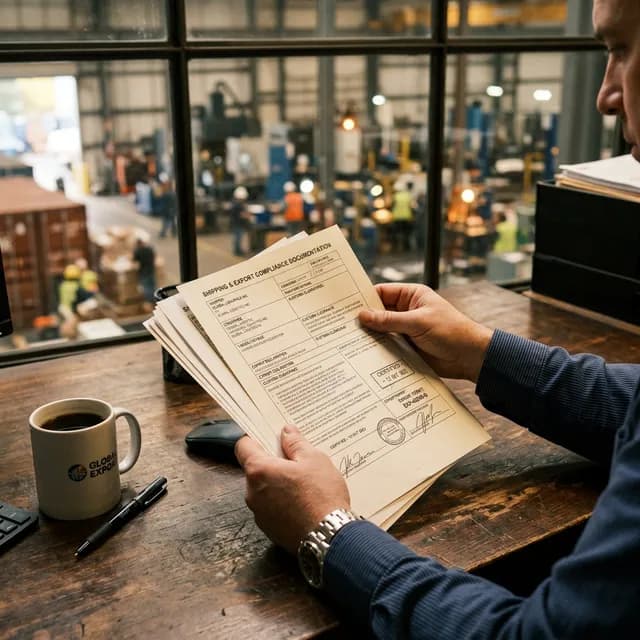 Technical Compliance
CBAM Default Values vs Actual Data: 2026 Cost Analysis for Exporters
EU CBAM default values are set deliberately high — analysts report they can cost 2–4× more than verified actual emissions. See the 2026 default-vs-actual cost gap for Indian steel and aluminium, and the steps to switch to actuals.
 Financial Planning
CBAM Penalties in 2026: What Non-Compliance Actually Costs and Who Pays
Indian exporters, understand the severe CBAM penalties starting 2026. Learn who pays, how much non-compliance costs, and how CarbonSettle ensures your seamless CBAM compliance.
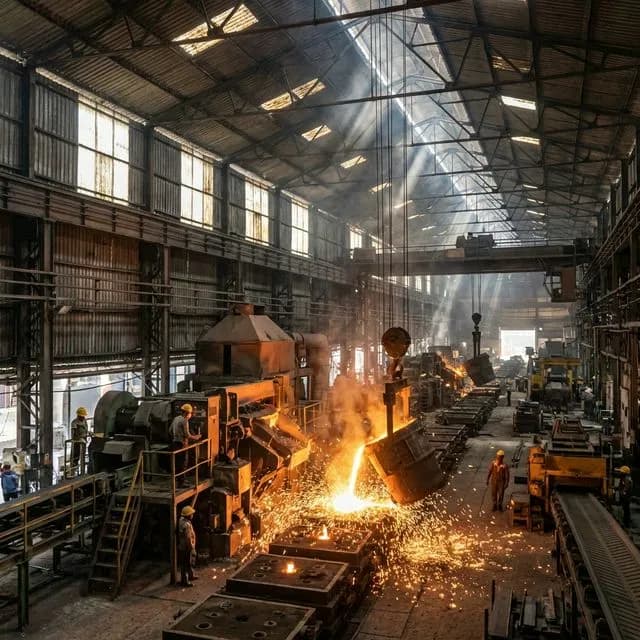 Financial Planning
CBAM Certificate Price Today: How the EU ETS Link Sets Your Cost
Indian exporters, understand how the EU ETS carbon price directly impacts your CBAM costs. Learn to calculate and mitigate your financial burden with expert guidance.