Navigating the Carbon Border Adjustment Mechanism: A Critical Guide for Indian Exporters
The European Union's Carbon Border Adjustment Mechanism (CBAM), established by Regulation (EU) 2023/956, is no longer a distant threat but a rapidly approaching reality for Indian manufacturers exporting to the EU. While the transitional phase (October 2023 - December 2025) focuses on reporting embedded emissions, the definitive phase, commencing January 1, 2026, introduces a direct financial obligation: the purchase of CBAM certificates. For Indian MSMEs and large manufacturers in sectors like steel, cement, aluminium, fertilisers, and hydrogen, understanding this timeline and preparing for the financial impact is paramount.
This comprehensive guide will walk Indian exporters through the critical steps leading up to and including their first CBAM certificate purchase in 2026. We will demystify the process, highlight key deadlines, discuss the financial implications in both EUR and INR, and provide actionable advice to ensure a smooth transition. Whether you're a steel producer in Jamshedpur, an aluminium manufacturer in Gujarat, or a cement plant near Pune, this article is designed to be your go-to resource for CBAM compliance in India.
Key Takeaways
- Definitive Phase Starts January 1, 2026: This marks the beginning of financial obligations under CBAM, requiring the purchase of CBAM certificates.
- Annual Declaration by May 31st: EU importers must submit an annual CBAM declaration by May 31st each year, covering emissions from goods imported in the preceding calendar year.
- Certificate Purchase Requirement: Importers must purchase and surrender CBAM certificates equivalent to the declared embedded emissions.
- Price Linked to EU ETS: The price of CBAM certificates will be determined by the weekly average auction price of EU Emissions Trading System (EU ETS) allowances, expressed in €/tonne of CO2e.
- Proactive Data Management is Key: Accurate, verified emissions data from Indian factories is crucial to avoid penalties and minimise costs.
- CarbonSettle: Your End-to-End Partner: CarbonSettle provides complete hand-holding for Indian exporters, managing all aspects of CBAM compliance from data collection to EU XML report generation and coordination with EU importers.
What is the CBAM Definitive Phase and Why Does it Matter to Indian Exporters?
The CBAM definitive phase, effective from January 1, 2026, is the period when the financial levy on carbon emissions embedded in certain imported goods will come into full effect. For Indian exporters, this means that their EU importers will be required to purchase and surrender CBAM certificates corresponding to the carbon footprint of the goods they bring into the EU. This directly impacts the competitiveness of Indian products, as the cost of these certificates will likely be passed back to the exporter, either through adjusted pricing or direct payment arrangements.
During the transitional phase (October 2023 - December 2025), the focus has been solely on reporting embedded emissions data. While this period provided a crucial learning curve, it carried no direct financial penalty for non-compliance (beyond administrative fines for non-reporting). The definitive phase changes this entirely. Non-compliance or inaccurate reporting in 2026 and beyond will lead to significant financial liabilities for EU importers, which will inevitably cascade down to Indian suppliers. Therefore, understanding and preparing for this phase is not just about regulatory adherence but about maintaining market access and profitability for Indian exports to the EU.
The 2026 Regulatory Impact for Indian Exporters: Financial Obligations Begin
From January 1, 2026, the Carbon Border Adjustment Mechanism (CBAM) transitions from a reporting-only mechanism to a full-fledged carbon levy. This means that for every tonne of embedded CO2 equivalent (CO2e) in goods imported into the EU from India, a corresponding CBAM certificate must be purchased and surrendered. This is a direct financial obligation for EU importers, but its economic burden will undoubtedly be borne by Indian exporters.
The core impact is financial. The price of CBAM certificates will be determined by the weekly average auction price of EU ETS allowances, expressed in euros per tonne of CO2e. As of late 2023/early 2024, EU ETS prices have hovered around €60-€80 per tonne of CO2e. Let's assume an average price of €75/tonne CO2e (approximately ₹6,750 at an exchange rate of ₹90/€). If an Indian steel manufacturer exports 10,000 tonnes of steel with an embedded emission intensity of 1.8 tonnes CO2e per tonne of steel, the total embedded emissions would be 18,000 tonnes CO2e. The total CBAM liability would then be €1,350,000 (₹12.15 Crores). This is a substantial cost that needs to be factored into pricing strategies and operational efficiency.
Furthermore, the definitive phase introduces stricter verification requirements. Emission reports submitted by EU importers (based on data provided by Indian exporters) will need to be verified by an accredited verifier. Any discrepancies or unverified data could lead to the application of default values, which are typically much higher than actual emissions and can increase CBAM costs by 20-40%, as seen in initial EU guidance. For an Indian MSME, this could mean paying an extra €270,000 - €540,000 (₹2.4 Crores - ₹4.8 Crores) annually on the example above, simply due to poor data quality or lack of verification. This underscores the critical need for accurate, primary data collection and robust reporting, which a service like CarbonSettle can provide.
See what CBAM will cost your buyer
Free 30-second check — pick your product and tonnage, get your buyer-side savings number.
Your First CBAM Certificate Purchase in 2026: A Step-by-Step Timeline
The process of purchasing and surrendering CBAM certificates in 2026 will primarily involve the EU importer, but the preparatory steps and data provision fall squarely on the shoulders of Indian exporters. Here's a detailed timeline:
Phase 1: Preparation and Data Collection (Throughout 2026)
-
Continuous Data Collection (January 1, 2026 - December 31, 2026):
- Action for Indian Exporters: This is the most crucial, ongoing step. You must meticulously collect all relevant data for your production processes for goods destined for the EU. This includes:
- Activity Data: Quantities of raw materials consumed, fuel consumed (e.g., coal, natural gas from GAIL, electricity from MSEDCL in Maharashtra, UGVCL in Gujarat, TANGEDCO in Tamil Nadu), waste generated, and product output.
- Emission Factors: For fuels, electricity, and process emissions. Where specific factors are unavailable, EU default values will apply, often at a higher cost.
- Production Process Details: Information on specific technologies used, clinker-to-cement ratios, scrap usage in steel, etc.
- Supply Chain Data: For complex products, data on embedded emissions from upstream materials (e.g., imported clinker for cement, primary aluminium for downstream products).
- CarbonSettle's Role: Our dedicated CBAM team will work directly with your factory in Ludhiana, Jamshedpur, or anywhere in India. We will guide your team on what data to collect, how to structure it, and even help extract it from your existing records (utility bills, production logs, purchase invoices). We take this entire data collection headache away from you, ensuring it's comprehensive and audit-ready.
- Action for Indian Exporters: This is the most crucial, ongoing step. You must meticulously collect all relevant data for your production processes for goods destined for the EU. This includes:
-
Emission Calculation and Report Generation (Q1 2027, for 2026 data):
- Action for Indian Exporters: Based on the collected data for the entire calendar year 2026, the embedded emissions for each CBAM-relevant product (identified by its CN/HS code – refer to our CBAM CN code directory) must be calculated according to the detailed methodologies outlined in Regulation (EU) 2023/956 and its implementing acts. This involves distinguishing between direct and indirect emissions.
- CarbonSettle's Role: We will perform all the complex emission calculations using EU-compliant methodologies. Our experts will translate your raw factory data into precise CO2e figures, ensuring accuracy and adherence to the latest EU guidelines. We then generate the draft CBAM report in the required EU XML format, ready for verification.
Phase 2: Verification and Declaration (Early 2027)
-
Verification of Emissions Report (January - March 2027):
- Action for Indian Exporters: The calculated emission report for 2026 must be verified by an independent, accredited verifier. This is a critical step to ensure the integrity and credibility of the data. Without verification, EU importers risk penalties or the application of higher default values.
- CarbonSettle's Role: We coordinate the entire verification process. We prepare all necessary documentation, liaise with accredited verifiers on your behalf, answer their queries, and ensure your report passes verification smoothly. This is a key part of our end-to-end CBAM compliance services.
-
Submission of Verified Report to EU Importer (March - April 2027):
- Action for Indian Exporters: Once verified, the final, accurate embedded emissions report for 2026 must be promptly provided to your EU importer(s). This report will form the basis of their annual CBAM declaration.
- CarbonSettle's Role: We provide the verified, EU-ready report directly to your EU importer, ensuring seamless handoff and clear communication, reducing any potential friction or misunderstandings.
-
EU Importer's Annual CBAM Declaration (By May 31, 2027):
- Action for EU Importer: The EU importer is legally obliged to submit an annual CBAM declaration to the European Commission by May 31st each year. This declaration covers all CBAM goods imported during the preceding calendar year (i.e., imports from January 1, 2026, to December 31, 2026, must be declared by May 31, 2027). The declaration must include the total quantity of each type of good, the total embedded emissions (verified), and the number of CBAM certificates to be surrendered.
- CarbonSettle's Role: While the submission is the importer's responsibility, our verified reports ensure they have all the accurate data they need. We can also assist with any queries they may have regarding the data we provided.
Phase 3: Certificate Purchase and Surrender (April - May 2027)
-
Opening a CBAM Account (Prior to April 2027):
- Action for EU Importer: To purchase CBAM certificates, the EU importer must first register and open a CBAM account with the competent national authority in their Member State. This account will be used to hold and surrender certificates.
- CarbonSettle's Role: We ensure your EU importer is aware of this requirement and has the necessary data from you to complete their registration process.
-
Purchase of CBAM Certificates (April - May 2027):
- Action for EU Importer: The EU importer must purchase CBAM certificates from a common central platform established by the European Commission. The price of these certificates will be calculated based on the weekly average auction price of EU ETS allowances. Importers must purchase enough certificates to cover their declared embedded emissions.
- CarbonSettle's Role: We provide the accurate, verified emission figures that directly inform the number of certificates your importer needs to buy. By optimising your emission calculations, we help minimise the number of certificates required, potentially saving you significant costs. For example, by accurately measuring your specific emissions, we can help you avoid the higher default values, which could save you up to 40% on your CBAM tax liability. For more details on potential savings, you can refer to our India CBAM Cost Index.
-
Surrender of CBAM Certificates (By May 31, 2027):
- Action for EU Importer: Concurrently with submitting their annual declaration, the EU importer must surrender the required number of CBAM certificates from their CBAM account. These certificates must match the total embedded emissions declared.
- CarbonSettle's Role: Our precise calculations ensure the importer surrenders the correct number of certificates, preventing both under-surrender (leading to penalties) and over-surrender (tying up capital unnecessarily).
Phase 4: Compliance and Audit (Post-May 2027)
- Record Keeping and Audits (Ongoing):
- Action for Indian Exporters & EU Importers: Both parties must maintain meticulous records of all data, calculations, and declarations for at least four years. Competent authorities may conduct audits to verify compliance.
- CarbonSettle's Role: We maintain a comprehensive digital archive of all your data, calculations, and reports, ensuring you are always audit-ready. We can also assist in responding to any audit queries.
This detailed timeline underscores that while the financial transaction of certificate purchase rests with the EU importer, the entire process is driven by the data and diligence of the Indian exporter. Proactive engagement and expert assistance are not just beneficial but essential for successful CBAM compliance. For a more detailed understanding of the overall compliance journey, please refer to our CBAM Compliance Guide for Indian Exporters.
How to Prepare Your Indian Factory for CBAM Certificate Purchase
Preparing your factory in India for the definitive phase of CBAM requires a strategic and operational overhaul, focusing on data accuracy, process understanding, and potentially, emission reduction.
-
Understand Your Product's CBAM Classification:
- Action: Identify all products you export to the EU that fall under CBAM. This involves checking their Harmonized System (HS) codes against the EU's Combined Nomenclature (CN) codes covered by Regulation (EU) 2023/956. This is the first step to knowing if you're affected.
- CarbonSettle's Help: We provide expert assistance in classifying your products and confirming their CBAM relevance using our CBAM CN code directory, ensuring no surprises.
-
Establish Robust Data Collection Systems:
- Action: Implement systems to accurately measure and record activity data (e.g., fuel consumption, electricity usage, raw material inputs) at the facility level for each CBAM-relevant production process. This means moving beyond aggregated company-level data to specific production lines or product batches. For instance, if you're a steel plant in Jamshedpur, you need to track the exact electricity consumption (from Jharkhand Bijli Vitran Nigam Ltd.) and coal usage per tonne of steel produced for EU export.
- CarbonSettle's Help: We help design and implement bespoke data collection protocols tailored to your factory's operations, integrating with your existing ERP or production management systems where possible. We identify data gaps and guide your team on the most efficient ways to capture necessary information.
-
Train Your Internal Teams:
- Action: Educate your production, procurement, and finance teams on CBAM requirements, data collection methodologies, and the importance of accurate record-keeping.
- CarbonSettle's Help: We offer workshops and training sessions for your key personnel, empowering them with the knowledge to support ongoing CBAM compliance efforts.
-
Engage Your Supply Chain:
- Action: If your products incorporate significant upstream materials (e.g., imported clinker for cement, primary aluminium for downstream products), you will need to collect embedded emissions data from your suppliers. This is critical for calculating the total embedded emissions of your final product.
- CarbonSettle's Help: We assist in supplier outreach, drafting data requests, and validating supplier-provided emission data, ensuring compliance throughout your value chain.
-
Explore Emission Reduction Opportunities:
- Action: Long-term strategy involves reducing your carbon footprint. Investigate energy efficiency measures, renewable energy adoption (e.g., solar panels on factory roofs), process optimisation, or switching to lower-carbon fuels. Every tonne of CO2e reduced directly translates into fewer CBAM certificates to be purchased, saving you money.
- CarbonSettle's Help: While our primary focus is compliance, our experts can provide initial assessments of emission hotspots and potential reduction pathways, linking compliance to long-term sustainability and cost savings.
The Role of CarbonSettle: Your End-to-End CBAM Compliance Partner in India
For Indian exporters, navigating the complexities of CBAM, especially the financial obligations starting in 2026, can be daunting. This is where CarbonSettle steps in as India's #1 end-to-end CBAM compliance service. We are not a software platform; we are your dedicated team of CBAM experts who handle every aspect of your compliance journey, taking the entire CBAM headache away from you.
Our comprehensive, managed CBAM service ensures that you, as an Indian manufacturer, don't need to become an expert in EU regulations, hire new compliance staff, or invest in complex software. We do it all:
- Complete Data Collection Management: From your factory in Ludhiana to your operations in Gujarat, we guide and assist your team in collecting all necessary activity data (electricity bills from MSEDCL, fuel invoices, production logs, raw material consumption). We ensure the data is granular, accurate, and audit-ready.
- EU-Compliant Emission Calculations:
Compliance disclaimer
Strategies described here are for educational purposes. CBAM regulations (EU 2023/956) evolve quarterly — always verify with your accredited verifier before filing definitive reports.
We’ll do your entire CBAM quarter — ₹0.
A dedicated CBAM expert plus our AI do the whole April–June 2026 report end-to-end: your factory data in, verified actual emissions out — so your buyer pays your real number, not the inflated EU default. The report is yours to keep.
Start your report by 30 September 2026 to claim the free quarter.
Bills, logs, photos — one afternoon.
Verified actuals, EU XML, audit standard.
Yours to keep. ₹0 this quarter.
Prefer to talk? +91 76250 95885 · or run a 30-second savings check first
The complete CBAM guide for Indian exporters
The full compliance roadmap — CN codes, emissions, deadlines, penalties and how to keep your EU orders.
More CBAM guidance for Indian exporters
 Financial Planning
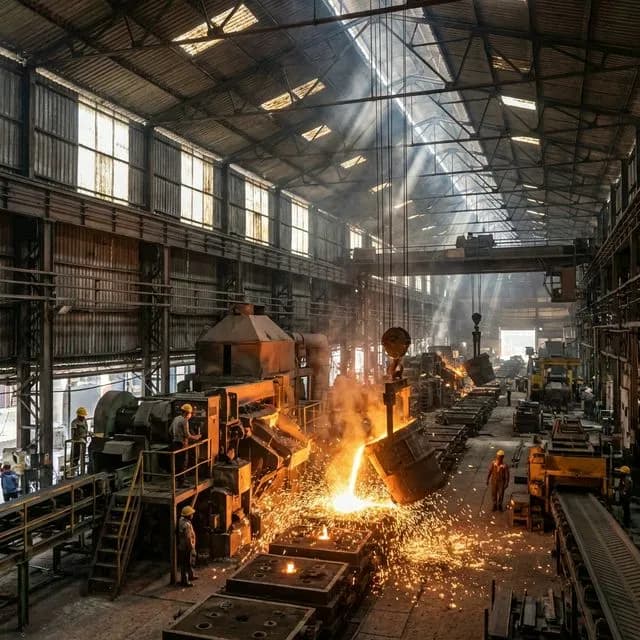
CBAM Penalties in 2026: What Non-Compliance Actually Costs and Who Pays
Indian exporters, understand the severe CBAM penalties starting 2026. Learn who pays, how much non-compliance costs, and how CarbonSettle ensures your seamless CBAM compliance.
 Financial Planning
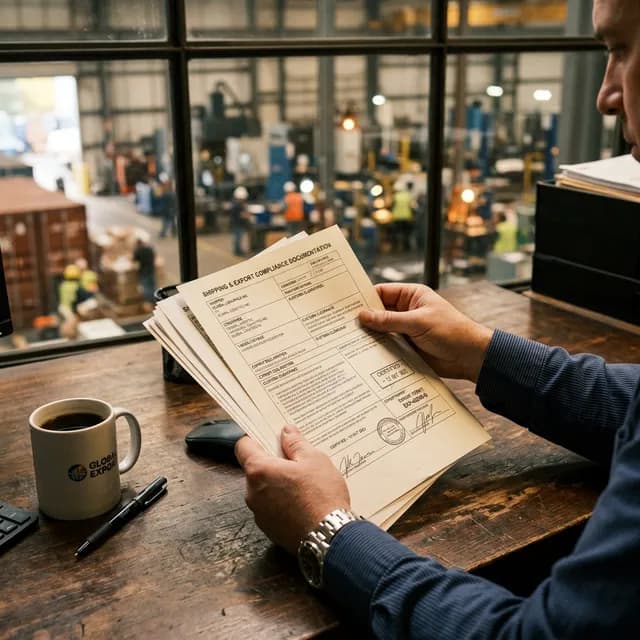
CBAM Certificate Price Today: How the EU ETS Link Sets Your Cost
Indian exporters, understand how the EU ETS carbon price directly impacts your CBAM costs. Learn to calculate and mitigate your financial burden with expert guidance.
 Financial Planning
Verified Actuals vs Default Values: The Real 2026 Cost Comparison for Indian Exporters Under EU CBAM
Indian exporters face critical CBAM choices for 2026. Learn how verified actual emissions can save millions compared to EU default values. Get expert CBAM compliance services in India.