Navigating CBAM for Indian Exporters to Italy: A Practical Guide
The European Union's Carbon Border Adjustment Mechanism (CBAM), established by Regulation (EU) 2023/956, is fundamentally reshaping trade dynamics, particularly for major exporting nations like India. For Indian manufacturers of steel, cement, aluminium, fertilisers, and hydrogen, exporting to Italy, understanding and complying with CBAM is no longer optional – it's a critical business imperative. This comprehensive guide is designed to provide Indian MSMEs and large enterprises, from the bustling industrial hubs of Ludhiana and Gujarat to the manufacturing powerhouses of Pune and Jamshedpur, with the practical, actionable insights needed to navigate CBAM, meet Italian buyer expectations, and ensure seamless trade.
Italy, a significant importer of Indian goods, is at the forefront of implementing EU regulations. Italian buyers are increasingly aware of their CBAM obligations, and their expectations from Indian suppliers regarding emissions data and documentation are rising. Non-compliance could lead to significant financial penalties for your Italian importer, which will inevitably translate into reduced orders or demands for price adjustments from you. This article will demystify the CBAM process, highlight the specific requirements for Indian exporters, and outline how you can prepare effectively for both the current transitional phase and the definitive phase starting January 2026.
Key Takeaways
- CBAM is Live: The transitional phase began on October 1, 2023, requiring quarterly emissions reporting for specified goods. The definitive phase with financial obligations starts January 1, 2026.
- Italian Buyer Expectations: Italian importers are now legally responsible for CBAM reporting and will demand accurate, verified embedded emissions data from their Indian suppliers. Expect requests for detailed factory-level data and potentially third-party verification.
- Covered Products: Focus on your HSN/CN codes for steel, cement, aluminium, fertilisers, and hydrogen. Verify if your products fall under the CBAM scope using resources like the CBAM CN code directory.
- Data is King: Accurate data collection on direct and indirect emissions (Scope 1 & 2) at the installation level is paramount. This includes electricity consumption from utilities like MSEDCL, UGVCL, or TANGEDCO, and fuel usage.
- Avoid Default Values: Relying on EU default values for emissions can increase your CBAM costs by up to 40% or more. Investing in precise calculations is financially beneficial.
- Prepare for 2026: The definitive phase will require purchasing CBAM certificates, making accurate emissions data directly impact your competitiveness and profitability.
- Partner for Compliance: Engaging an end-to-end CBAM compliance service like CarbonSettle can significantly reduce the burden, ensuring accuracy and timely reporting without requiring you to become a CBAM expert.
What is CBAM and Why Does it Impact Indian Exporters to Italy?
The Carbon Border Adjustment Mechanism (CBAM) is the European Union's landmark climate policy designed to prevent "carbon leakage." Carbon leakage occurs when EU companies move carbon-intensive production abroad to countries with less stringent climate policies, or when EU products are replaced by more carbon-intensive imports. CBAM aims to level the playing field by ensuring that the carbon price of imports is equivalent to the carbon price of domestic EU production under the EU Emissions Trading System (ETS).
For Indian exporters, particularly those in sectors like steel manufacturing in Jamshedpur, cement production in Gujarat, or aluminium processing in Odisha, CBAM means that the embedded greenhouse gas (GHG) emissions of your products, when imported into the EU (including Italy), will be subject to a carbon price. This isn't a direct tax on you, the exporter, but rather an obligation on your Italian importer. However, your importer will pass on the cost and the data collection burden to you.
The transitional phase, which commenced on October 1, 2023, requires EU importers to report the embedded emissions of CBAM goods without any financial payment. This period is crucial for data collection and familiarisation. The definitive phase, starting January 1, 2026, will introduce the financial obligation: EU importers will be required to purchase CBAM certificates corresponding to the reported embedded emissions. The price of these certificates will be linked to the weekly average auction price of EU ETS allowances, currently around €60-€80 per tonne of CO2e. This translates to approximately ₹5,400 - ₹7,200 per tonne of CO2e (at an exchange rate of ₹90/€).
Italian buyers are now legally mandated to collect and report this data. Their primary concern is receiving accurate, verifiable emissions data from their Indian suppliers to avoid penalties for incorrect or missing reports. If you cannot provide this data, your Italian importer will be forced to use default values, which are generally higher and will result in a greater financial burden when the definitive phase begins. This directly impacts your competitiveness and could lead to Italian buyers seeking alternative, more compliant suppliers.
Which Indian Products and Sectors are Covered by CBAM?
CBAM applies to specific goods imported into the EU that are carbon-intensive and at high risk of carbon leakage. For Indian exporters, it is critical to identify if your products fall under these categories. The covered sectors and their corresponding Combined Nomenclature (CN) codes (which are based on the Harmonized System - HS codes) include:
- Cement: Primarily clinker and cement products.
- Electricity: Though less common for direct export from India to Italy, it's included.
- Fertilisers: Ammonia, nitric acid, and other nitrogenous fertilisers.
- Iron and Steel: A vast category covering raw iron, various steel products (e.g., bars, rods, sheets, tubes, pipes), and some downstream products like screws and bolts. This is particularly relevant for Indian steel manufacturers in Jamshedpur, Bhilai, and Rourkela.
- Aluminium: Raw aluminium, aluminium articles, and some semi-finished products. Relevant for Indian aluminium producers in Odisha and Chhattisgarh.
- Hydrogen: A newer addition, reflecting the EU's focus on decarbonisation.
It is imperative for Indian exporters to precisely verify the CN codes of their products against the official CBAM list. You can use resources like the CBAM CN code directory to cross-reference your product classifications. Even minor variations in product specifications or manufacturing processes can sometimes alter the classification, so thorough verification is essential. For instance, a steel product might have a specific CN code that makes it subject to CBAM, while a slightly different alloy or finish might not.
See what CBAM will cost your buyer
Free 30-second check — pick your product and tonnage, get your buyer-side savings number.
What Data Do Italian Buyers Expect from Indian Exporters?
Italian importers, as the declarants under CBAM, are legally responsible for reporting accurate embedded emissions. Consequently, they will demand comprehensive and precise data from their Indian suppliers. This data must cover both direct and indirect emissions for each consignment of CBAM goods.
1. Direct Emissions (Scope 1)
These are greenhouse gas emissions from sources owned or controlled by your factory. For an Indian steel mill or cement plant, this includes:
- Fuel Combustion: Emissions from burning fossil fuels (coal, natural gas, furnace oil, diesel) in your furnaces, kilns, boilers, and power generators. You'll need records of fuel types, quantities consumed (e.g., tonnes of coal, litres of diesel), and their specific calorific values and emission factors.
- Process Emissions: GHG emissions released during industrial processes, not from combustion. For example, CO2 released during the calcination of limestone in cement production or from chemical reactions in fertiliser manufacturing.
- Waste Treatment: Emissions from on-site waste management.
What your Italian buyer needs: Detailed records of fuel purchases, consumption logs, production data, and specific emission factors for your processes. For instance, a steel producer in Ludhiana would need to provide data on the quantity of coking coal used per tonne of steel produced, along with its carbon content.
2. Indirect Emissions (Scope 2)
These are emissions from the generation of purchased electricity, heat, or steam consumed by your factory. For Indian manufacturers, this primarily means electricity consumption.
- Purchased Electricity: Emissions associated with the electricity you buy from the grid (e.g., from MSEDCL in Maharashtra, UGVCL in Gujarat, TANGEDCO in Tamil Nadu, or various private utilities).
- Captive Power Plants: If you generate your own electricity on-site using fossil fuels, the emissions from that generation are considered direct emissions (Scope 1). If you purchase electricity from a third-party captive power plant, it falls under indirect emissions.
What your Italian buyer needs: Your electricity bills showing consumption in kWh, details of your electricity supplier, and the relevant grid emission factor for your region in India. If you have renewable energy contracts (e.g., solar power purchase agreements), documentation of these will be crucial to claim lower indirect emissions.
Key Data Points and Documents Required:
- HS/CN Codes: Precise classification of your exported goods.
- Production Volumes: Quantity of CBAM goods produced during the reporting period.
- Input Materials: Detailed list of raw materials, intermediate products, and their origins, especially for complex goods like steel where scrap content or imported clinker can influence emissions.
- Fuel Consumption Data: Type and quantity of all fuels consumed on-site (e.g., coal, natural gas, diesel, petcoke).
- Electricity Consumption Data: Total kWh consumed, distinguishing between grid electricity and any on-site generation.
- Emission Factors: Specific emission factors for fuels and processes used at your facility. Where specific data is unavailable, EU default values or internationally recognised standards (e.g., IPCC guidelines) might be used, but this should be clearly documented.
- Production Process Description: A brief overview of your manufacturing process to help the importer understand the emission sources.
- Verification Report (Post-2025): From January 2026, the reported emissions will need to be verified by an accredited verifier. Preparing for this now will save significant time and cost later.
Italian buyers will expect this data to be organised, transparent, and preferably in a format that simplifies their reporting process. They will likely send you data request templates or questionnaires. Responding promptly and accurately is vital for maintaining good business relationships.
How to Calculate Embedded Emissions for CBAM Compliance
Calculating embedded emissions accurately is the cornerstone of CBAM compliance. The EU CBAM methodology is detailed in Regulation (EU) 2023/956 and its implementing acts. It requires a specific approach that Indian exporters must understand.
Step 1: Define the Scope and Boundary
Identify all relevant production processes and facilities involved in manufacturing the CBAM good. This includes all direct emissions from your factory (Scope 1) and indirect emissions from purchased electricity (Scope 2). For a steel re-rolling mill in Pune, this would mean emissions from reheating furnaces and the electricity consumed for rolling operations.
Step 2: Collect Activity Data
This is the raw data from your factory operations.
- Fuel Consumption: Gather invoices and consumption logs for all fuels. For example, if you use natural gas, record cubic meters consumed. If you use coal, record tonnes.
- Electricity Consumption: Collect monthly electricity bills from your utility provider (e.g., MSEDCL, UGVCL, TANGEDCO) showing total kWh consumed. If you have on-site renewable energy, collect generation data.
- Production Data: Record the total output of the CBAM good in tonnes or other relevant units.
- Material Input Data: For complex products, track the quantity and origin of key input materials (e.g., for steel, track scrap metal input vs. virgin iron ore).
Step 3: Apply Emission Factors
Emission factors convert activity data into CO2e emissions.
- Fuel Emission Factors: Use country-specific or internationally recognised emission factors for the fuels you consume. The EU provides default factors, but using specific factors for your fuel type can yield more accurate results.
- Electricity Emission Factors: Obtain the grid emission factor for your specific region in India. The Central Electricity Authority (CEA) of India publishes these factors, or you can use other reliable sources. If your factory has a Power Purchase Agreement (PPA) for renewable energy, you can claim zero emissions for that portion of electricity, provided you have the necessary documentation.
- Process Emission Factors: For process emissions (e.g., cement clinker production), use industry-specific factors or conduct direct measurements if feasible.
Example Calculation (Simplified): Let's say an Indian aluminium smelter in Gujarat produced 10,000 tonnes of primary aluminium in a quarter.
- Direct Emissions: Consumed 500 tonnes of furnace oil.
- Furnace oil emission factor (example): 3.15 tCO2e/tonne.
- Direct Emissions = 500 tonnes * 3.15 tCO2e/tonne = 1,575 tCO2e.
- Indirect Emissions: Consumed 20,000,000 kWh of grid electricity.
- Gujarat grid emission factor (example): 0.75 tCO2e/MWh (or 0.00075 tCO2e/kWh).
- Indirect Emissions = 20,000,000 kWh * 0.00075 tCO2e/kWh = 15,000 tCO2e.
- Total Embedded Emissions: (1,575 + 15,000) tCO2e / 10,000 tonnes = 1.6575 tCO2e per tonne of aluminium.
Step 4: Aggregate and Allocate Emissions
For facilities producing multiple products, you must allocate emissions to the specific CBAM goods. The EU methodology provides guidance on allocation methods (e.g., mass-based, energy-based). This can be complex and requires careful consideration to avoid over- or under-reporting.
Step 5: Document Everything
Maintain meticulous records of all data, calculations, and assumptions. This documentation will be vital for your Italian importer's reporting and for future verification.
Crucial Point: Avoiding EU Default Values The EU provides default values for embedded emissions if actual data is not supplied. However, these default values are often conservative (i.e., higher) and can significantly increase the CBAM financial burden. For instance, using EU default values could increase your CBAM costs by 20-40% compared to accurately calculated, facility-specific emissions. This could mean paying an extra €10-€30 (₹900-₹2,700) per tonne of CO2e. Investing in accurate data collection and calculation is a direct investment in your long-term competitiveness and profitability.
For comprehensive guidance and support in calculating your emissions, consider exploring end-to-end CBAM compliance services.
2026 Regulatory Impact for Indian Exporters: The Definitive Phase
While the transitional phase (October 2023 - December 2025) primarily focuses on reporting, the definitive phase, commencing January 1, 2026, will introduce significant financial and operational impacts for Indian exporters. This is where CBAM becomes a direct cost factor for your Italian buyers, and by extension, for your business.
Financial Obligations: Purchasing CBAM Certificates
From 2026, your Italian importer will be legally required to purchase and surrender CBAM certificates equivalent to the embedded emissions of the goods they import from you. The price of these certificates will be determined by the weekly average auction price of EU ETS allowances. As mentioned, this is currently in the range of €60-€80 per tonne of CO2e.
Impact on Indian Exporters:
- Direct Cost Pass-Through: While the importer pays, they will inevitably factor this cost into their purchasing decisions. This could lead to demands for price reductions from you, or they may choose suppliers with lower embedded emissions to reduce their own CBAM burden.
- Competitiveness: Indian exporters with higher embedded emissions will face a competitive disadvantage against those with lower emissions or against EU producers who already bear an ETS cost.
- Investment in Decarbonisation: The financial pressure will incentivise Indian manufacturers to invest in cleaner production technologies, energy efficiency, and renewable energy sources to reduce their carbon footprint. For example, switching from coal to natural gas in a steel plant or installing solar panels on the factory roof.
Verification Requirements
From 2026, the reported embedded emissions will need to be verified by an independent, accredited verifier. This is a critical step to ensure the integrity and accuracy of the data.
Impact on Indian Exporters:
- Audit Readiness: Your factory's data collection processes, calculation methodologies, and supporting documentation must be robust enough to withstand an audit.
- Verifier Engagement: While the importer is responsible for engaging the verifier, they will rely heavily on you to provide all necessary information and facilitate the verification process. This might involve site visits or extensive document reviews.
- Cost of Verification: The cost of verification, though borne by the importer, could indirectly influence your business relationship and pricing.
Operational Changes and Strategic Planning
The definitive phase necessitates a strategic shift for Indian exporters:
- Proactive Data Management: Establish robust internal systems for continuous data collection and management. This isn't a one-off task but an ongoing requirement.
- Supplier Engagement: If your product relies on intermediate goods (e.g., clinker for cement, pig iron for steel), you will need to collect emissions data from your upstream Indian suppliers as well. This extends the CBAM impact across your supply chain.
- Technological Upgrades: Evaluate investments in energy-efficient machinery, process optimisation, and renewable energy to reduce your emissions and thus your CBAM liability.
- Market Differentiation: Exporters with demonstrably lower carbon footprints will gain a significant competitive edge in the Italian
Compliance disclaimer
Strategies described here are for educational purposes. CBAM regulations (EU 2023/956) evolve quarterly — always verify with your accredited verifier before filing definitive reports.
We’ll do your entire CBAM quarter — ₹0.
A dedicated CBAM expert plus our AI do the whole April–June 2026 report end-to-end: your factory data in, verified actual emissions out — so your buyer pays your real number, not the inflated EU default. The report is yours to keep.
Start your report by 30 September 2026 to claim the free quarter.
Bills, logs, photos — one afternoon.
Verified actuals, EU XML, audit standard.
Yours to keep. ₹0 this quarter.
Prefer to talk? +91 76250 95885 · or run a 30-second savings check first
The complete CBAM guide for Indian exporters
The full compliance roadmap — CN codes, emissions, deadlines, penalties and how to keep your EU orders.
More CBAM guidance for Indian exporters
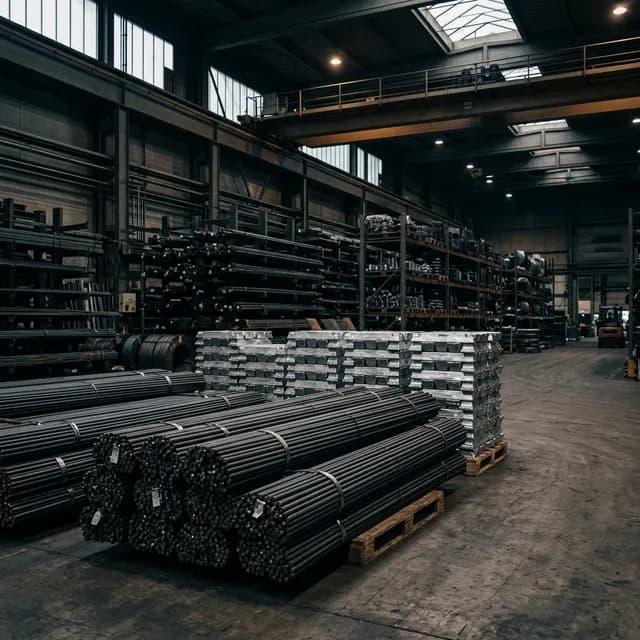 Industry Guide
Steel Fittings and Flanges: CN Code 7307 CBAM Compliance Walkthrough for Indian Exporters
Indian exporters of steel fittings (CN 7307) face EU CBAM. This guide offers a practical walkthrough for MSMEs on compliance, data collection, and reducing carbon tax. Get expert help from CarbonSettle.
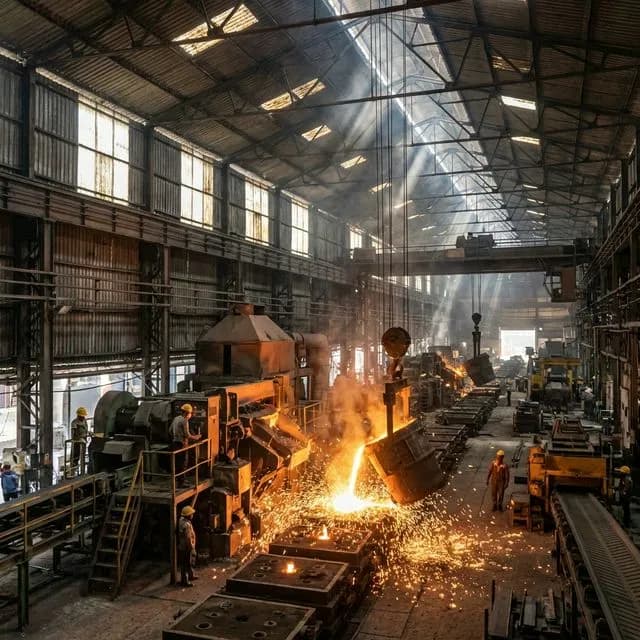 Industry Guide
Faridabad and NCR Auto Component Makers: Preparing for CBAM
Indian auto component manufacturers in Faridabad & NCR exporting to the EU need urgent CBAM compliance. Learn how to navigate Regulation (EU) 2023/956, calculate emissions, and avoid penalties. Get expert CBAM help in India.
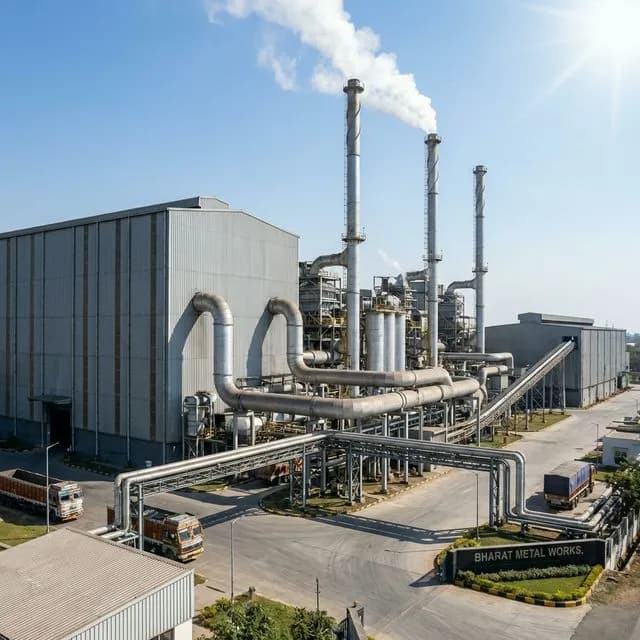 Industry Guide
Exporting Steel to Germany Under CBAM: What Your German Importer Needs From You
Indian steel exporters to Germany: Understand CBAM compliance, reporting, and what your German importer requires. Get expert help from CarbonSettle.