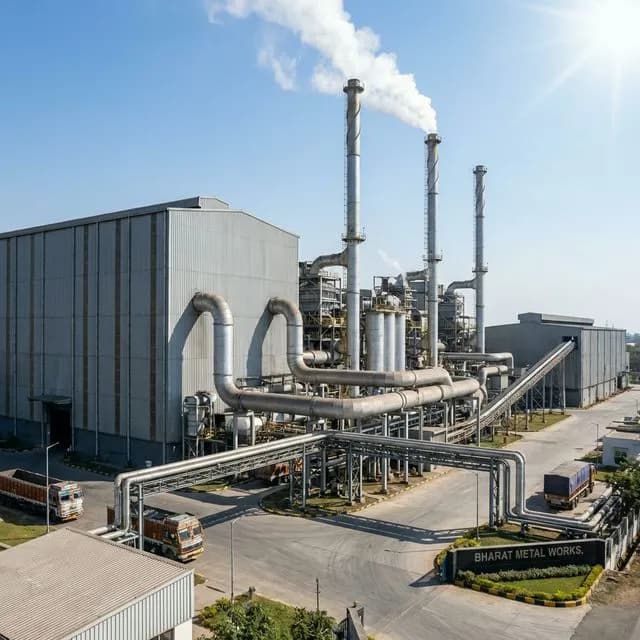
As a Senior CBAM Compliance Expert and EU Regulatory Specialist, I understand the significant challenges and opportunities the Carbon Border Adjustment Mechanism (CBAM) presents for Indian manufacturers, especially those in the steel sector. This comprehensive guide is specifically tailored for Indian MSMEs and larger enterprises exporting steel products to Germany, providing actionable insights into what your German importers will demand from you under Regulation (EU) 2023/956.
The EU's CBAM is not just another trade barrier; it's a fundamental shift in how carbon emissions are accounted for in global trade. For Indian steel producers, from the bustling industrial hubs of Ludhiana and Jamshedpur to the specialized foundries in Pune, understanding and proactively addressing CBAM requirements is paramount to maintaining your competitive edge in the lucrative German market. This article will demystify the process, highlight critical deadlines, and explain how an end-to-end CBAM compliance service like CarbonSettle can be your strategic partner.
Key Takeaways
- CBAM is Here: The transitional phase of CBAM began on October 1, 2023, requiring Indian steel exporters to provide embedded emissions data for their products shipped to the EU.
- German Importer's Burden: Your German importer is legally responsible for CBAM reporting and, from 2026, for purchasing CBAM certificates. They will demand precise, verified emissions data from you.
- Covered Products: Steel and iron products (under specific CN codes) are among the initial sectors covered by CBAM.
- Data is King: Accurate, granular data on direct and indirect emissions from your production processes is crucial. This includes electricity consumption, fuel usage, and raw material inputs.
- The 2026 Deadline: The definitive phase starting January 1, 2026, will introduce financial obligations, making accurate emissions reporting directly impact your product's cost competitiveness.
- Default Values are Costly: Relying on EU default emission values can increase your CBAM tax liability by 20-40% compared to reporting actual emissions.
- Seek Expert Help: Navigating CBAM is complex. Engaging an end-to-end CBAM compliance service like CarbonSettle can simplify the process, ensure accuracy, and save you significant costs and administrative burden.
What is CBAM and Why Does it Matter for Indian Steel Exporters to Germany?
The Carbon Border Adjustment Mechanism (CBAM) is the European Union's landmark climate policy designed to prevent 'carbon leakage' – the relocation of carbon-intensive production outside the EU to countries with less stringent climate policies. For Indian steel exporters, CBAM means that the carbon emissions embedded in your products, from their manufacturing in India to their arrival at the German border, will be subject to a carbon price equivalent to that paid by EU domestic producers under the EU Emissions Trading System (ETS).
This regulation, specifically Regulation (EU) 2023/956, directly impacts your business because your German importer is legally obligated to report these embedded emissions and, from 2026, purchase CBAM certificates to cover them. If you, as the Indian exporter, cannot provide accurate, verified emissions data, your German importer will face higher costs (due to reliance on EU default values) or even penalties, which will inevitably be passed back to you or lead them to seek alternative suppliers. Therefore, understanding CBAM is not just about compliance; it's about safeguarding your market access and profitability in Germany.
The German Importer's Perspective: What They Need From You, The Indian Steel Exporter
Your German importer is at the forefront of CBAM compliance. They are the "declarant" responsible for submitting quarterly CBAM reports during the transitional phase (until December 31, 2025) and, subsequently, annual declarations and purchasing CBAM certificates from January 1, 2026. To fulfill these obligations, they critically depend on you, the Indian steel exporter, for accurate and timely data.
Here's a breakdown of what your German importer will require:
- Product Identification (CN/HS Codes): They need the precise Combined Nomenclature (CN) codes (which align closely with HS codes) for every steel product you export. CBAM covers specific iron and steel products listed in Annex I of Regulation (EU) 2023/956. Misclassification can lead to reporting errors or missed obligations. You can refer to a comprehensive CBAM CN code directory to ensure accuracy.
- Quantity of Goods: Accurate weight (in tonnes) of each CBAM-relevant product exported to them.
- Country of Origin: Confirmation that the goods originate from India.
- Embedded Emissions Data: This is the most crucial and complex requirement. Your German importer needs to know the total embedded greenhouse gas (GHG) emissions (in tonnes of CO2e) for each consignment. This includes:
- Direct Emissions: Emissions from the production process at your Indian factory (e.g., from burning coal, natural gas, or diesel in furnaces, boilers, or for power generation).
- Indirect Emissions: Emissions from the electricity consumed during the production process. This is particularly relevant for Indian manufacturers, who often draw power from regional grids like MSEDCL (Maharashtra), UGVCL (Gujarat), or TANGEDCO (Tamil Nadu), each with varying grid emission factors.
- Methodology Used: Details on how you calculated these emissions, adhering to the methodologies outlined in the CBAM Implementing Regulation (EU) 2023/1773.
- Verification (Post-2025): From 2026, the reported emissions data will need to be verified by an accredited verifier. Your German importer will expect you to facilitate this process.
- Carbon Price Paid in India (if any): If India implements a domestic carbon price or tax on the embedded emissions of your exported goods, your German importer can claim a reduction in their CBAM certificate purchase. Currently, India does not have such a mechanism for exports, but this could change.
Without this information, your German importer will be forced to use default emission values provided by the EU Commission, which are typically much higher than actual emissions. This can lead to a significant increase in their CBAM costs, making your products less competitive.
See what CBAM will cost your buyer
Free 30-second check — pick your product and tonnage, get your buyer-side savings number.
Operational Steps: How Indian Steel Exporters Can Prepare for CBAM
Preparing for CBAM requires a systematic approach, focusing on data collection, process understanding, and strategic planning. Here are the actionable steps Indian steel manufacturers should undertake:
1. Identify Your CBAM-Relevant Products and Processes
Begin by thoroughly reviewing your product portfolio. Which of your steel products (e.g., rebar, sheets, pipes, castings) fall under the specified CN codes in Annex I of Regulation (EU) 2023/956? For each relevant product, map out its entire production process, from raw material intake (iron ore, scrap, coke) to the finished good. This includes all energy-intensive steps like smelting, refining, rolling, and finishing.
2. Understand and Quantify Your Emissions Sources
This is the core of CBAM compliance. You need to identify and quantify all direct and indirect GHG emissions associated with the production of your CBAM-relevant steel products.
- Direct Emissions:
- Fuel Consumption: Track the type and quantity of fuels consumed (coal, natural gas, diesel, furnace oil) in your furnaces, boilers, and other equipment. For example, a steel plant in Jamshedpur using coking coal will have significant direct emissions.
- Process Emissions: Emissions directly released from industrial processes, such as CO2 from the reduction of iron ore in a blast furnace.
- Scope 1 Emissions: These are the direct emissions from sources owned or controlled by your factory.
- Indirect Emissions:
- Electricity Consumption: Accurately measure the electricity consumed for each production line or product. This is critical. For instance, a steel rolling mill in Gujarat powered by UGVCL will need to know its electricity consumption and the specific grid emission factor for UGVCL's supply mix.
- Scope 2 Emissions: These are the indirect emissions from the generation of purchased electricity, steam, heating, and cooling consumed by your factory.
Maintain meticulous records of utility bills (MSEDCL, TANGEDCO, UGVCL), fuel purchase invoices, and production logs. This granular data is essential for accurate emission calculations.
3. Establish Robust Data Collection Systems
Manual data collection is prone to errors and inefficiencies. Consider implementing or upgrading systems to automatically track energy consumption, production volumes, and raw material inputs. This might involve:
- Smart Meters: Installing smart meters for electricity and fuel at key production stages.
- ERP/MES Integration: Leveraging your existing Enterprise Resource Planning (ERP) or Manufacturing Execution Systems (MES) to capture relevant data.
- Dedicated Spreadsheets/Databases: For MSMEs, well-structured spreadsheets or simple databases can be a starting point, but ensure consistency and accuracy.
Remember, the data needs to be auditable.
4. Calculate Embedded Emissions According to EU Methodology
The EU's Implementing Regulation (EU) 2023/1773 specifies the methodologies for calculating embedded emissions. This involves:
- Activity Data: Your collected data on fuel consumption, electricity usage, and production volumes.
- Emission Factors: Specific CO2e emission factors for each fuel type and for the electricity grid you use. While the EU provides default factors, using India-specific or supplier-specific factors (if available and verifiable) can lead to more accurate, and often lower, emission figures. For example, the average grid emission factor for electricity in India is around 0.7-0.8 tCO2e/MWh, but this can vary significantly by state and utility.
- Allocation Rules: If your factory produces multiple products, you'll need to allocate emissions to each specific CBAM-relevant product based on mass, energy content, or economic value.
This calculation process is complex and often requires specialized expertise. This is where an end-to-end CBAM compliance service becomes invaluable.
5. Engage with Your Supply Chain
CBAM doesn't stop at your factory gate. If you use significant precursor materials (e.g., pig iron, ferroalloys) that are also CBAM-covered, you will need to obtain their embedded emissions data from your Indian suppliers. This "supplier outreach" is a critical, often overlooked, step. Start conversations with your key raw material suppliers now to understand their data capabilities.
6. Prepare for Reporting and Verification
During the transitional phase (until December 31, 2025), you need to provide your German importer with the necessary data for their quarterly reports. This data doesn't need external verification yet, but it must be accurate. From 2026, the data will require independent verification. This means your internal processes and calculations must withstand scrutiny. Prepare for potential audits and ensure all documentation is readily available.
For a more detailed operational roadmap, you can refer to our comprehensive CBAM Compliance Guide for Indian Exporters.
2026 Regulatory Impact for Indian Exporters: The Definitive Phase and Financial Obligations
The transitional phase, which requires only reporting, serves as a crucial learning period. However, the real financial impact of CBAM will commence on January 1, 2026, with the start of the definitive phase. This is when your German importer will be legally obliged to purchase CBAM certificates corresponding to the embedded emissions of your steel products.
Here's what changes and why it's critical for Indian steel exporters:
- Financial Burden: From 2026, the cost of CBAM certificates will be directly linked to the weekly average price of EU ETS allowances, expressed in EUR per tonne of CO2e. As of mid-2024, EU ETS prices have hovered around €60-€80 per tonne of CO2e. This means for every tonne of CO2e embedded in your steel exports, your German importer will pay this amount. For a typical steel product with an embedded emission intensity of, say, 1.8-2.2 tonnes of CO2e per tonne of steel, this translates to an additional cost of approximately €108-€176 (approx. ₹9,600-₹15,600 at an exchange rate of ₹89/€) per tonne of steel.
- Verification Becomes Mandatory: The reported embedded emissions must be verified by an accredited verifier. This adds another layer of complexity and cost. Your German importer will expect you to bear the responsibility for providing verified data.
- Direct Impact on Competitiveness: If your emissions data is not accurate or verified, your German importer will be forced to use EU default values, which are deliberately set high to incentivize actual reporting. These default values can be 20-40% higher than actual emissions, leading to a significantly increased CBAM cost. For example, if your actual emissions are 1.8 tCO2e/tonne of steel, but the default value is 2.5 tCO2e/tonne, your importer pays for an extra 0.7 tCO2e/tonne. At €70/tCO2e, this is an avoidable cost of €49 (approx. ₹4,350) per tonne of steel. This directly impacts your product's landed cost and, consequently, your attractiveness to German buyers.
- Strategic Advantage for Low-Carbon Producers: Conversely, Indian steel manufacturers who have invested in energy efficiency, renewable energy, or process improvements to lower their carbon footprint will gain a significant competitive advantage. Their lower embedded emissions will translate to lower CBAM costs for their German importers.
The 2026 deadline is not far off. Indian exporters must use the transitional period to refine their data collection, calculation, and reporting processes to avoid financial penalties and maintain market share. This is not just a compliance exercise; it's a strategic imperative.
The Cost of Non-Compliance and the Value of Accurate Reporting
Ignoring CBAM or providing inaccurate data carries substantial risks and costs for both you and your German importer.
- Penalties for Importers: During the transitional phase, non-compliance or incorrect reporting by the EU importer can result in penalties ranging from €10 to €50 per tonne of unreported emissions, adjusted for inflation. These penalties will undoubtedly be passed back to you.
- Loss of Business: German importers will naturally gravitate towards Indian suppliers who can provide accurate, verified emissions data, thereby minimizing their CBAM costs and administrative burden. Those who cannot will find their market access shrinking.
- Higher CBAM Certificate Costs: As discussed, relying on EU default values can inflate your CBAM tax by 20-40%. This is a direct hit to your profitability or makes your product uncompetitive. For a medium-sized steel exporter shipping 10,000 tonnes of steel annually to Germany, an additional €49/tonne due to default values could mean an extra €490,000 (approx. ₹4.35 Crore) in annual CBAM costs.
- Reputational Damage: Being seen as a difficult or non-compliant supplier can harm your long-term business relationships.
Conversely, accurate reporting offers significant benefits:
- Cost Savings: By meticulously calculating and reporting your actual, lower emissions, you can save your German importer substantial amounts on CBAM certificates, potentially up to 40% compared to default values. This saving can be a powerful negotiation tool.
- Enhanced Competitiveness: Lower CBAM costs make your products more attractive.
- Improved Brand Image: Demonstrating commitment to sustainability and compliance enhances your reputation in the European market.
- Future-Proofing: Developing robust emissions monitoring capabilities now positions you well for future carbon regulations, both in India and globally.
It's crucial for Indian exporters to understand that the cost of professional CBAM compliance services is often a fraction of the potential savings and avoided penalties. When considering CBAM service providers in India, look beyond just the price; consider the depth of expertise and the end-to-end support offered.
Common Challenges for Indian MSMEs and How to Overcome Them
Indian MSMEs, particularly in sectors like steel, face unique challenges in navigating CBAM:
- Lack of Awareness and Expertise: Many MSMEs lack dedicated compliance teams or in-house expertise on EU regulations and carbon accounting.
- Data Collection Infrastructure: Older factories might not have sophisticated systems for granular energy and production data collection.
- Cost of Compliance: Initial investment in systems or expert services can seem daunting.
- Supplier Engagement: Convincing upstream Indian suppliers to provide their emissions data can be difficult.
Overcoming these challenges:
- Education and Training: Invest in training for key personnel on CBAM fundamentals.
- Phased Implementation: Start with manual data collection and gradually upgrade systems.
- Leverage External Expertise: This is perhaps the most effective solution. Engaging an end-to-end CBAM compliance service like CarbonSettle allows you to outsource the entire burden to specialists. We handle the complex calculations, data validation, and reporting, freeing up your internal resources.
- Collaborate with Industry Associations: Indian industry bodies like FICCI, CII, and EEPC India are actively working to support MSMEs on CBAM. Participate in their workshops and initiatives.
How CarbonSettle Can Help: Your End-to-End CBAM Compliance Partner
Navigating the complexities of CBAM, especially for steel exports to Germany, can feel overwhelming. This is precisely where CarbonSettle steps in as India's #1 end-to-end CBAM compliance service. We are not a software platform; we are your dedicated team of CBAM experts, providing complete hand-holding to ensure seamless compliance from start to finish.
We take your entire CBAM headache away. Here’s how CarbonSettle ensures your Indian steel exports to Germany remain competitive and compliant:
- **Factory Data
Compliance disclaimer
Strategies described here are for educational purposes. CBAM regulations (EU 2023/956) evolve quarterly — always verify with your accredited verifier before filing definitive reports.
We’ll do your entire CBAM quarter — ₹0.
A dedicated CBAM expert plus our AI do the whole April–June 2026 report end-to-end: your factory data in, verified actual emissions out — so your buyer pays your real number, not the inflated EU default. The report is yours to keep.
Start your report by 30 September 2026 to claim the free quarter.
Bills, logs, photos — one afternoon.
Verified actuals, EU XML, audit standard.
Yours to keep. ₹0 this quarter.
Prefer to talk? +91 76250 95885 · or run a 30-second savings check first
The complete CBAM guide for Indian exporters
The full compliance roadmap — CN codes, emissions, deadlines, penalties and how to keep your EU orders.
More CBAM guidance for Indian exporters
 Industry Guide
Exporting to Poland and Central Europe Under CBAM: What Indian Mills Should Know
Indian mills exporting steel, cement, and aluminum to Poland and Central Europe must understand CBAM. Get practical guidance on compliance, costs, and reporting for Indian exporters.
 Industry Guide
Aluminium Utensils and Cookware Exports Under CBAM: A CN 7615 Guide for Indian Exporters
Indian aluminium utensil exporters under CBAM face new rules. This guide explains CN 7615, emission calculations, and how CarbonSettle helps with end-to-end CBAM compliance for your EU exports.
 Industry Guide
Steel Castings for Pumps and Valves: CBAM Guidance for Indian Foundries
Indian foundries exporting steel castings for pumps and valves to the EU face CBAM. This guide helps navigate compliance, reduce carbon tax, and secure market access.