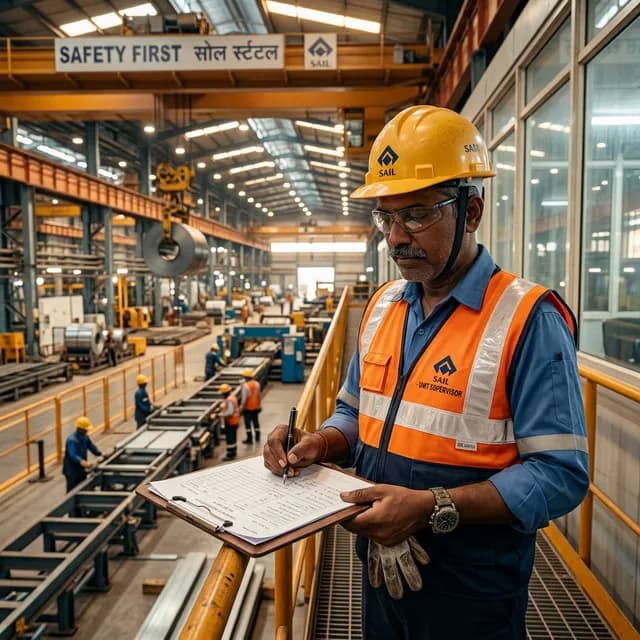
Navigating CBAM: A Critical Guide for Hyderabad and Telangana Engineering Exporters
The European Union's Carbon Border Adjustment Mechanism (CBAM), established under Regulation (EU) 2023/956, is no longer a distant policy but an immediate reality for Indian exporters, especially those in the vibrant engineering and manufacturing hubs of Hyderabad and Telangana. From the bustling industrial estates of Balanagar and Jeedimetla to the specialized manufacturing zones around Medchal and Shamshabad, companies exporting steel components, aluminum products, cement, fertilizers, and even hydrogen to the EU must now contend with a new carbon reporting and eventual carbon tax regime. This comprehensive guide is designed to equip Indian MSMEs, factory owners, and compliance officers in Telangana with the practical knowledge and actionable steps needed to navigate CBAM effectively, ensuring continued market access and competitive advantage in the European market.
The EU CBAM aims to prevent 'carbon leakage' – where EU companies might move carbon-intensive production outside the EU to countries with less stringent climate policies. For Indian exporters, this means that the carbon emissions embedded in their products will now be accounted for at the EU border, leveling the playing field with EU domestic producers who already pay a carbon price under the EU Emissions Trading System (ETS). Ignoring CBAM is not an option; it risks significant financial penalties, disruption to supply chains, and loss of valuable EU contracts.
Key Takeaways for Telangana Exporters:
- Immediate Action Required: The transitional phase began on October 1, 2023, requiring quarterly emissions reporting. Non-compliance can lead to penalties ranging from €10 to €50 per tonne of unreported emissions.
- Covered Products: Focus on your HS/CN codes. CBAM primarily impacts iron and steel, cement, aluminum, fertilizers, hydrogen, and electricity.
- Data is King: Accurate and verifiable data on direct and indirect emissions from your manufacturing processes is paramount. This includes electricity consumption, fuel usage, and raw material inputs.
- Financial Impact: The definitive phase starting January 1, 2026, will involve purchasing CBAM certificates, effectively an "EU carbon tax India" will need to pay. Proactive emission reduction can lead to significant savings.
- Seek Expert Help: Navigating complex EU regulations, data collection, and reporting is challenging. Engaging an end-to-end CBAM compliance service like CarbonSettle can simplify the process and ensure accuracy.
What is CBAM and Why Does it Matter to Indian Exporters?
CBAM, or the Carbon Border Adjustment Mechanism, is the European Union's tool to put a fair price on the carbon emitted during the production of certain goods imported into the EU. It matters significantly to Indian exporters because it directly impacts their cost of doing business with Europe and demands a new level of transparency regarding their carbon footprint.
For Indian manufacturers, particularly those in Hyderabad and Telangana producing steel rebar, aluminum extrusions, cement clinker, or even specialized fertilizers for the European market, CBAM translates into a requirement to declare the embedded greenhouse gas (GHG) emissions of their products. During the current transitional period (October 1, 2023, to December 31, 2025), the focus is on reporting these emissions. However, from January 1, 2026, EU importers will be required to purchase CBAM certificates corresponding to the declared emissions. This cost will inevitably be passed back to the Indian exporter, making carbon efficiency a direct financial imperative.
The EU's rationale is clear: to prevent 'carbon leakage' and encourage global decarbonisation. If a Hyderabad-based steel manufacturer produces steel with higher emissions than its European counterpart, it will face a carbon cost at the border, effectively equalizing the playing field. This mechanism is designed to incentivize Indian companies to invest in greener technologies and processes, aligning with global climate goals. Understanding this fundamental shift is the first step towards effective CBAM compliance India.
Identifying Your CBAM Exposure: Products and HS/CN Codes
The first critical step for any Indian exporter is to determine if their products fall under the scope of CBAM. CBAM currently covers specific categories of goods that are typically carbon-intensive.
The covered sectors are:
- Iron and Steel: This includes a vast range of products from raw iron and steel to finished components, pipes, tubes, and even some fasteners. Many engineering firms in Hyderabad and Telangana, specializing in automotive components, industrial machinery parts, or construction materials, will find their products within this category.
- Cement: Clinker, cement, and related products.
- Aluminium: Raw aluminum, aluminum plates, sheets, foils, and various articles of aluminum. Manufacturers of aluminum castings, extrusions, or fabricated parts are directly impacted.
- Fertilisers: Ammonia, nitric acid, and complex fertilizers.
- Hydrogen: A newer addition, reflecting the growing importance of hydrogen in the energy transition.
- Electricity: Though less common for direct export from India to the EU, it's part of the scope.
To precisely identify your exposure, you must cross-reference your product's Harmonized System (HS) code with the Combined Nomenclature (CN) codes listed in Annex I of Regulation (EU) 2023/956. For example, if you are exporting steel pipes (HS code 7306) or aluminum profiles (HS code 7604) from a factory in Ludhiana, Gujarat, Pune, or Jamshedpur to the EU, these will almost certainly be subject to CBAM reporting.
A common pitfall is assuming that only primary materials are covered. In many cases, certain downstream products containing these materials are also included. It is crucial to verify each product line. CarbonSettle maintains a comprehensive CBAM CN code directory to help Indian exporters quickly identify their relevant products. If you are unsure, consulting with a CBAM consultant India specializing in product classification is highly recommended.
See what CBAM will cost your buyer
Free 30-second check — pick your product and tonnage, get your buyer-side savings number.
Operational Steps for CBAM Compliance: A Factory Owner's Checklist
For factory owners and compliance officers in Hyderabad and Telangana, CBAM compliance is fundamentally an exercise in data collection, calculation, and accurate reporting. Here's a practical, step-by-step checklist:
1. Verify Your Product Scope and Supply Chain Mapping:
- Identify Covered Products: Go through your export portfolio to the EU. For each product, determine its HS code and then check if it falls under the CBAM CN codes.
- Map Your Production Process: Document the entire manufacturing process for each CBAM-relevant product. This includes all inputs (raw materials, electricity, fuels), production steps, and outputs.
- Identify Key Suppliers: List all direct and indirect suppliers of raw materials and energy inputs. This is crucial for collecting upstream emissions data.
2. Data Collection Strategy: The Core of CBAM Reporting
This is the most critical and often the most challenging step. You need to collect specific data points related to your direct and indirect emissions.
- Direct Emissions (Scope 1): These are emissions from sources owned or controlled by your company.
- Fuel Consumption: Record the types and quantities of all fuels used on-site (e.g., natural gas, coal, diesel, furnace oil for boilers, furnaces, or generators). Keep detailed invoices and consumption logs. For example, if your factory in Patancheru uses natural gas from GAIL, record the monthly consumption in cubic meters.
- Process Emissions: For certain industries (e.g., cement production from limestone calcination), emissions are inherent to the chemical process itself, not just fuel combustion.
- Indirect Emissions (Scope 2): These are emissions from the generation of purchased electricity, heat, or steam.
- Electricity Consumption: Collect monthly or quarterly electricity bills from your utility provider (e.g., MSEDCL, UGVCL, TANGEDCO, or Telangana State Southern Power Distribution Company Limited - TSSPDCL). Record the total MWh consumed.
- Emission Factors: You'll need the grid-average emission factor for electricity in your region. While EU default values are available, using India-specific factors (e.g., from the Central Electricity Authority or specific state grids) can often result in lower reported emissions and thus lower future CBAM costs.
- Embedded Emissions from Precursors: For complex products, you also need to account for the emissions embedded in the raw materials (precursors) you purchase.
- Supplier Outreach: This is where it gets complex. You need to ask your raw material suppliers (e.g., for iron ore, bauxite, scrap metal) for their embedded emissions data. This often requires significant effort and collaboration. If supplier data isn't available, you'll have to use default values, which are generally higher and can increase your CBAM liability.
3. Emission Calculation Methodology:
- Adhere to EU Guidelines: The EU provides detailed methodologies for calculating embedded emissions. These are complex and require careful interpretation.
- Direct Emissions: Use standard emission factors for different fuel types (e.g., tonnes of CO2 per litre of diesel).
- Indirect Emissions: Multiply your electricity consumption by the relevant grid emission factor.
- Precursor Emissions: Sum the embedded emissions from all relevant precursor materials.
- Allocation to Products: If your factory produces multiple products, you'll need to allocate emissions to each CBAM-relevant product based on mass, volume, or economic value. This is a critical step for accurate reporting.
4. Reporting and Verification:
- Quarterly Reports: During the transitional phase, reports must be submitted quarterly to the EU Commission via the CBAM Transitional Registry. These reports detail the quantity of goods imported, their embedded emissions, and any carbon price paid in the country of origin (though this is less common for India currently).
- Accuracy is Key: Inaccurate reporting can lead to penalties.
- Future Verification: From 2026, reports will need to be verified by an accredited verifier. Preparing your data and documentation now will streamline this future process.
2026 Regulatory Impact for Indian Exporters: The Definitive Phase
The true financial impact of CBAM for Indian exporters begins on January 1, 2026. This is when the definitive phase of Regulation (EU) 2023/956 comes into full effect, shifting from mere reporting to a direct financial obligation.
From 2026, EU importers will be required to purchase and surrender CBAM certificates equivalent to the embedded emissions of the goods they import. The price of these certificates will be linked to the weekly average auction price of EU ETS allowances, expressed in Euros per tonne of CO2e. As of late 2023/early 2024, EU ETS prices have hovered around €70-€90 per tonne of CO2e. This means for every tonne of CO2e embedded in your product, your EU importer will pay this amount, which will invariably be passed back to you, the Indian exporter.
Example Financial Impact: Consider a steel manufacturer in Hyderabad exporting 10,000 tonnes of steel to the EU annually. If the embedded emissions are 2 tonnes of CO2e per tonne of steel, and the CBAM certificate price is €80/tonne CO2e:
- Total emissions: 10,000 tonnes * 2 tonnes CO2e/tonne steel = 20,000 tonnes CO2e
- Annual CBAM cost: 20,000 tonnes CO2e * €80/tonne CO2e = €1,600,000 (approximately ₹14.5 Crores at an exchange rate of ₹90/€).
This significant cost highlights the urgency for Indian exporters to not only comply with reporting but also to actively reduce their carbon footprint. Companies that can demonstrate lower embedded emissions will have a distinct competitive advantage. Using EU default values for emissions, which are often conservative and higher than actual emissions, can increase your CBAM tax by as much as 40%. This is why accurate, verified data is crucial for cost savings. CarbonSettle's India CBAM Cost Index provides up-to-date insights into potential financial liabilities.
Supplier Engagement and Data Gaps: A Major Challenge for Indian MSMEs
One of the most significant hurdles for Indian MSMEs in CBAM compliance is obtaining accurate emissions data from their upstream suppliers. The embedded emissions of your final product include not just your factory's direct and indirect emissions, but also the emissions from the production of the raw materials you purchase (known as "precursors").
For instance, if you're a manufacturer in Telangana producing aluminum components, you need to know the embedded emissions of the primary aluminum ingots or scrap you procure. This data is often not readily available from Indian suppliers, many of whom are themselves MSMEs with limited carbon accounting capabilities.
Strategies for Supplier Engagement:
- Educate Your Suppliers: Start by explaining what CBAM is and why their data is crucial. Many suppliers may not be aware of the regulation's implications.
- Request Data Proactively: Ask for specific data points, such as their fuel consumption, electricity usage, and production volumes related to the materials they supply to you.
- Provide Templates: Offer simple data collection templates to make it easier for them to provide the necessary information.
- Incentivize Compliance: Consider making CBAM data provision a contractual requirement or offering preferential terms to suppliers who provide accurate, verified data.
- Address Data Gaps: If a supplier cannot provide data, you will have to use default values provided by the EU Commission. These default values are intentionally set high to encourage actual data collection. Relying on default values can significantly increase your reported emissions and, consequently, your future CBAM costs.
This aspect requires considerable effort and often dedicated resources. CarbonSettle's end-to-end CBAM compliance services include expert teams specifically trained to engage with your suppliers, chase data, and bridge these crucial data gaps, ensuring you avoid punitive default values.
Penalties for Non-Compliance and the Importance of Accuracy
The EU is serious about CBAM compliance, and non-compliance during the transitional phase (October 2023 - December 2025) can result in significant financial penalties.
According to the Implementing Regulation (EU) 2023/1773, if an EU importer fails to submit a CBAM report or submits an incomplete or incorrect report, penalties can range from €10 to €50 per tonne of unreported emissions. These penalties are multiplied by an adjustment factor based on the duration of the non-compliance. For a large exporter, this could quickly escalate into millions of rupees. For example, if a Hyderabad exporter's products lead to 5,000 tonnes of unreported CO2e, even at the lower end of the penalty scale (€10/tonne), that's €50,000 (approximately ₹45 Lakhs) in fines.
Beyond monetary penalties, repeated non-compliance could lead to:
- Reputational Damage: Loss of trust with EU importers and customers.
- Supply Chain Disruption: EU importers may choose to source from compliant suppliers, leading to loss of market share.
- Increased Scrutiny: Higher likelihood of audits and investigations.
The emphasis on accuracy cannot be overstated. It's not just about submitting a report, but submitting a report that accurately reflects your embedded emissions. Overstating emissions means paying more CBAM tax than necessary from 2026. Understating emissions risks penalties and reputational damage. This is why having a robust data collection system and expert guidance for calculations is indispensable.
Frequently Asked Questions for Indian Exporters
What is the primary objective of CBAM for the EU?
The primary objective of CBAM is to prevent "carbon leakage," where EU companies might move carbon-intensive production to countries with less stringent climate policies. By placing a carbon price on imports, the EU aims to level the playing field for its domestic industries, which already pay a carbon price under the EU Emissions Trading System (ETS), and encourage global decarbonisation efforts.
Which Indian industries are most affected by CBAM?
Indian industries most affected by CBAM are those exporting carbon-intensive goods to the EU. This primarily includes manufacturers of iron and steel products (e.g., from Jamshedpur, Ludhiana, Hyderabad), aluminum (e.g., from Gujarat, Odisha), cement, fertilizers, and hydrogen. Engineering exporters in Hyderabad and Telangana dealing with these base materials or products derived from them are directly impacted.
What data do I need to collect for CBAM reporting?
For CBAM reporting, you need to collect data on your direct emissions (Scope 1) from on-site fuel combustion (e.g., diesel, natural gas, coal usage) and process emissions. You also need indirect emissions data (Scope 2) from purchased electricity consumption, including your utility bills (e.g., from TSSPDCL in Telangana) and the grid emission factor. Additionally, you must gather embedded emissions data from your raw material suppliers (precursors).
What are the consequences if I don't comply with CBAM reporting during the transitional phase?
During the transitional phase (October 2023 - December 2025), non-compliance with CBAM reporting can lead to significant financial penalties. These penalties range from €10 to €50 per tonne of unreported or incorrectly reported embedded emissions. Beyond fines, repeated non-compliance can damage your reputation with EU importers and potentially lead to loss of market access.
How can I reduce my CBAM liability in the long term?
To reduce your long-term CBAM liability, focus on decarbonizing your production processes. This includes transitioning to renewable energy sources for electricity (e.g., solar, wind), improving energy efficiency in your factory, optimizing fuel consumption, and exploring low-carbon raw material inputs. Accurately reporting your emissions, rather than relying on high EU default values, is also crucial for minimizing costs.
How CarbonSettle Can Help: Your End-
Compliance disclaimer
Strategies described here are for educational purposes. CBAM regulations (EU 2023/956) evolve quarterly — always verify with your accredited verifier before filing definitive reports.
We’ll do your entire CBAM quarter — ₹0.
A dedicated CBAM expert plus our AI do the whole April–June 2026 report end-to-end: your factory data in, verified actual emissions out — so your buyer pays your real number, not the inflated EU default. The report is yours to keep.
Start your report by 30 September 2026 to claim the free quarter.
Bills, logs, photos — one afternoon.
Verified actuals, EU XML, audit standard.
Yours to keep. ₹0 this quarter.
Prefer to talk? +91 76250 95885 · or run a 30-second savings check first
The complete CBAM guide for Indian exporters
The full compliance roadmap — CN codes, emissions, deadlines, penalties and how to keep your EU orders.
More CBAM guidance for Indian exporters
 Industry Guide
Steel Fittings and Flanges: CN Code 7307 CBAM Compliance Walkthrough for Indian Exporters
Indian exporters of steel fittings (CN 7307) face EU CBAM. This guide offers a practical walkthrough for MSMEs on compliance, data collection, and reducing carbon tax. Get expert help from CarbonSettle.
 Industry Guide
Faridabad and NCR Auto Component Makers: Preparing for CBAM
Indian auto component manufacturers in Faridabad & NCR exporting to the EU need urgent CBAM compliance. Learn how to navigate Regulation (EU) 2023/956, calculate emissions, and avoid penalties. Get expert CBAM help in India.
 Industry Guide
Exporting Steel to Germany Under CBAM: What Your German Importer Needs From You
Indian steel exporters to Germany: Understand CBAM compliance, reporting, and what your German importer requires. Get expert help from CarbonSettle.