---
title: "Visakhapatnam Steel Cluster: CBAM Compliance for Coastal Exporters"
date: YYYY-MM-DD
description: "Indian steel exporters from Visakhapatnam face new EU CBAM rules. Learn how to navigate compliance, reduce costs, and ensure market access with expert guidance."
category: "Industry Guide"
---

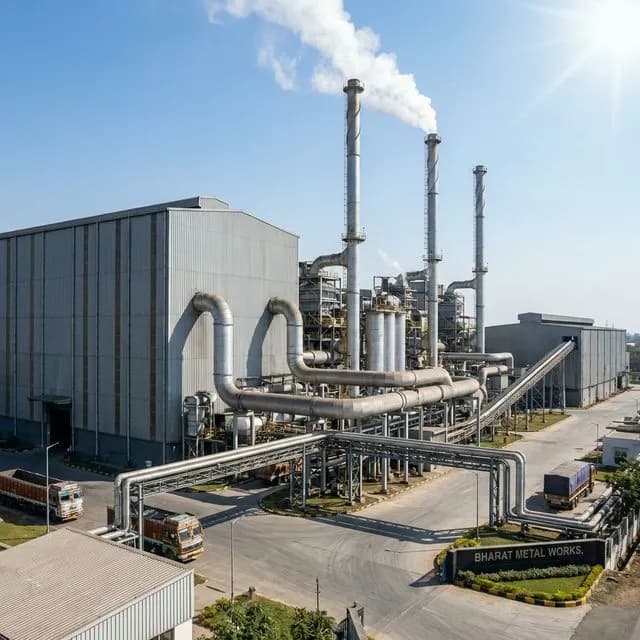
# Visakhapatnam Steel Cluster: Navigating CBAM Compliance for Coastal Exporters

The European Union's Carbon Border Adjustment Mechanism (CBAM), established by Regulation (EU) 2023/956, is fundamentally reshaping global trade, and Indian steel manufacturers, particularly those in vibrant industrial hubs like Visakhapatnam, are at the forefront of this change. As a Senior CBAM Compliance Expert and EU Regulatory Specialist, I understand the unique challenges and opportunities this presents for Indian MSMEs and large-scale exporters. This comprehensive guide is designed to provide actionable insights and practical steps for Visakhapatnam's steel industry to ensure seamless compliance and maintain competitive access to the lucrative European market.

Visakhapatnam, with its strategic port location and robust steel manufacturing ecosystem, is a critical export hub for India. However, the impending financial obligations under CBAM, starting definitively in January 2026, mean that understanding and proactively managing your carbon footprint is no longer optional – it's a commercial imperative. This article will demystify CBAM, highlight its specific impact on the Visakhapatnam steel cluster, and outline how Indian exporters can not only comply but also thrive in this new carbon-conscious trade environment.

## Key Takeaways

*   **CBAM is Real and Imminent:** The transitional phase is ongoing, but definitive financial obligations for steel exports to the EU begin January 2026.
*   **Visakhapatnam's Unique Position:** Coastal steel exporters have specific energy consumption patterns and logistical advantages/disadvantages that impact CBAM.
*   **Data is King:** Accurate, granular data on direct and indirect emissions is crucial for minimizing CBAM costs and avoiding default values.
*   **Operational Steps are Key:** From HS/CN code verification to supplier engagement and precise emission calculations, proactive steps are essential.
*   **Financial Impact is Significant:** Default values can increase your CBAM liability by 20-50% or more. Understanding and reducing your actual emissions is paramount.
*   **Expert Partnership is Crucial:** Navigating complex EU regulations, data requirements, and reporting formats requires specialized knowledge. CarbonSettle offers end-to-end CBAM compliance services, taking the entire burden off your shoulders.

## What is CBAM and Why Does it Matter for Visakhapatnam Steel Exporters?

The Carbon Border Adjustment Mechanism (CBAM) is a landmark EU policy designed to prevent "carbon leakage" – where EU companies might move carbon-intensive production outside the EU to countries with less stringent climate policies. For Indian steel exporters, this means that the carbon emissions embedded in your products, from raw material extraction to manufacturing processes, will be subject to a carbon price upon entry into the EU.

For the Visakhapatnam steel cluster, this regulation is particularly significant because steel is one of the initial sectors covered. Whether you're producing rebar, hot-rolled coils, cold-rolled sheets, or specialized alloys destined for European construction, automotive, or machinery markets, your products will fall under CBAM. The transitional period, which began in October 2023, requires quarterly reporting of embedded emissions without financial payment. However, from **January 1, 2026**, the definitive phase kicks in, requiring EU importers to purchase CBAM certificates corresponding to the embedded emissions of your products. The financial burden of these certificates will inevitably be passed back to the Indian exporter.

Consider a steel manufacturer in Visakhapatnam exporting 10,000 tonnes of steel to the EU annually. If the embedded emissions are, for example, 2 tonnes CO2e per tonne of steel, and the EU carbon price (ETS price) is €80 per tonne CO2e, the annual CBAM liability would be 10,000 tonnes * 2 CO2e/tonne * €80/CO2e = €1,600,000. This significant cost underscores why proactive CBAM compliance is not just about regulatory adherence but about maintaining financial viability and market access.

## Understanding Your Carbon Footprint: Direct and Indirect Emissions for Steel

To comply with CBAM, Indian steel exporters must accurately calculate the embedded emissions in their products. This involves understanding both direct and indirect emissions.

**Direct Emissions (Scope 1):** These are greenhouse gas (GHG) emissions from sources owned or controlled by your steel plant. For a typical steel factory in Visakhapatnam, this includes emissions from:
*   **Fuel Combustion:** Burning coal, coke, natural gas, or other fuels in blast furnaces, electric arc furnaces (EAFs), rolling mills, and power generation units within your facility.
*   **Process Emissions:** Chemical reactions inherent in steelmaking, such as the reduction of iron ore in blast furnaces, which releases CO2.
*   **On-site Transportation:** Emissions from company-owned vehicles and machinery.

**Indirect Emissions (Scope 2):** These are emissions from the generation of purchased electricity, steam, heating, or cooling consumed by your steel plant. For Indian manufacturers, this primarily means emissions associated with the electricity you purchase from the grid.

For a steel plant in Visakhapatnam, the electricity consumed would likely be sourced from Andhra Pradesh Southern Power Distribution Company Limited (APSPDCL) or Eastern Power Distribution Company of Andhra Pradesh Limited (APEPDCL). The emission factor for grid electricity in India is significantly higher than in the EU, often ranging from 0.7 to 0.9 kg CO2e/kWh, depending on the grid mix (which is heavily reliant on coal). This high emission factor for electricity is a critical component of your indirect emissions and can substantially increase your overall CBAM liability compared to EU counterparts using cleaner grids.

To accurately calculate these, you'll need detailed records of:
*   **Fuel Consumption:** Type and quantity of all fuels used (coal, coke, natural gas, diesel).
*   **Electricity Consumption:** Monthly electricity bills from your utility provider (e.g., APSPDCL, APEPDCL).
*   **Production Data:** Tonnage of crude steel, finished steel products, and any intermediate products.
*   **Raw Material Inputs:** Details of iron ore, scrap, limestone, and other inputs, including their embedded emissions if available from suppliers.

Without this granular data, the EU importer will be forced to use default values, which are typically much higher than actual emissions, leading to significantly increased CBAM costs. For example, using default values could mean paying up to 20-50% more in CBAM tax, potentially costing a Visakhapatnam exporter an additional ₹1 Crore to ₹2.5 Crore (approx. €110,000 to €275,000) annually for the same 10,000 tonnes of steel mentioned earlier.
See what CBAM will cost your buyer
Free 30-second check — pick your product and tonnage, get your buyer-side savings number.
Operational Steps for CBAM Compliance: A Roadmap for Indian Exporters
Navigating CBAM requires a structured approach. Here are the key operational steps for Indian steel exporters:
1. Identify CBAM-Affected Products and HS/CN Codes
The first step is to precisely identify which of your exported steel products fall under CBAM. This requires cross-referencing your product list with the EU's Combined Nomenclature (CN) codes specified in Regulation (EU) 2023/956. Products like iron and steel (Chapter 72), and certain articles of iron or steel (Chapter 73) are covered.
- Action: Review your export product portfolio. For each product, determine its 6-digit Harmonized System (HS) code and then its 8-digit or 10-digit CN code.
- Resource: Utilize the official EU TARIC database or consult with a CBAM expert to ensure accurate classification. You can also refer to our dedicated resource, the CBAM CN code directory, for a comprehensive list.
2. Establish Robust Data Collection Systems
Accurate data is the bedrock of CBAM compliance. Without it, you risk higher costs and compliance penalties.
-
Action: Implement systems to track and record:
- Fuel Consumption: Daily/monthly records of all fuels (coal, lignite, natural gas, diesel, furnace oil) used in your steelmaking processes, including their calorific values.
- Electricity Consumption: Monthly electricity bills from your utility provider (e.g., APSPDCL, APEPDCL) showing total kWh consumed.
- Production Volumes: Daily/monthly output of crude steel, semi-finished, and finished steel products.
- Material Inputs: Records of primary raw materials (iron ore, coke, scrap) and their origin.
- Supplier Data: For complex products, you may need to request embedded emissions data from your upstream suppliers (e.g., for purchased scrap or intermediate steel products).
-
Tip: Many Indian factories, especially MSMEs in Ludhiana, Pune, or Jamshedpur, may not have fully digitized data. Start by centralizing existing paper records and then explore digital solutions.
3. Calculate Embedded Emissions Accurately
This is the most technical and critical step. Embedded emissions must be calculated according to specific EU methodologies.
- Action:
- Direct Emissions: Apply relevant emission factors (e.g., IPCC guidelines, national emission factors) to your fuel consumption data. For process emissions, specific methodologies for blast furnaces or EAFs must be followed.
- Indirect Emissions: Multiply your purchased electricity consumption by the specific grid emission factor for your region in India (e.g., Andhra Pradesh grid factor).
- Weighted Average: For products made using different production routes (e.g., blast furnace vs. EAF), a weighted average of emissions per tonne of product is required.
- Verification: Ensure your calculations are auditable and transparent.
- Challenge: This step often requires specialized expertise in GHG accounting and EU CBAM methodologies. This is where an end-to-end CBAM compliance service like CarbonSettle becomes invaluable, as we handle all these complex calculations for you.
4. Engage with Your Supply Chain
For many steel products, especially those using significant amounts of scrap or intermediate inputs, emissions from upstream suppliers contribute to your product's total embedded emissions.
- Action:
- Identify Key Suppliers: Determine which suppliers provide materials with a high carbon footprint.
- Request Data: Proactively reach out to these suppliers to request their embedded emissions data.
- Educate Suppliers: Help them understand the importance of providing this data for your CBAM compliance.
5. Prepare for Reporting and Verification
During the transitional phase (until December 2025), quarterly reports must be submitted to the EU Commission. From 2026, annual verified reports will be mandatory.
- Action:
- Generate Reports: Compile all calculated emissions data into the required XML format specified by the EU.
- Internal Review: Conduct thorough internal reviews to ensure accuracy and completeness.
- External Verification (from 2026): Engage an accredited verifier to audit your emissions data and calculations. This step is crucial for the definitive phase.
- Note: The EU platform for submitting reports is complex. Many Indian exporters find this a significant hurdle. CarbonSettle's end-to-end CBAM compliance services manage the entire reporting process, from data collection to XML generation and submission.
2026 Regulatory Impact for Indian Exporters: The Definitive Phase and Financial Obligations
The definitive phase of CBAM, commencing on January 1, 2026, marks a significant shift from reporting to financial obligations. Indian steel exporters from Visakhapatnam and other industrial clusters must be prepared for this.
From 2026, EU importers will be required to purchase CBAM certificates to cover the embedded emissions of the goods they import. The price of these certificates will be linked to the weekly average price of EU Emissions Trading System (ETS) allowances, which has historically fluctuated but often hovers around €70-€100 per tonne of CO2e.
Financial Implications:
- Direct Cost: The cost of CBAM certificates will effectively be a "carbon tax" on your exports. While the EU importer is legally responsible for purchasing them, market dynamics dictate that this cost will be passed back to the Indian exporter, either through reduced purchase prices or direct charges.
- Default Values Penalty: If an Indian exporter cannot provide verified emissions data, the EU importer will be forced to use default values provided by the EU Commission. These default values are generally set at the average emission intensity of the worst-performing 10% of EU installations for that product, or if not available, at the average emission intensity of the worst-performing 10% of installations in the exporting country. This can lead to a CBAM liability that is 20% to 50% higher than your actual emissions, directly impacting your profitability and competitiveness.
- Example: For a steel product with actual emissions of 2 tonnes CO2e/tonne of steel, if the default value is 3 tonnes CO2e/tonne, and the ETS price is €80/tonne, the difference is €80 per tonne of steel exported. For 10,000 tonnes, this is an additional €800,000 (approx. ₹7.3 Crore) annually due to lack of data.
- Competitive Disadvantage: Exporters who cannot provide accurate, verified data will be at a significant disadvantage compared to competitors who can demonstrate lower embedded emissions.
- Market Access: Non-compliance could lead to rejection of goods at the EU border or significant delays, jeopardizing long-term contracts and market access.
Mitigation Strategies:
- Decarbonization: Long-term, the most effective strategy is to reduce your actual emissions through energy efficiency measures, switching to cleaner fuels (e.g., natural gas, green hydrogen), or investing in renewable energy sources. Many steel plants in Visakhapatnam could explore solar power installations or biomass co-firing to reduce their grid dependency and Scope 1 emissions.
- Accurate Reporting: In the short to medium term, ensuring meticulous data collection and accurate reporting is paramount to avoid punitive default values.
Common Pitfalls for Indian Exporters and How to Avoid Them
Indian MSMEs and exporters often face specific challenges in CBAM compliance:
- Lack of Awareness: Many factory owners are still unaware of the full scope and financial implications of CBAM.
- Solution: Prioritize internal education and seek expert guidance early.
- Data Gaps: Incomplete or unorganized data on fuel consumption, electricity usage, and production.
- Solution: Implement robust data collection protocols. Start with existing records and build from there.
- Complexity of EU Methodologies: The EU's calculation rules are highly specific and differ from standard GHG accounting protocols.
- Solution: Do not attempt to interpret these alone. Engage a specialized CBAM compliance service provider in India.
- Supplier Reluctance: Upstream suppliers may not understand why you need their emissions data.
- Solution: Educate your suppliers about CBAM's impact and the benefits of collaboration.
- Cost of Compliance: Perceived high cost of consultants or internal resources.
- Solution: View compliance as an investment to maintain market access and avoid higher CBAM taxes. Compare CBAM service providers in India to find a cost-effective, end-to-end solution.
- Language and Communication Barriers: Navigating EU regulations and communicating with EU importers/authorities.
- Solution: Partner with a service provider that bridges this gap, offering expertise in both Indian and EU contexts.
How CarbonSettle Can Help: Your End-to-End CBAM Compliance Partner
For Indian steel exporters in Visakhapatnam and across the nation, navigating the complexities of CBAM can seem daunting. This is precisely where CarbonSettle steps in as India's #1 end-to-end CBAM compliance service. We are not a software or a platform; we are your dedicated team of CBAM experts who take your entire CBAM headache away.
We understand that as a factory owner or compliance officer, your core focus is on production and exports, not decoding intricate EU regulations or mastering new reporting formats. Our managed CBAM service is designed to handle every aspect of your CBAM journey, from initial assessment to final report submission and beyond.
Here’s how CarbonSettle provides unparalleled support:
- Comprehensive Data Collection & Organization: We work directly with your team to gather all necessary operational data – from electricity bills (e.g., from APSPDCL, APEPDCL) and fuel invoices to production logs and raw material inputs. We streamline this process, ensuring no critical data is missed.
- Expert Emission Calculations: Our specialists apply the precise EU CBAM methodologies to calculate your direct (Scope 1) and indirect (Scope 2) embedded emissions for each product. We ensure accuracy and compliance with Regulation (EU) 2023/956, avoiding the pitfalls of default values.
- HS/CN Code Verification: We meticulously verify your product classifications against the EU's Combined Nomenclature to ensure all CBAM-relevant items are correctly identified.
- Supplier Engagement & Data Chasing: We proactively engage with your upstream suppliers on your behalf, explaining CBAM requirements and assisting them in providing the necessary emissions data, reducing your burden.
- EU XML Report Generation & Submission: We generate the mandatory quarterly (transitional phase) and annual (definitive phase) CBAM reports in the specific XML format required by the EU Commission, and manage the submission process through the EU's complex CBAM Transitional Registry.
- Audit Preparation & Verifier Coordination: From 2026, verified reports will be mandatory. We prepare all documentation for external audits and coordinate seamlessly with accredited verifiers, ensuring your reports stand up to scrutiny.
- EU Importer Handoff & Communication: We facilitate clear communication with your EU importers, providing them with the necessary verified emissions data and ensuring a smooth handoff for their CBAM certificate purchase obligations.
- Cost Optimization & Savings:
Compliance disclaimer
Strategies described here are for educational purposes. CBAM regulations (EU 2023/956) evolve quarterly — always verify with your accredited verifier before filing definitive reports.
We’ll do your entire CBAM quarter — ₹0.
A dedicated CBAM expert plus our AI do the whole April–June 2026 report end-to-end: your factory data in, verified actual emissions out — so your buyer pays your real number, not the inflated EU default. The report is yours to keep.
Start your report by 30 September 2026 to claim the free quarter.
Bills, logs, photos — one afternoon.
Verified actuals, EU XML, audit standard.
Yours to keep. ₹0 this quarter.
Prefer to talk? +91 76250 95885 · or run a 30-second savings check first
The complete CBAM guide for Indian exporters
The full compliance roadmap — CN codes, emissions, deadlines, penalties and how to keep your EU orders.
More CBAM guidance for Indian exporters
 Compliance
A Day in the Life of a CBAM Compliance Officer at an Indian Steel Mill
EU CBAM compliance guide.
 Compliance
How CBAM Is Reshaping India-EU Steel and Aluminium Trade Flows
EU CBAM compliance guide.
 Compliance
Steel Wire Rope and Cable: CBAM Classification for Indian Rope Makers
EU CBAM compliance guide.